I started writing this book on my honeymoon in Thailand, a rare occasion in which the days stretched forward with leisurely poolside hours to fill.
There, an image of a little boy fishing with his dad arrived, unbidden, in my imagination. I started writing and couldn’t stop.
Later that year, I often lost track of time and forgot to eat or drink whilst writing from our attic lodgings in Devon, England – enjoying the opportunity to mentally transport myself home to Australia’s balmy east coast while looking out my rain-speckled window.
I wrote the second draft on a solo stay in an airbnb cabin at the bottom of someone’s backyard in the Blue Mountains, five months pregnant.
That baby is now four years old and a big brother, and the manuscript has sat in the digital equivalent of my top drawer since then.
I’ve had several readers who’ve kept me encouraged with their feedback, critiques and – to my delight – praise. Alas I haven’t had success taking the traditional publishing route, so I’ve decided to be brave (or vain, depending on your perspective!) and self-publish. It’s time to give this book wings and move onto my next creative project (stay tuned).
If you do download and read the book, please do leave your honest review on Goodreads – I’d love to hear what you think, and without the marketing or apparatus of a legacy publisher behind me, reviews and ratings really help us humble self-publishers!
1. No cooling-off periods – so get a good solicitor Unlike most other states, Tasmania doesn’t have a standard cooling-off period when you buy property. Once you sign, it’s legally binding – unless you’ve added specific conditions in advance (like finance approval or building inspection clauses). The takeaway? Don’t sign anything without first speaking to a Tasmanian conveyancer or solicitor. A good one will help make sure your contract protects you if anything goes wrong – and there’s no second chance if you skip this step.
2. Live auctions are relatively rare Most Tassie properties are sold via private treaty, not auction. That can be a relief if bidding wars aren’t your thing – but it doesn’t always mean the process is relaxed. Good properties can still sell quickly, often after the first open home. Some agents will hint at “other interest” to nudge you into a quick offer. Do your research, know your limits and ask for a contract early if you’re serious about a place.
3. Consider using a buyer’s agent If you’re buying from interstate or just feeling overwhelmed, a local buyer’s agent can be a huge help. They know the zoning lingo, can attend inspections on your behalf and may even hear about listings before they hit the market. Some will negotiate for you, too. It’s an upfront cost, but could save you from a costly mistake – especially in regional areas where properties vary wildly in condition and value.
4. Meet your neighbours – if you can If you’re serious about a property, it’s worth knocking on the doors of the immediate neighbours. Ask what the area’s like in winter, how often the road floods, what the mobile reception is like – or if there’s anything they wish they’d known before moving in. You’ll learn more from that five-minute conversation than from any real estate ad. Trust your gut – if something feels off, it probably is. If you can’t do it yourself, a buyer’s agent or trusted local contact might be able to suss it out for you.
5. Use LIST and LISTmap to research property properly The Tasmanian Government’s Land Information System Tasmania (LIST) and the associated LISTmap tool are goldmines for buyers. You can look up titles, zoning, planning overlays, road classifications, bushfire-prone areas and more – all online, for free. The interface isn’t the friendliest, but once you get the hang of it, it’s powerful. In the guide, we walk through how to check a property’s zoning and overlays before you even pick up the phone to an agent.
Want more practical advice? This post is just a taste of what’s inside our full guide – Moving to Tasmania? – which includes 60+ tips like these. From housing to job hunting, timelines to lifestyle quirks, it’s based on our real experience of relocating to Tassie – and what we wish we’d known.
When we started dreaming about a move to Tasmania, one of the big drawcards was affordability. Housing looked cheaper, the air was cleaner, and the pace of life slower – surely our wallets would thank us too?
Spoiler: it’s not quite that simple.
Here’s what we’ve learned since making the move from NSW to the Huon Valley – and what surprised us most about the real cost of living in Tassie.
Housing: Cheaper, but…
Yes, property prices in Tasmania are lower than in most mainland cities – but don’t be fooled into thinking it’s a budget paradise.
Lower average incomes mean affordability is still a challenge for many locals, and the rental market is tight. We spent our first few months here in a caravan with a newborn, which wasn’t quite the idyllic fresh start we’d imagined.
If you’re buying, expect unique challenges: mould, dodgy builds, sight-unseen sales, and a so-called “mainlander’s tax” (you’ll see what we mean when you get here). The market doesn’t work quite like Sydney or Melbourne – and that’s not always a bad thing.
Groceries & Goods: Hello, Island Tax
Groceries cost a little more. Freight and fewer supermarket options (no Aldi, sorry) mean higher prices on some basics. The same goes for furniture and large goods – if you’re planning a big move, weigh up what’s worth bringing with you.
Transport: Bring Your Car
Public transport here is… let’s say limited. You’ll almost certainly need a car – and the good news is that Tasmania has the lowest on-road costs in the country.
We go into all the detail in our guide, but here’s a tip: windscreen insurance is worth it.
Utilities & Energy: The Hidden Budget Buster
Heating your home in winter is a real cost consideration. Wood, gas and electricity prices can add up – especially if you’re in a poorly insulated rental (ask us how we know).
Childcare & Education: A Mixed Bag
Public school is free (and we recommend it), but childcare and early learning can be expensive and hard to come by in some regions. Definitely something to research ahead of time if you’ve got young kids.
The Bottom Line?
We’ve found that life in Tasmania can be more affordable – but it depends on how you live, where you settle, and what your expectations are.
There are trade-offs, surprises, and local quirks to understand – and it’s not all roses and rustic charm. But with the right preparation, it can be a financially sustainable and deeply rewarding move.
We’ve published a guidebook – with everything you need to know about moving to Tasmania
Last year, I wrote a blog post marking our first year in Tasmania – reflecting on the challenges of relocating at the height of the pandemic, heavily pregnant and without a rental lined up. We’ve now been here for more than two years and are still learning the ins and outs of what it means to build a life in a new state, and in this state in particular.
We’ve learnt so much since then not just from our own move to Tasmania, but from helping my mum and stepdad take the same leap – with their own unique considerations and challenges – and from speaking to other Tasmanians, old, new and aspiring.
Those lessons and experiences inspired us to write this guidebook, which compiles our top tips and advice on moving to Tassie.
The book covers:
Lifestyle and community
Weather and climate
Schools and education
Hospitals and healthcare
Property and housing
Logistics of relocating to Tasmania
Your car in Tasmania
Gardening and growing your own food
Getting a job
It’s not meant to be an advertisement for moving to Tasmania, nor a general guide for moving, nor is it aimed at property flippers or investors. This is a guide with advice and insights unique to moving to and living in Tasmania. The goal is to get aspiring Tasmanians asking the right questions and to hopefully save them time, stress and money.
We’re exceedingly grateful to our friends and family who shared their stories to help bring this together, who read and commented on drafts, and to Ashwood Publishing for editing and formatting, and Kat Power for the cover design.
So if you’ve ever thought about moving to Tasmania, or if you know someone who is thinking of taking the leap – please share this with them!
All the retail links are available on the main book page here or you can head straight to Amazon and pre-order a Kindle copy.
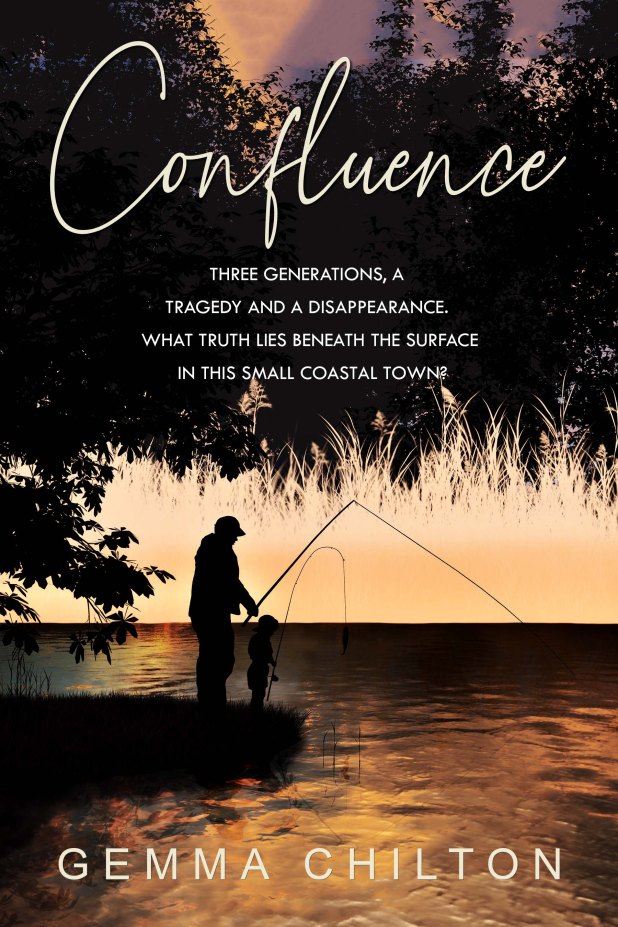
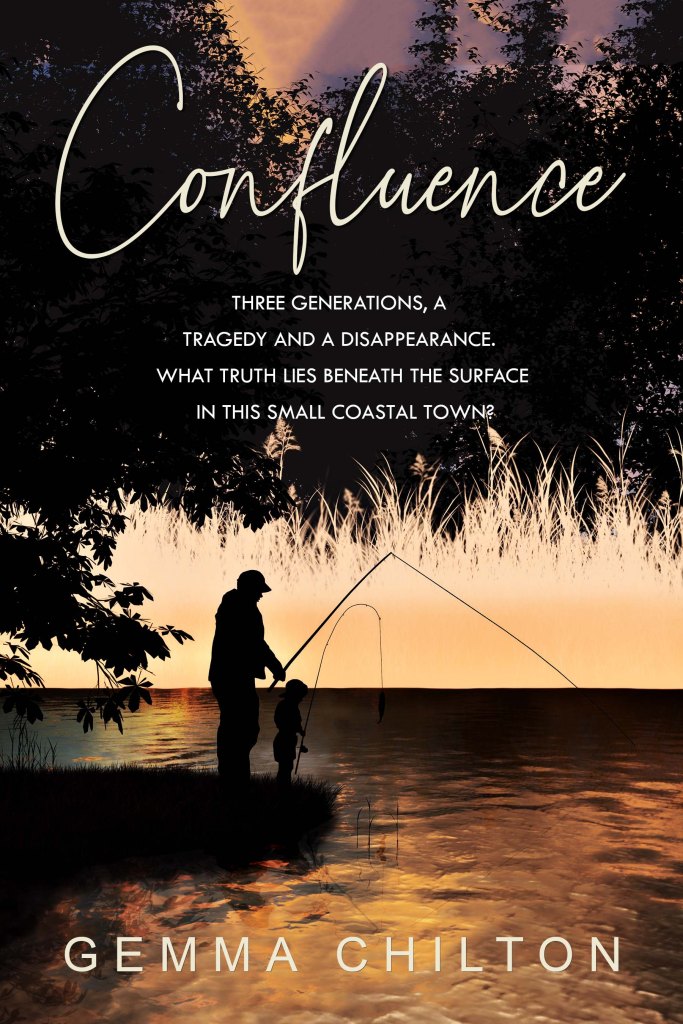
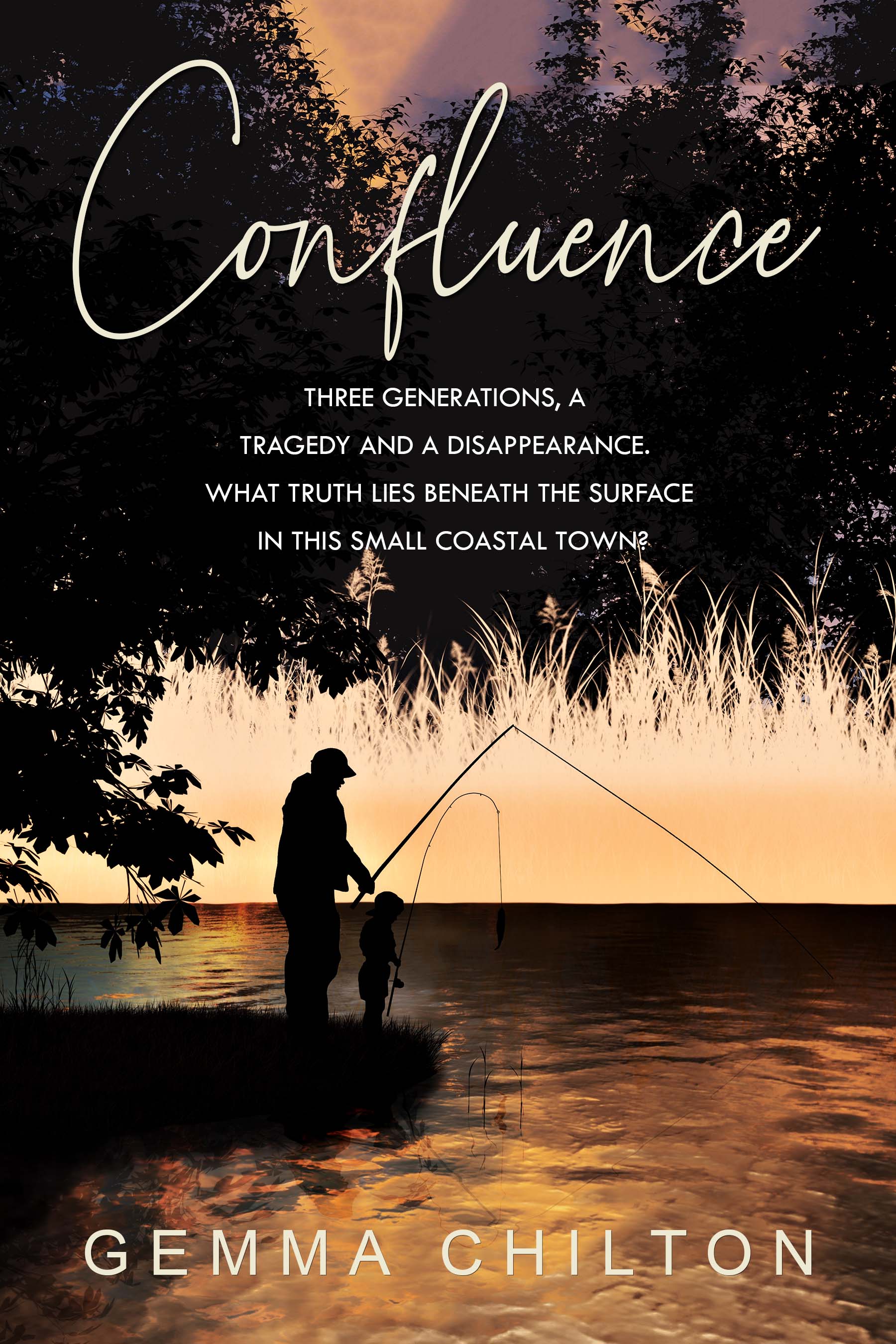
In February this year I self-published a mystery novel called Confluence. It’s been a fun, daunting and enlightening journey. Here are 5 key lessons I learnt along the way
1. Don’t use the first result on Google as the service to help you self-publish
I really should have known better. I work in the (magazine) publishing industry for God’s sake! But when, in Christmas 2021, my husband forwarded me this compelling Tweet and said, “why don’t you just self-publish that novel you wrote?” I decided the only way it was going to happen (between work and kids and a penchant for procrastination) was to make it as low-input for me as possible.
So… I had a manuscript… in a word doc… that I wanted to publish on Kindle, so what service did I go with? Word-2-Kindle, naturally!
SEO: 1, me: 0.
I was very happy with the cover design… eventually!
Well, not 0 exactly. I did have my novel published by February 2022. The Word-2-Kindle service had some positives – they were competitively priced, responsive, friendly to deal with, and they seemed to have their processes down-pat. And I still use them when I have to make edits, but that’s also because I don’t have access the editable design files, which is also a negative. More negatives incoming:
The quality of the work I’m afraid was poor.
I filled in the cover design briefing form and the result I received was a bit like what you get when you feed a prompt to those AI art tools (you know, ‘a banana eating a frog sitting on a windmill’ kind of thing). They had picked up keywords but completely missed the point.
In the end I specified the exact image, fonts, provided screenshots of a comparable cover I wanted them to emulate and spelt out exactly where I wanted all elements of the copy to go. I was happy with the result, but I didn’t feel I had benefited from any graphic design creative prowess on their part, rather provided detailed instructions to someone with access to InDesign (which I also have access to).
I was similarly disappointed with the editing, unfortunately. I hate to say this as the editor herself provided a lovely review of the novel in her comments – so maybe, having read that, I was blinded by my ego when her track-changed document had so little red. Well of course, unsurprising, I’m amazing! The manuscript is clean and perfect and ready to publish.
Alas, as countless readers have helpfully let me know since (usually the only downside in otherwise pretty consistently positive reviews): typos and errors are still lurking. That fact is embarrassing and disheartening, and costing me money every time I find more and have to ask my ‘Project Manager’ at Word-2-Kindle to weed them out.
Next time I’ll seek out and engage an individual graphic designer for the cover and contents (or maybe do it myself on Canva), and the same for a book editor. Using a middle man was a quick, efficient bult ultimately poor idea.
2. Put in the leg work getting reviews and reviewers, early on
After publishing, I knew that part of my marketing would be getting reader reviewers. I hoped between my blog followers, friends and family and the small handful of book reviewers I contacted, followed by the power the word-of-mouth, I would have this covered off. And reviews did trickle in, but they quickly tapered off. This is frustrating when you realise what a powerful potential marketing tool they are. And the reviews I did get were consistently positive enough that I wanted more readers to find and review it. What I found was that finding new readers for a small, new, self-published author can genuinely be like getting blood from a stone.
So recently, I got my hands on a copy of the Book Blogger Directory and worked my way through A to Z (of course only contacting the relevant blogs who stated they were accepting review requests, etc.). I emailed off cover JPGs, synopses, free ebook copies for review, URLs social handles etc, trying to make the process as easy as possible for them. Mainly because these bloggers are Under. The. Pump with reading promises already into the hundreds. But the process is starting to result in real, honest reviews from strangers (the best kind), and reading them is so rewarding.
Other review avenues I tried with this book: Book Sirens. You sign up for an account ($10 from memory) then pay $2 for every review of your book (this covers the cost of the service and doesn’t go to the reviewer). I received I think three reviews this way. It’s a nice idea, and a pretty simple, affordable way to connect reviewers and publishers.
I also splashed out and purchased a Kirkus Review – Kirkus Reviews is a literary magazine which is mainly aimed at and used by the publishing industry. This New Yorker article does a good job of explaining what they’re all about. As an Indie author you pay a lot of money for a pretty formulaic (but honest) review, but the selling point is that they are respected in the industry, and can be good to add to your cover art. And I was pleased that my review appeared in the September 15 edition of the magazine – which isn’t a given and apparently relatively rare for Indie authors.
3. Put yourself out there – including with a launch event!
Selling Confluence at the Tassie Indie Author Book Fair
It took some convincing to self publish, and then it took some more convincing to self-promote. After all, most people don’t get into writing fiction (which involves hours and hours hanging out with your imagination, alone in a room forgetting to stay hydrated) to have to put themselves ‘out there’ in front of others. But even if your book is published by a traditional publisher, if you are a new or unknown author, you will be expected to do a lot of the leg work in your marketing. In fact, publishing contracts are easier to come up with if you already have a big existing online audience or network – as a completely separate variable to the quality of the book itself.
In reality, when people ask me about my book or want to discuss the story, I want to shrink away. How do you discuss or explain the product of a process that is so intuitive, so driven by the subsconscious? It always feels like post-rationalising to me.
But – just as I was convinced to self publish, I was convinced to self-market, and this included a launch.
First, I guess you could say I had a ‘soft-launch’ at the Tassie Indie Author Book Fair which took place in May this year at Brook Street Pier in Hobart. I set up my table with a pile of books and my A3 poster (designed myself this time!). I’d been instructed to bring 10 to 20 copies and told to expect to sell 5-10 of those. I arrived with my 20 copies and a serious case of imposter syndrome looking at all the other set ups.
But then… I sold out! Every last copy!
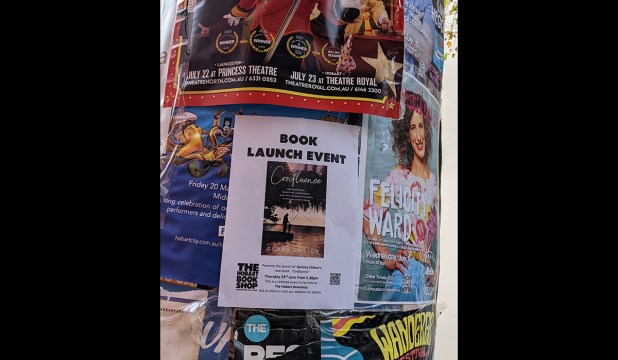
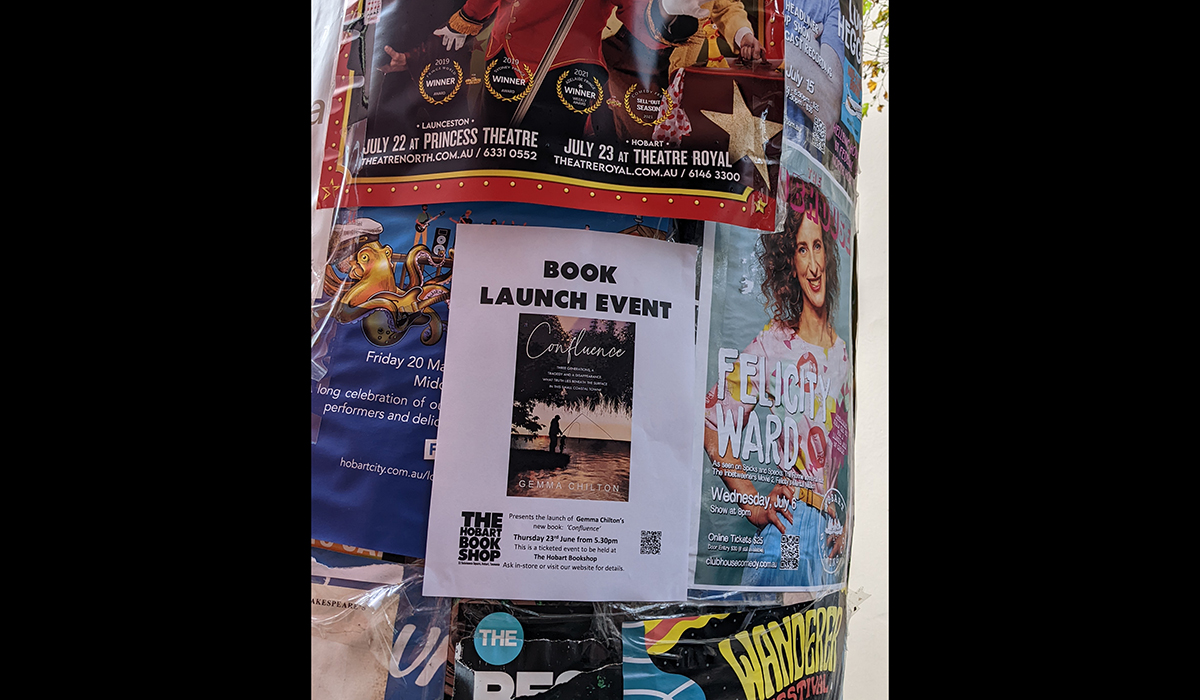
It was at that fair that I also met the owner of The Hobart Bookshop, the lovely Bronwyn, and in follow-up was able to organise to hold my ‘real’ launch there. In the lead up, I posted flyers around town, advertised it on my own social media as well as the bookshop’s website and social media. And… a very small handful of mostly friends and family showed up..! (As one of those friends pointed out, holding it soon after Dark Mofo, when everyone was evented-out, was perhaps a mistake). Still, it was a lovely evening, and somewhat out of character I really enjoyed the chance to discuss my book (in an interview/Q&A format), and in hindsight the marketing of the event in the lead up was the real value. (Cafes and libraries won’t let you put a picture of your book cover up on their wall just because you published it – but they may well be happy to do so if it’s to promote a local event.)
4. You’ll find an amazing community (at least I did)
One of the best things about stepping out of your comfort zone is that you soon find there are so many people willing to help and support you. To start, I originally heard about the Tassie Indie Author Book Fair through a good friend in the industry who knew I’d self-published (His name is Meng and he’s a Tassie-based freelance graphic designer – check him out here). At the Fair I met not only the owner of the Hobart Bookshop which spawned my launch event, but also several other local independent authors.
One author I met was Rauiri Murphy, who wrote Two Sets of Books, a series of short stories all set in Hobart public library, recently long-listed for the Tasmanian Premier’s Literary Award. We exchanged books (and reviews), and then I more or less cold-called on him after the event, when the bookshop suggested I find someone to interview me at my launch, and he not only agreed to help but truly went above and beyond for a more-or-less stranger. I was amazed and so grateful!
Other people in the community have been equally generous and supportive. I was invited onto local radio for an interview, which included an opportunity to give away copies to local readers.
I feel if I hadn’t self-published, I wouldn’t have met or become a part of most of these supportive and generous individuals and communities.
5. Keep writing your next novel!
There was a period of time when focussing on publishing and marketing Confluence provided a nice distraction from working on any other project… but you can’t be an author, whether self- or traditionally published, without being a writer first. So it’s important to return back to that fundamental place of being a creator – and that’s regardless of how your first effort goes.
I have learnt a lot from this process, it’s been difficult, enjoyable, scary, fun. There are many things I’d do differently were I to self publish again, but thinking about that now feels like putting the cart before the horse.
I’m working on two separate pieces – one I’ve put on the backburner as another idea came into being and is exciting me a lot more. So… watch this space!
Oh, and please buy a copy of Confluence and leave your review online!
You can also subscribe to be notified when I post in the future by entering your email address below:
Looking back on our first year in Tasmania – 100 trees, 4 chickens, three months in a caravan and one new human later
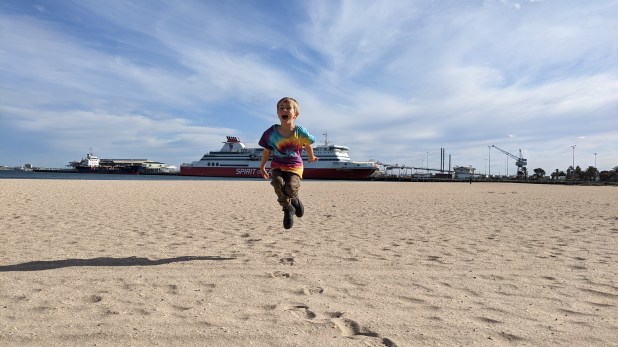
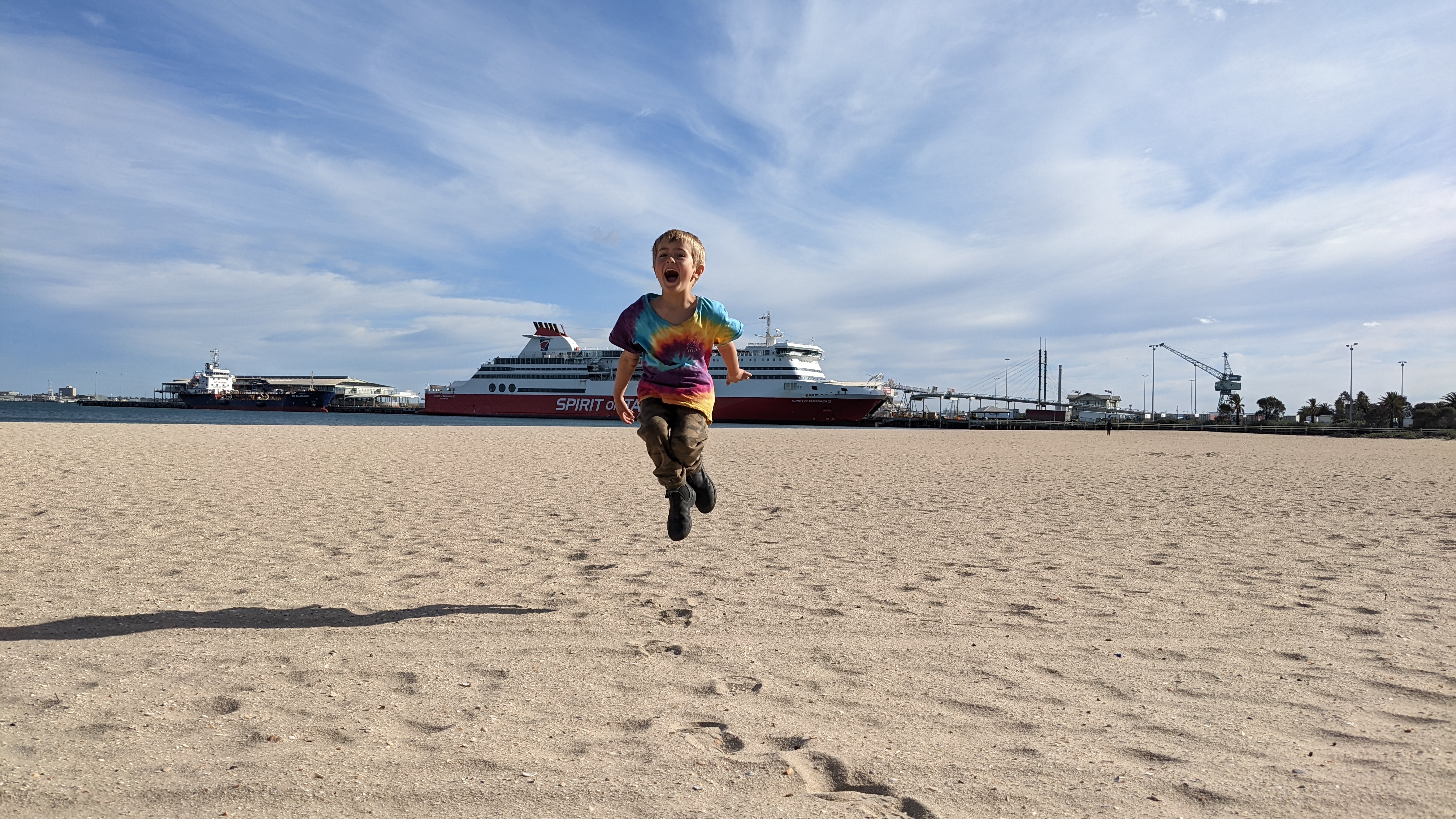
The frenzied barking of caged dogs didn’t help our stress levels, as we milled around in the cold with the rest of the untouchables on the vehicle deck of the Spirit of Tasmania, awaiting our instructions. Our three-year-old Owen was steadily losing patience, splashing in the oil-slicked-brine at our feet.
Finally, over an hour after the Clean Passengers had boarded for their civilised dinners on this floating RSL, we were led by a harried, masked crew member onto our deck, segregated by red tape and hazard signs.
We’d chosen the first day the Spirit was to start ferrying passengers (returned, or in our case new, residents only) from NSW and Victoria, to which the Tas border was otherwise closed. That meant procedures were still a work in progress, and it showed – but we weren’t about to let it dampen our excitement of this new chapter.
We’d spent the previous weeks at our home in Gerringong, NSW, packing all of our belongings into a shipping container, then watched nervously as the front wheels of the truck levitated off our steep driveway from the weight of all our worldly possessions, before disappearing around the corner.
We’d nervously submitted our border pass request – successful only on the second attempt – and then drove the 820km to Melbourne, before sailing overnight to Tasmania.
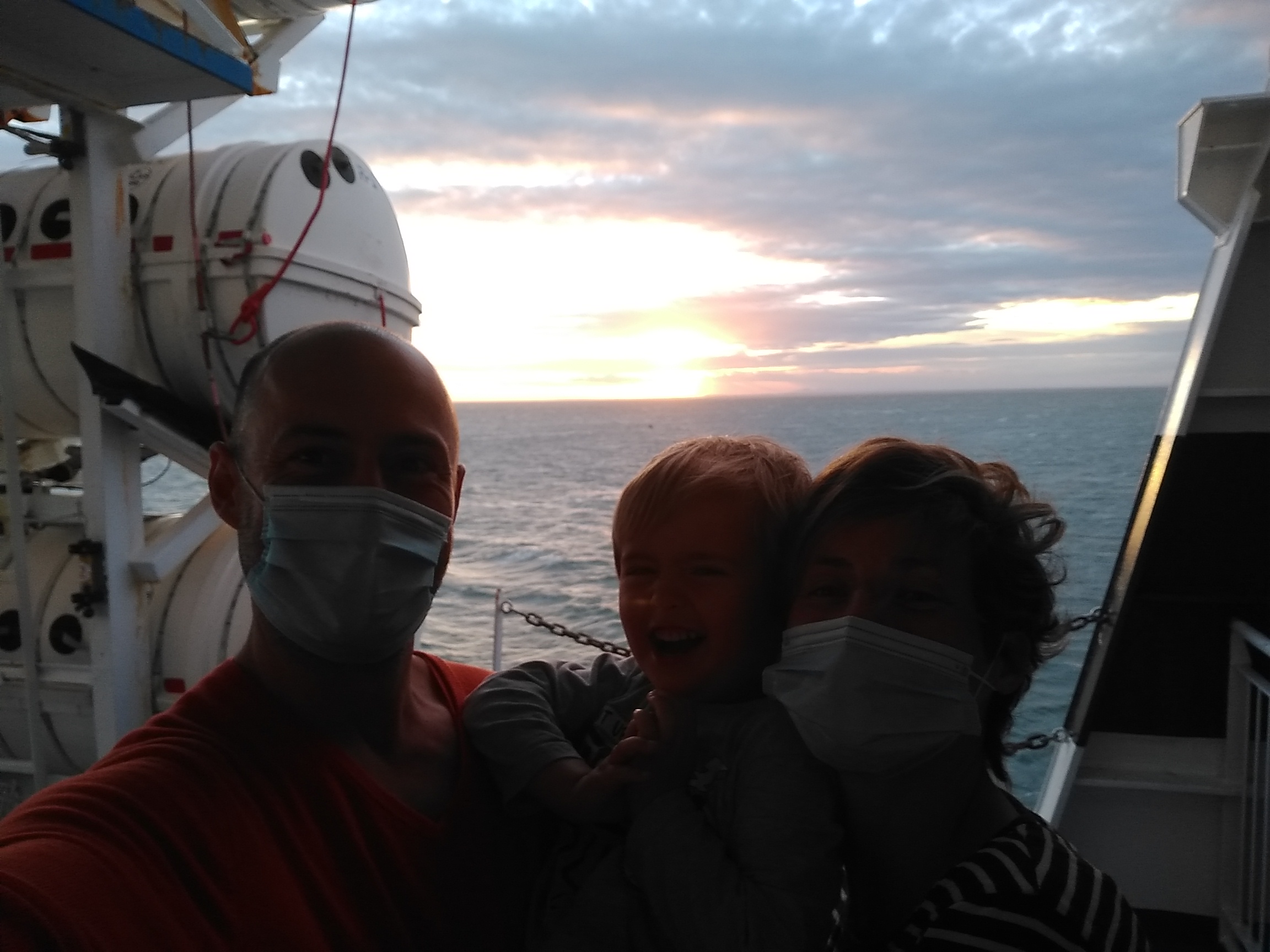
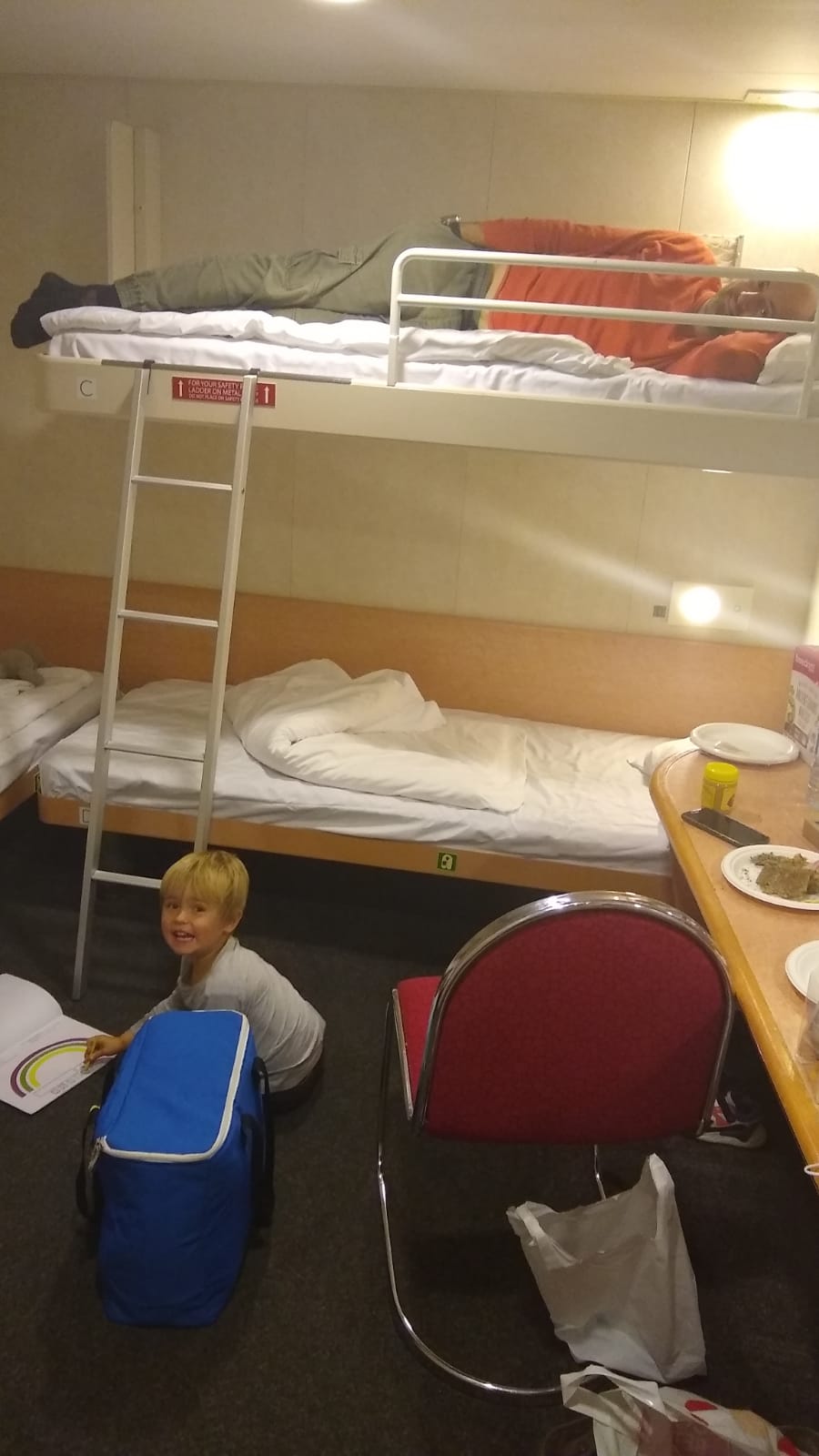
On the boat, we weren’t allowed to leave our windowless bunk room, other than fresh air breaks on the smokers’ deck, and Owen took a long time to fall asleep in all the excitement of Sleeping On A Boat. But waking at dawn and spotting the hills of Devonport lifted our hearts. This was it!
We set foot on Tassie soil as new residents on 27 October 2020.
In the 12 months since then we’ve brought a new human into the world, planted almost 100 trees, built a chicken coop and a veggie garden, and lived in three different dwellings including a caravan. Now it feels like an apt time to refresh this old travel blog (remember travel?) and reflect on our first full year as new Tasmanians.
Why Tassie
It seems we have a habit of procreating and relocating. About six months after Owen was born, we moved three hours south of Sydney to the coastal town of Gerringong. We loved our life there, and got used to daily swims in the ocean, made friends and even had a little veggie patch and two chooks in our rental backyard.
But we wanted to buy our own place, and Gerringong it turned out wasn’t much cheaper than Sydney.
Then there was 2020’s summer of fires, with thick smoke from all directions and consecutive scorching days and stifling nights, in a rental in which the owner refused to install AC. We spent a small fortune on a portable air filter and worried about the impact of the smoke on our little boy’s developing lungs, and were haunted by the idea that summers like those are only predicted to become more frequent.
For many years we’d talked about Tasmania as a milder climate to relocate to – and here was the reality of global warming playing out on our doorstep. Yes, Tassie will get fires too, but at least here we can afford to build a home that’s more resilient to them and other climate risks (more on that to come!).
We were also drawn by the wilderness on our doorstep, the produce, proximity to Hobart, and the fact that we have some wonderful friends already putting down roots here and were doing a good job of selling the dream. It felt like a no-brainer.
The property and the house
We had first seen our block on a holiday to Tasmania back in January 2020, a significant moment in history we would later realise – but at the time had very little idea how the world was about to change.
By March, from lockdown in Gerringong, we exchanged contracts on 2500sqm of ex-bull paddock on the outskirts of Huonville, about 30 minutes drive south of Hobart.
Still on the mainland, we engaged an architect and started to plan out our house – two-storey, to minimise the footprint on the land and enable an airy double-height void and capture views down the valley. Our architect specialises in Passive House construction, which means, in a nutshell, extremely well-sealed and insulated buildings that are mechanically ventilated through a heat exchanger, meaning you barely have to heat or cool them.
The block is a big flat rectangle on a subdivided farm that belonged to the family of our neighbours on two sides.
Spring
On arrival in Tasmania, we’d secured a very short lease to avoid hotel quarantine. And while nothing could make two weeks’ quarantine with a three-year-old easy, exactly, arriving at the beautiful little cottage, walls lined with books and surrounded by gardens in the sunny late spring weather helped.
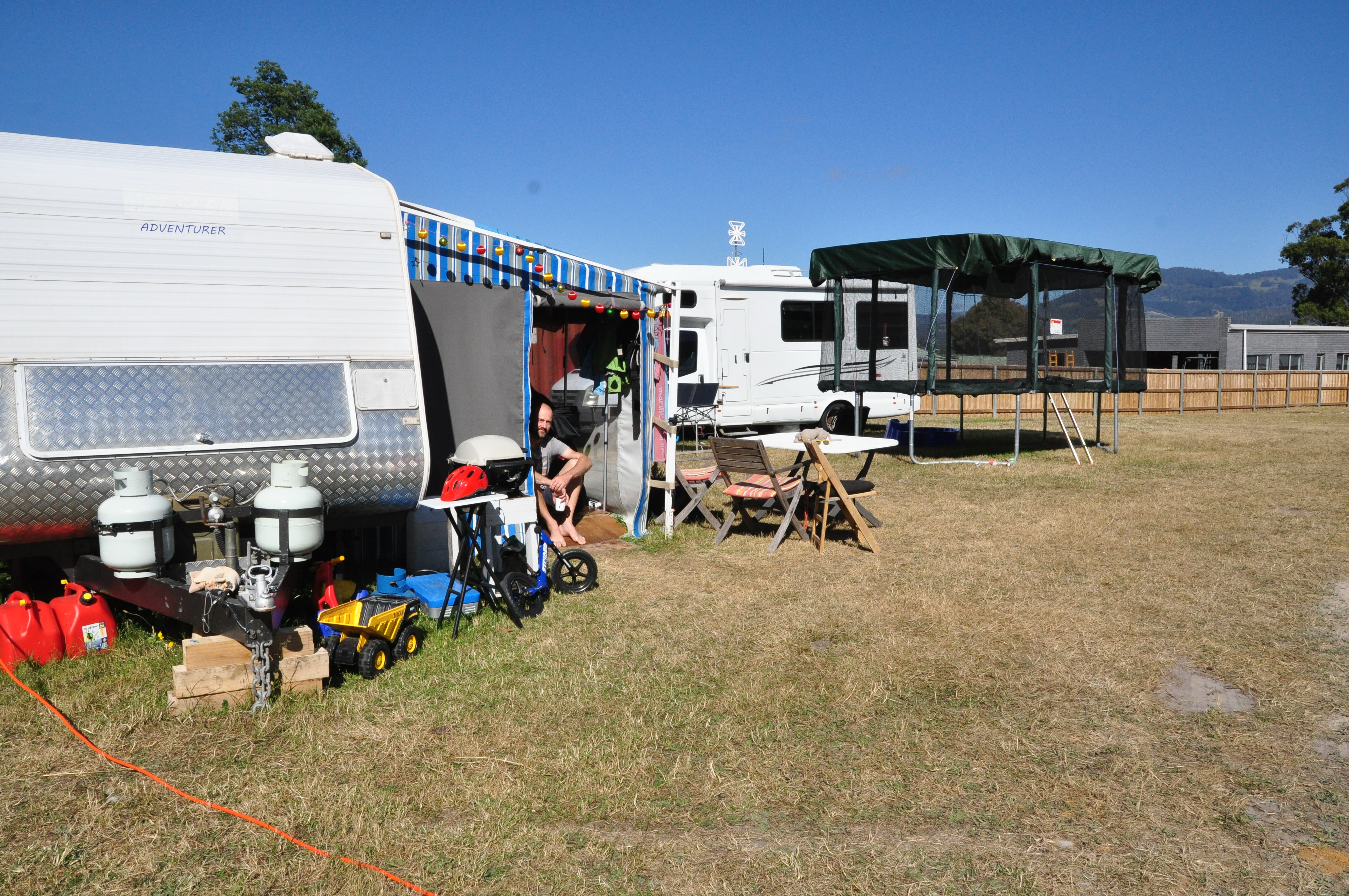
Our quarantine accommodation was a bit more luxurious than the caravanWe forgot to social distance from the neighbours during quarantine!
We had the rental for about a month, total – with plans to find a longer-term place in the two weeks after our quarantine, where we’d live while we built our passive house on the block. We’d been warned about a severe rental shortage in the area, and that’s what we found.
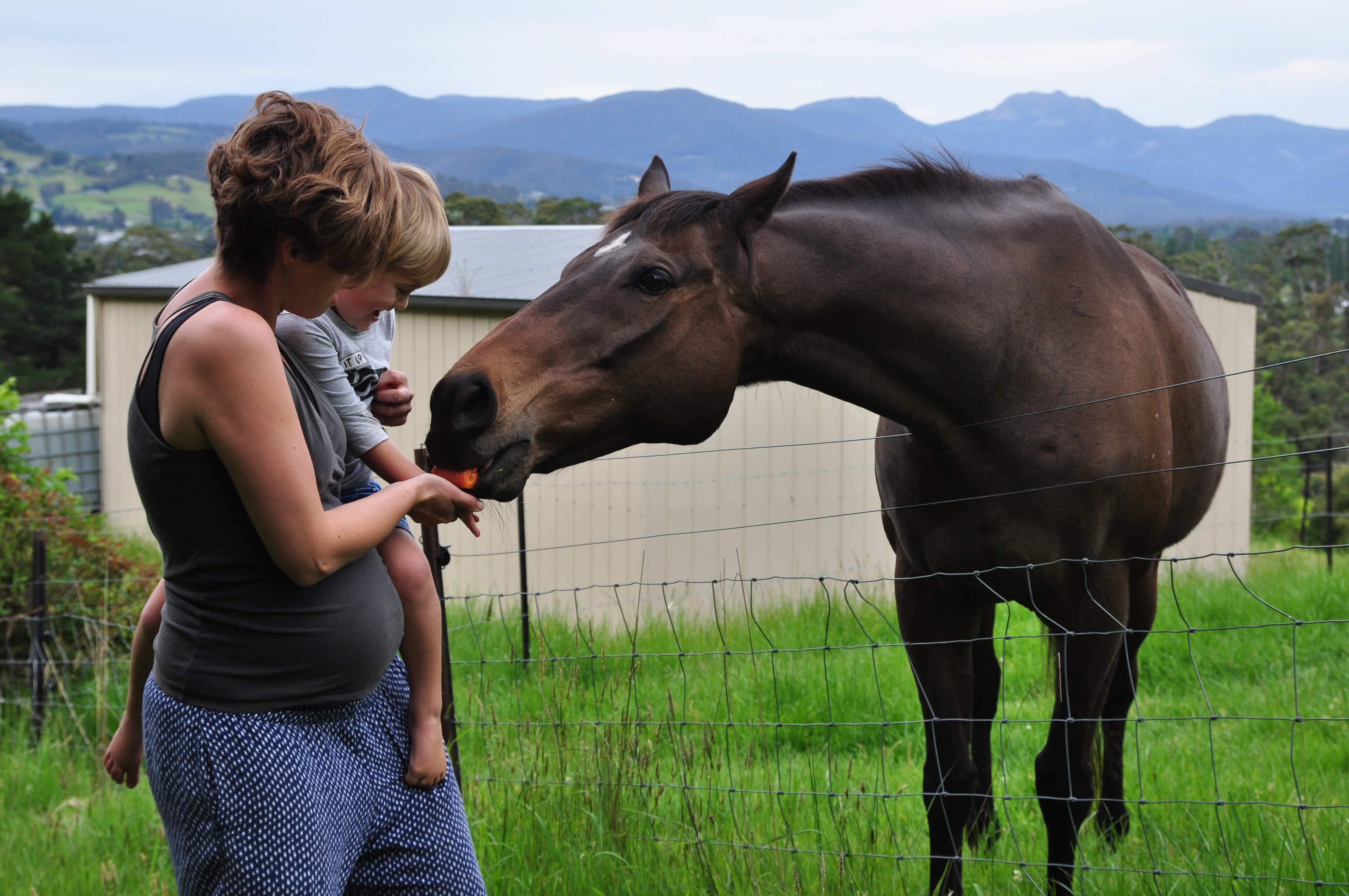
I was edging into my third trimester when we’d arrived, with our lease coming to an end, wondering what address to give the hospital as I tried to navigate a new state health system for the impending birth.
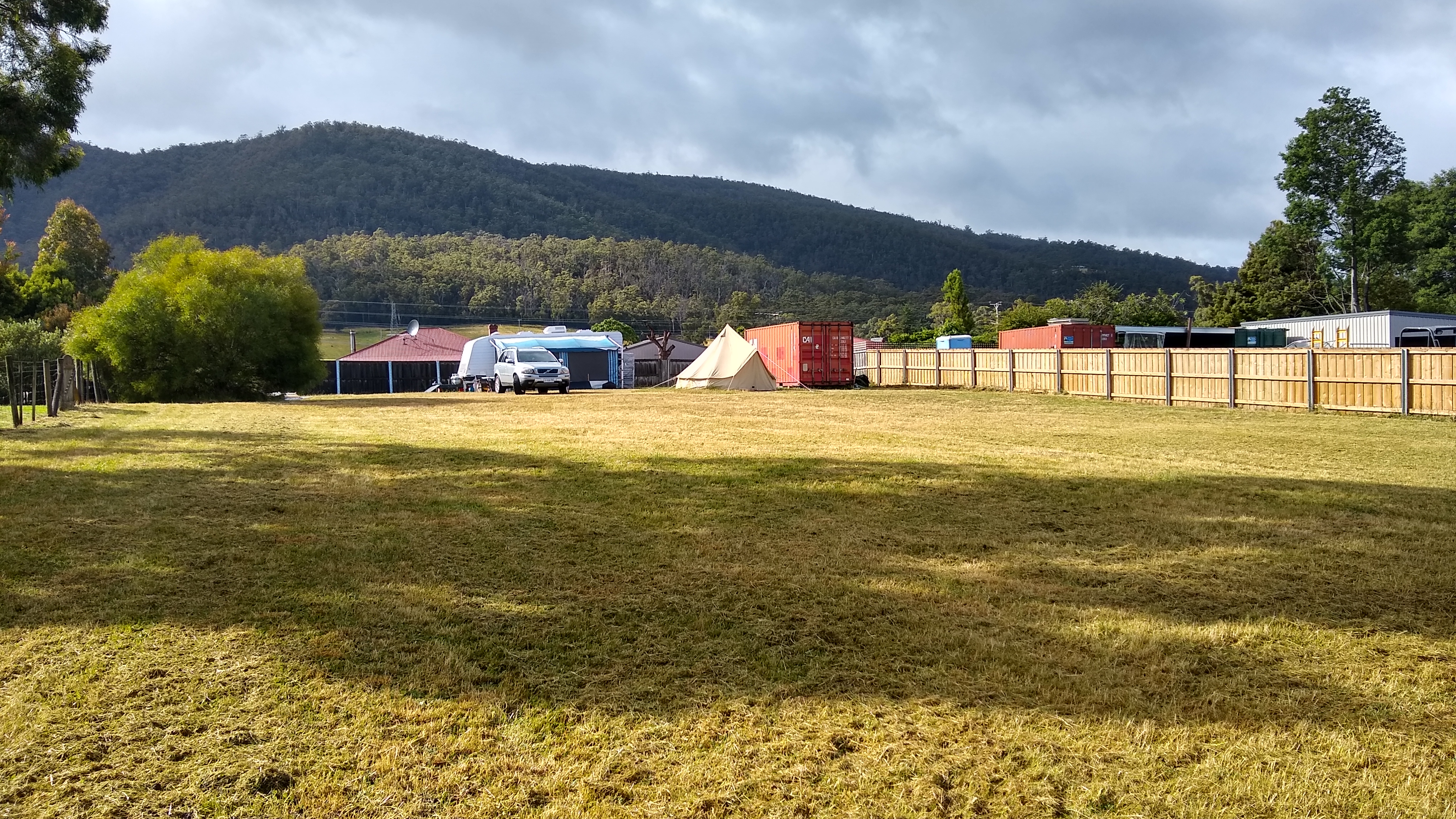
We’ve never been ones to shy away from an adventure, but were we crazy to buy a caravan and live on the block without mains power or water, with a toddler (and soon a newborn) whilst working remotely full-time?
Yes, we were, and we were also a walking Grand Designs-esque cliche.
In late November, the caravan arrived sight-unseen, towed by a 4WD from Launceston. Home sweet home.
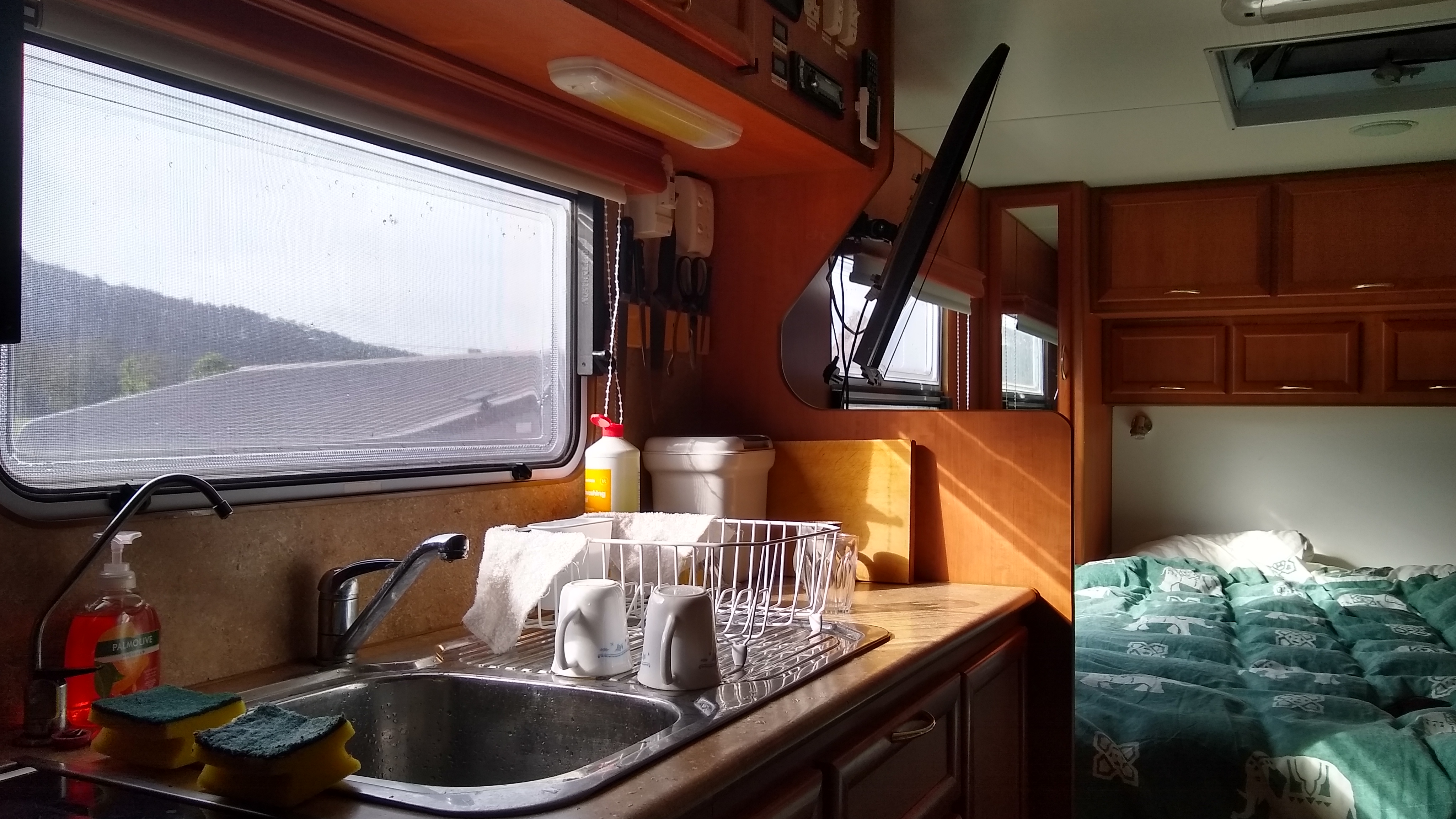
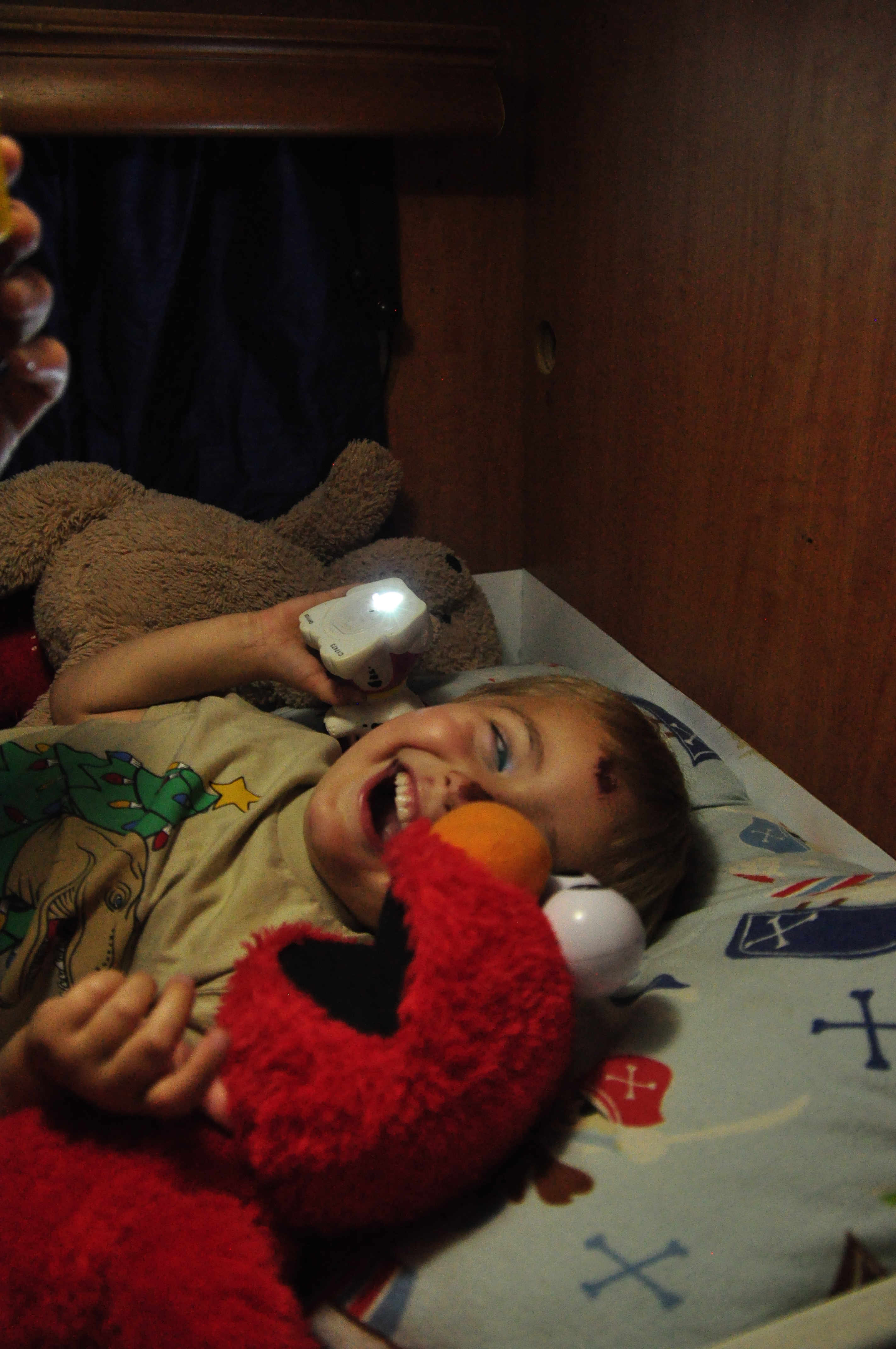
I had dreams of renovating the caravan into something white painted and instagrammable, but time wasn’t on our side. Instead we put glow in the dark stars above Owen’s bunk bed and Paul unscrewed and refitted the dining table in the kitchenette to better accommodate my growing belly. We were gifted recycled floorboards to put under the awning by our good friends living in similar circumstances on their own property (I told you we were cliche), and I instructed Paul to redesign the caravan bed area, to make space for baby and me before January.
Summer
People associate Tassie with cold, but the summers can get hot, and with no shade on our block it could feel quite arid. The caravan was sometimes an oven by day and a fridge by night. We mastered the Zoom background filter for our corporate video meetings, to hide the garish caravan decor – there wasn’t much we could do about the background sounds of the plastic awning flapping in the wind, or the braying of the sheep we borrowed to help keep the grass down.
But the caravan also allowed us to make the most of Tassie’s long summer twilight, and I loved watching Owen play outside long after we’d eaten dinner while watching the sun set over the valley.
We spent our first Tassie Christmas in what was by then dubbed Caravanistan with Paul’s parents in a winnebago on the property, and it was like many of our summer days and nights on the block. Our much-missed Sydney family were happy faces waving over Zoom calls, our neighbour traipsed through the fence with a plastic bag full of plum-sized cherries, Owen played in his Bunnings splash pool, and we sat outside until the sun finally set at about 9pm.
While I’ve missed our daily ocean swims from our mainland lives (sometimes viscerally), we’ve compensated as frequent visitors to Kingston beach, summer afternoons playing in the tannin Huon River water, and barely touched the surface of the aquamarine beaches to the far south, let alone the potential for holidays up Tassie’s famous east coast.
The caravan was truly cemented in our family history when it was christened by my waters breaking at midnight, two weeks early on 30 December. An intense labour and five nights in hospital later (we watched Hobart’s New Year’s Eve fireworks from the birthing suite) the population of Caravanistan had finally increased by one.
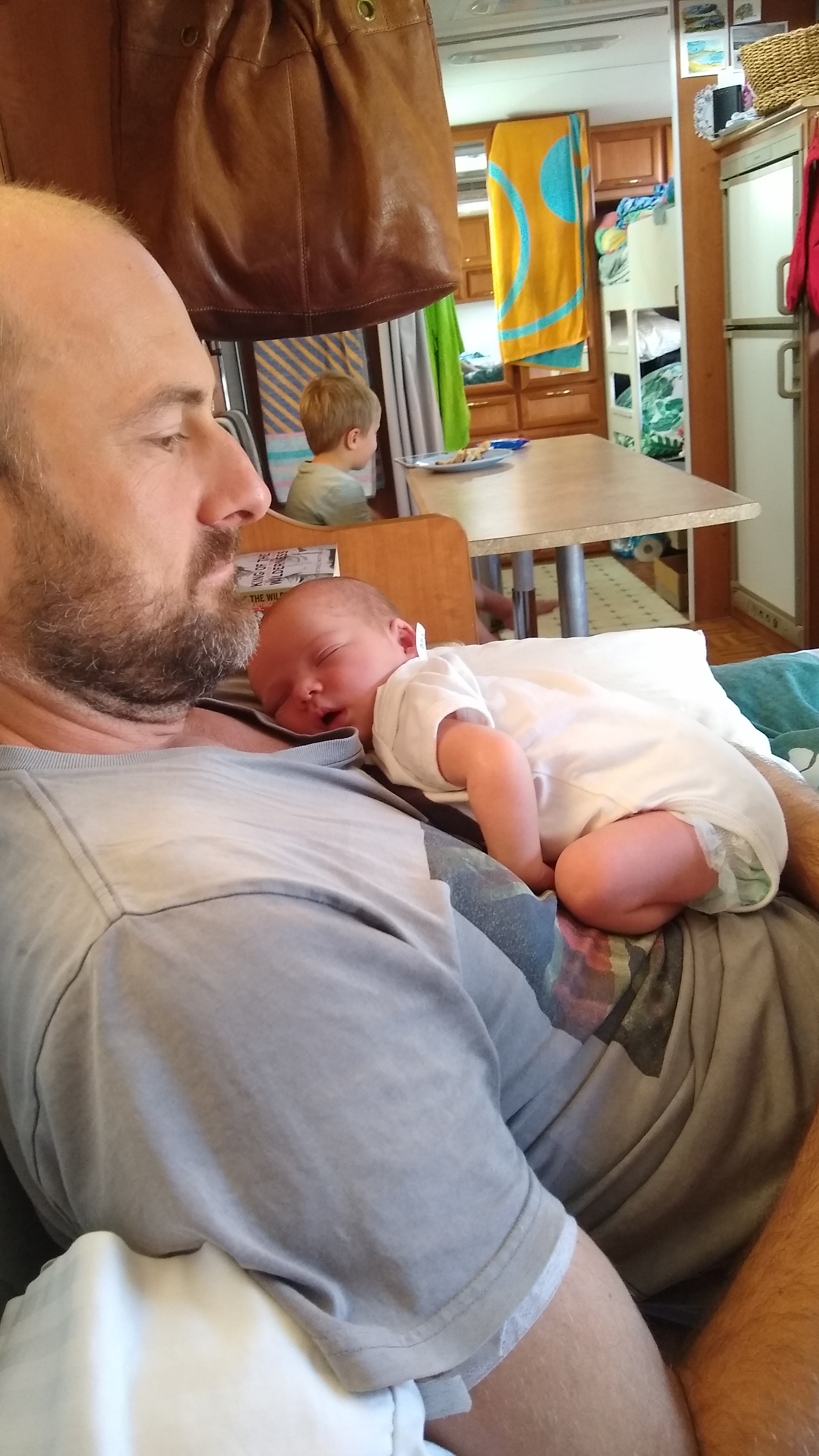
The home midwife visits all took place in the caravan, which I would painstakingly tidy in the hope of avoiding a call to social services, but they all seemed happy enough. In fact, having Ebony’s first six weeks of life in that little bubble on wheels was ideal in many ways. I’ll always treasure memories like the sleepy mornings feeding her as the dawn light flooded the tiny space, Paul in the kitchen two feet away, the smell of coffee and steam billowing off the kettle, Owen’s sleepy face peeking through his ‘bedroom’ curtain before he’d unsteadily descend his bunk ladder and run outside to knock on his grandparents’ door a few metres away.
But eventually, with our first Tassie winter on the horizon, a rental down the road finally came on the market and we pounced. We sold the caravan and watched it be towed away by its new owners.
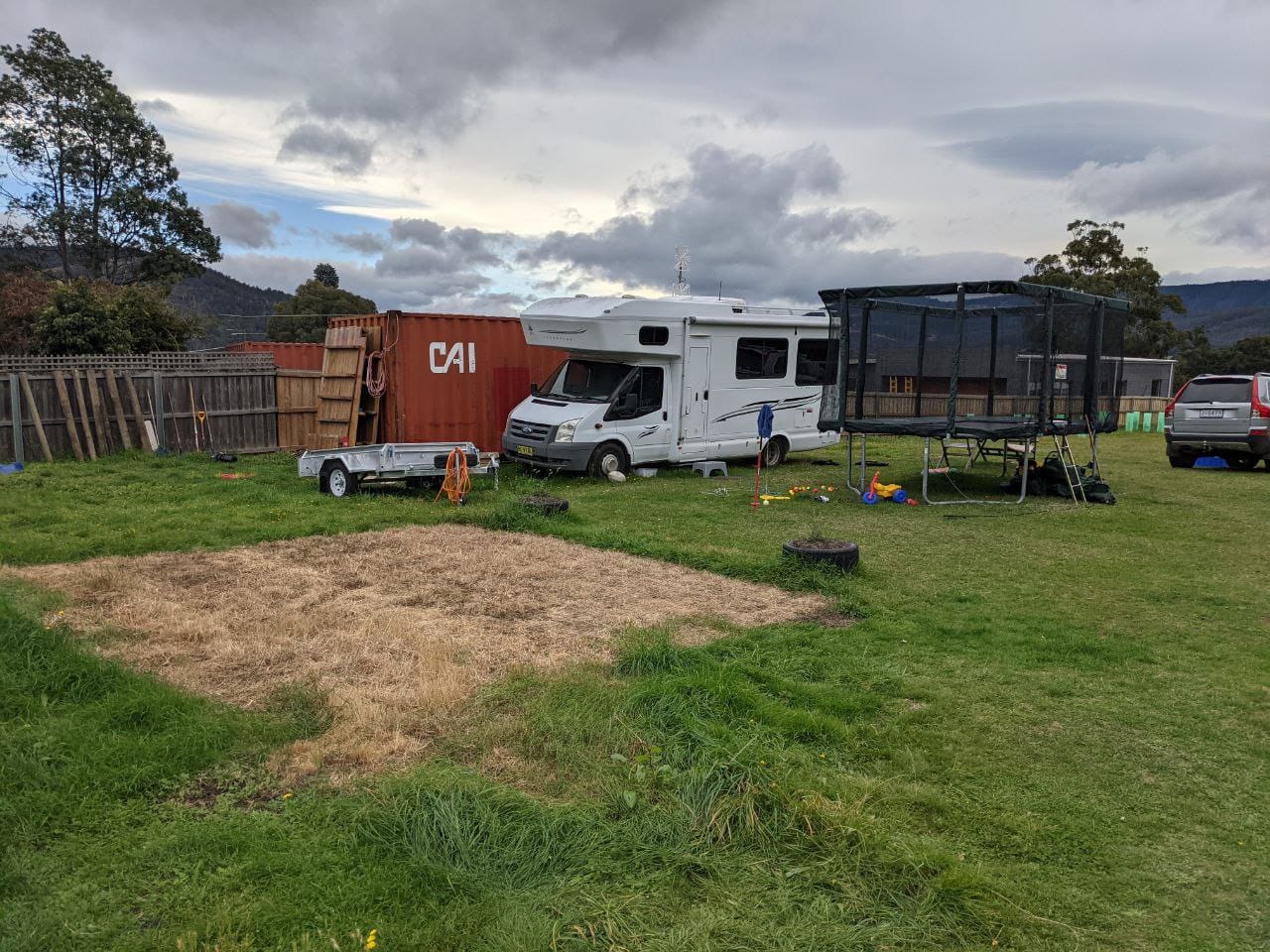
The patch of dead grass it left behind looked impossibly small for all the memories it had contained.
Autumn and winter
Autumn and winter followed in our rental townhouse, where we still live now. We’ve settled into life here as a family of four.
Autumn was the orchards heavy with apples and shorter days. Winter was long mornings shrouded in thick fog, bright snow settling on the surrounding mountain ranges, gloves and coats and thick socks, coffees and croissants in front of woodfires. We were glad to be living now with heating and insulated walls.
On the block, the grass has grown over the caravan patch, but Caravanistan hasn’t been completely deserted – at almost any one time since we’ve been here we’ve had either set of our parents living in the Winnebago on the block, which has been invaluable and obviously transformative to them too – both have since bought properties in the Huon Valley themselves!
Materials shortages and builder availability (or lack thereof) mean our build hasn’t started yet. A scheduled start date of late this year turned into early next year and now mid-way through next year. But we already have DA approval, and it will happen.
On weekdays, we drive past the Tassal salmon smoking factory and through an apple orchard, muddying the car on dirt roads to Owen’s daycare drop off. We work in our office jobs from home, and spend time with our fantastic circle of friends, who have been so open, welcoming and generous, most recent blow-ins themselves, empathetic to the experience of setting up a new life in a new state.
Weekends, especially rainy ones, we often drive into Hobart, enjoying exploring its alleys and family-friendly offerings – museums, rock climbing, swimming at the aquatic centre, ice creams at the Botanical Gardens. Otherwise, we’ve made a second home in Hobart’s tip shops, collecting recycled materials like bowerbirds, to incorporate into our eventual house – so far we’re storing a full set of Kauri pine doors from a Federation house, bathroom basins, a marble washstand for the vanity, an enormous Huon pine slab for a kitchen island, piles of recycled bricks for an interior brick wall, sandstone slabs, three art deco mirrors.
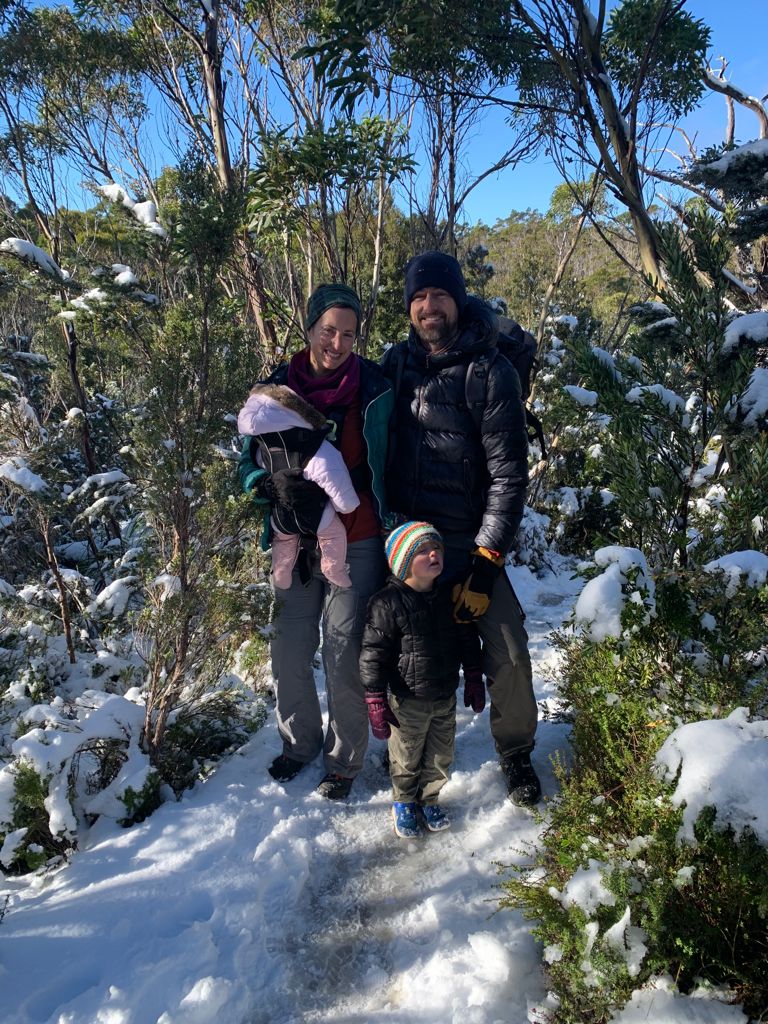
Loving the novelty of it, we’ve sought out snow when we could, hiked the Hartz Mountains twice – once in summer when we swam in the mountain lake, once when it was blanketed in snow.
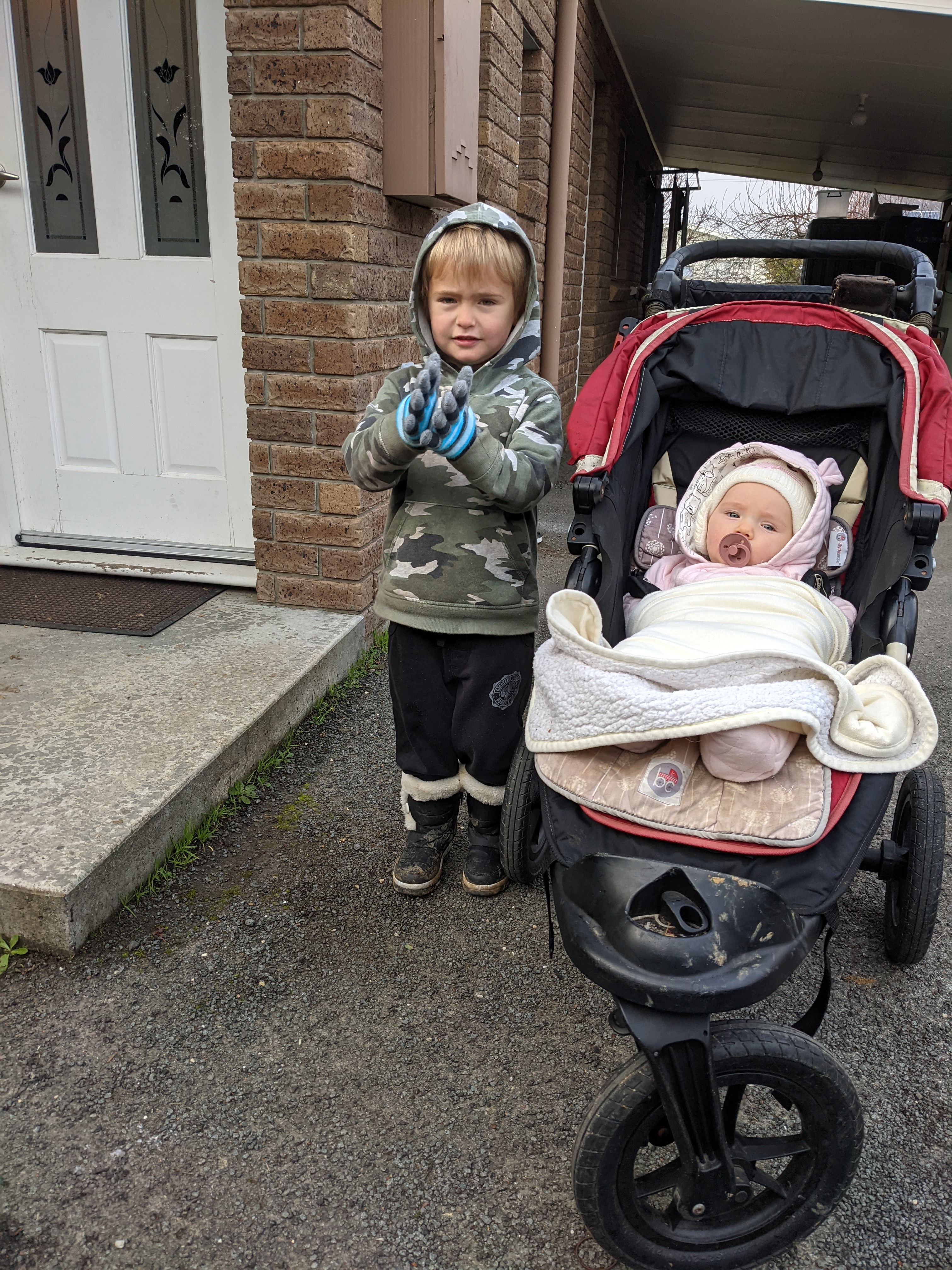
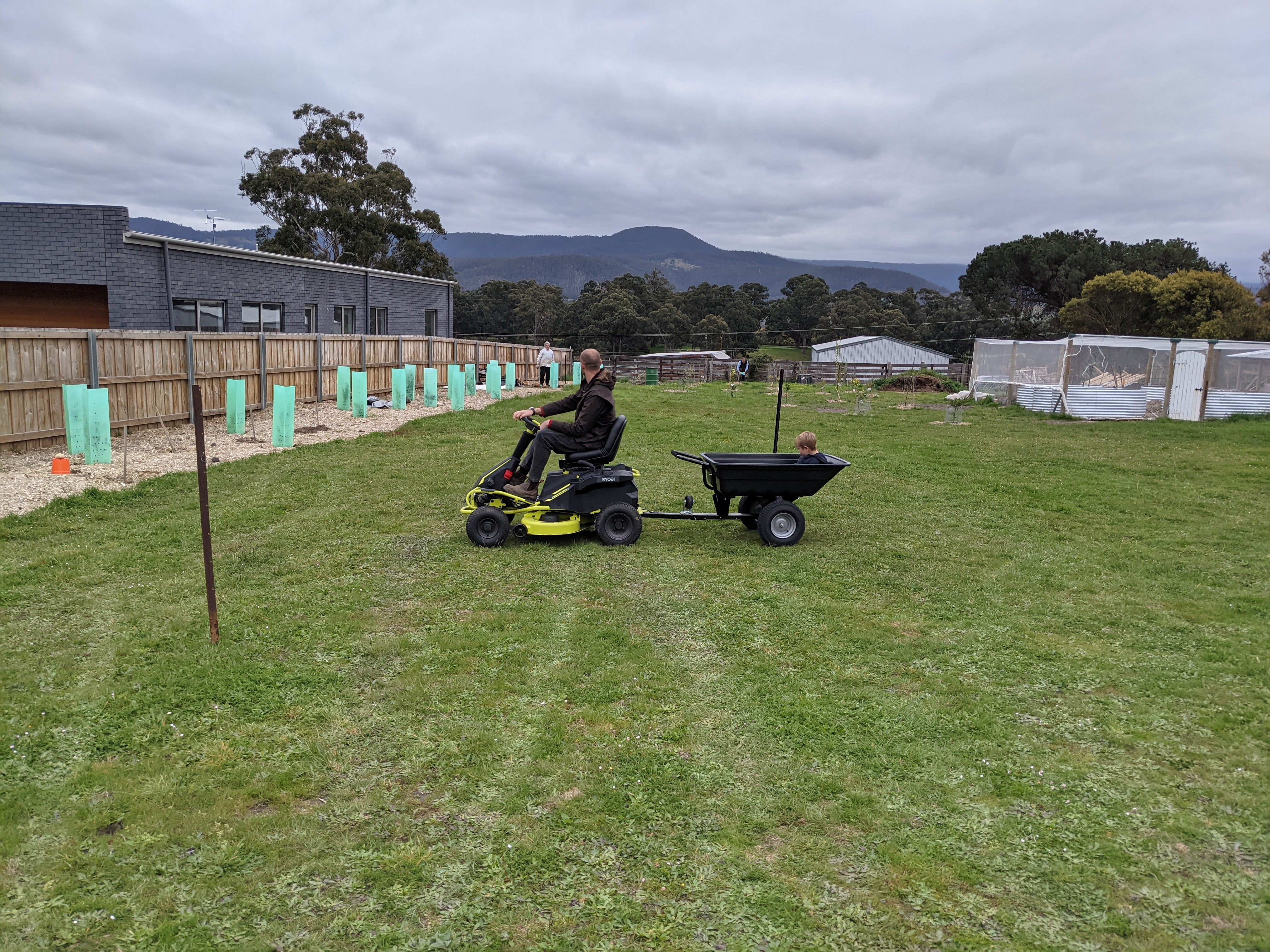
And more than anything else, any chance we get, we’re back up at the block, building, weeding and planting, while Owen plays in the mud and Ebony sleeps in her pram or, more recently, crawls in the grass and attempts to eat the flowers.
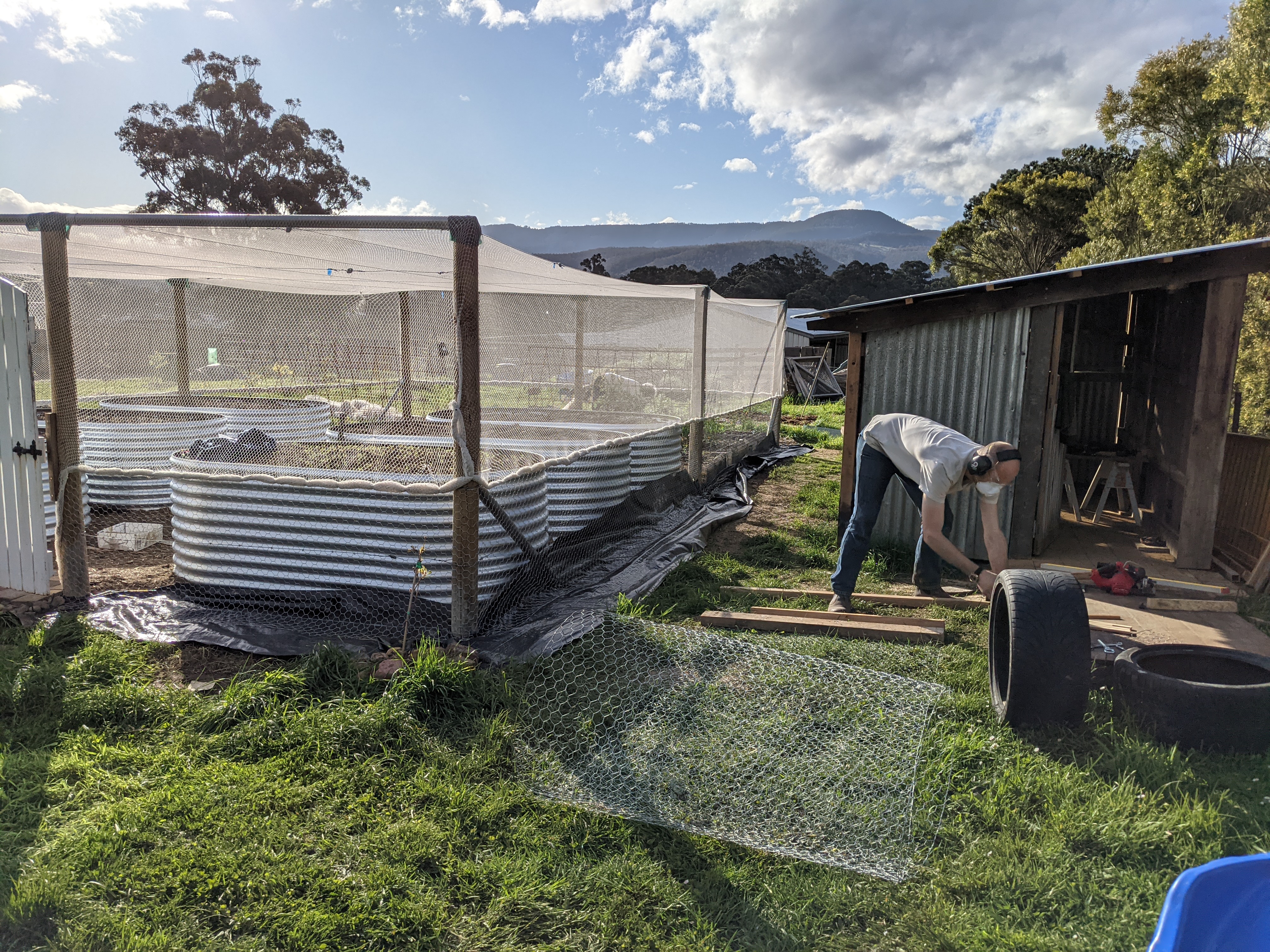
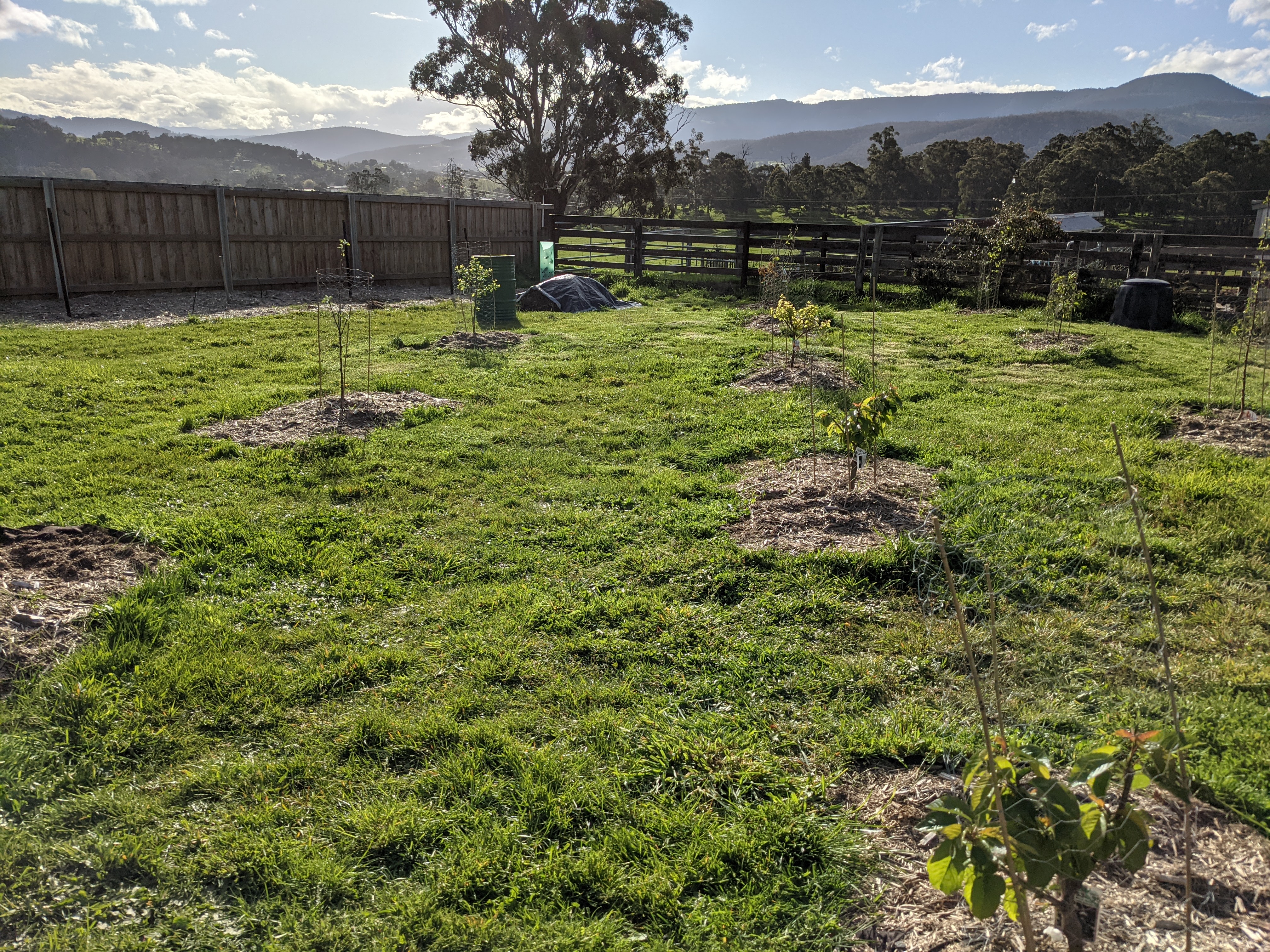
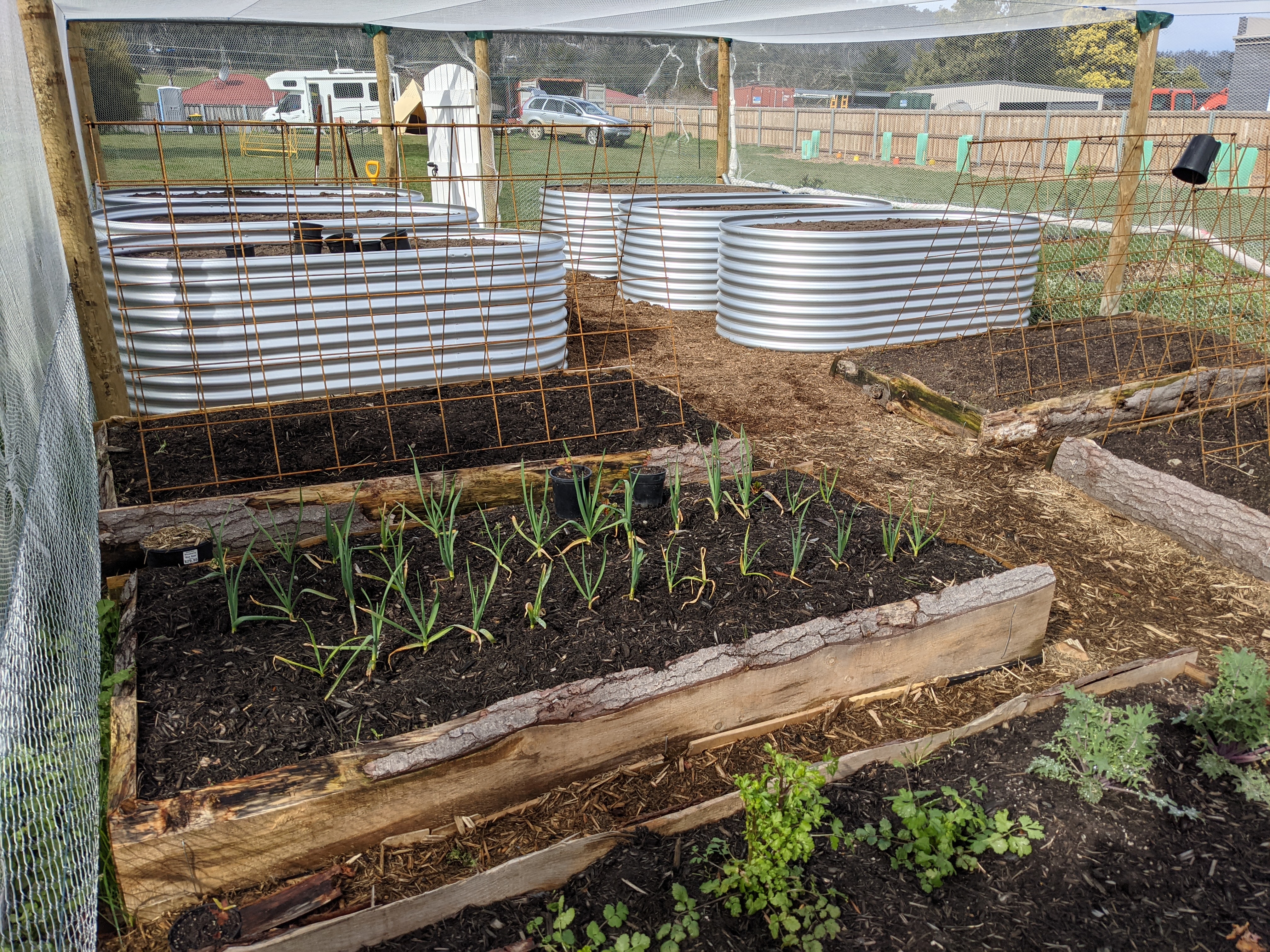
We first broke dirt with an assortment of about 60 flowering natives planted down the western fence as a wind and visual screen. Then a small orchard of 15 fruit and nut trees, a large veggie garden enclosure, and now a chook house which has just welcomed 4 Plymouth rock hens with three blue Australops waiting for us to collect them soon.
We’ve also waged war on capeweed (my mother in law gets all the kudos for that!), layed a gravel driveway, had three-phase power provided and plumbed in a portaloo!
Spring again
We’ve basically done our best to fill the void of not being able to build our house, and already the block is far from the sparse bull paddock we lived on last summer. The months of winter and spring rain have softened and darkened the soil, which writhes with earthworms when met with a shovel.
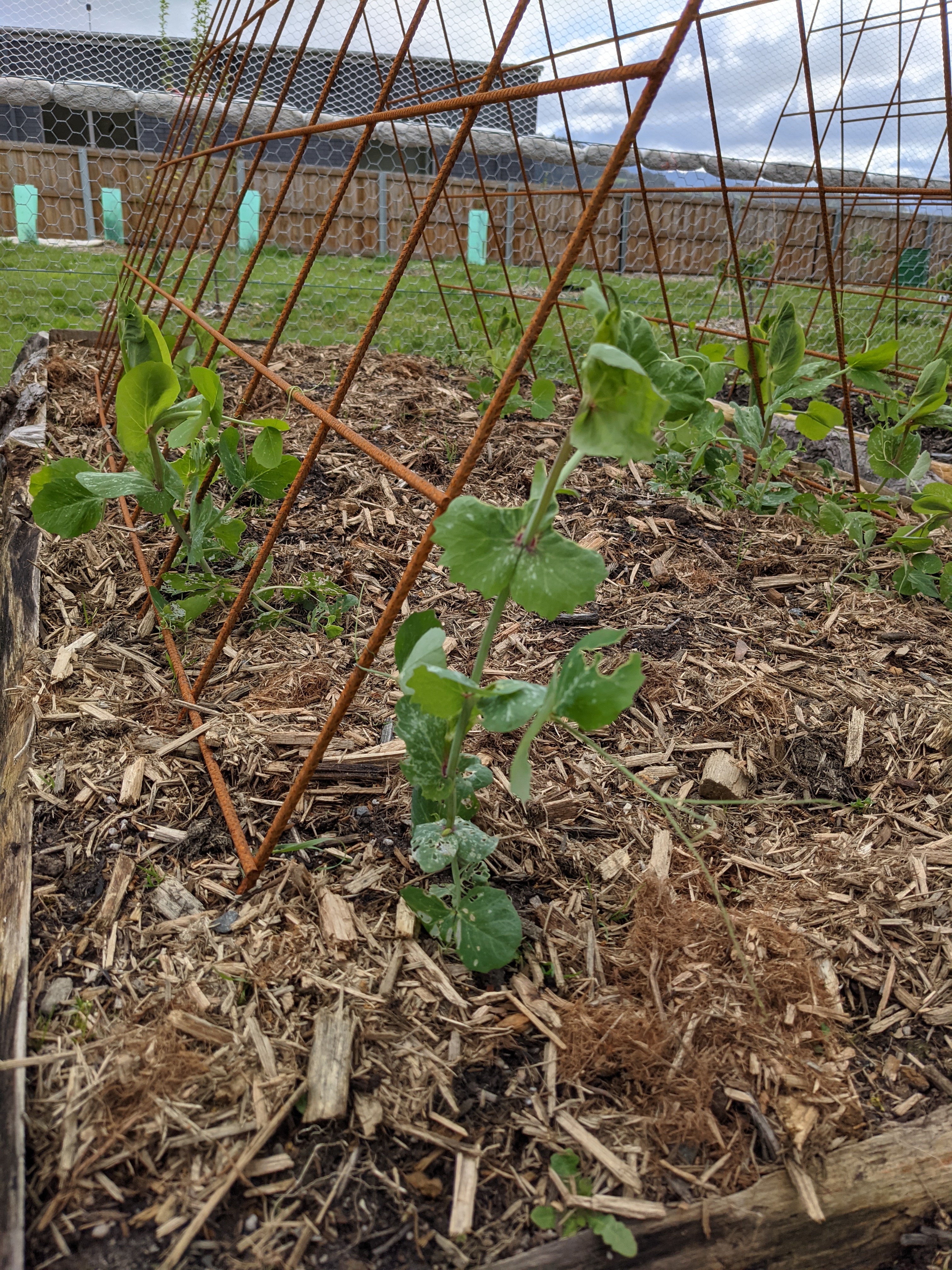
Seedlings are popping up in the veggie beds, most of the natives are poking their heads above the plastic tree guards, and the fruit trees and berry patch are flowering and budding. I’m loving learning more about gardening and the prospect of creating a patch of something lush and green that can feed our family. I’m also anticipating much trial and error, as the selection of brown leaves, frost-burnt or slug-devoured seedlings already attest.
It’s been a big year – globally, of course, but in our little lives and corner of the world too. Impossible to fit it all into one post, but I plan on updating this blog more regularly than annually. So stay tuned for our Taswegian adventures as we build our house (eventually!) and explore our new island home.
I recently entered the following short story in the New Philosopher magazine writing competition for the ‘life’-themed issue. Alas I didn’t make the list of finalists (such is life!), however this morning the uncanny familiarity of a headline about Google AI “depicting life expectancy with 95% accuracy” prompted me to publish the story here.
The idea of a tool like this, I felt when writing the story, raised so many philosophical questions that I could barely touch upon within the 1500 word limit – and now (so soon!) those questions are a reality. It also seems so fitting of our time that my attempt at a sci fi concept had such a short lifespan, although that is why I didn’t bother setting this in the distant future.
Anyway, here it is – the first piece of fiction published on my blog. I hope you find it thought provoking.
I STILL REMEMBER THE day I met Jamie. I smelt him before I saw him. The aroma was instantly recognisable, although I couldn’t remember the last time I’d been exposed to it. In my busy mind’s eye, attempting to meditate in vain, it draped over me like a diaphanous grey cloak. My eyes snapped open and found the culprit – a man sitting a few metres away, leaning against the trunk of a giant fig tree shading us both. He was already looking back at me.
“Sorry,” he said, stubbing out the offending cigarette in the grass. “I don’t usually smoke, it’s been one of those days.”
I stood to leave, hand held over my mouth protectively. “Can you even still buy those things?” I scoffed. “You lose a week just thinking about them.”
He laughed. “Everything in moderation, right?”
“Everything except that, surely.”
“Guess you’ve got me there,” he said and winked, which sent a little frisson through me. Then he added: “If there was ever a time for a smoke it’s when your mother’s died, surely.”
I stopped short. “Sorry,” I said, although I was no less perplexed. “How long had she known?”
“Three months. One day she refreshed and, well, she went to the doctor to confirm and there it was, cancer. Family history had already stunted her lifespan, but suddenly she wasn’t playing averages anymore.”
The smoke lingered and passers-by were giving us a wide berth. I should have been itching to get away – surely no one was worth the second-hand smoke – but instead I stayed, as if waiting for something.
I truly hoped the cigarette was an aberration as I accepted his offer for coffee.
Sitting across from him in a nearby cafe I was amazed to learn I was speaking to a rare breed – a Life Counter abstainer.
“What’s the point?” he said, turning his cup around in its saucer. I noticed his eyes were the same hue as the black coffee he’d eccentrically ordered. “It doesn’t use any information I couldn’t already access through my doctor, without this morbid countdown function built in.”
“But it prolongs lives!” I almost shouted across the table, catching my smoothie before I could knock it over with my gesticulating hand. “I’ve never been healthier!”
“Healthy? Awareness of our mortality has been hard enough on our species without this advertising-backed oracle making it an all-out obsession,” he said. Then his voice changed slightly, became soft but strident, in a way with which I would eventually become familiar. “The fear of death is only an instance of thinking oneself wise when one is not,” he said.
I hesitated, trying to understand, then cottoned on. “Who said that?”
“Me,” he smiled, and there was that wink again. “Ok, Plato.”
“You smoke cigarettes, drink black coffee and quote Plato? Have I walked into a film noir?”
“You know reading adds years, right?” He teased.
“Unless you die of boredom!” I wish I could have winked back at him. What a thing to be flirting about!
“I like to read philosophy,” he went on. “Maybe if more people did, there’d be more like me.”
“What, abstainers? Or smokers?”
He laughed. “Probably both! But I told you, I don’t usually smoke.”
“So, what then, you’re saying we’re silly to do what we can to delay death?”
“I just think we need to… think more before we let a date generated by an algorithm no one really understands rule our lives.”
“But we’ve always known we’re going to die. That’s always been a part of life. Now we have more… information.”
“Death is not an event of life. Death is not lived through.”
“Plato again?”
“A guy called Wittgenstein. He basically said because we don’t experience death we shouldn’t worry about it so much. He also said we already have access to eternity, in a sense, by living in the present. I like that idea. It’s not that we can live forever, but we can try and live without the intrusion of time. Tell me this, how much have you even spent on updated deathdays?”
“It’s 99 cents a Count, hardly a big expense for information like that.”
“So, how much? How often do you refresh?”
I suddenly felt like I was being accused. So what if I’d spent money? What would he have paid for more time with his mother? But of course I couldn’t say that, so I told him the truth.
“Everyday, before bed.”
He groaned. Inexplicably embarrassed, I rushed to add, “I’m not the only one! It’s recommended in the app!”
“Of course it is. A dollar a day? Since the app was launched? That’s almost a thousand dollars. Spent billions of times over! And how much have you spent on potions supposed to buy more time? Advertised to you through Life Counter directly?”
“But I’ve gained four years already! How can you put a price on that?”
“More time to tag onto the end of a life in which the last thing you think about every night is your own impending death. That’s not wellbeing. Do they factor that into their stupid algorithm?”
“‘Stupid algorithm?’ That last bit’s Plato again, right?” I was trying to lighten the tone but also cover my growing unease. Because he was right – I couldn’t remember the last time I’d fallen asleep thinking about anything else. And if the date had changed for the worse sleep could elude me for hours.
“You sound as obsessed as the rest of us,” I said, deflecting again. “How many hours have you spent reading what your philosophers have said about death? Long before Life Counter was even a reality.”
“Philosophy is a battle against the bewitchment of our intelligence by means of language,” he said. I raised an eyebrow. “Sorry – Wittgenstein again. So maybe he should have said ‘by means of algorithms’, but the ideas of people like him are hardly irrelevant – you said it yourself we’ve always known we’ll die. But ok, Life Counter is here and we can’t undo it. The apple has been offered and I refuse to bite. We give too much power to that app. It might buy time, but you pay for it not only with money, but with any possibility of discovering eternity can in fact exist in an hour.”
“William Blake,” I said a little too eagerly, then: “Do all your thoughts come from the minds of others, or do you have some original ideas too?”
“Now there’s an excellent question,” he said, and laughed.
“I suppose I can’t accuse an Abstainer of not being original.”
Outside on the street we bumped phones and Jamie made me promise that for one night only, I wouldn’t refresh the Count.
In bed, I put my phone in a drawer, and lay there thinking about the things he’d said. They were just romantic ideas. None had the same power over me as the terrifying finality of death.
When I drifted off I was still thinking of him and what I’d say when we met again. I slept a few hours but woke in the middle of the night.
I pulled my phone from the drawer and held it in my palm, persistently flashing with a reminder from Life Counter. I was surprised to find my hand shaking. This was the first time I’d resisted, so I’d never realised just how much I’d come to rely on this daily ritual.
I found Jamie’s contact and sent him a message.
“This is hard.”
He replied almost immediately. “Have you done it yet?”
“No, I’m messaging you instead. Tell me something comforting. Will I live forever?”
“How about just living right now?”
My blue-lit face smiled at the screen. He sent another message before I could reply. “Meet me for sunrise, in two hours, at the beach,” and he pinged me a location.
When I made it to the beach I found Jamie perched on a bench, silhouetted by the fiery sky. I arrived at his side and we exchanged smiles but said nothing.
Eventually, the glowing lip of the sun peeked out from the horizon and Jamie broke the silence. “Here she comes,” he said, then added: “The first day of the rest of my life without mum.” My heart sank, disappointed – this wasn’t exactly the romance I was expecting – but then guilty. I’d forgotten what he was going through, too wrapped up in my own demons and these dizzy feeling I had around him.
“Well, it’s also the first day since you’ve known me,” I blurted before I could stop myself. He turned, his expression amused.
“God, sorry,” I said, mortified. “Bad timing.”
But he smiled. “No, you’re right. This is the first day of the rest of my life. That’s something, isn’t it? That’s enough.”
“I like that idea,” I said, and looked back out towards the sun, already a complete orb hovering above the horizon. “Yes. That’s enough.”
In between packing nappies, wet wipes and extra bug spray and sunscreen for a baby, I keep forgetting to pack our camera so that he can one day look back and know he was actually here on Christmas Island!
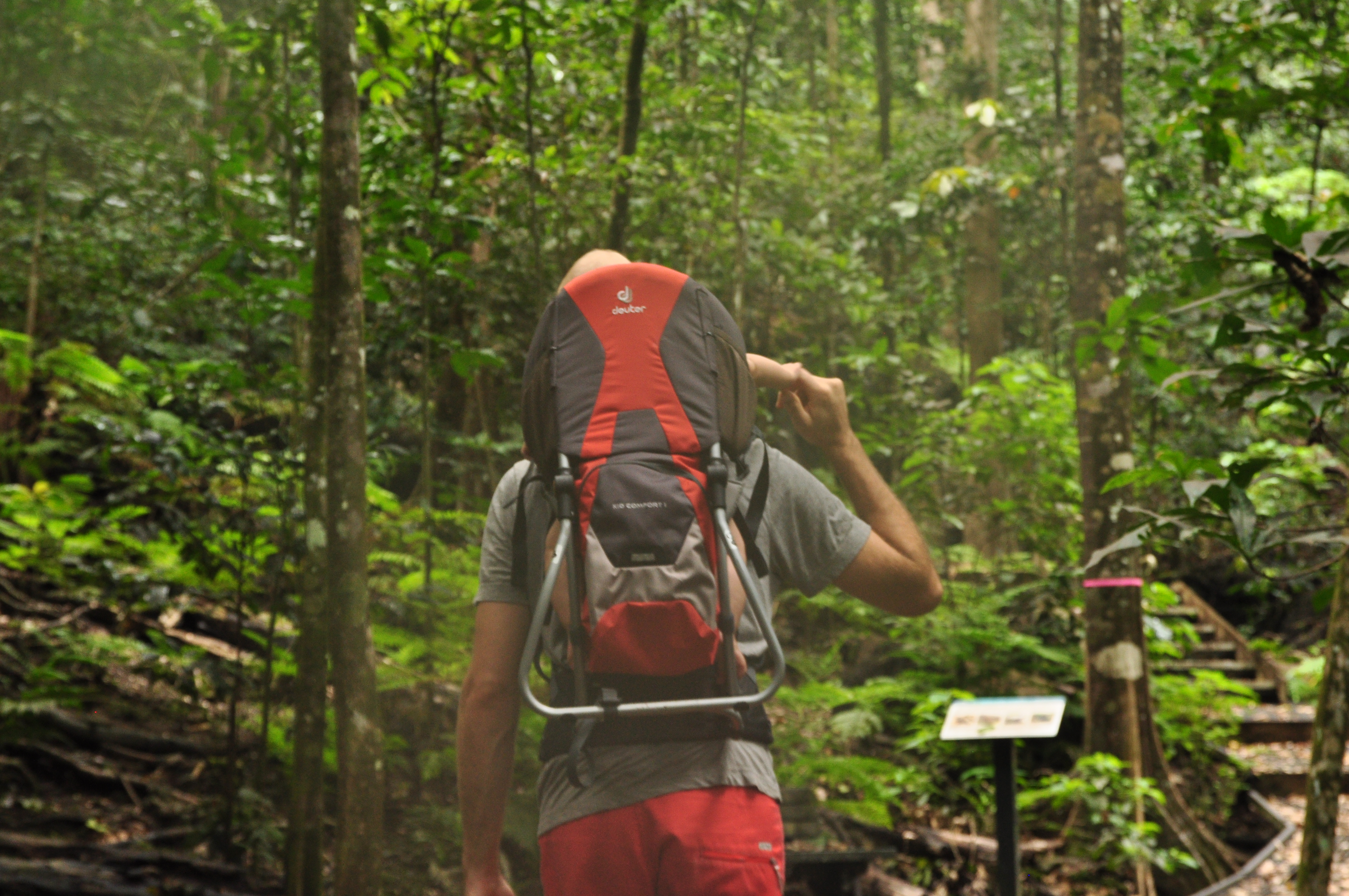
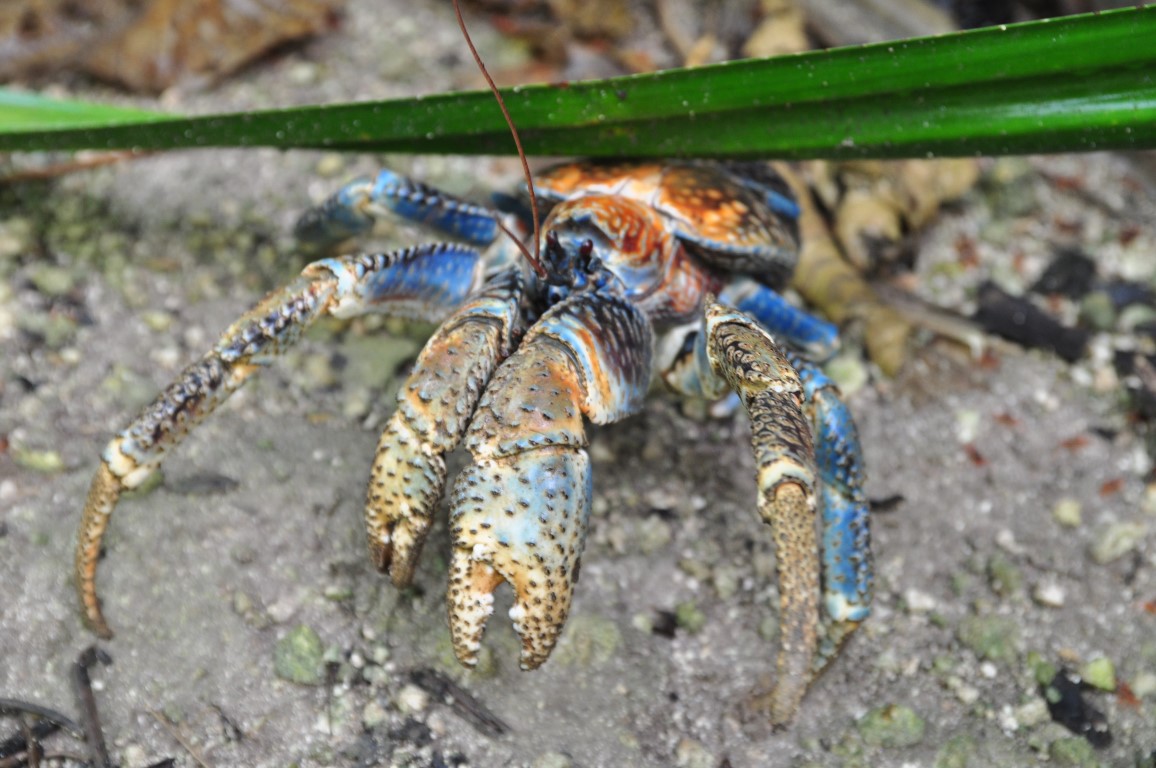
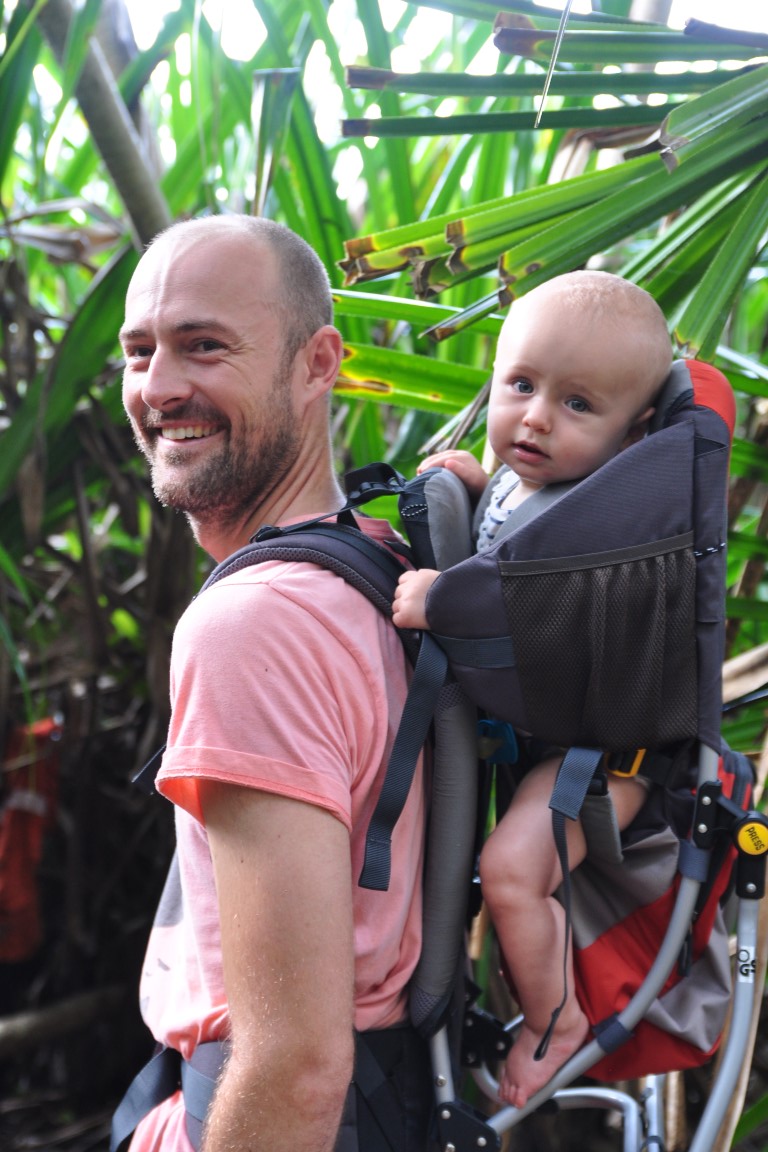
For example, I would have loved to have shown Owen pictures one day of himself at seven months old, strapped to his dad’s back, sloshing down one of the Christmas Island ‘dales’ – under sporadic rain and morning light filtered through the rainforest canopy, past robber crabs not much smaller than him, clinging on while Paul scrambles over fallen tree trunks and limestone outcrops; to have a photo of Paul sliding down a wall of tangled tree roots next to a small waterfall… That was yesterday morning, on our walk to Anderson’s Dale, which finished abruptly at the coast, at a towering, narrow gorge that peeks out at the big blue Indian Ocean.
However, as I forgot the camera he’ll have to make do with our stories instead to remind him – and no doubt those crabs and rocks and scrambles will become a little bigger and more treacherous with each telling…
We finally snorkelled Flying Fish Cove!
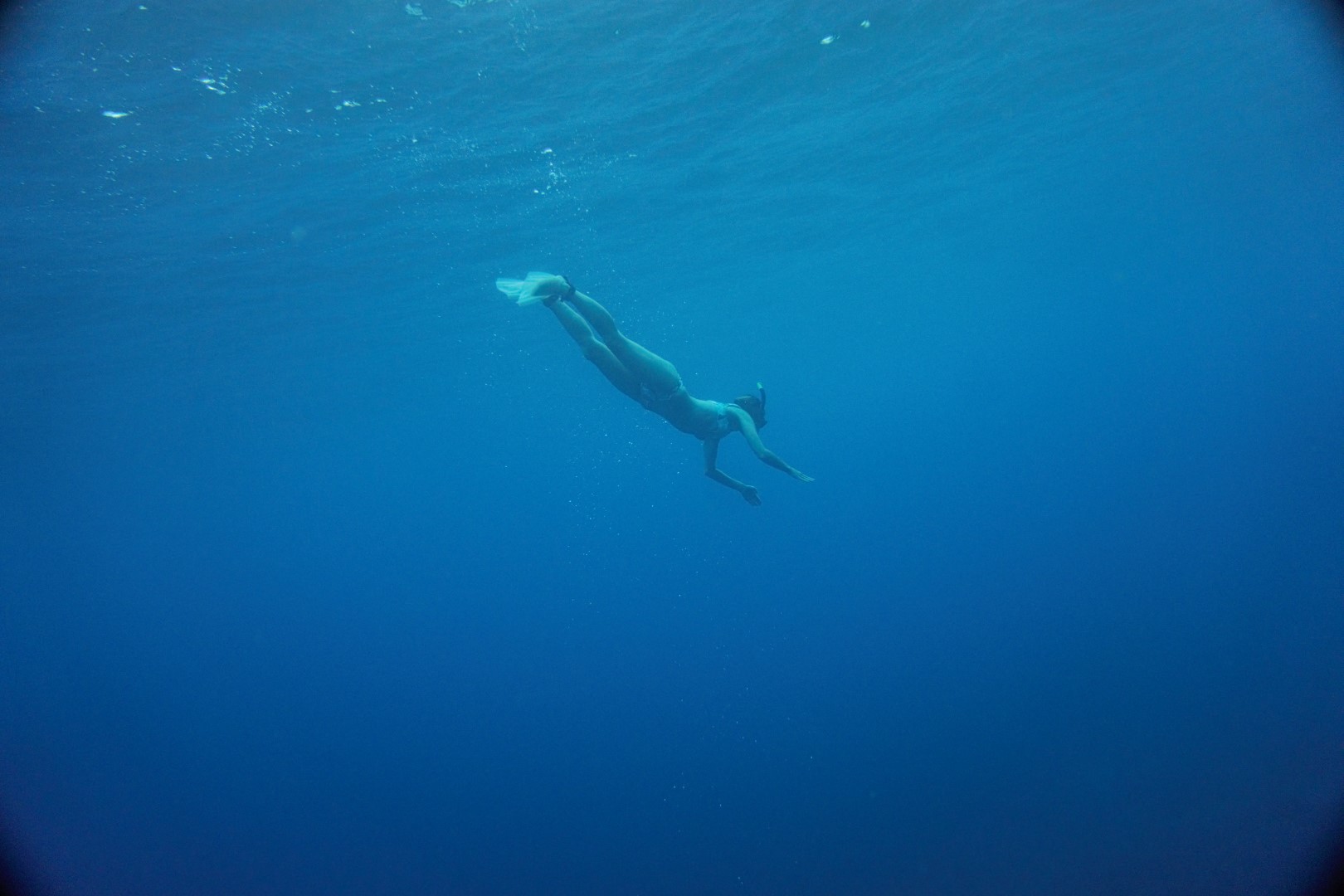
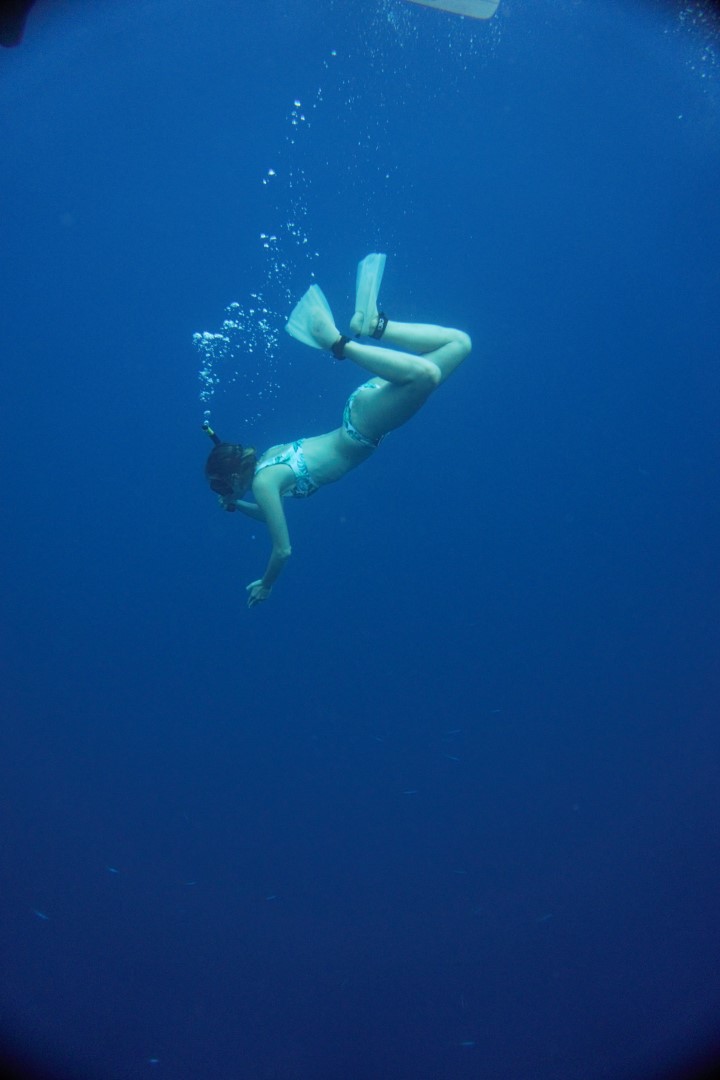
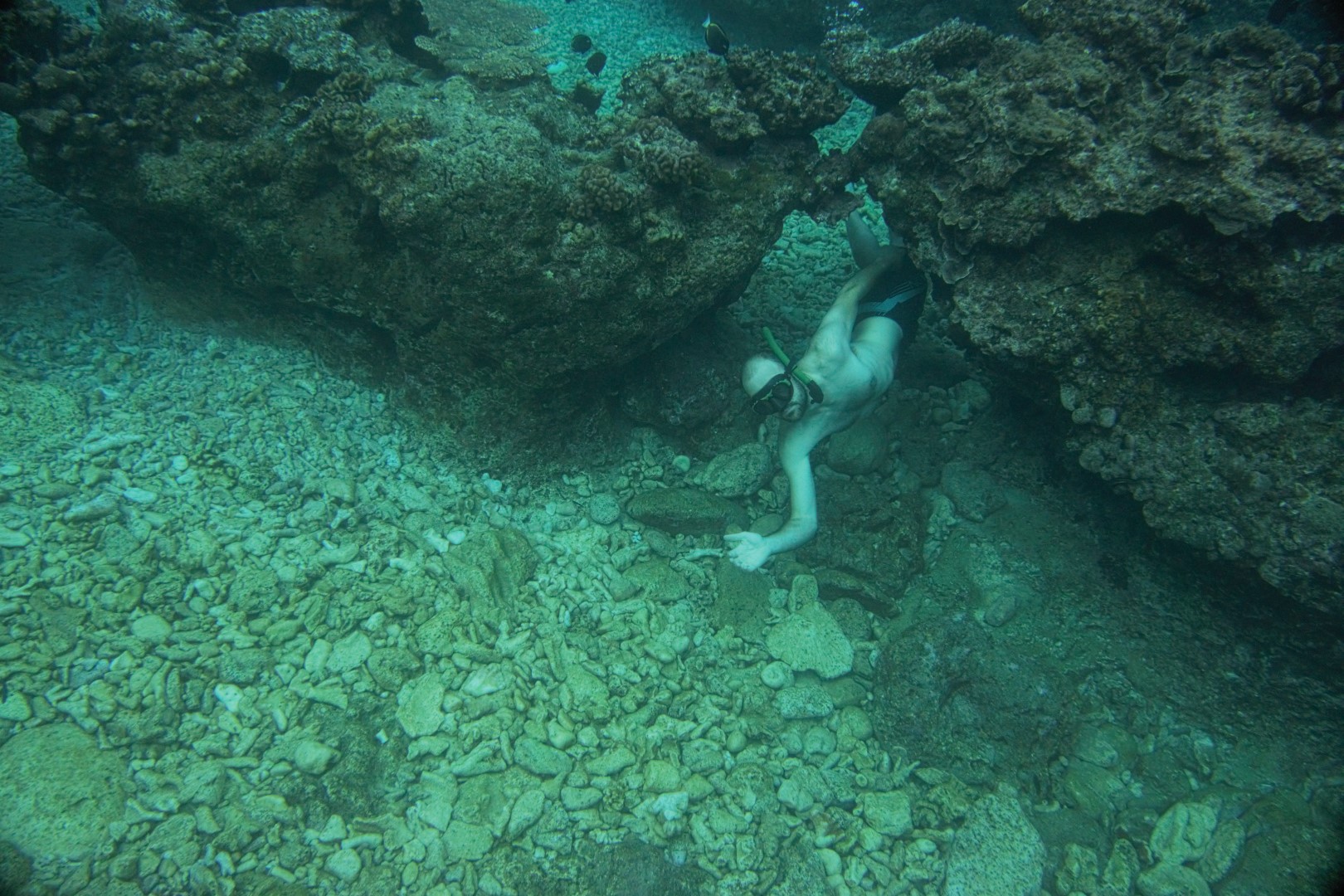
We’ve now reached the last week of our time here, and this morning we achieved something of a milestone for the trip – the swell finally calmed down enough for us to snorkel Flying Fish Cove. Owen stayed home with his new good mate Jess, and we set out at 6am, swimming from the boat ramp out to the immense ‘drop off’ at the edge of the reef. The diversity of fish, water clarity and colourful coral was beautiful – we swam until our fingers were wrinkled and we actually started to get a little cold which is pretty rare in this environment. Paul spotted a giant trevally and a lion fish, I got to see schools of tiny ‘Nemo’ clownfish in the corals, plus a bizarre looking pipefish and several beautiful technicolour parrot fish – plus countless other species that I’m afraid I couldn’t name.
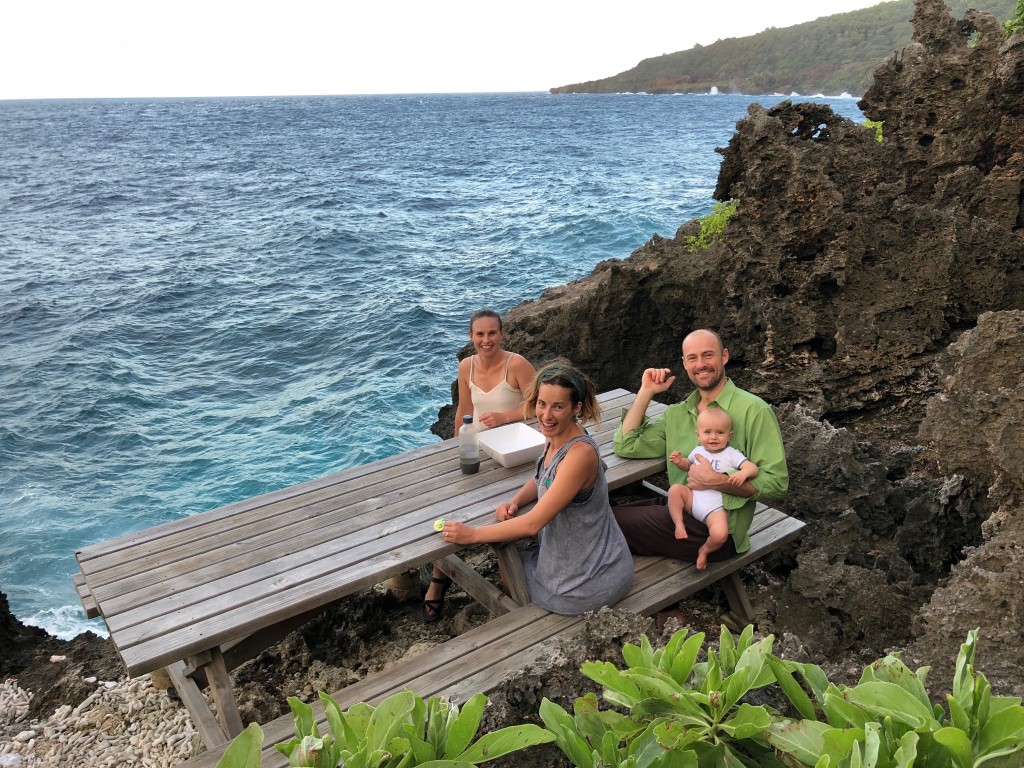
By now, I feel like we’ve established a pleasant routine here – often swimming or exploring in the early mornings (sometimes Paul and I take turns having quiet mornings at home with Owen depending on the activity). This is followed by a day on the site for Paul helping to build Swell Lodge and me at home with Owen (we’ve also swapped on two occasions), and then either a swim or activity in the afternoon, or maybe just drinks and snacks down by the water as the Sun sets.
One of the highlights has definitely been the strong sense of community on the island, so it’s easy to see how Chris and Jess will be able to make a life here for the foreseeable future while they build and run Swell Lodge.
For example, tonight I’ll be participating in our third weekly ‘Hash House Harriers’ run, which happens at 4.30pm every Thursday – usually a roughly 5km run (or walk) with a drink stop that includes beers, and finishing with a BBQ, along with some obscure rituals that feel like a cross between maybe the Masons and college ‘hazing’ initiation ceremonies.
Another regular outing has been the Island’s outdoor cinema on a Saturday (and sometimes Wednesday) evening, which usually involves pulling on your rain jacket at some point as a rain shower passes over, and on Australia Day we went along to a community sausage sizzle – the upshot of all this (plus getting to meet Chris and Jess’s lovely circle of friends) is that already we’re waving hello to familiar faces when we walk down the street or at the local pub.
Tomorrow is our last day for exploring and the conditions will inform how we spend it – there’s another underground freshwater pool we’ve been meaning to visit, or we may hike to a new beach or an existing favourite (Dolly Beach is on my list as a highlight – and another place I failed to pack the camera for!).
In the meantime, here’s a few pics from when we did actually remember to take a camera!
Snorkelling at Flying Fish Cove.
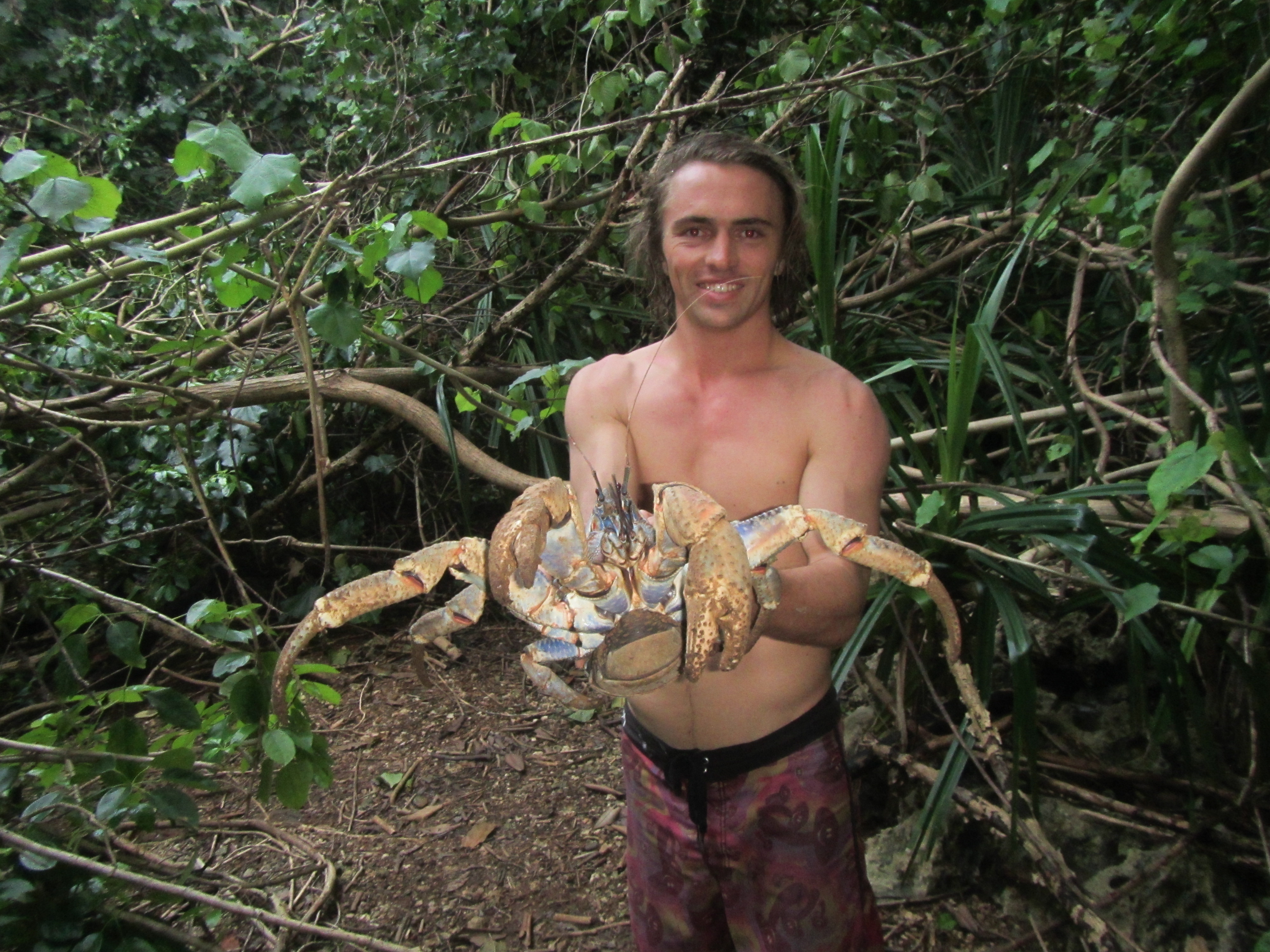
Fellow volunteer Hamish bravely demonstrating the true scale of the robber crabs.
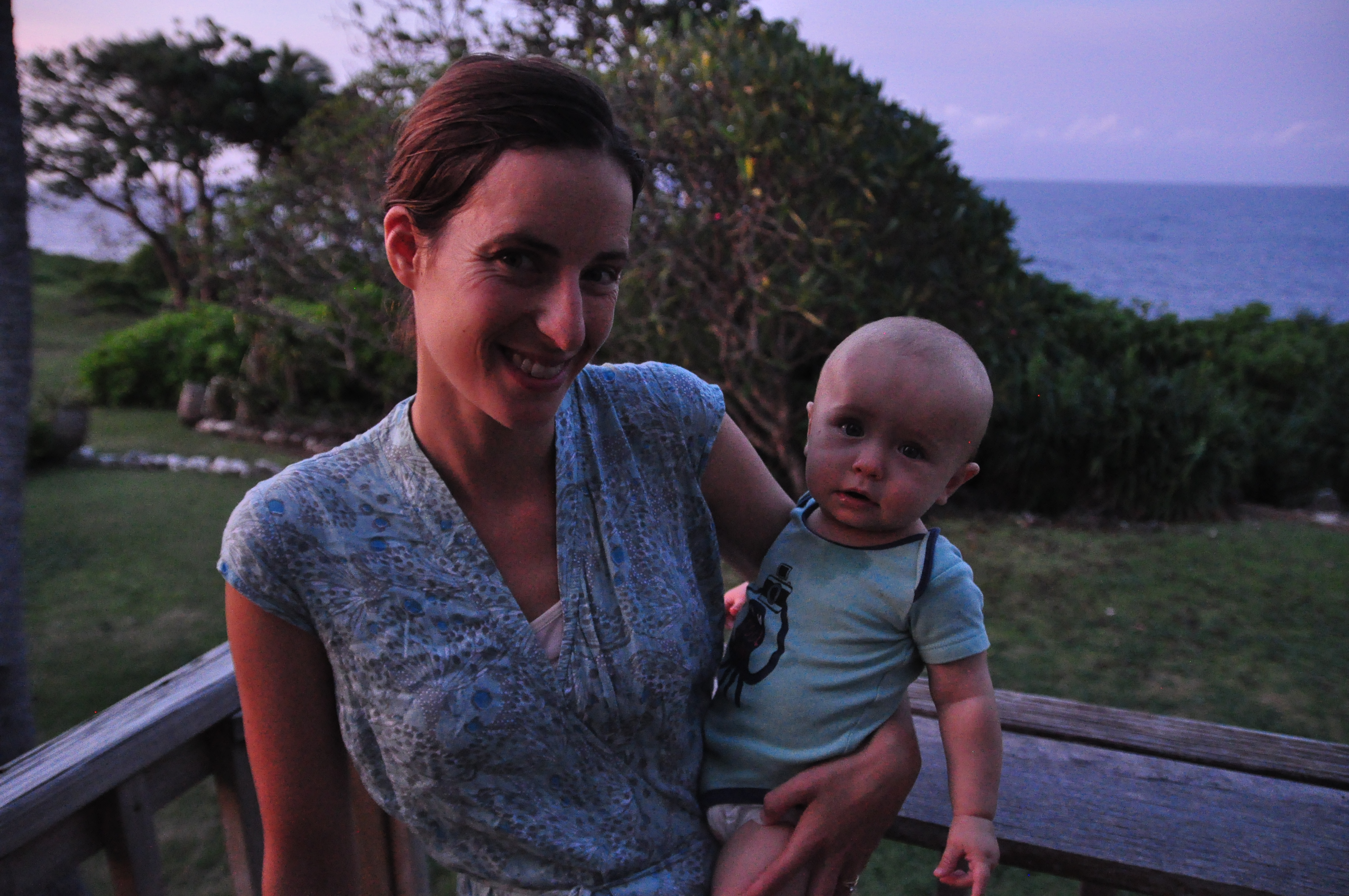
Sundowners on the deck with Owen.
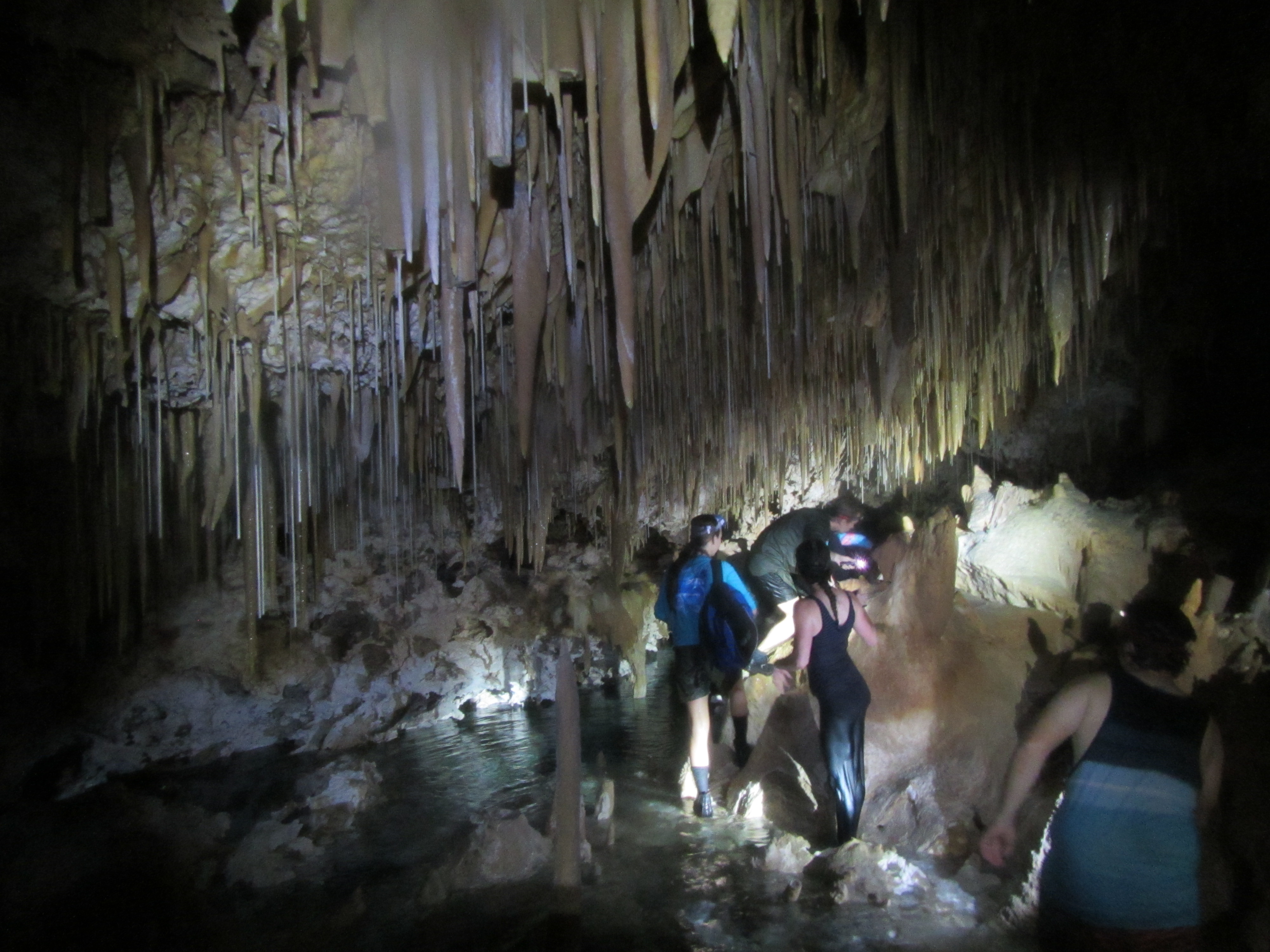
Paul went on a caving adventure while I stayed home with Owen. At least I got to see the photos!
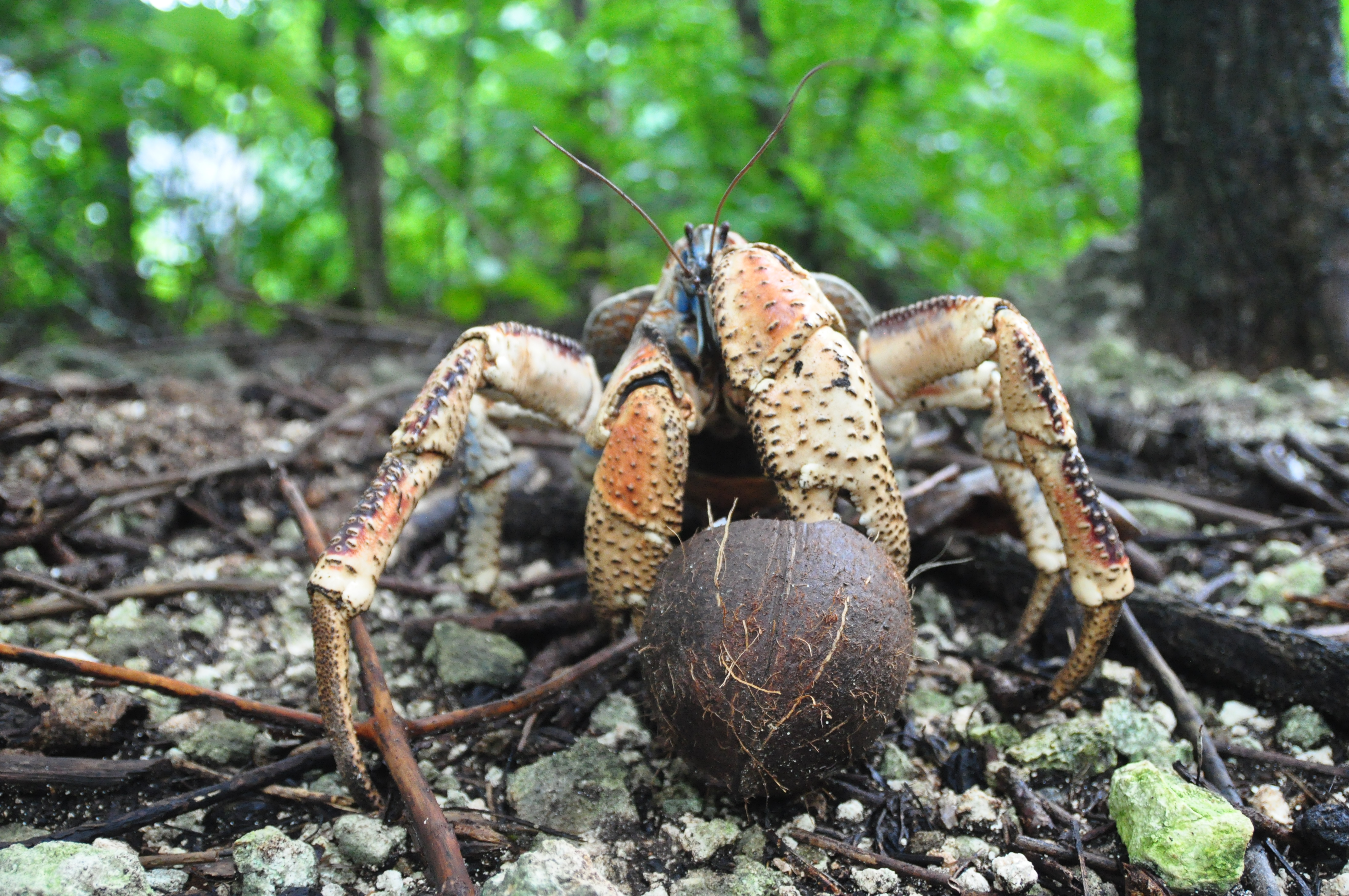
Robber crab chowing down on a coconut.
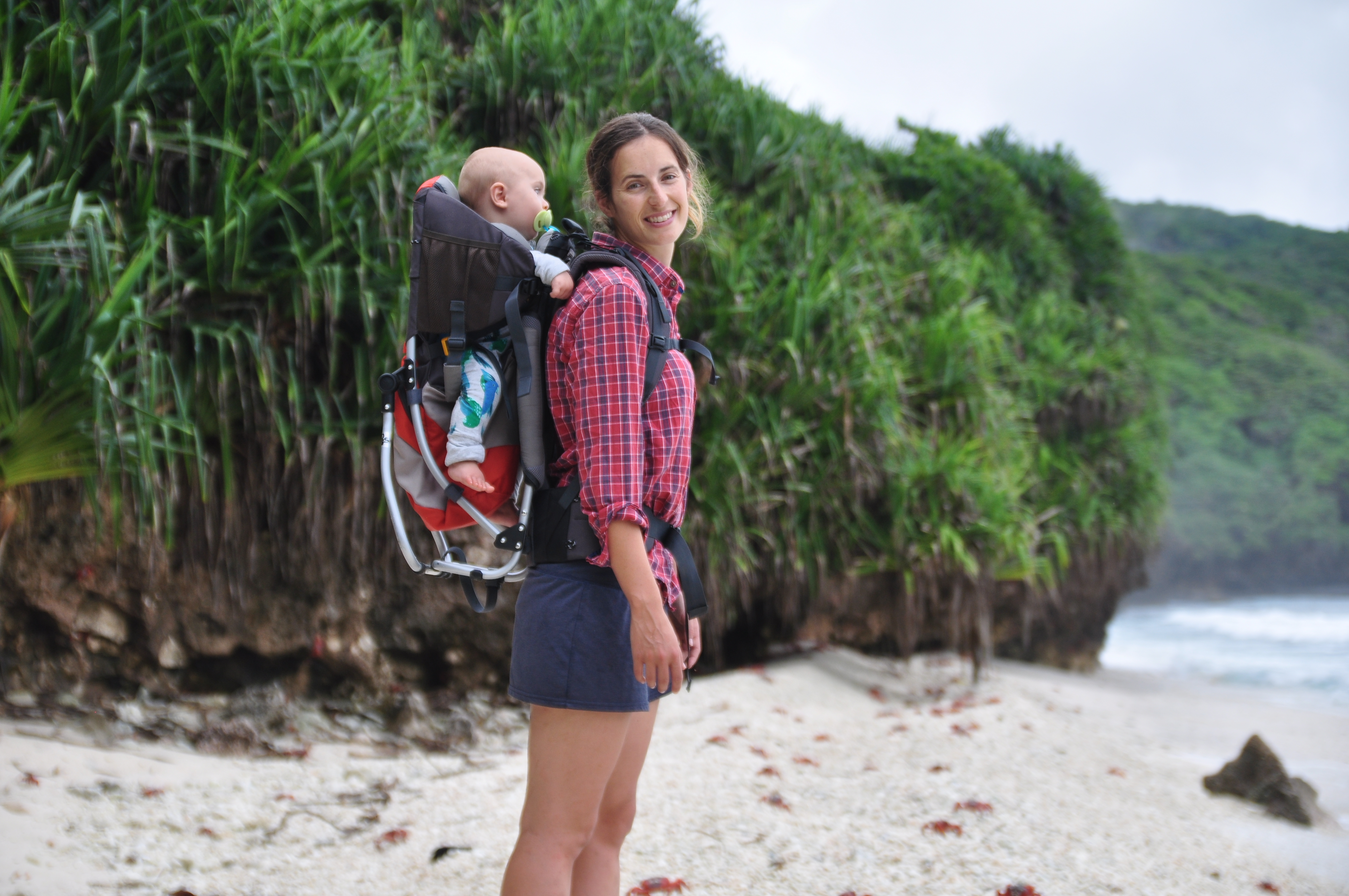
Ethel beach with my human cargo.
Luckily, Owen seems to enjoy hanging out in his backpack carrier!
The big robber crabs are a favourite site in the rainforest.
The Land Cruiser trundled down the steep bumpy track through dark rainforest. Outside, tropical rain fell hard on the roof and our baby Owen slept soundly in his car seat next to me while I swotted away the ever-present mosquitoes.
As I anticipated the evening ahead, I also wrestled with whether the decision to take him along this evening was bad parenting or… was it that awesome free-range parenting you read about in Scandinavia, but with more humidity…?
Soon we’d park and step out into the rain, hike down to a beach to watch a relatively rare natural event – something that only happens once a year on the island, and may well be a once-in-a-lifetime opportunity for us to witness. I didn’t want to miss out, so I continued swotting those mozzies.
We hiked down to Greta Beach to watch blue crabs spawning
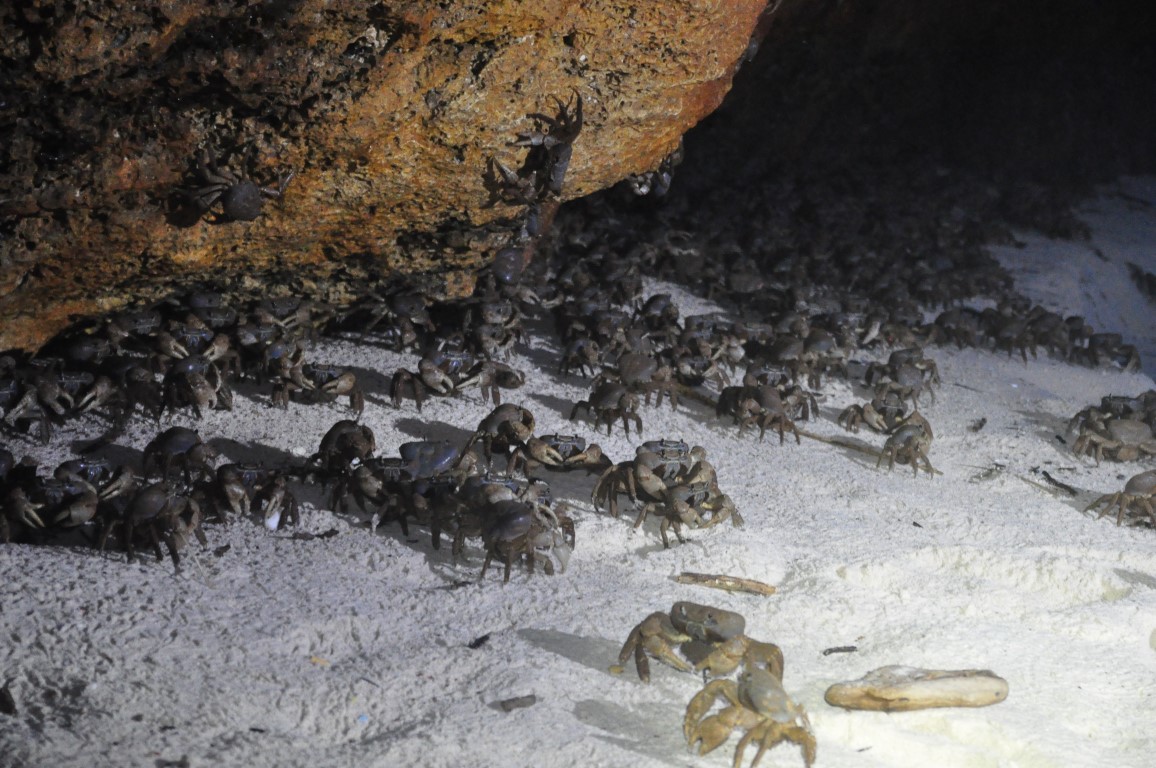
Christmas Island is famous for its 5 million or so red crabs, hence it being such an amazing spectacle when they migrate out of the forest to spawn. However the less populous blue crabs also do their thing every year, and lucky for us the stars had aligned (well, the Moon more specifically, I believe) and the island’s crab experts had predicted tonight would be the night to witness blue crabs spawning.
We stepped out of the 4WD into the forest, under the dense canopy of which we were somewhat sheltered from the rain.
Head torches lit, Owen strapped to my front, we hiked along the trail to Greta Beach. After the short walk, we could sense we were reaching the coast as the canopy opened up and our surroundings lightened from night to dusk.
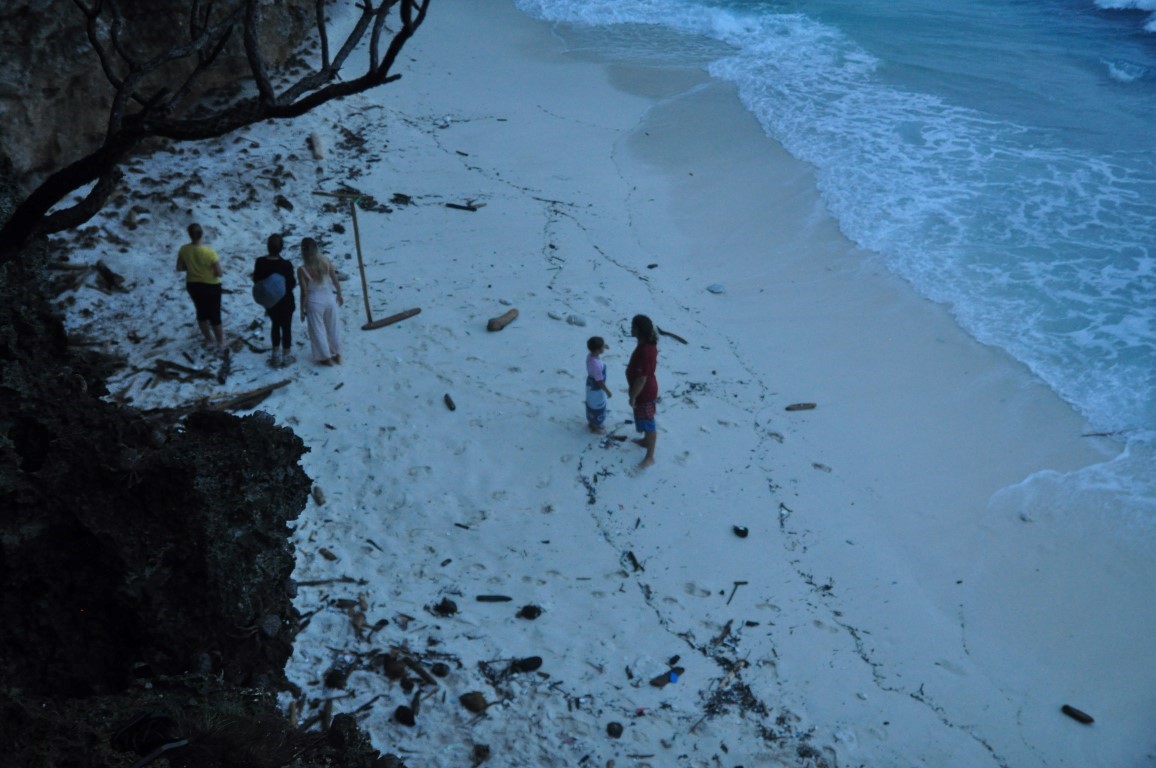
The last part of the track was a steep metal staircase down to the beach, where a few locals, national parks crew and scientists had already gathered to witness the spawning. Hundreds of blue crabs descended the limestone cliffs that tower behind the small beach towards the rising tide, where they’d wait for the water to wash over them and do a funny little dance to release their parcel of eggs, and hopefully make it back to shore to crawl back into the forest…
Gathered to witness the blue crab spawning on Greta Beach.
We’ve now been on Christmas Island for over a week, and every day I’ve been putting off uploading my next travel blog as we see and do new things that I want to include! Chris and Jess are famous for the busy schedules they keep (if you’ve ever received one of their Christmas cards you’ll know) so our days are full; and that’s in between the demands of a seven-month-old!
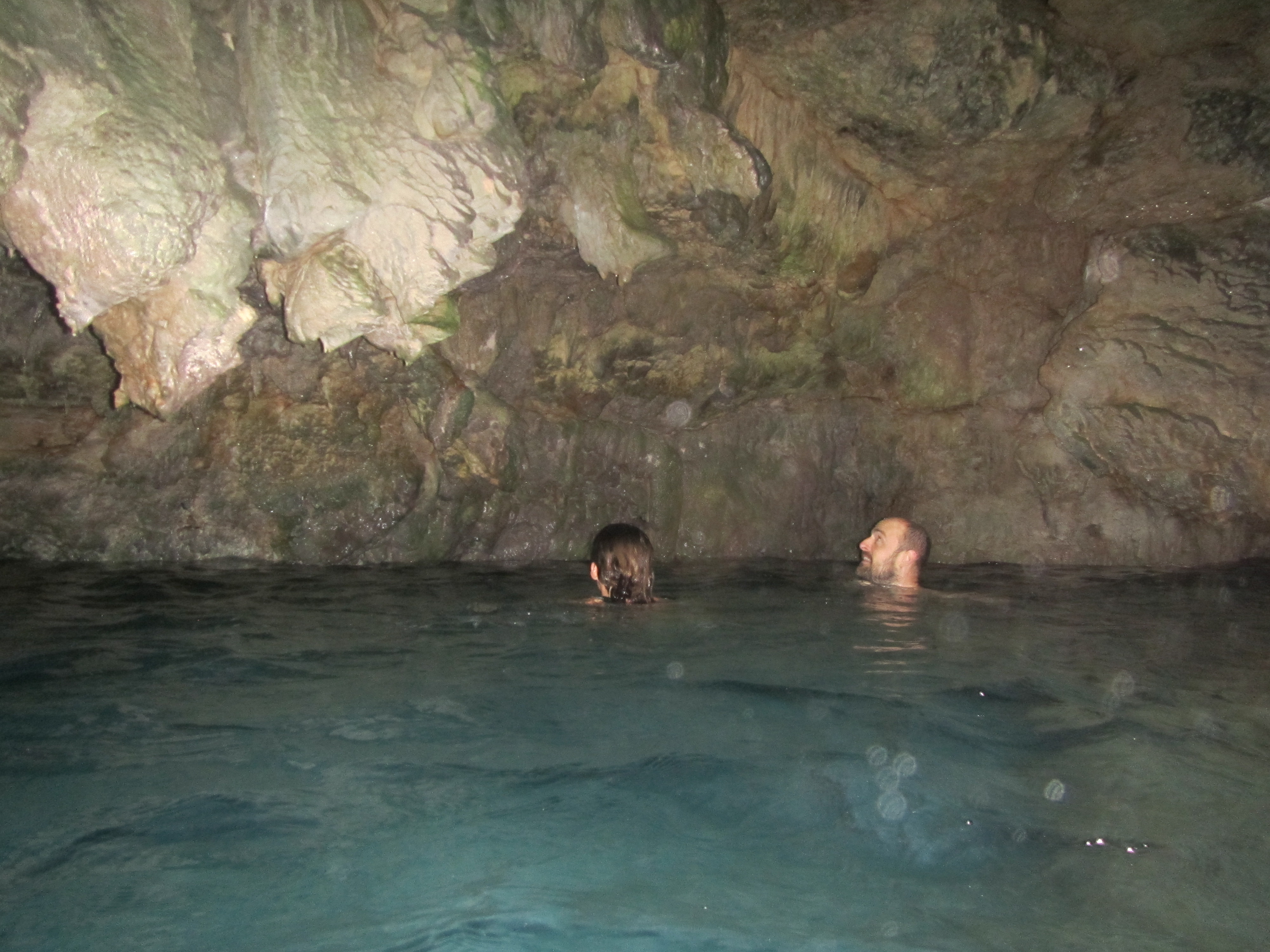
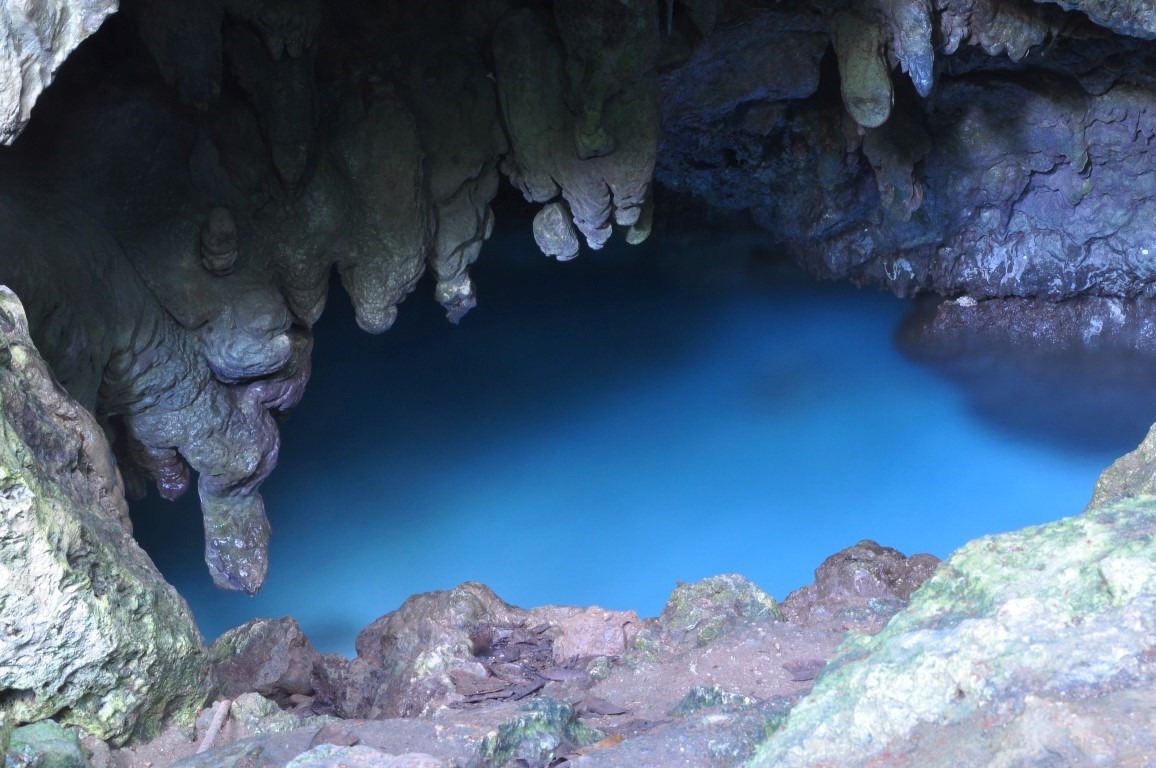
Some highlights so far have included swimming in the Grotto – an amazing cave and freshwater pool, easily one of the most stunning swimming spots I’ve experienced.
The Grotto swimming hole
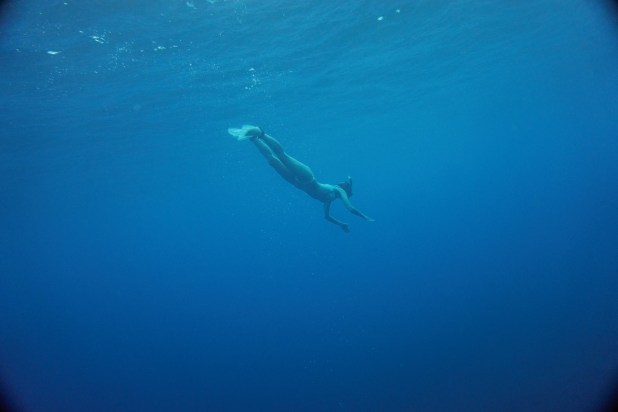
We’ve snorkelled and swam at Ethel Beach – and Paul has already spotted a whale shark there on a spearfishing outing. The water temperature (about 28C) and clarity makes for gorgeous swimming conditions – on our morning swims tiny blue sea sapphires sparkle beneath us, like swimming above a starry night. We swim at the edge of the ‘drop off’, where the water drops off a coral shelf and disappears into blue darkness.
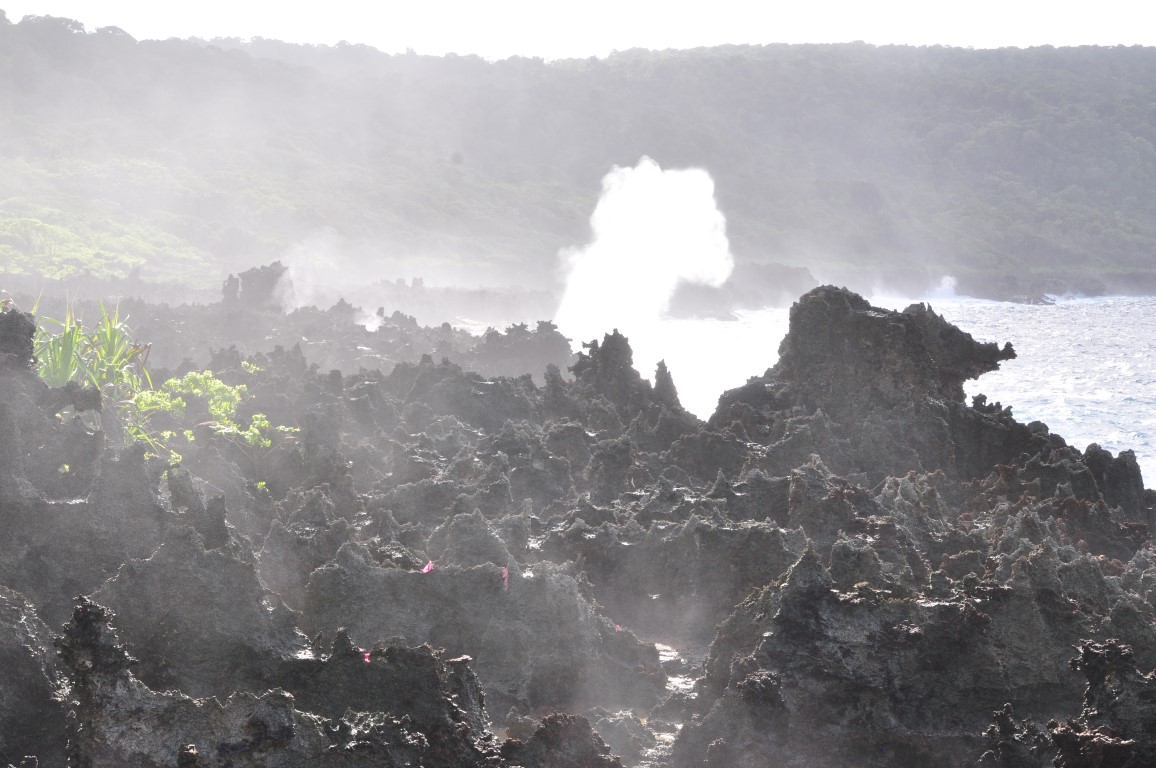
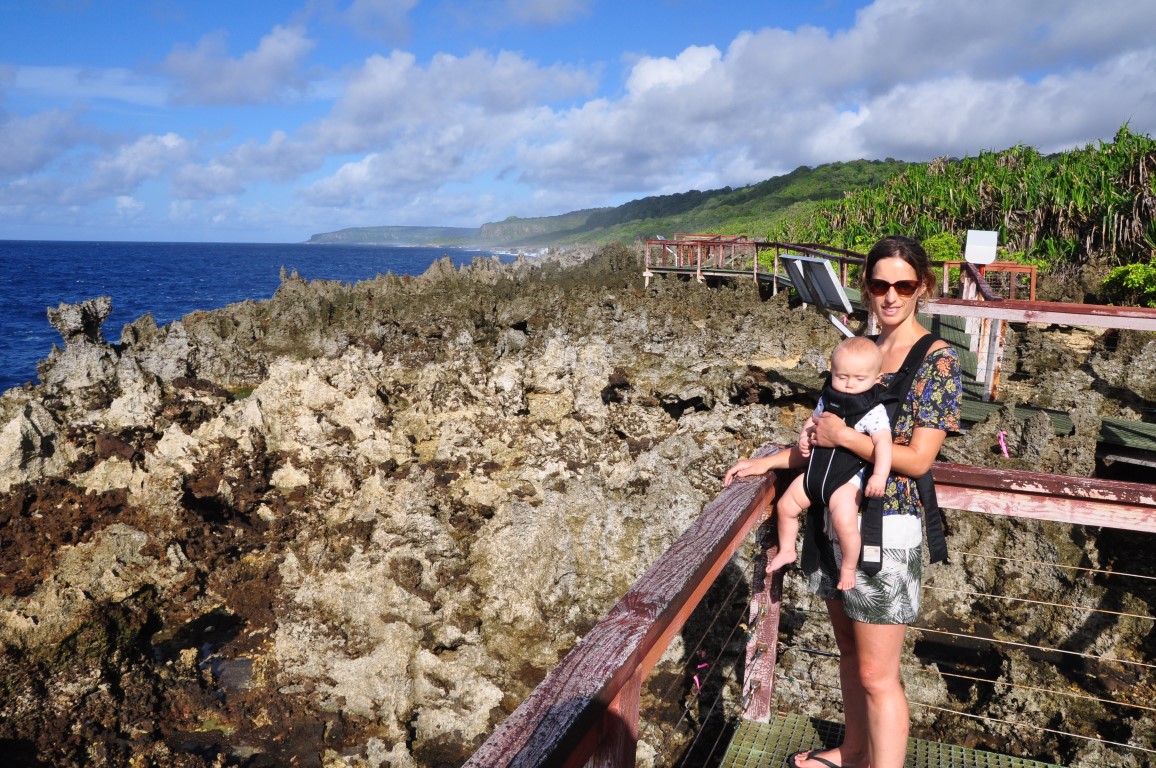
We’ve visited the ‘blowholes’ lookout on the coast, at the end of another walk through rainforest. The honeycombed limestone structure of the island is perfect for blowholes and they make me wonder if they’re linked to dragon mythology – as that’s what I think of when I hear the low rumble and see the puff of ‘smoke’ (sea mist) bursting out of the rocks.
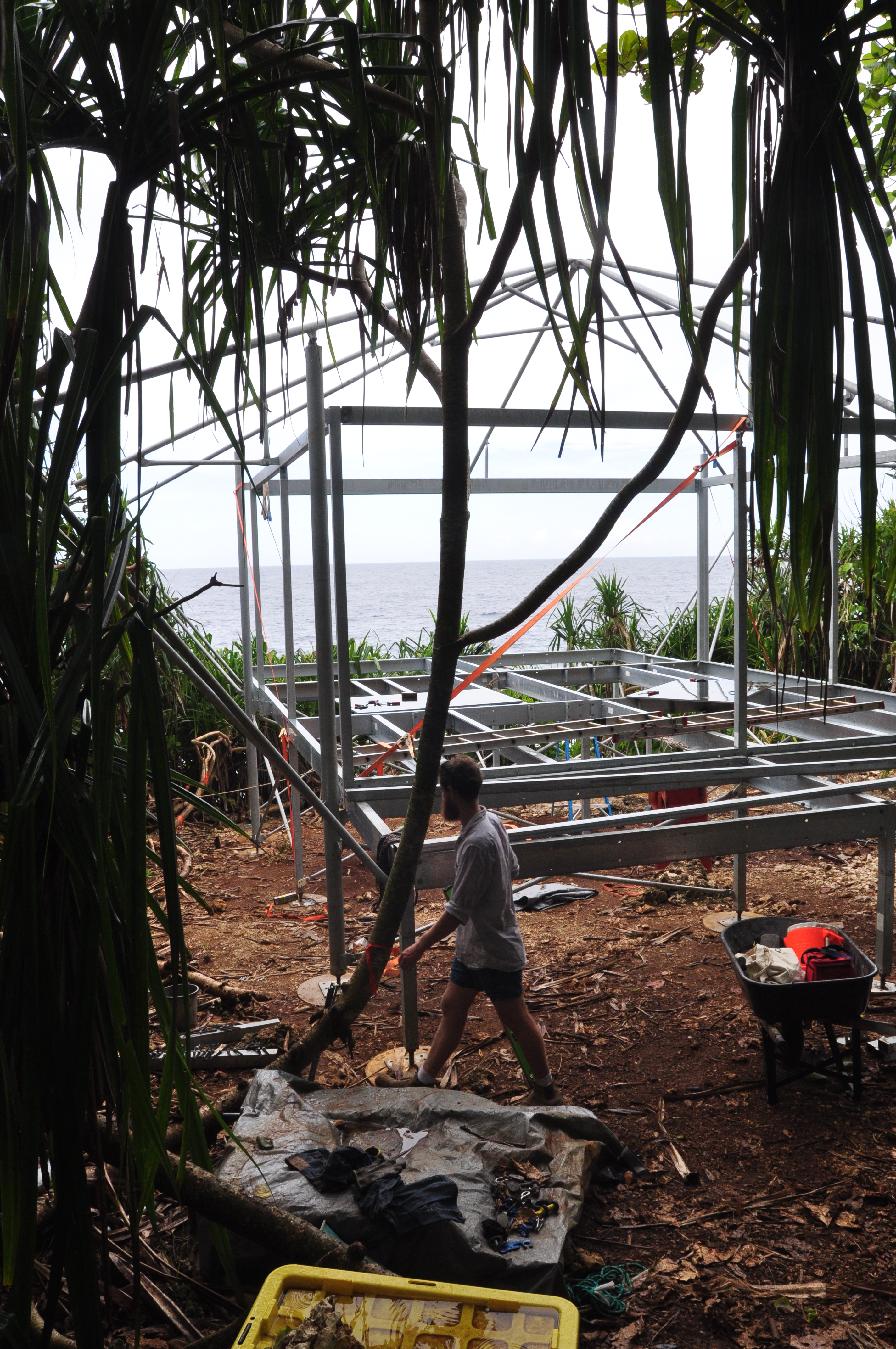
Yesterday Paul and I swapped roles; he spent the day with Owen at home and I went onto the work site for a working bee clearing the second lodge site – clearing rainforest and dragging out Pandanus and other vegetation in the middle of the jungle is as gruelling as it sounds, but it was also surprisingly fun and oddly cathartic.
Working bee clearing the second site for Swell Lodge in the national park. (Photo: Chris Bray/@SwellLodge)
We finished the day at a nearby rock pool on the coast that filled with the swell like a spa.
Paul and Owen joined us for our swim after a day on the Swell Lodge work site yesterday.
We now have two days to rest and/or explore – the swell is still big on our side of the island, so we haven’t swam at Flying Fish Cove yet. A trip Dollys Beach is on the cards for this afternoon; ranked one of the top 10 best beaches in Australia last year.
Regular afternoon drink spot.
Paul at the work site with a huge robber crab. (Photo: Chris Bray)
The blowholes look out.
The blowholes lookout.
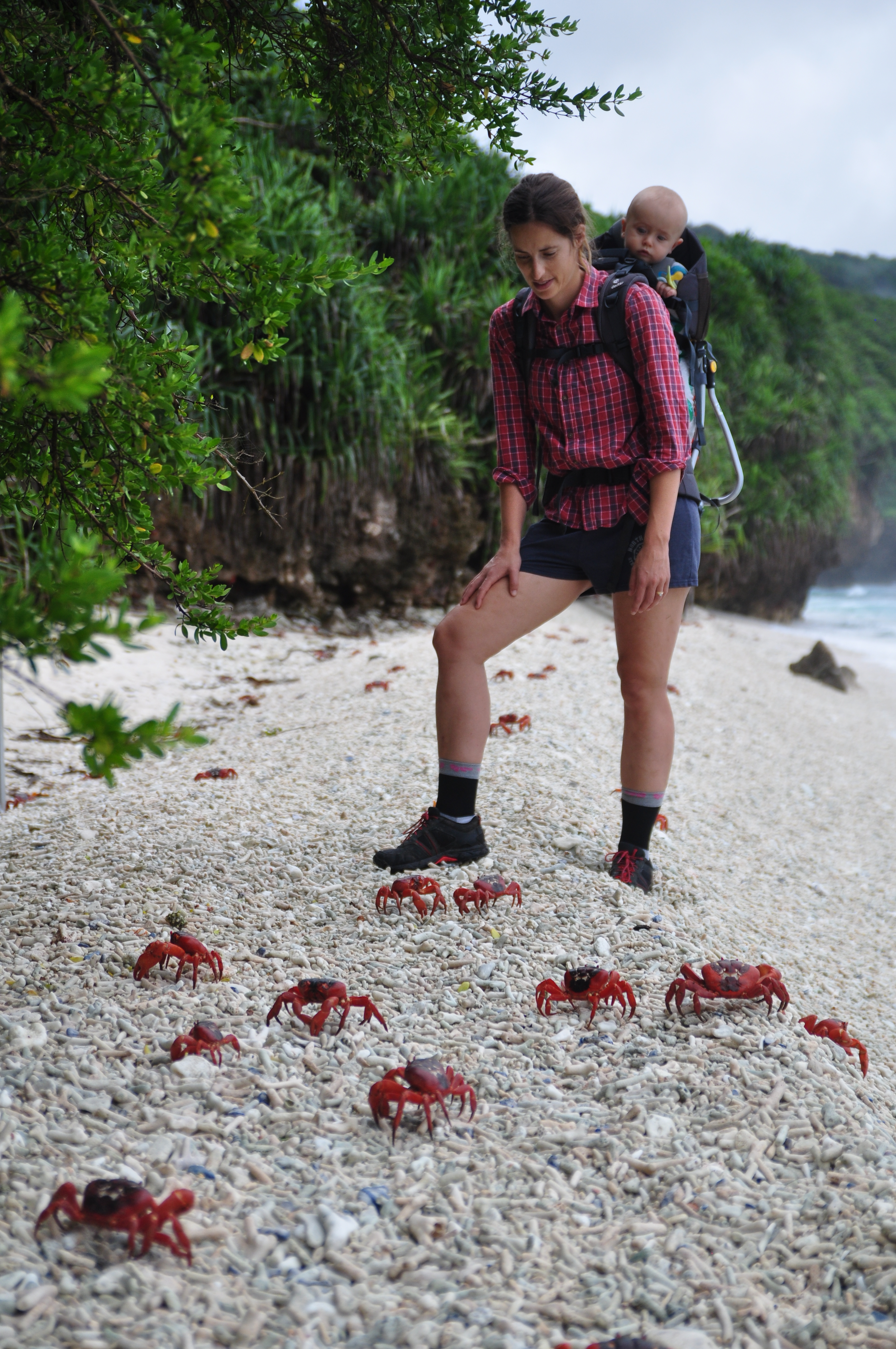
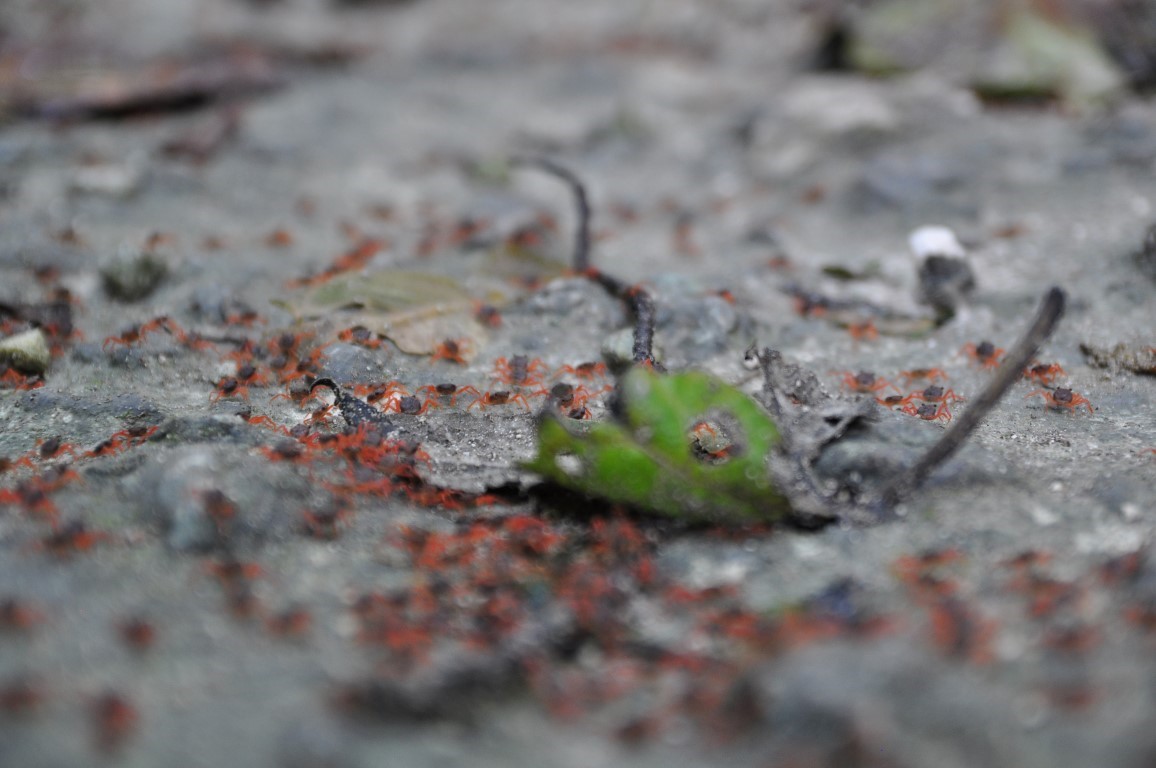
Carpets of baby red crabs closed the roads to the protected side of the island for a few days.
“Don’t they have to see the landing strip to land? Those clouds are very low,” my husband, Paul, unhelpfully commented from the seat next to me.
“Oh my God, oh my God, oh my God,” a woman intoned from a few rows behind us.
On my lap, Owen gurgled and cooed, happily oblivious in his infant’s seatbelt strapped to my own. I clasped my arms around his waist and took deep breaths, while our Virgin passenger jet wafted side to side in the wind as it stepped towards the seemingly invisible runway.
On the ground our friends and hosts for the three weeks ahead, Jess and Chris Bray, were at home and unprepared for our arrival, certain the weather would prevent our plane from landing. It’s not uncommon for planes to be turned around – and for the previous few days they’d been hit by the outer edges of Tropical Cycle Joyce, which was battering the north-west coast of Western Australia almost 2000km away.
But land our pilot did, and the passengers exhaled a collective sigh of relief before we disembarked into the grey, humid tropical air of our destination.
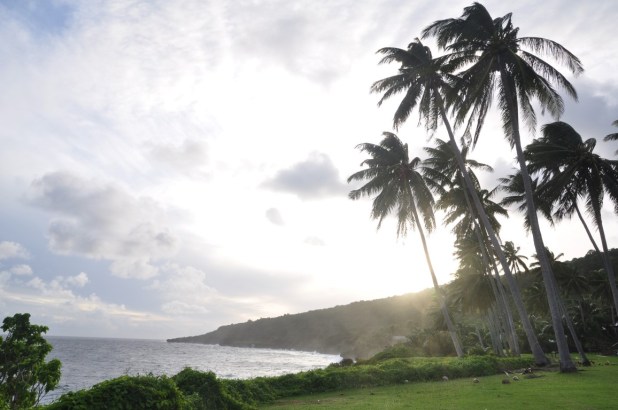
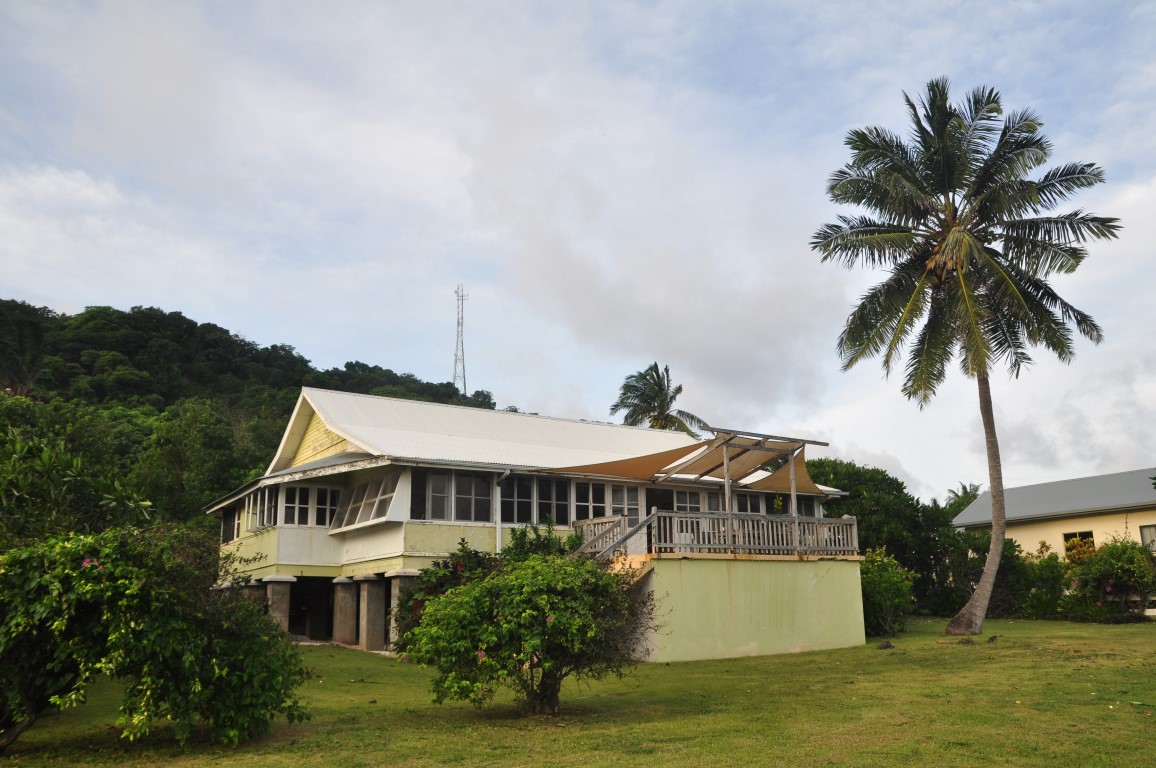
Our home (and view) for the next three weeks.
Welcome to Christmas Island, a 135sq.km island of jagged limestone rock and mature rainforest in the Indian Ocean – technically an Australian territory, but closer to Indonesia by a long shot. The island is famous for the red crabs that carpet the streets during migration season, and infamous for its immigration detention centre. Settled in 1888, its approximately 1800-strong population is multicultural, made up of Chinese, Malaysian and Western residents, home to a Buddhist temple and Islamic mosque. The island’s main industry for most of its history has being phosphate mining, supported by tourism – an aspect which Chris and Jess hope to help grow. (I’ve embedded a video at the bottom of this post with more about their exciting project.)
Paul and I, with our seven-month-old son Owen, will be spending the next three weeks on this remote, tropical wilderness while Paul pitches in a helping hand for our friends’ ambitious project building a luxury ecolodge in the island’s national park – while I take my current day job of changing nappies, breastfeeding and facilitating naps to somewhere new and exotic, hopefully interspersed with some world-class snorkelling, rainforest walks, and wildlife spotting.
Checking out the uncharacteristic swell at Flying Fish Cove.
Snorkelling and swimming are on hold for the first few days, however. On our way from the airport we pulled into Flying Fish Cove – usually idyllic and calm, we watched enormous waves pound the coral beach and crash against the infrastructure of the island’s phosphate mine. It was apparently the biggest swell the island had seen in years.
Insect-sized baby red crabs crawled over our sandals and palm fronds and coconuts littered the roads. We drove through the township (called Settlement), past ramshackle houses, shops and apartment blocks, paint flaking off in sheets and metal rusting from the constant salty air. The town’s prized open air cinema was cancelled as the screen had torn in the wind. We arrived at our friends’ house (actually their friends’ – they’re house sitting), which is one of several 1940s weatherboard Queenslander-style homes lining the island’s north, with servants’ quarters from the colonial days, lofty ceilings and perpetually open windows and spinning ceiling fans. From the front deck we watched and listened to waves explode against the cliffs and seabirds ride the winds.
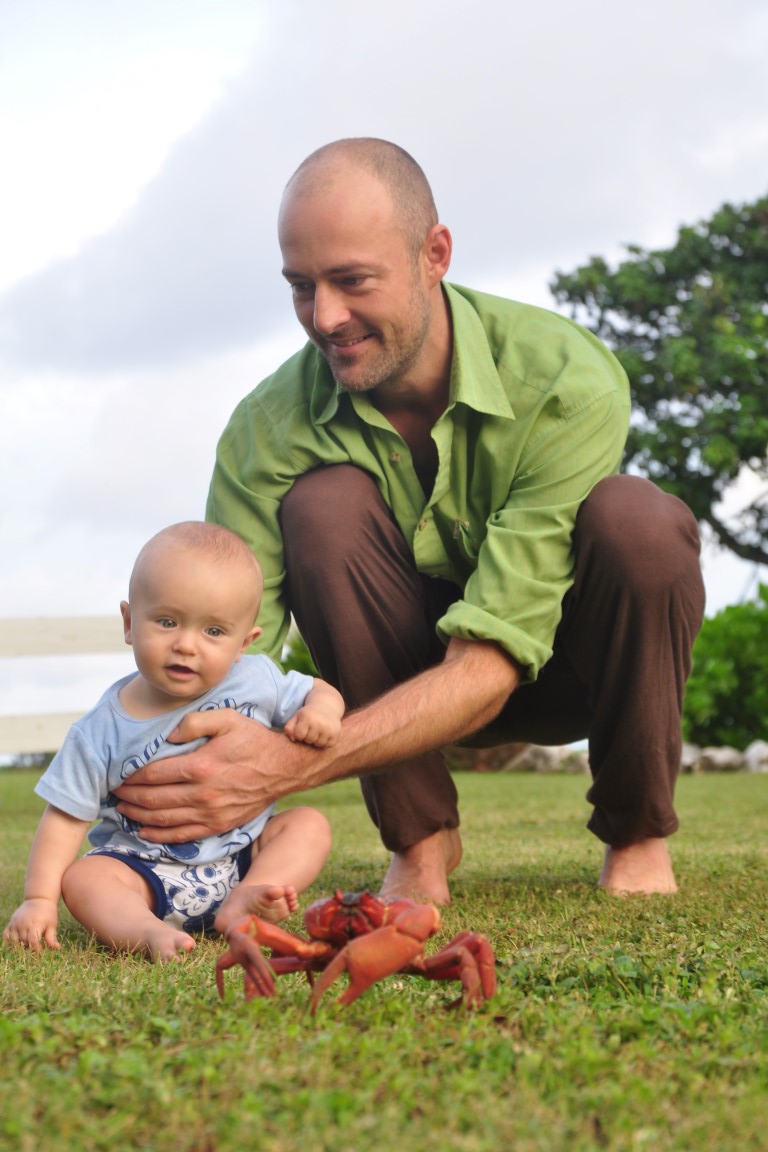
Paul, Owen and one of Christmas Island’s iconic red crabs.
Paul and Chris wasted no time heading out to check the site – Paul saw his first robber (or coconut) crab, enormous, forest-dwelling land crabs which can weigh up to 4kg (making them the world’s largest land invertebrate) and can climb trees. I stayed home and gave our tired little traveller a cool bath and managed to get him to sleep in his travel cot under the whirring fan. The boys eventually made it back, a little later than expected as they walked roads closed by carpets of baby crabs and the odd fallen tree, and we settled onto the deck for obligatory gins and tonic.
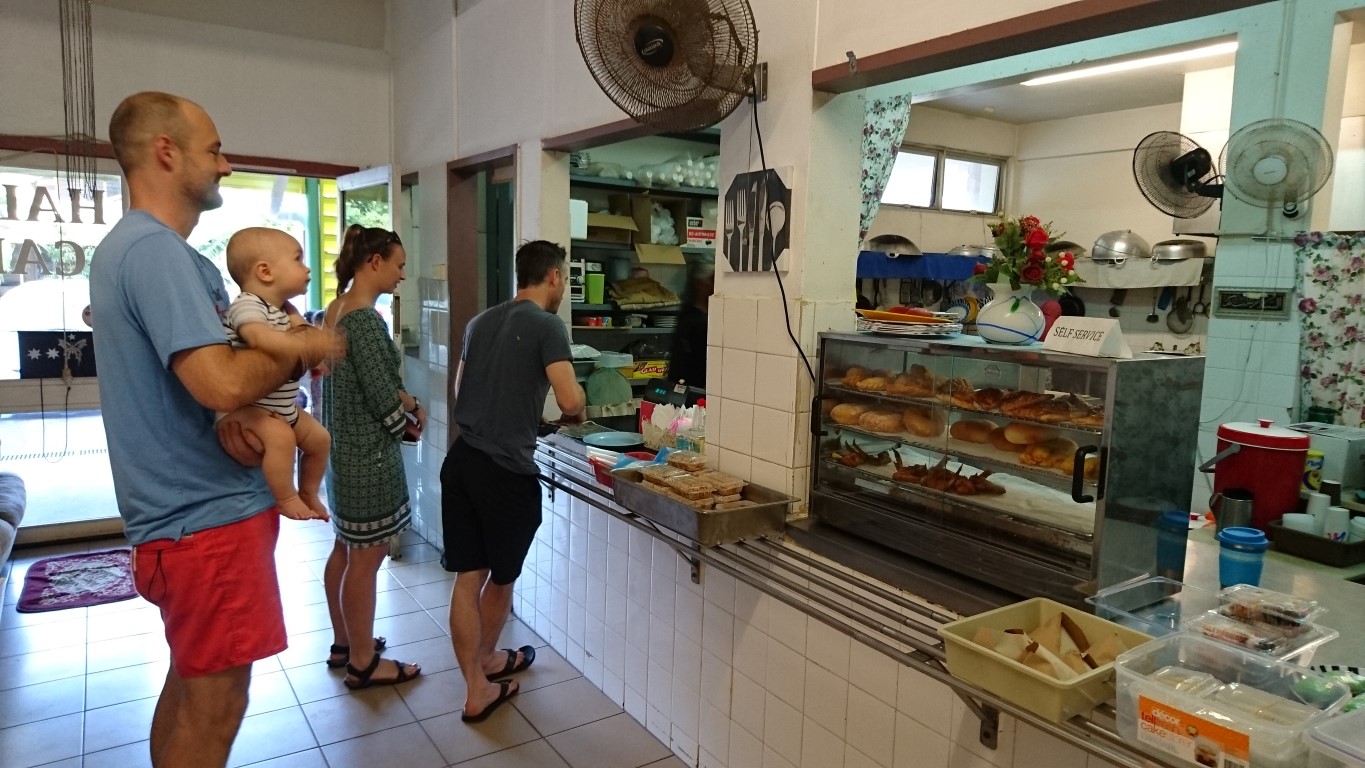
I’m writing this now back at the house, having breakfasted on egg roti and sweet coffee in the island’s Malaysian quarter (a weekend ritual of Chris and Jess that I’m excited to adopt while we’re here), while the others strategise the weeks ahead building Swell Lodge.
Buying egg rotis for breakfast in Kampong, the island’s Malaysian enclave.
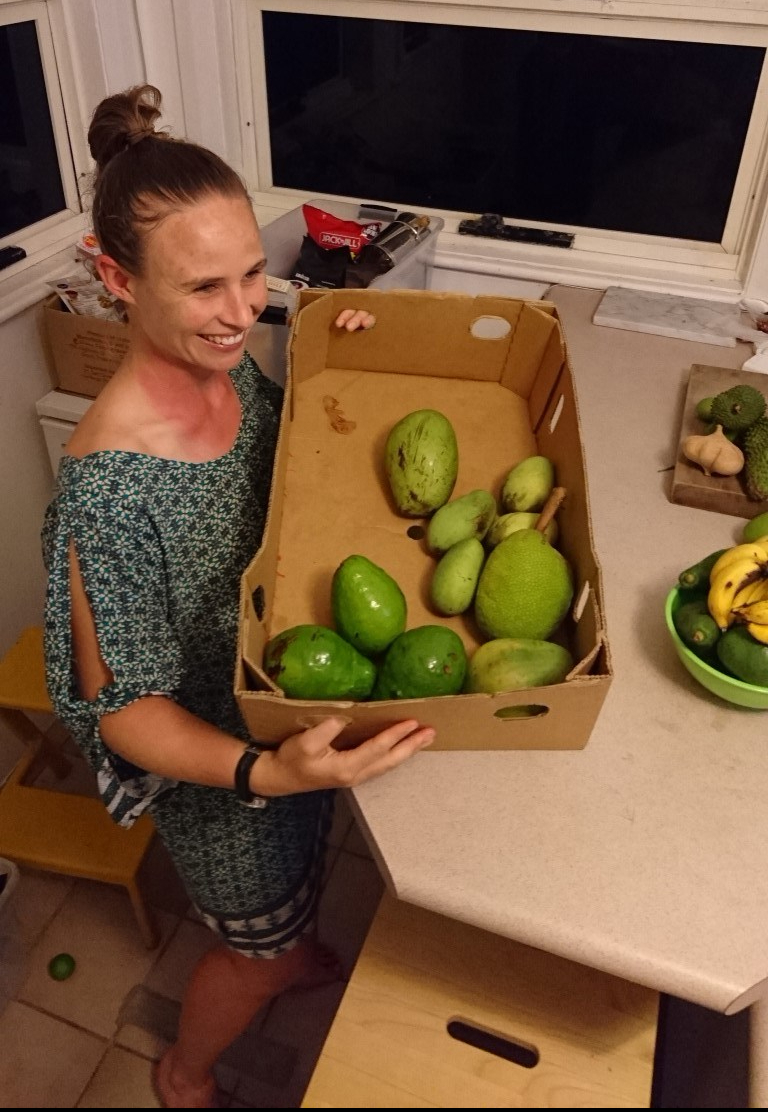
Post storm harvest: papaya, mangoes, avocados and bananas
It’s been a long while since my last travel blog – there’s been a pregnancy and an infancy in between, and now a little boy who’s starting to look more and more like a toddler.
But now, the slow pace, humid air, and the vantage point offered in the ocean-facing deck here has alighted the spark for getting back into writing and it feels good.



























 Gemma Chilton