Pyrenees adventure

Hiking and exploring the Pyrenees mountain range at the border of France and Spain

Puig CarlitCatalunya hike adventure

Part 1: Loose lips at Goat Alley

“If this thing falls, it´ll f***ing kill you!”

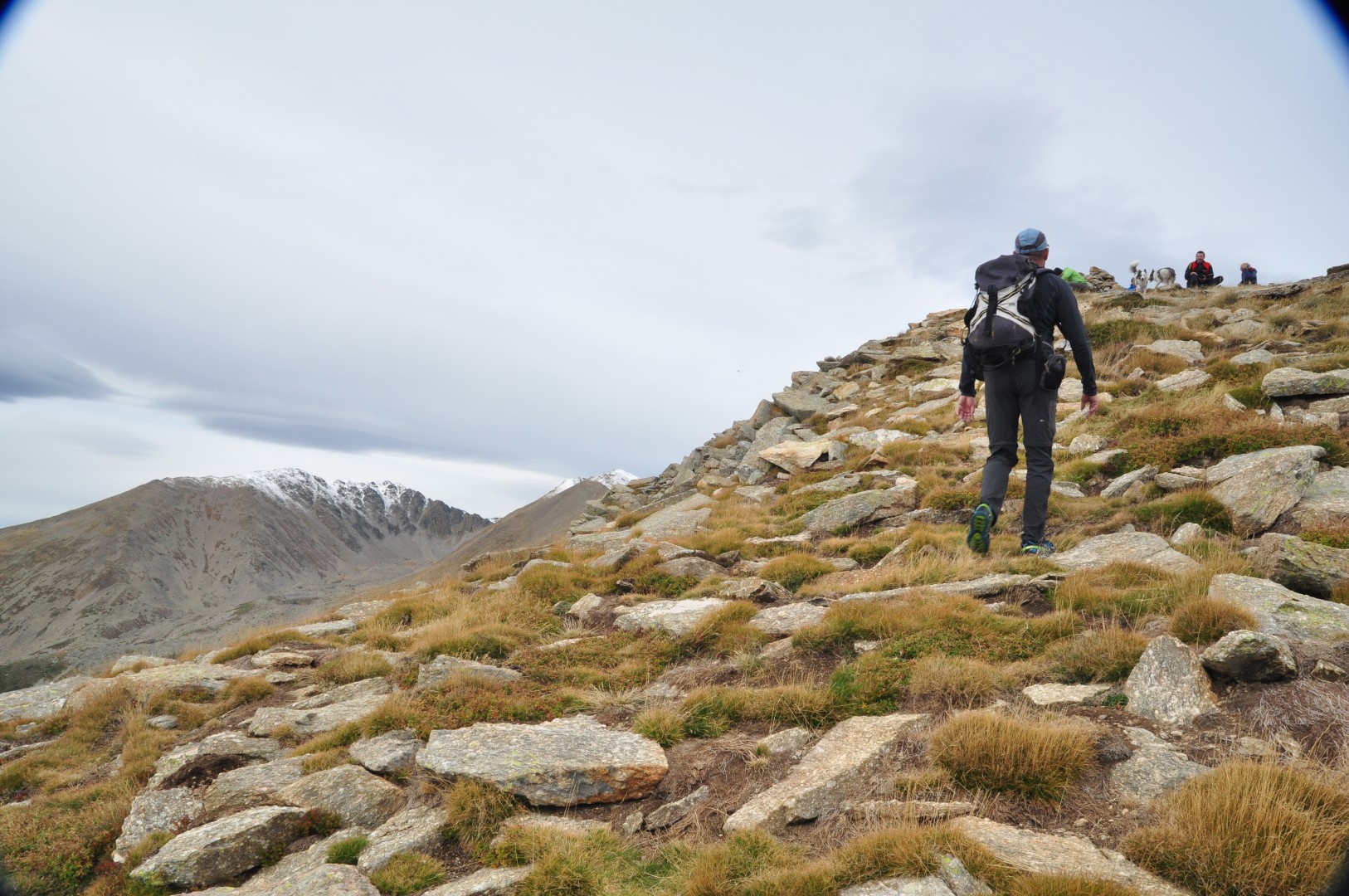
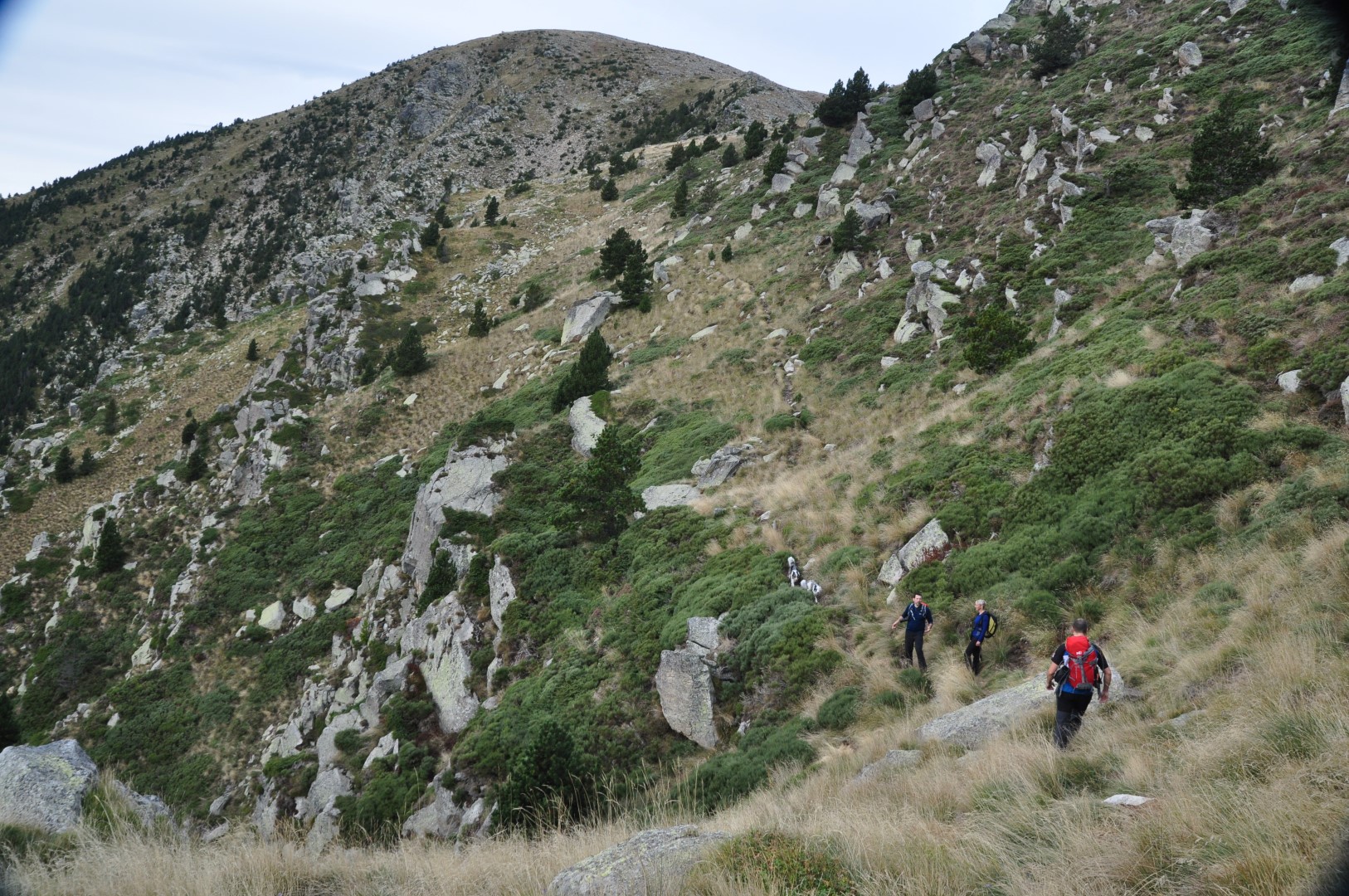
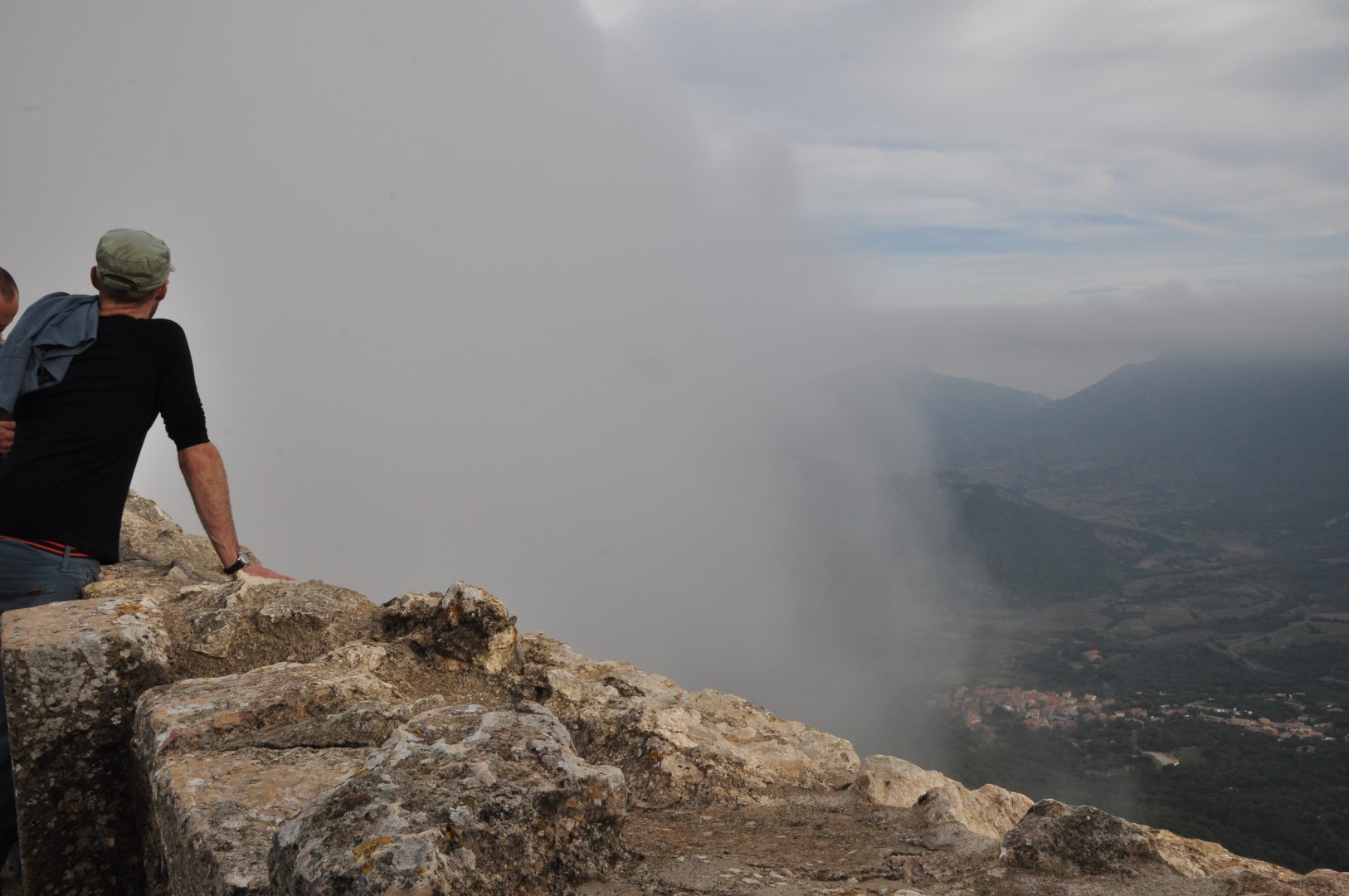
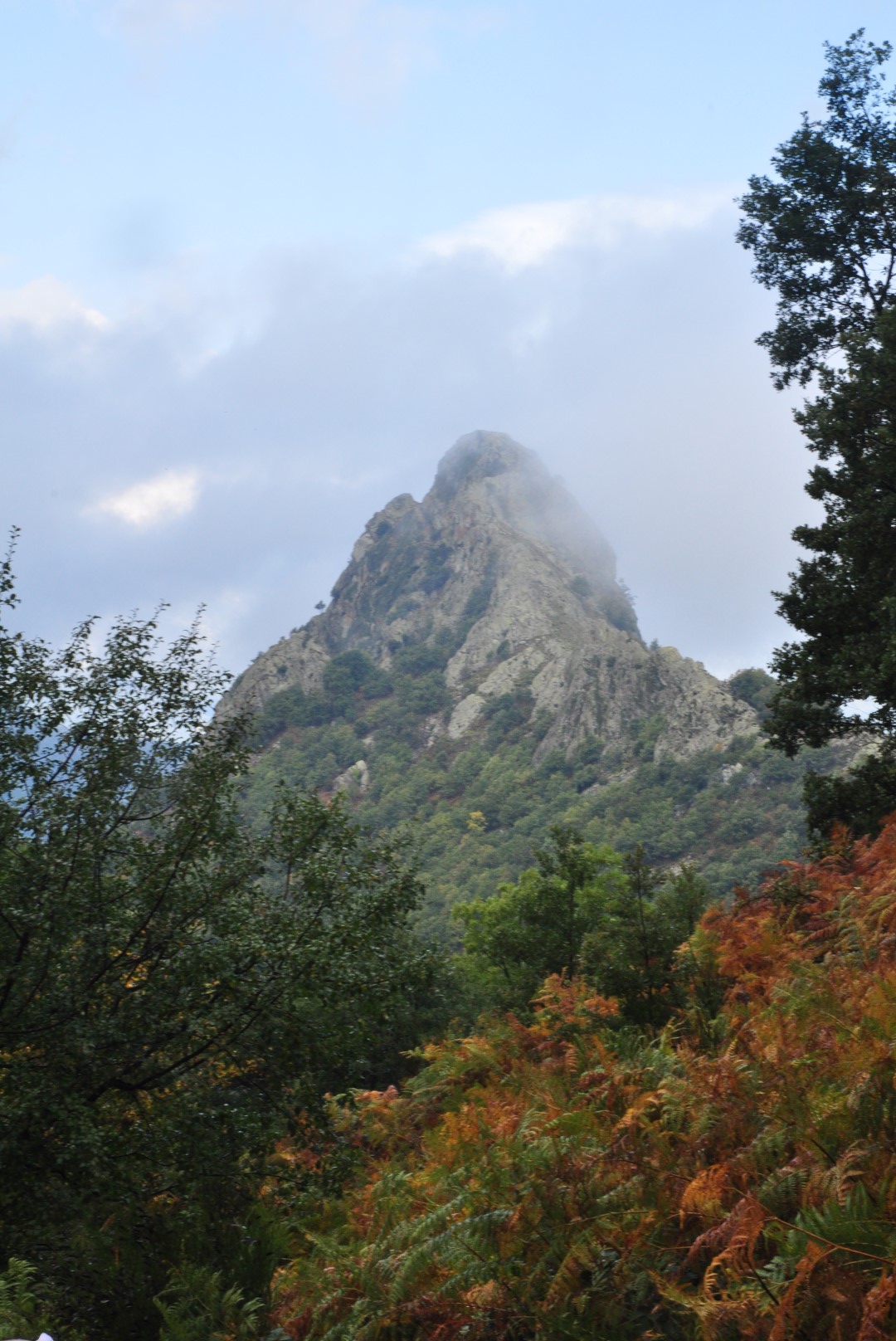
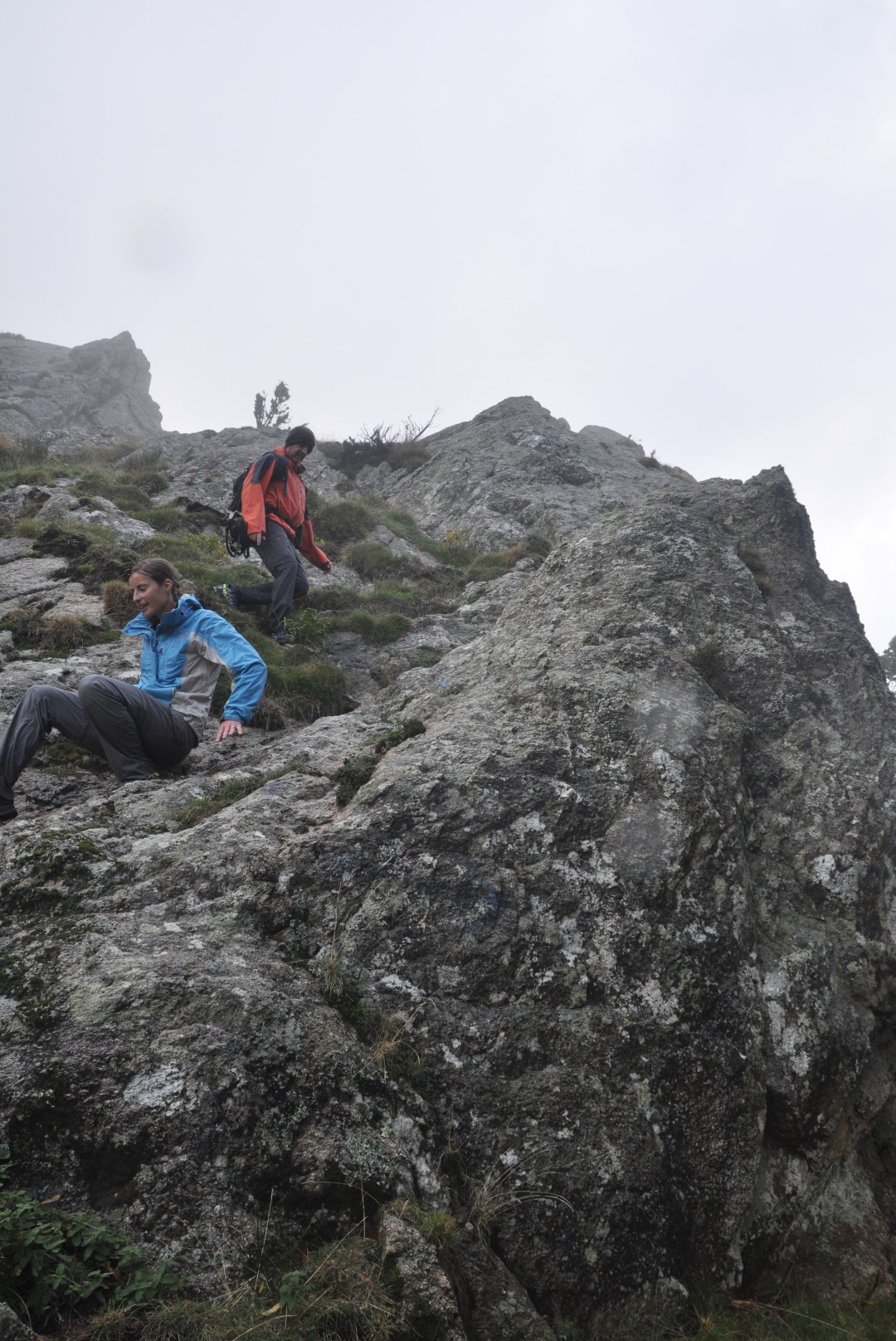
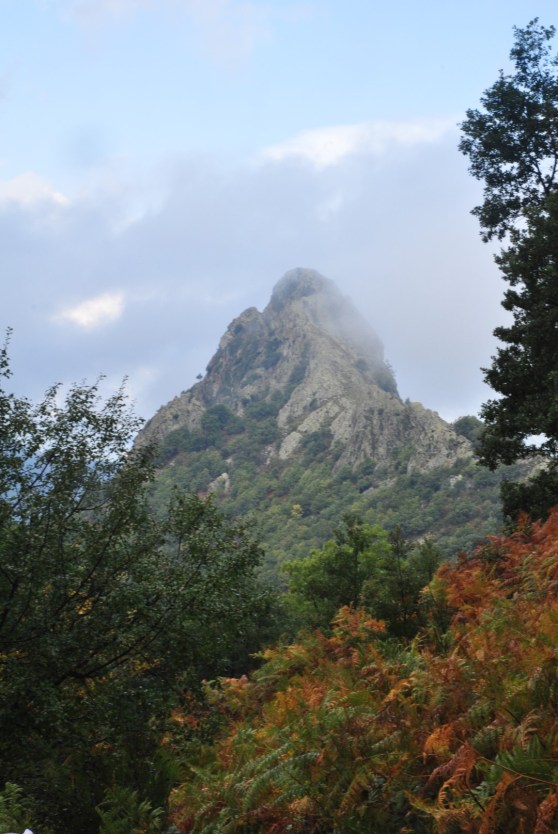
Paul was clinging to a reportedly loose boulder, wedged between two perpendicular rock walls a couple of hours into our hike towards Pic de la Dona Morta (Catalan for ‘Mountain of the Dead Lady’). I looked up at him nervously, wondering whether he was overreacting or I was about to live up to the mountain’s name. To our right the mountainside gave way to immense scenery overlooking the Pyrenees that form the border between France and Spain.

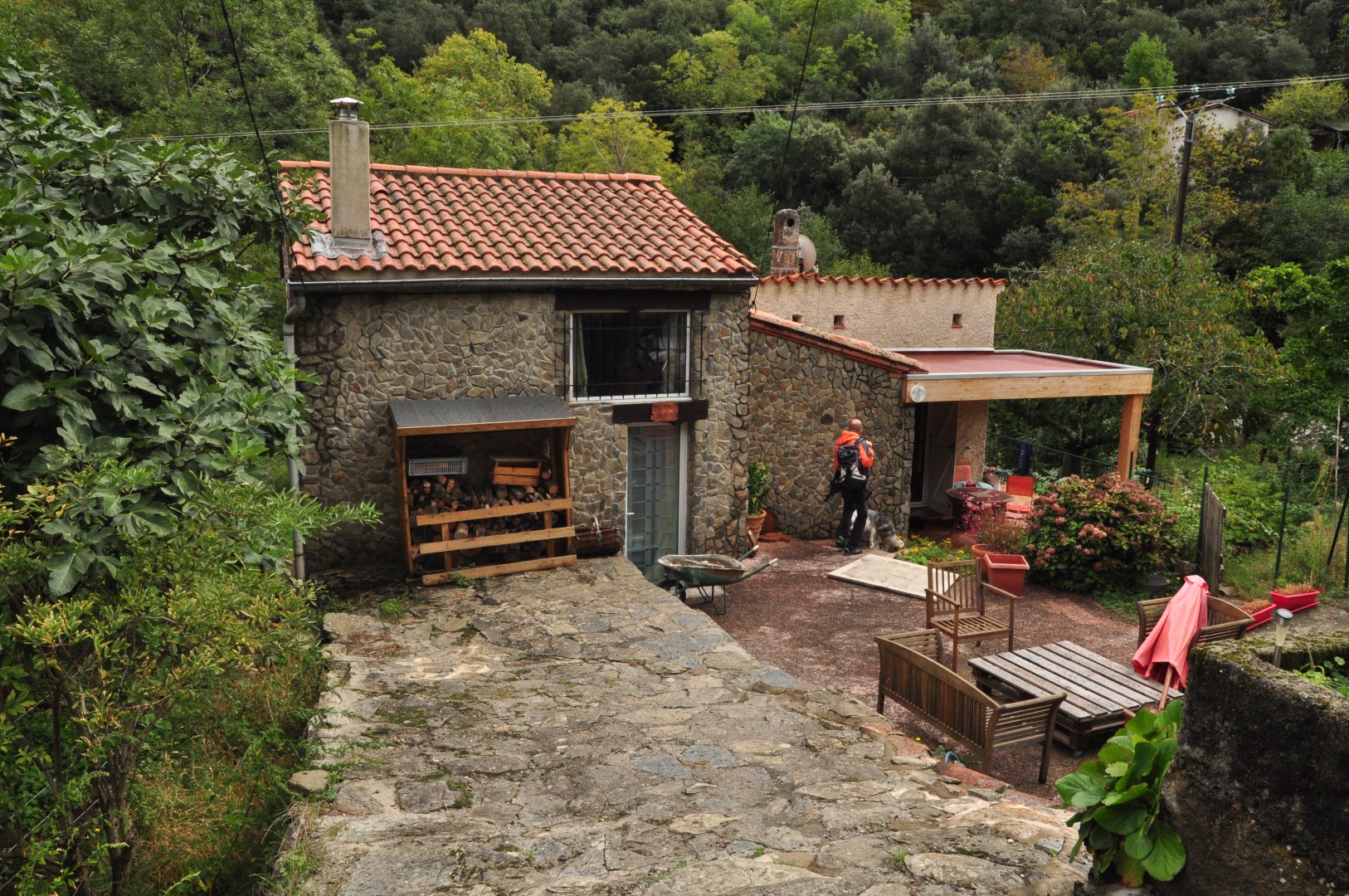
Earlier that morning, we’d awoken in the morning dark in our host’s mountain hut, a charming old water mill, for our first day of the first half of our trip to the continent that would mark the end of our year-and-a-bit in England. The skies were grey and thunder rumbled in the distance – we’d asked our host, guide, translator and good friend Chris Ward for adventure and that´s what we were getting!
DSC_0914 (Large)

DSC_0837 (Large)

Waiting out the rain

DSC_0859 (Large)

“What exactly do you have planned for us, Chris?”

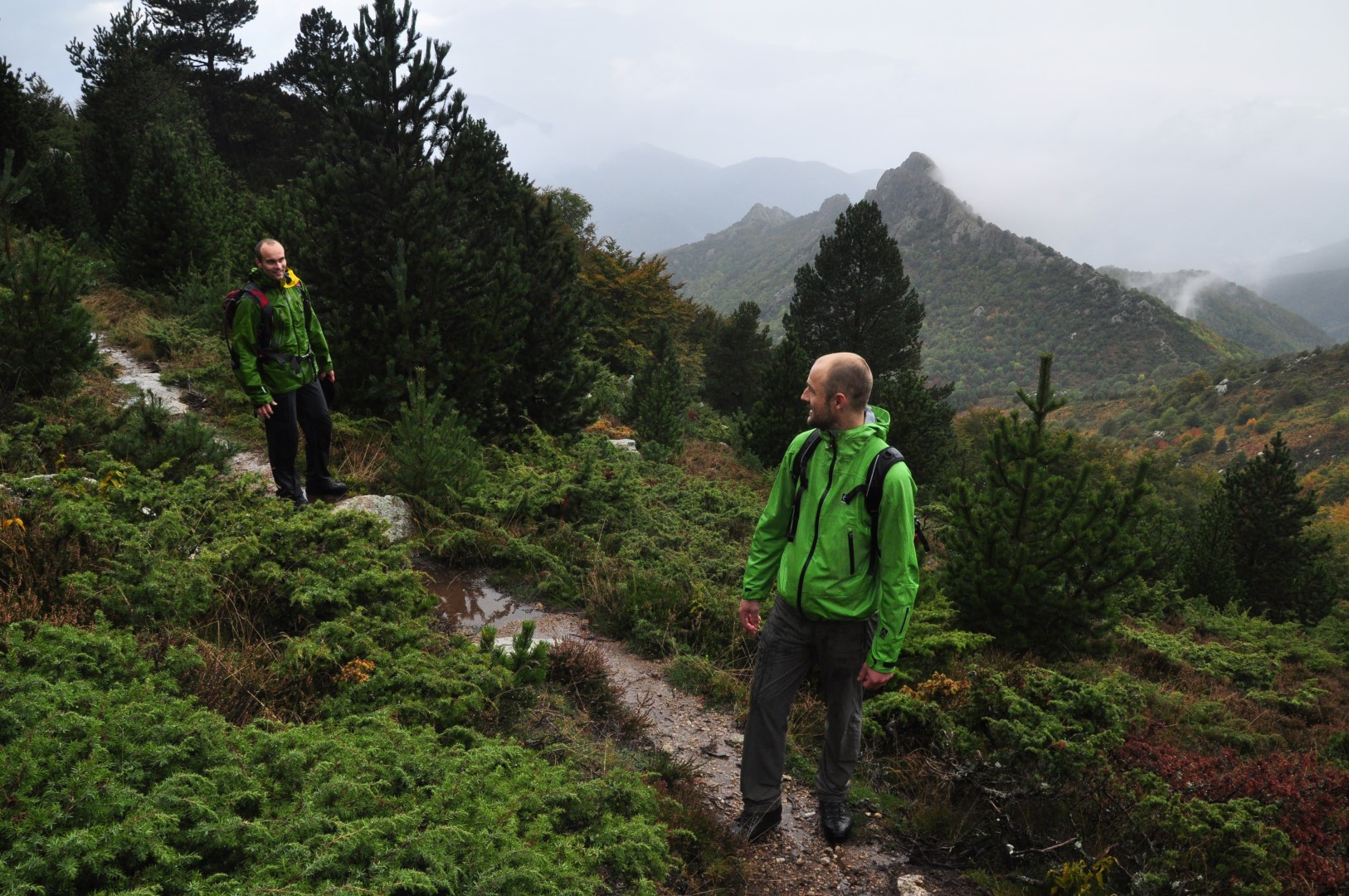
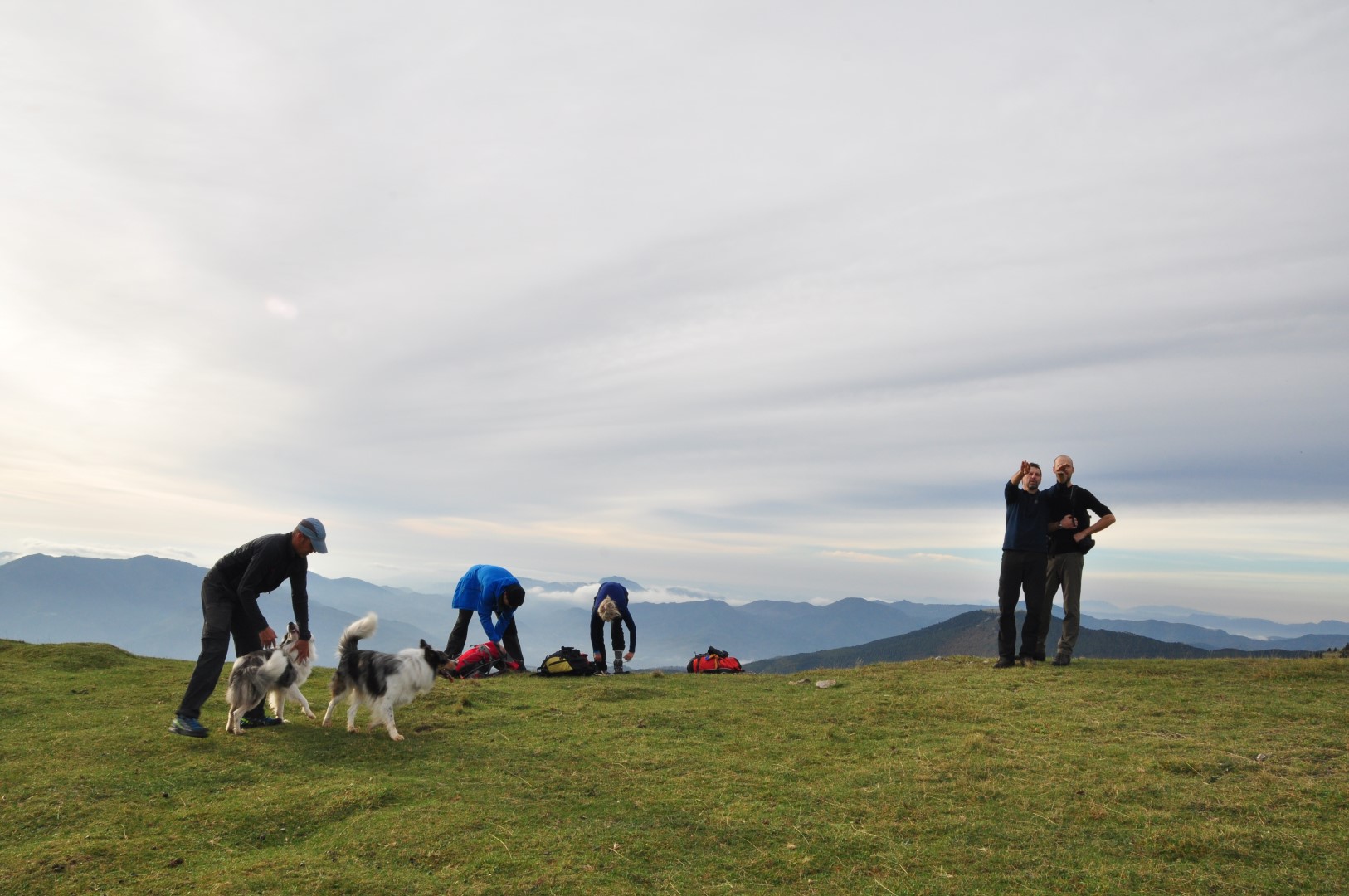
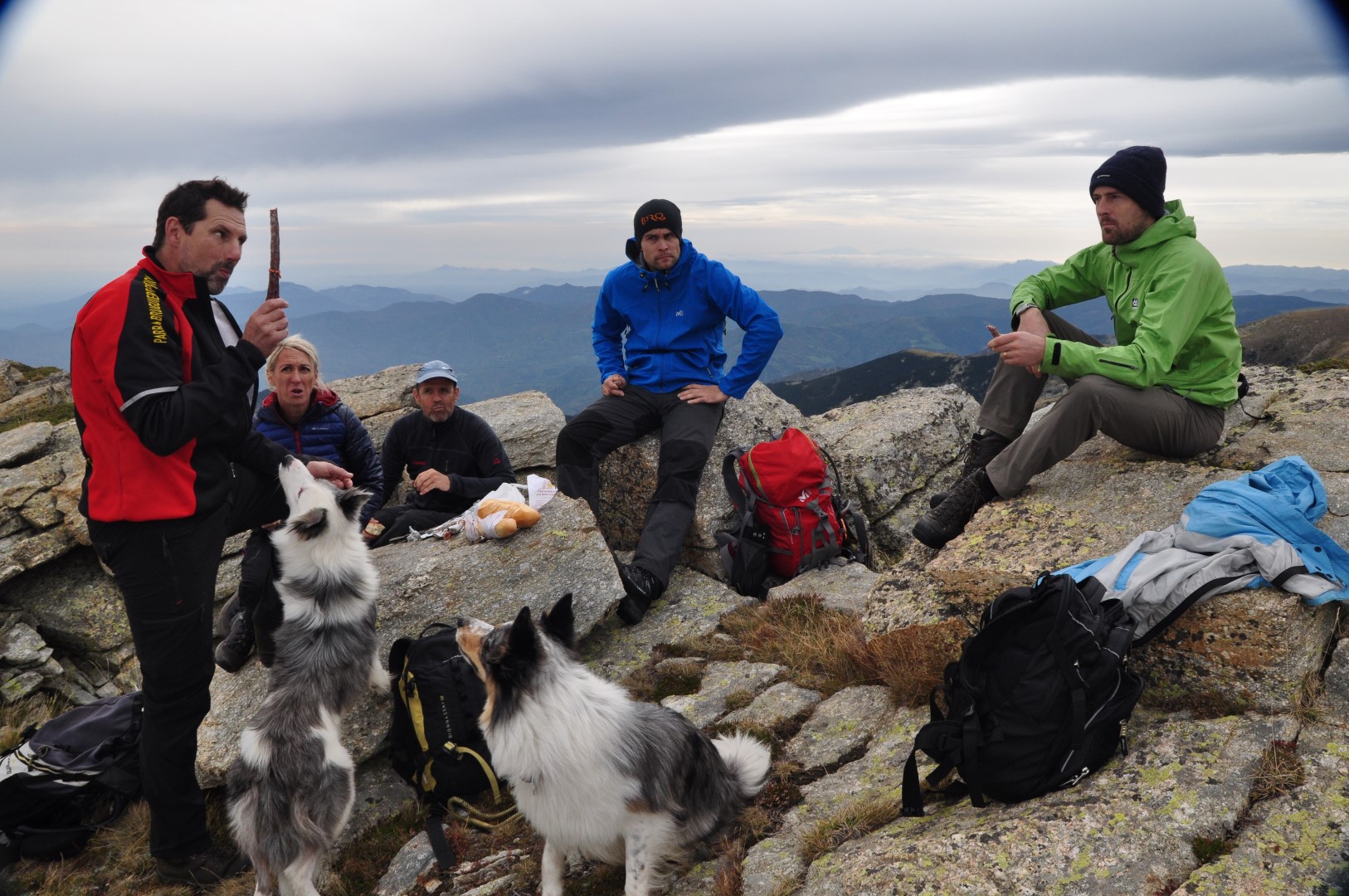
On this day on the mountain, our eclectic group consisted of Chris; his good friend Philippe (aka ‘Vallespir Migou’); Philippe’s friend and retired member of the Slovakian special services Valentin; my husband Paul; Django (who loves mountains but hates the snapping sound of individual yoghurt pots being separated and is also a Border Collie); and moi.

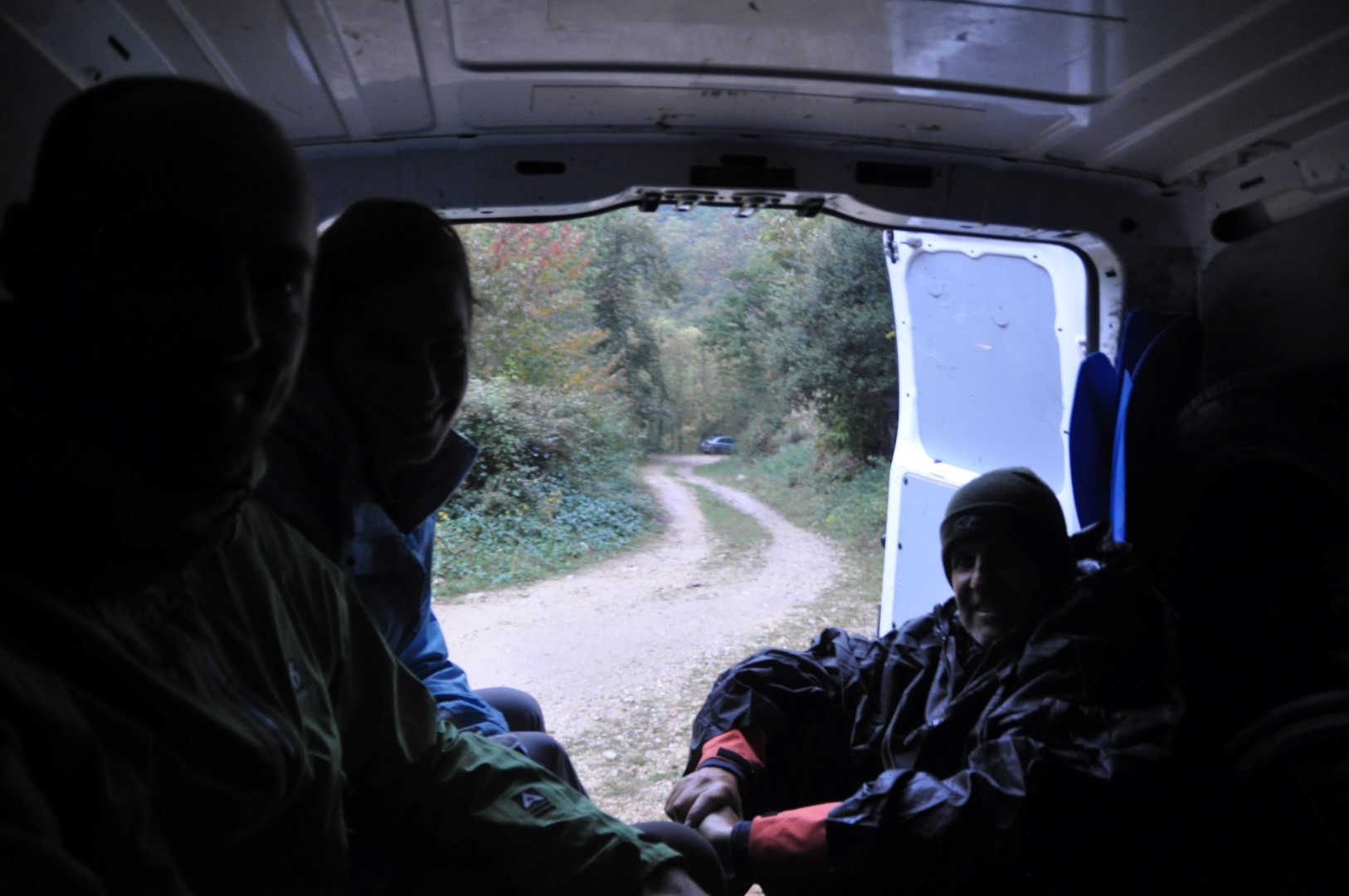
When we’d pulled up at the start of the hike, the heavens opened, so the six of us (including Django) sheltered in the back of the van counting the seconds between lightning and thunder and waiting for the skies to clear. When they did (for the time being at least) Django leaped ahead barking enthusiastically and we hoofed behind him, the peaks in the distance revealing themselves intermittently as the cloud cover shifted.

The weather was mostly fine, until at one point the heavens again unleashed a downpour of rain and hail and the track at our feet became a running stream. Our broken French-English conversations were halted when Philippe, in the drama of the moment, ran ahead belting out the Catalan anthem in the rain, as you do.
DSC_0875 (Large) DSC_0877 (Large) DSC_0861 (Large)

If the weather hadn´t cleared so completely after that, we probably wouldn´t have tackled ´The Chimney´ – also known as Goat Alley – which forms a small part of a local mountain race that Philippe organises. I mentioned hesitantly that I was a little scared of heights when I heard the word ´Chimney’, but apparently people aged up to their 60s have completed the mountain race, so we continued on under refreshed blue skies.

It was the first part of this small section of rock scrambling that Paul encountered his loose boulder. Those of us still on the track below him moved aside as he climbed over it, then Valentin followed him up and confirmed that yes it was loose and directed me up a different route which I gratefully took. Finally, Chris made his way to the precarious boulder and with scary ease pulled it free from the rock wall and sent it hurtling down the empty mountain side as we listened in silence to it thumping against the earth and cracking tree trunks on its descent.
DSC_0871 (Large)
We made it to the top of that!

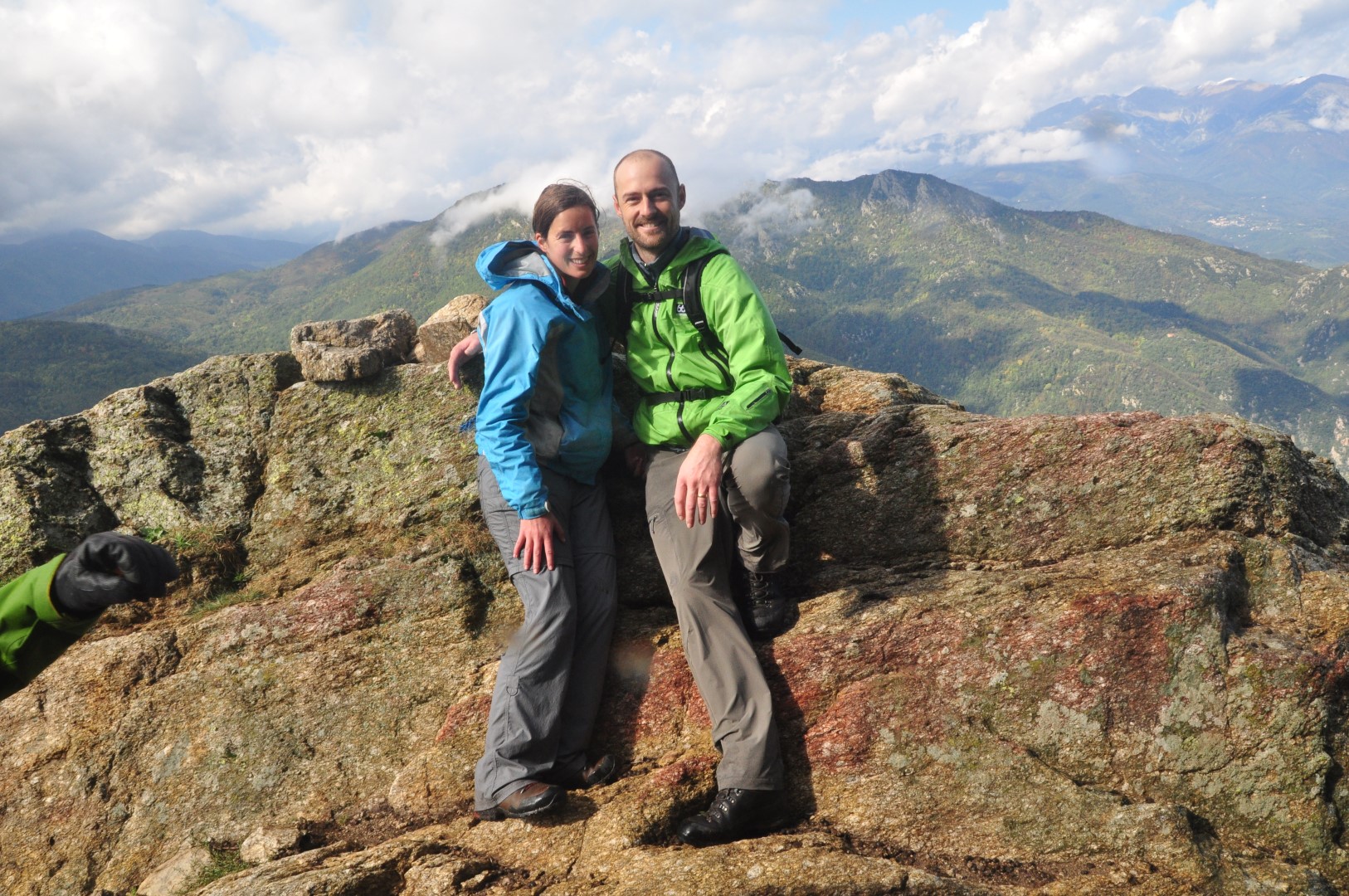
Next up was the aforementioned Chimney/Goat Alley, another short climb/scramble before we reached the top. Philippe climbed ahead with dog-slash-mountain goat Django. As I followed them up – making nervous noises that can´t have required translation – Chris mentioned something along the lines of ‘I hope you don´t mind all the goat poo’ (hence the name Goat Alley) and I remember thinking I´d happily eat goat poo as long as I could get to the top of this bit and not look down. Of course, fairly easily (in hindsight!) we greeted the top with smiles and whoops and took a few snaps before the easy, steady descent through sheltered forest (formerly terraced farmland) down the other side.
DSC_0882 (Large) DSC_0879 (Large)

Life’s all about contrasts and it was almost surreal when, that same afternoon, I found myself lowering my tired legs into the famed thermal baths (which date back to Roman times) back in the village of Amelie les Bains, which attracts thousands of French people every year who arrive on doctor´s orders for (government-subsidised) treatment of their arthritis and respiratory illnesses.

Washed of all goat poo, we drifted our way around a hot pool with various kinds of jets to massage different joints, then it was on into the steam room and finally the mud bath – all followed by a muscat tasting session in the local wine shop and an introduction to the Catalan specialty cake, ´rusquilles´.

Yep, our trip was off to a good start.

Part 2: Castles in the sky

The next morning the weather was much clearer and this time we were joined in the (fully-loaded-and-then-some) 4WD by our French hostess Marion and Django´s brother Pep – two dogs with a serious case of sibling rivalry.

DSC_0918 (Large)

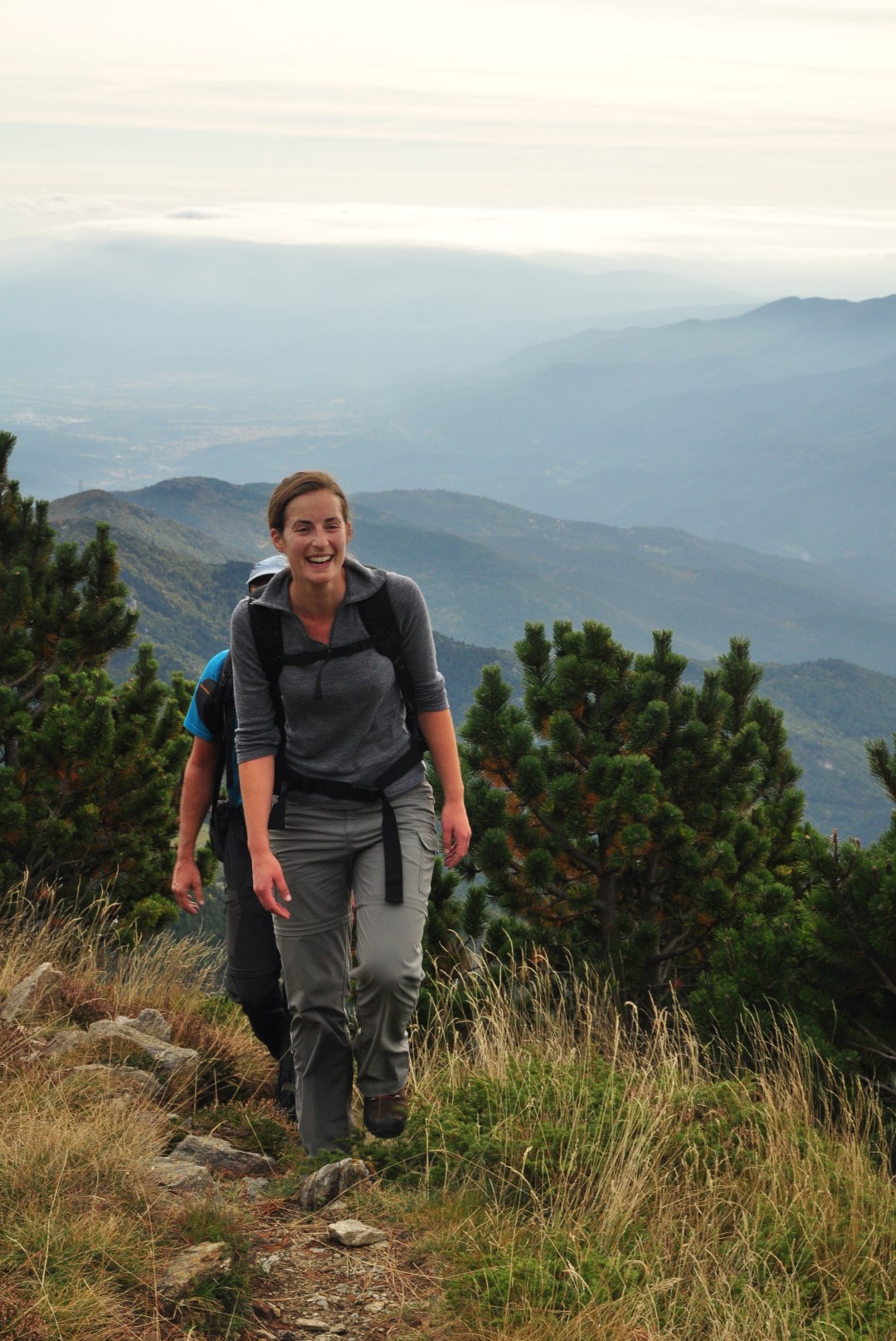
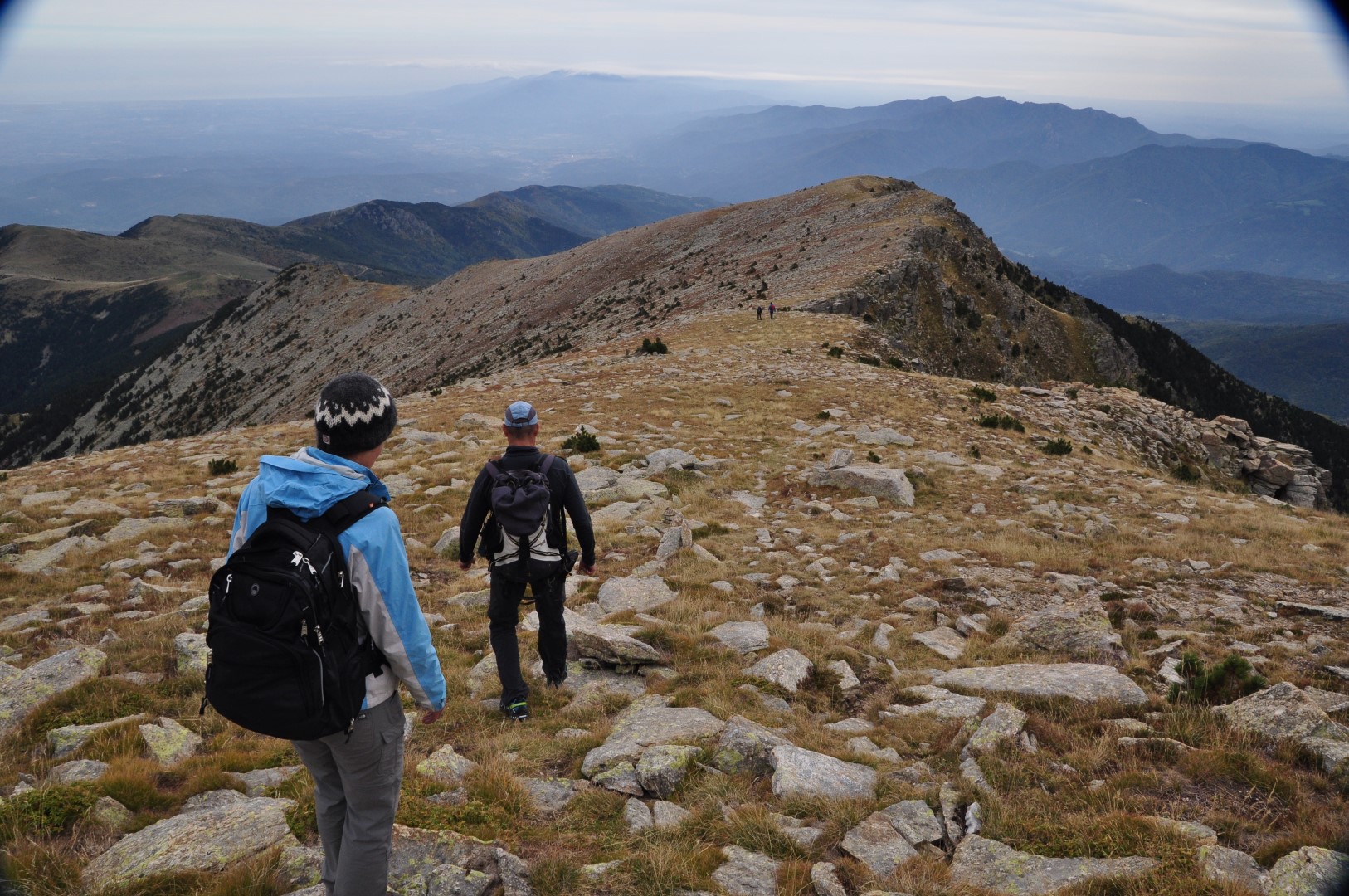
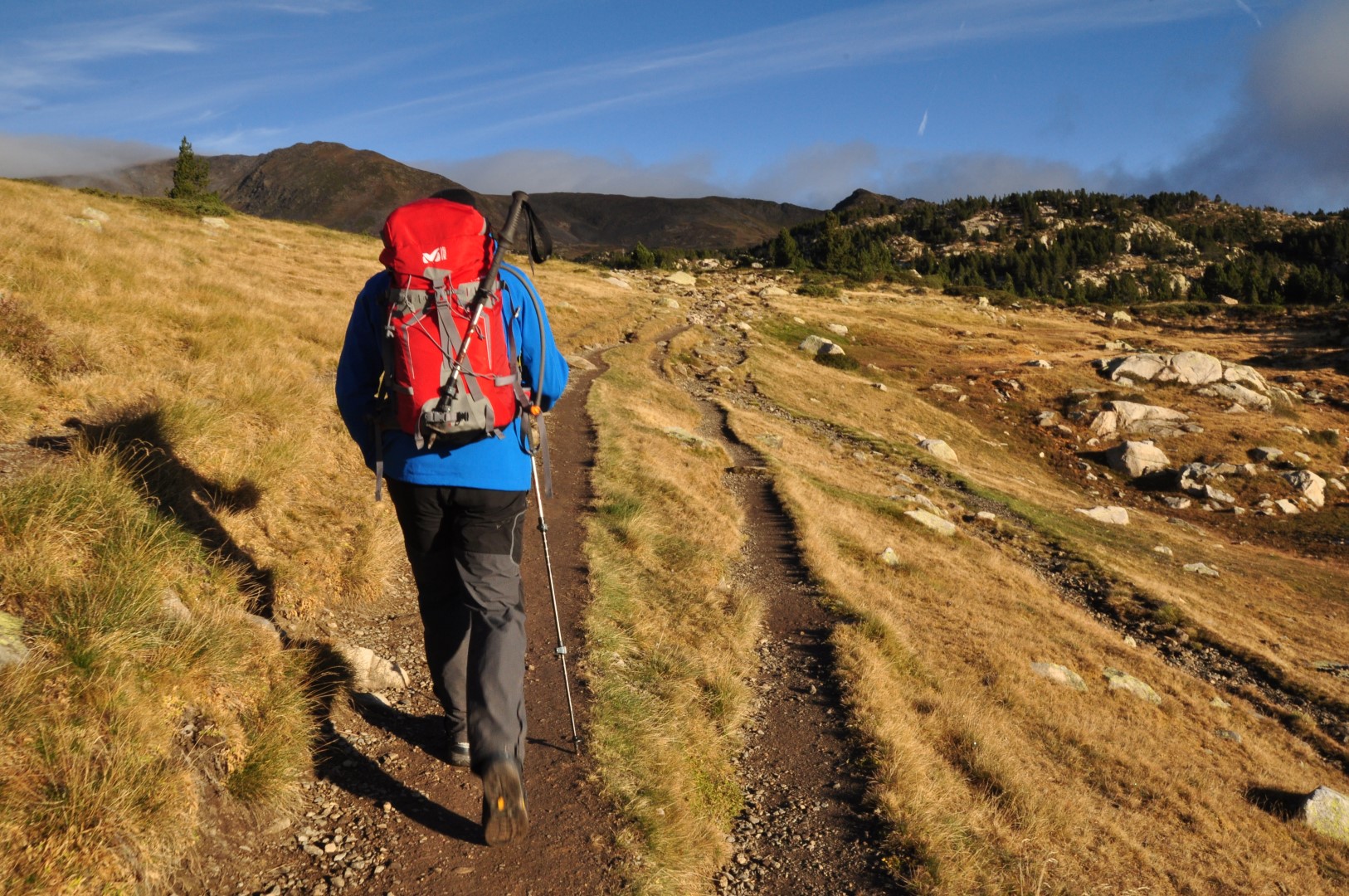
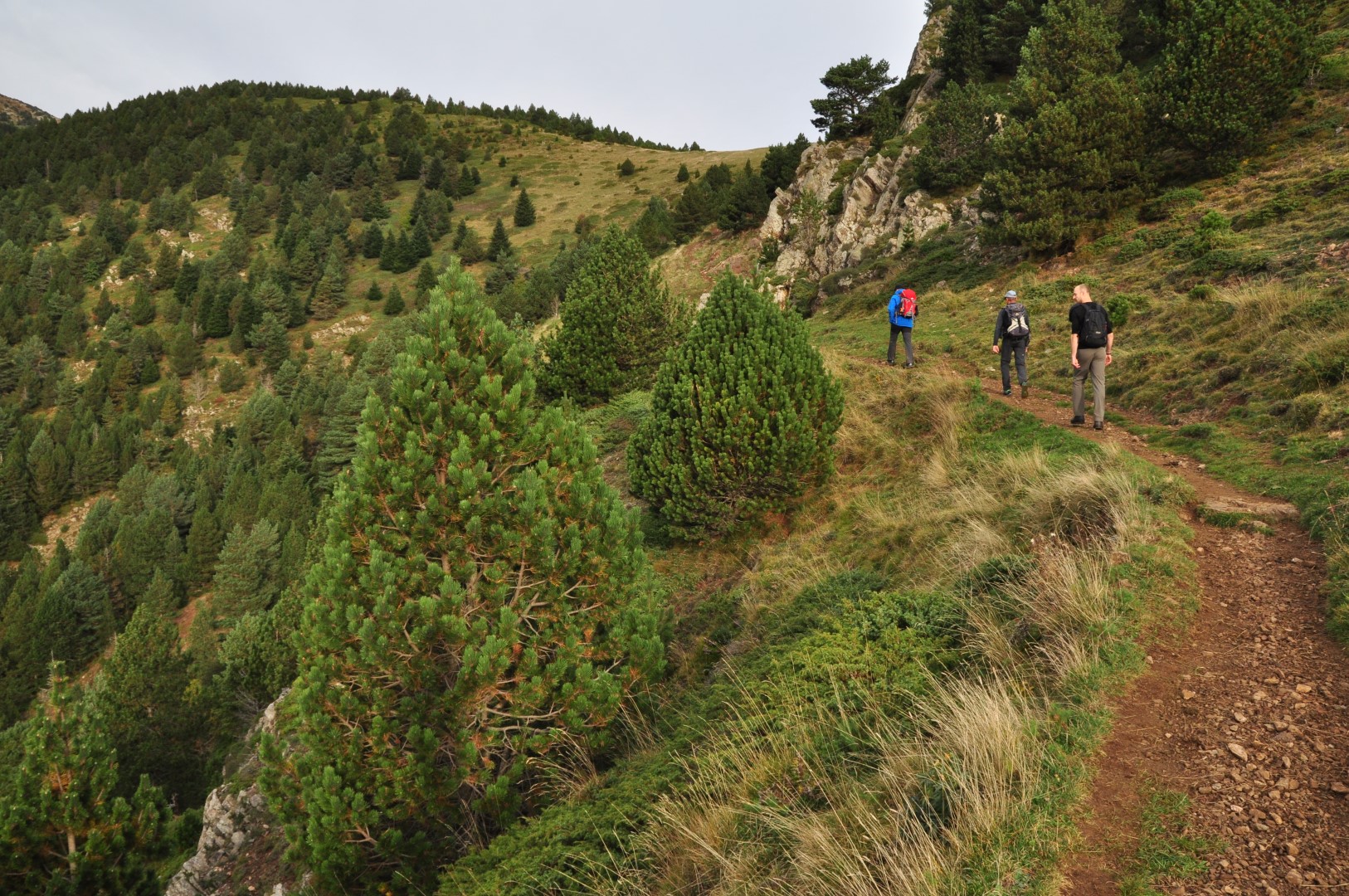
This was a pleasant (and steep!) hike that started at a disused iron ore mine and continued onto wide, low grasslands populated with sheep and horses, then a steeper climb up the rocky mountain side in a steady hike that gave us time to practice our burgeoning pigeon-French with our friends.

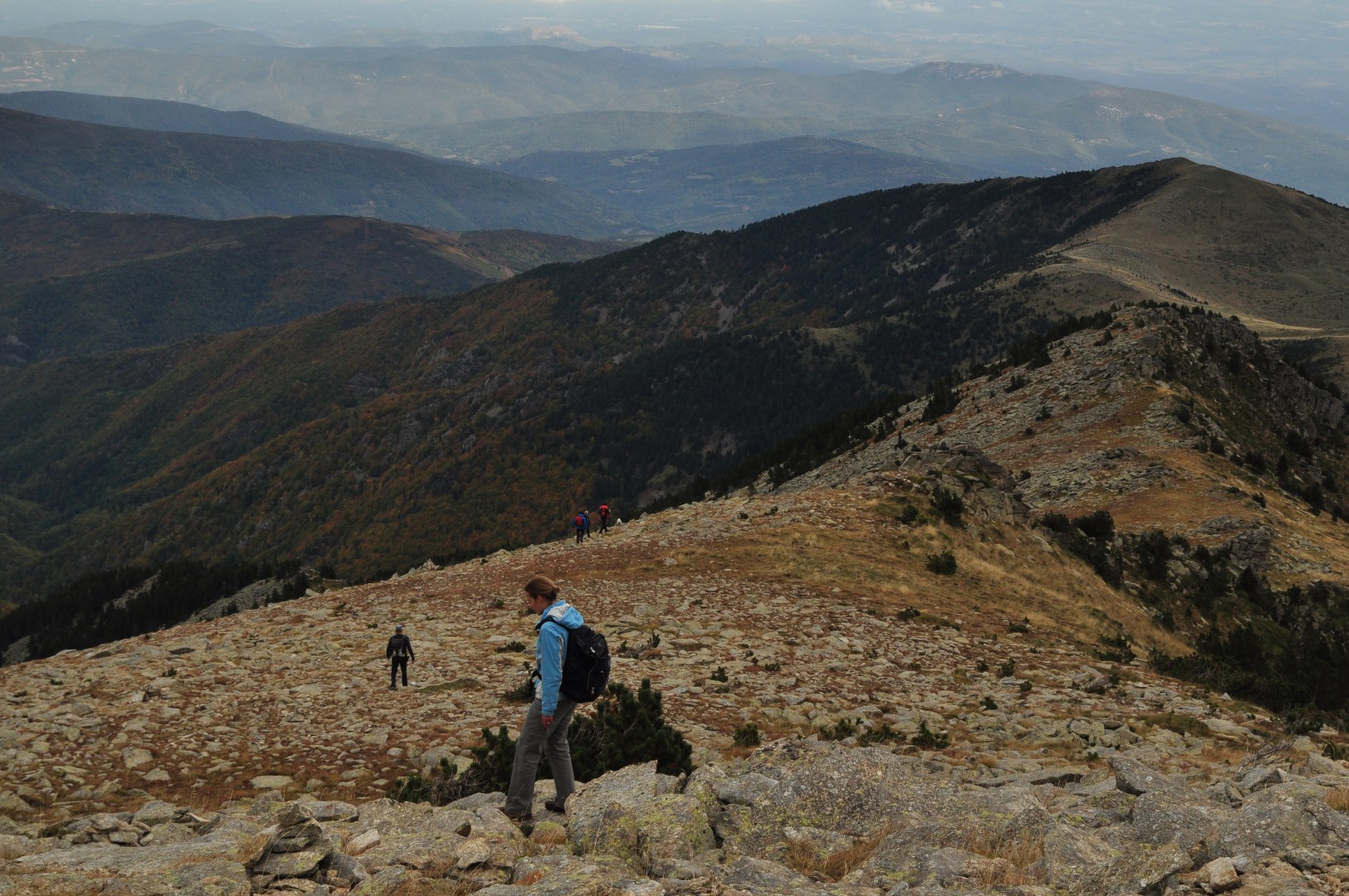
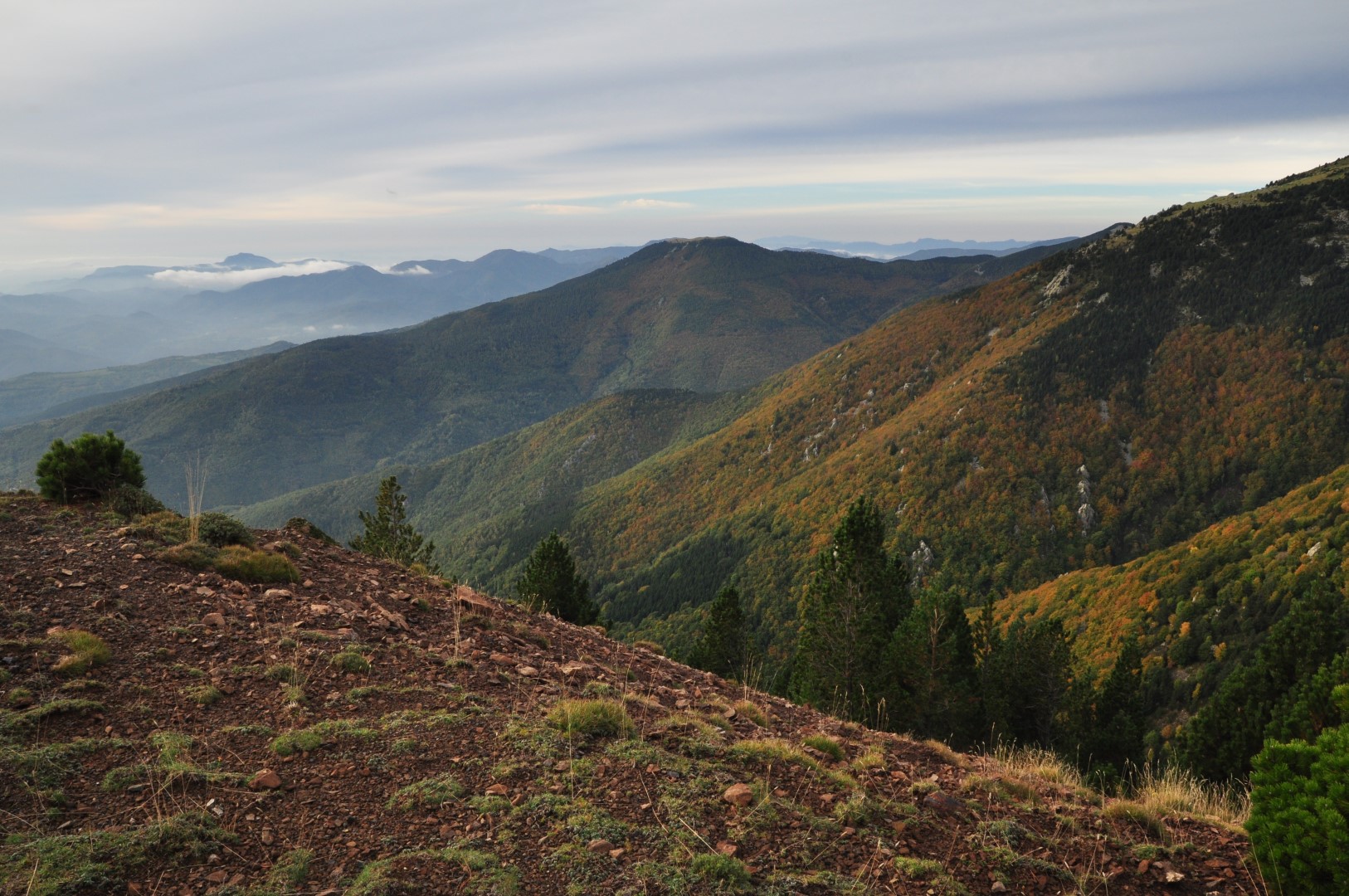
This time the weather was clear and we enjoyed uninterrupted views over the Pyrenees and ahead to Canigou (2786m), a mountain of spiritual and national significance to the Catalan people. We stopped at an area called Pic De Gallinas and, in true French style, lunched on bread, cheese, salami and chocolate.

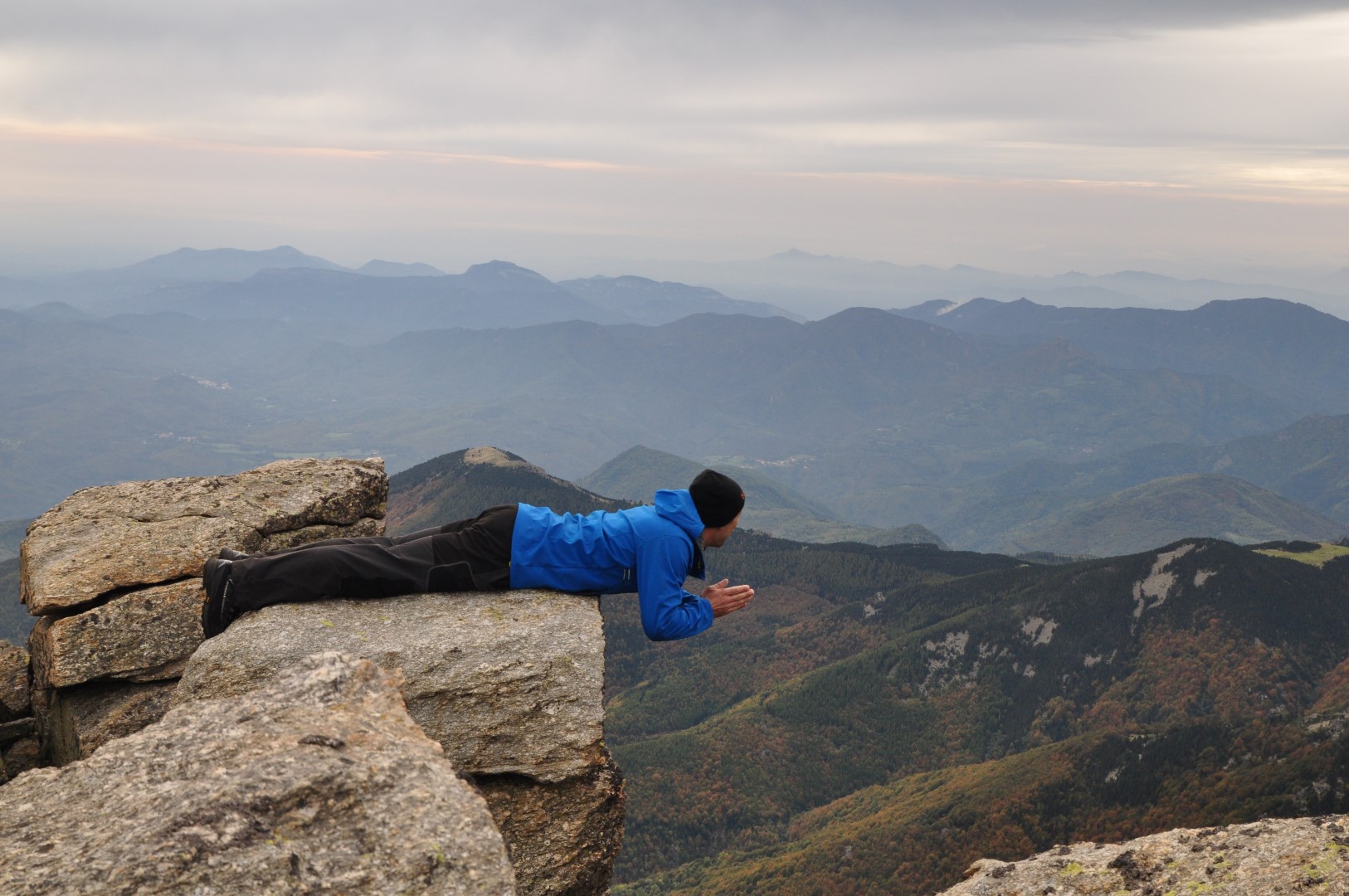
I then watched on from a safe distance as our mad French friends (that includes Chris) showed off their tricks on the mountain ledge, before we made the long descent back down into the valley, followed by a scenic drive home via the Tour de Batere, a military signal tower built in the 14th century,
DSC_0932 (Large) DSC_0930 (Large) DSC_0935 (Large) DSC_0949 (Large) DSC_1006 (Large) DSC_0997 (Large) DSC_0995 (Large) DSC_0991 (Large) DSC_0983 (Large) DSC_0974 (Large) DSC_0958 (Large)

It was time to rest the Aussies´ legs (I´m sure our hosts could´ve kept going!) so that night we refuelled in the local cafe on salmonella and toxoplasmosis. Wait, sorry I mean steak tartare served with a raw egg in its shell. (It was tasty and of course I was fine! Although according to the internet toxoplasmosis is asymptomatic in adults barring potential reduced IQ, so watch this space…)

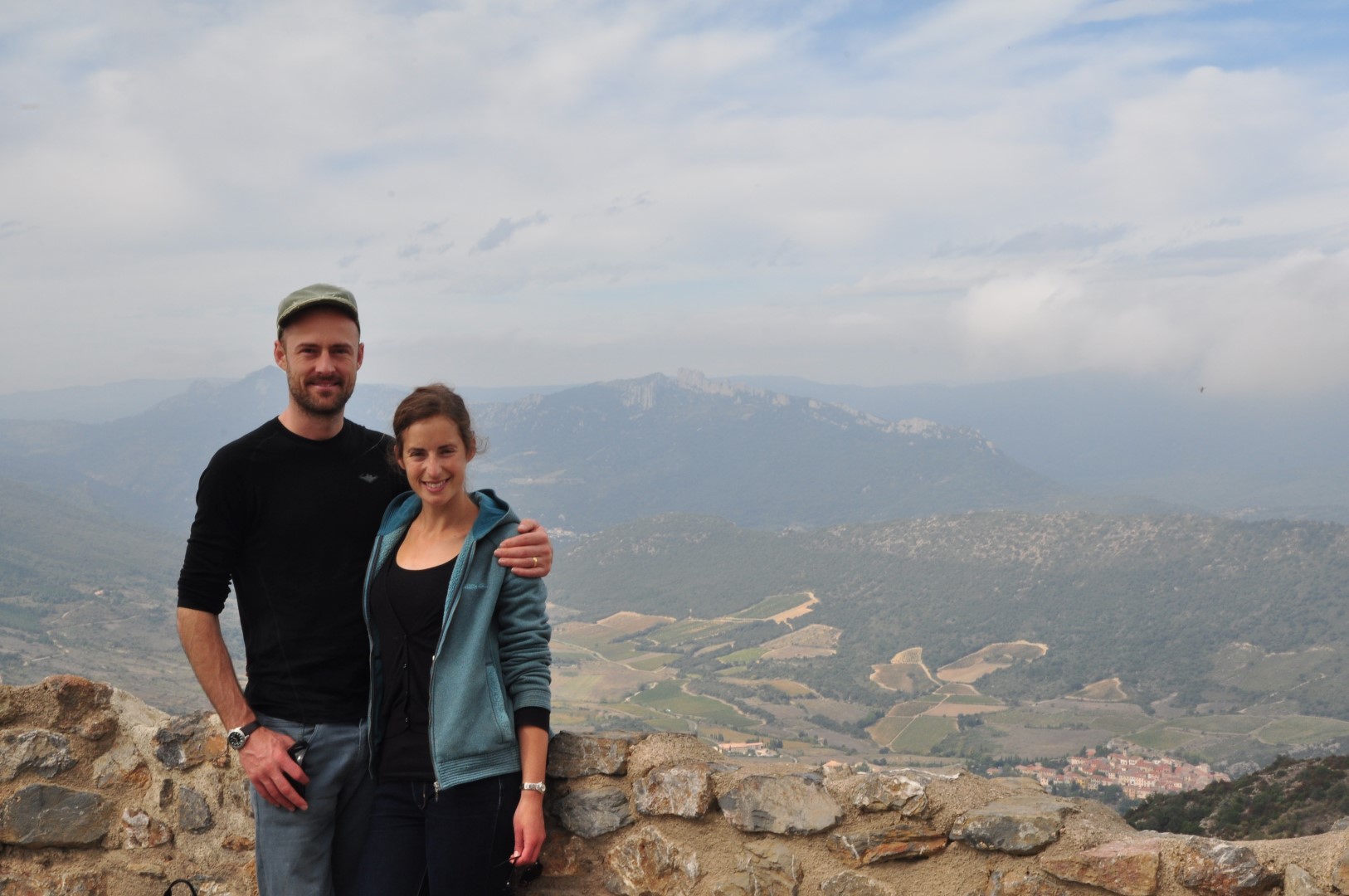
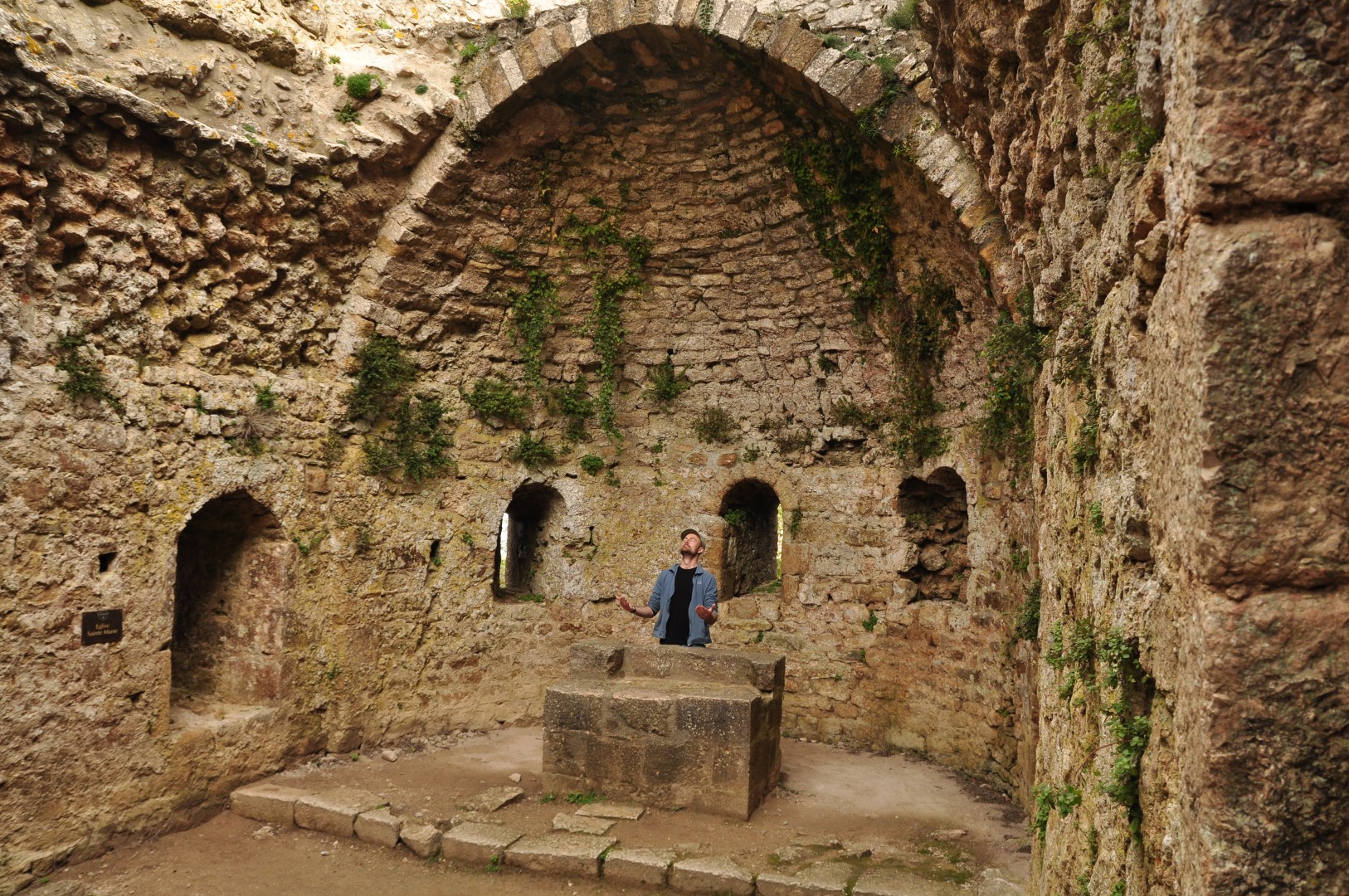
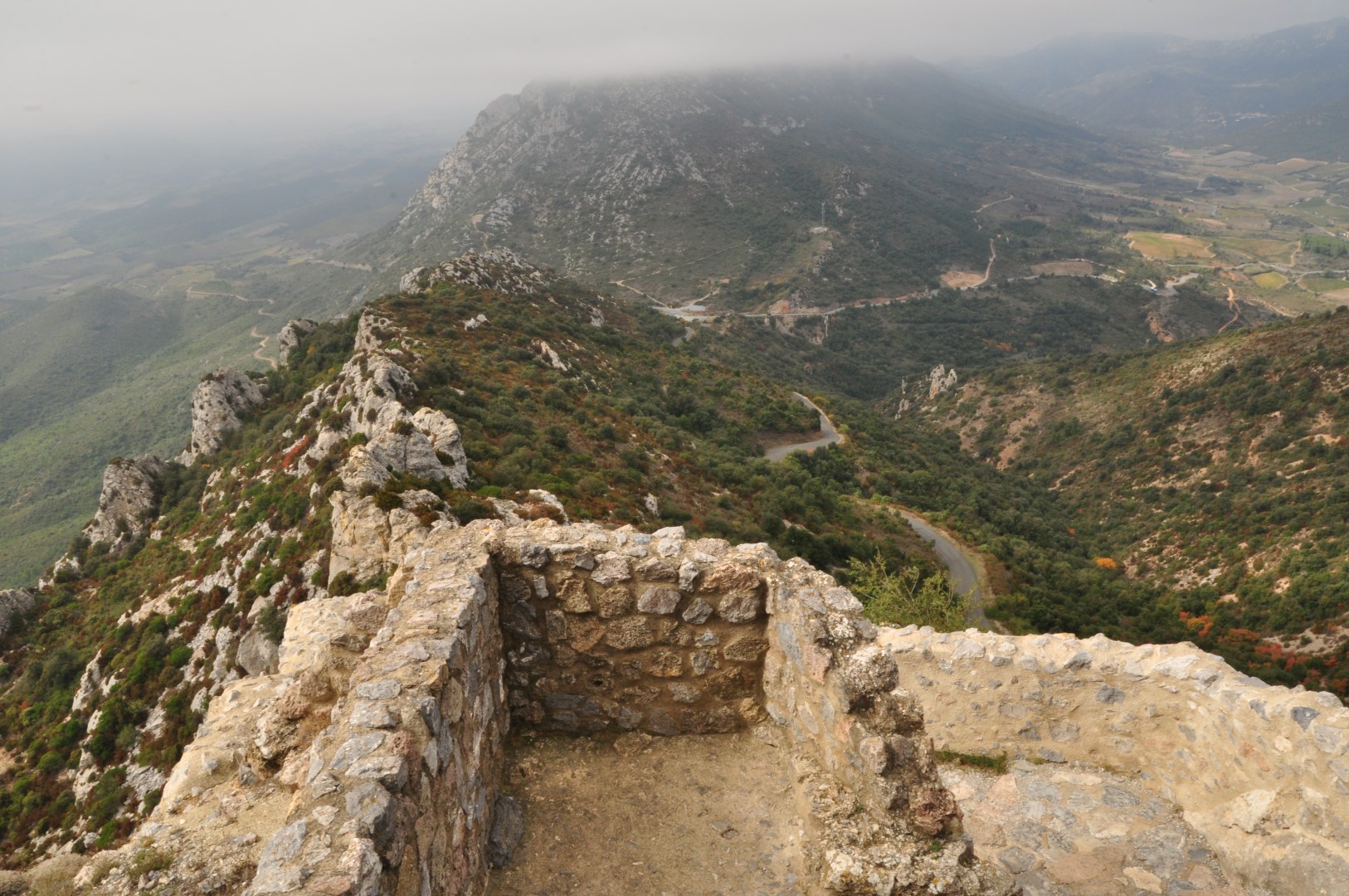
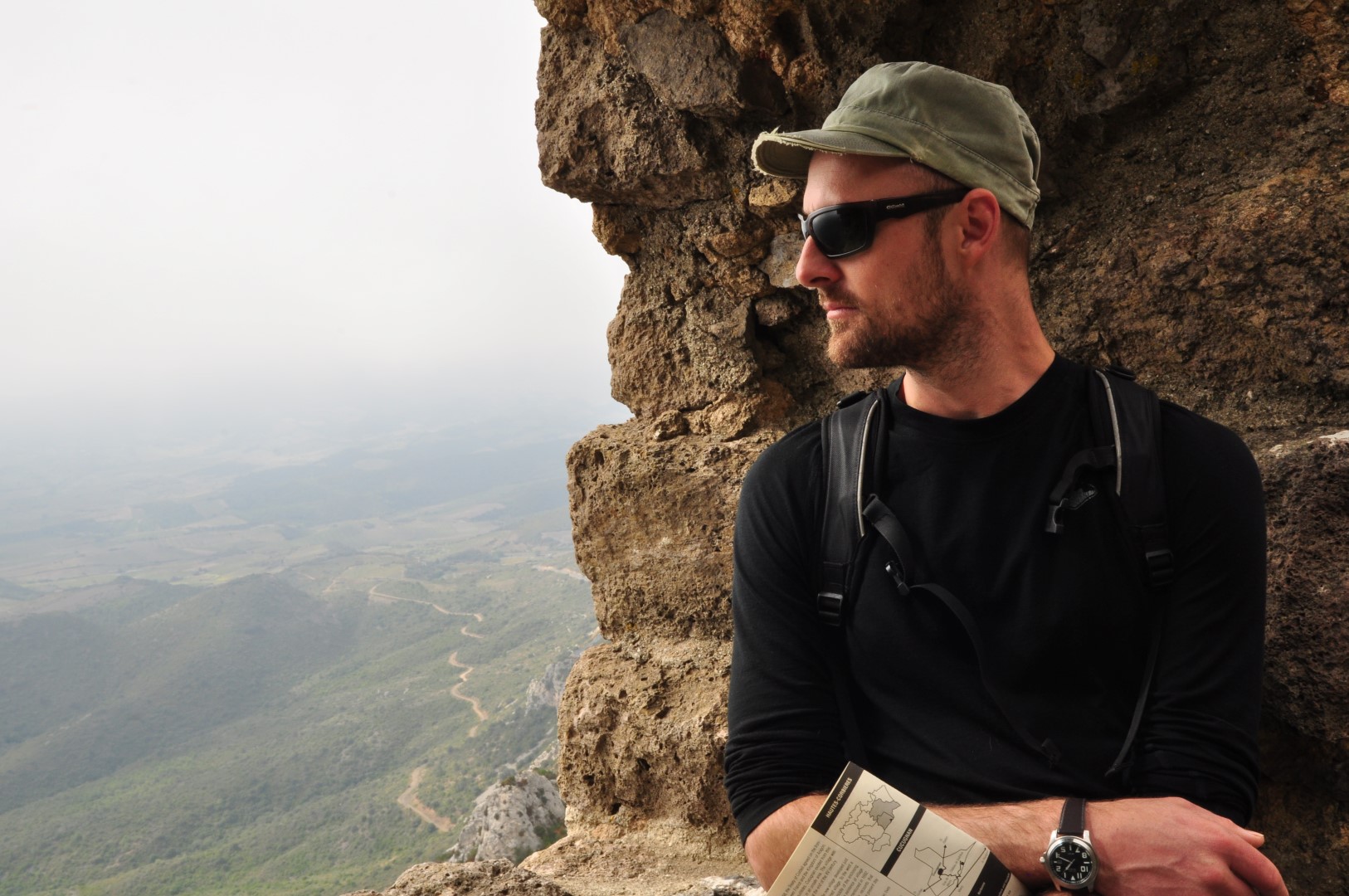
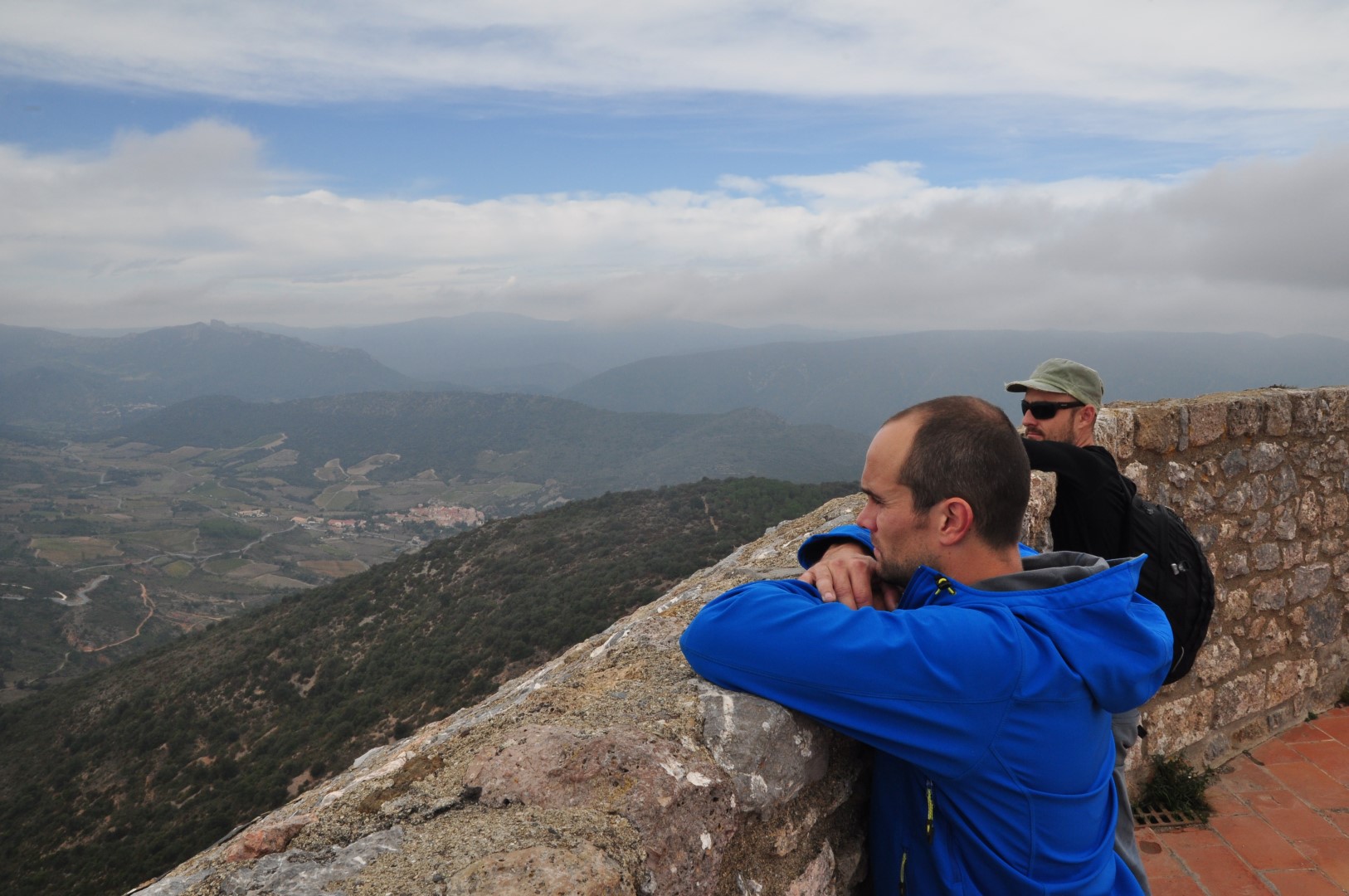
We spent the next day visiting two ruined 12th century fortresses/castles built high up in the mountains – Queribus and Peyrepertuse. Both were fascinating and eerie, particularly as the fog closed in, so I´ll let the photos do the talking here…
DSC_0005 (Large) DSC_0017 (Large) DSC_0025 (Large) DSC_0056 (Large) DSC_0074 (Large) DSC_1038 (Large)

Part 3: Homes away from home

DSC_0445 (Large)

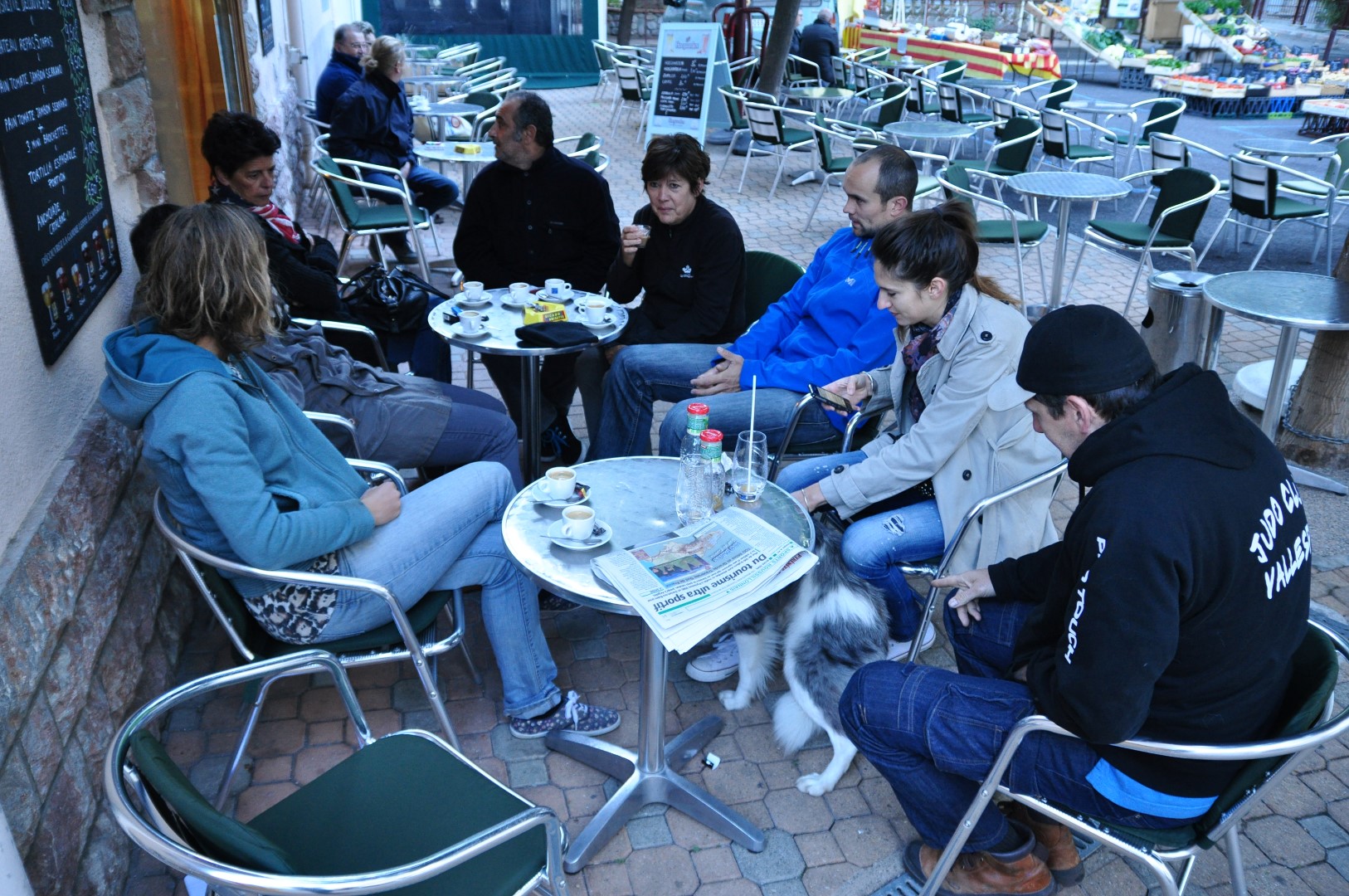
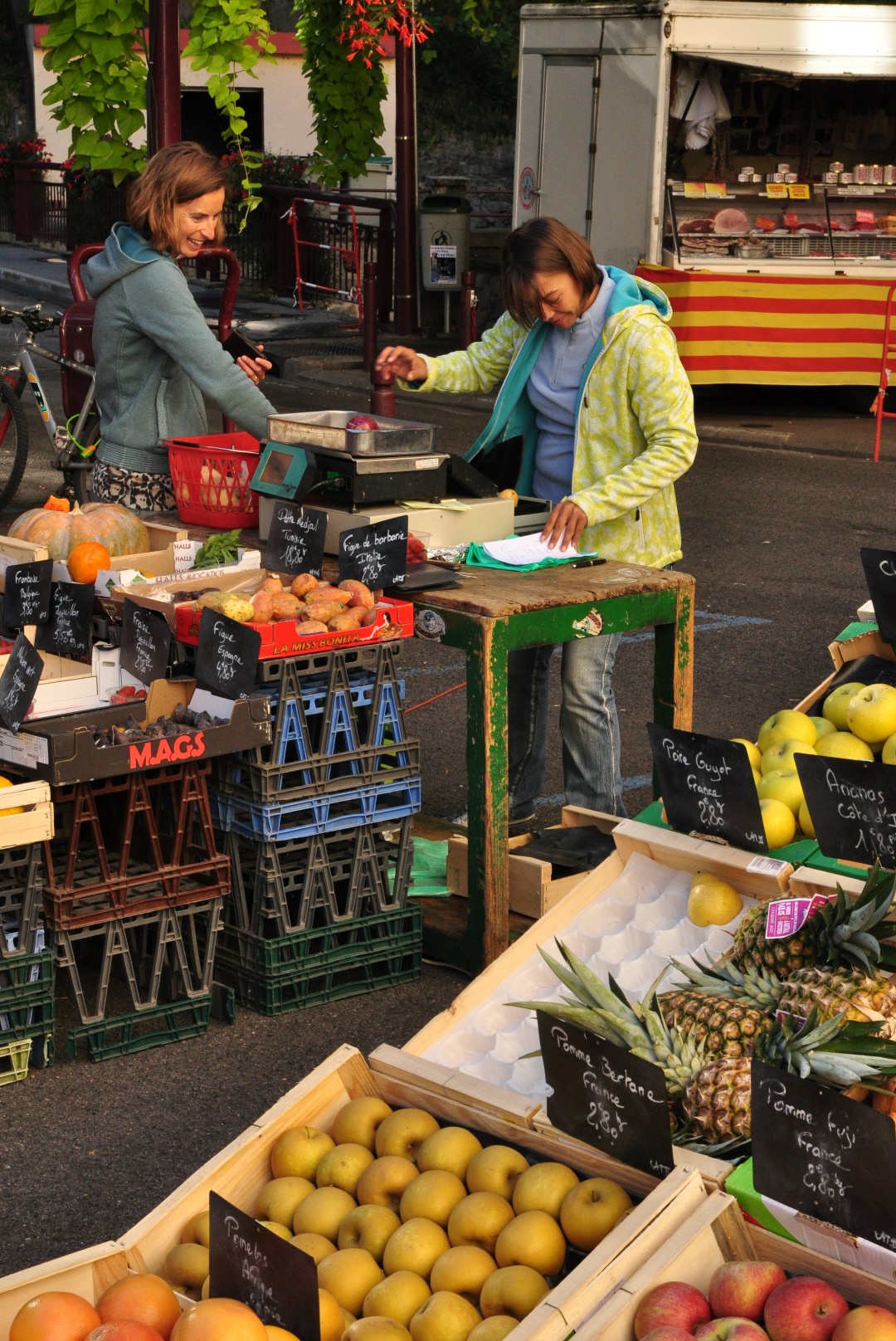
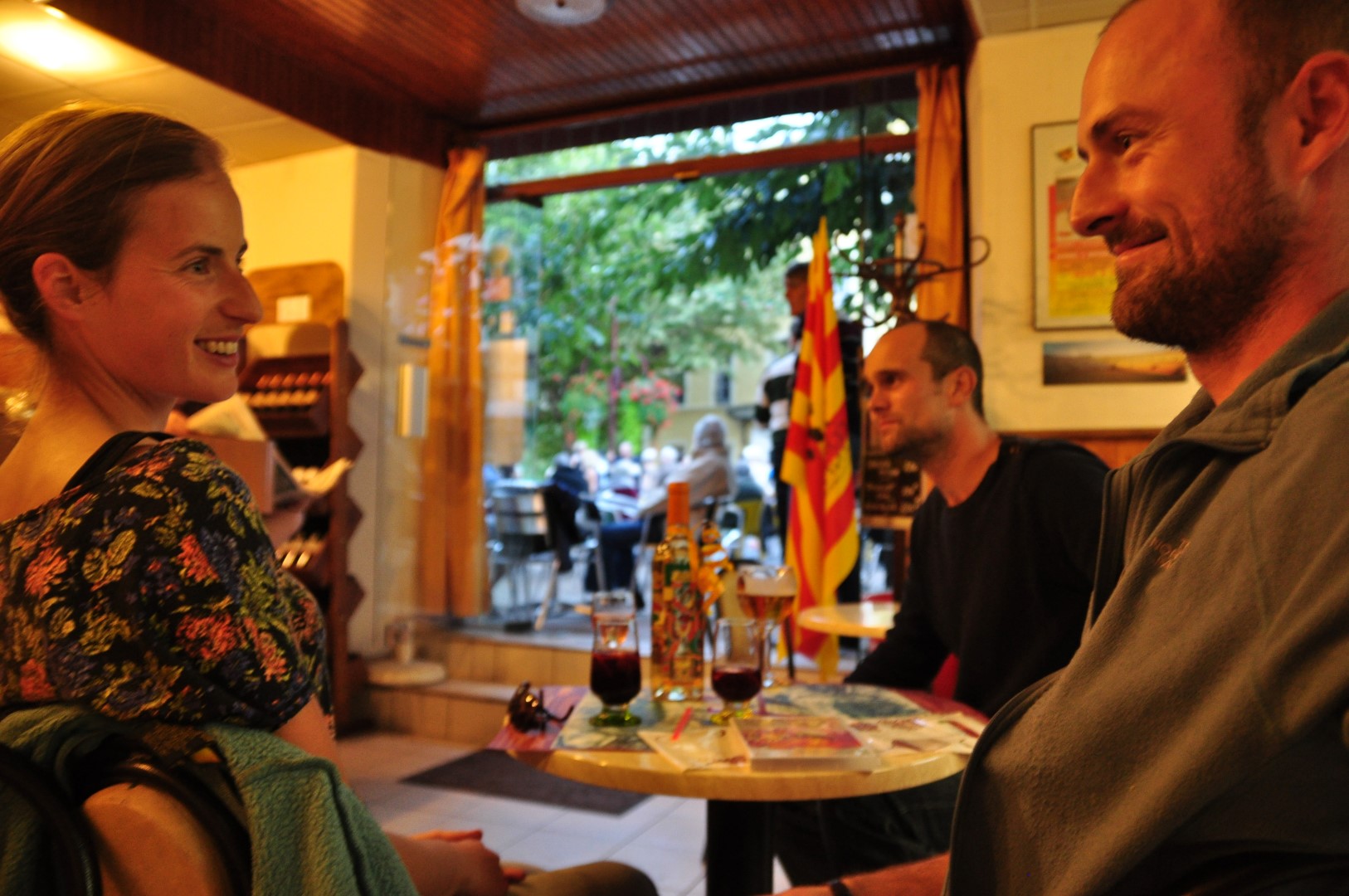
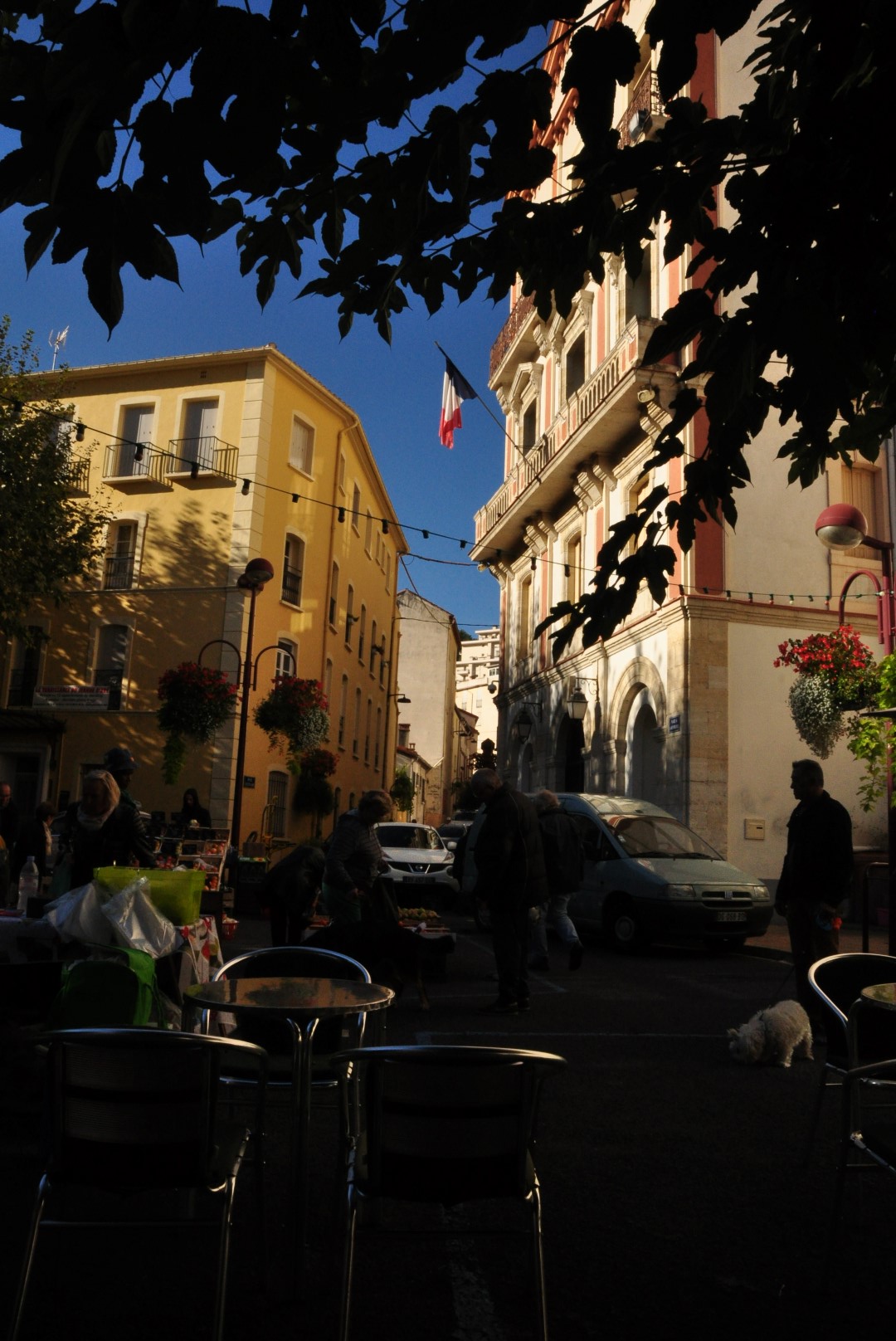
In case you thought this trip was all mountain climbing and Russian roulette dining, let me transport you to Chez Toinette – the home of Chris´s other French ´family´, a charming cafe looking out over the town square where daily fresh produce markets are held, and where we were welcomed from the first day we arrived with open arms by the owners Michelle and Pierre, even given the language barrier.

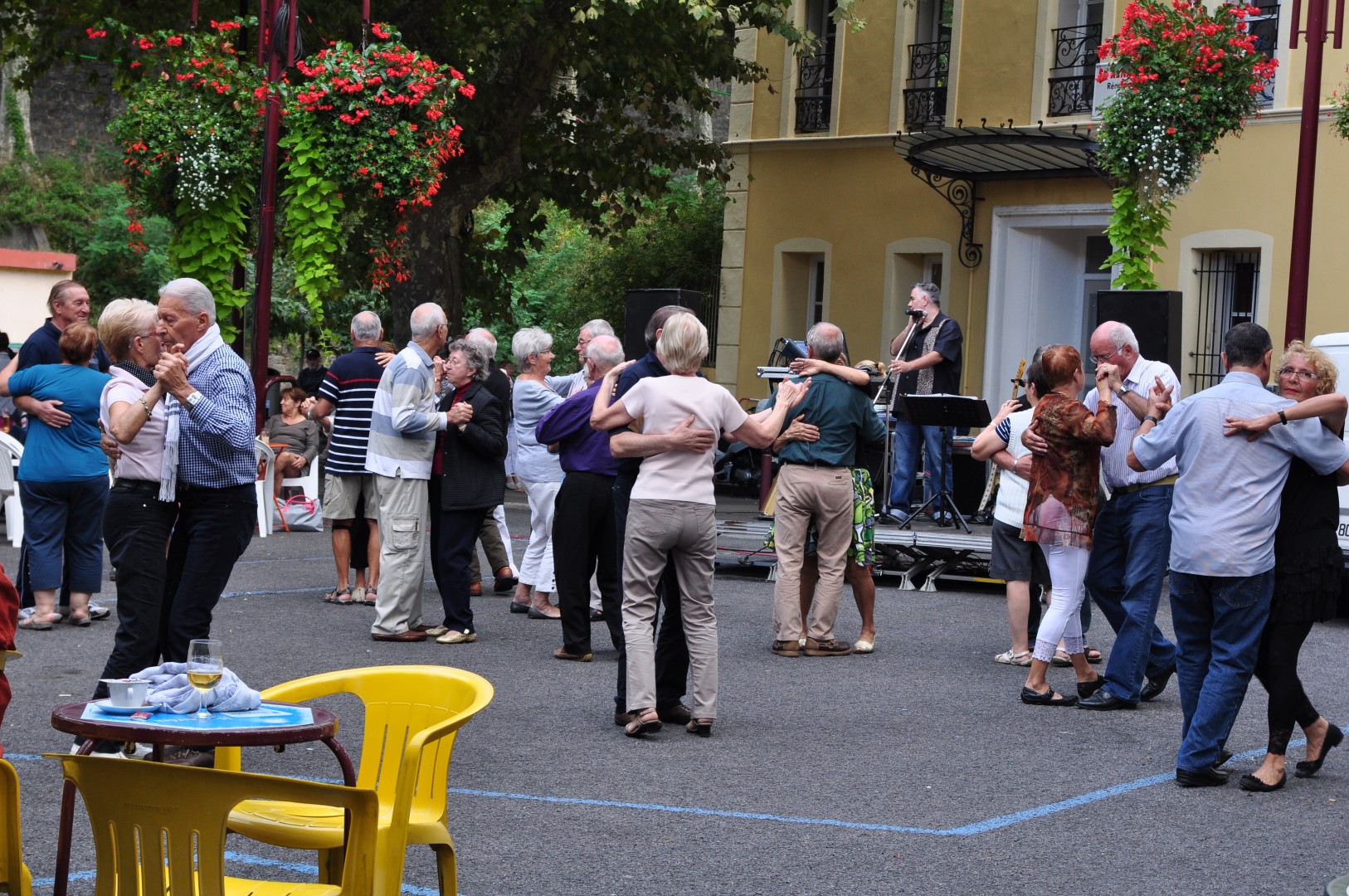
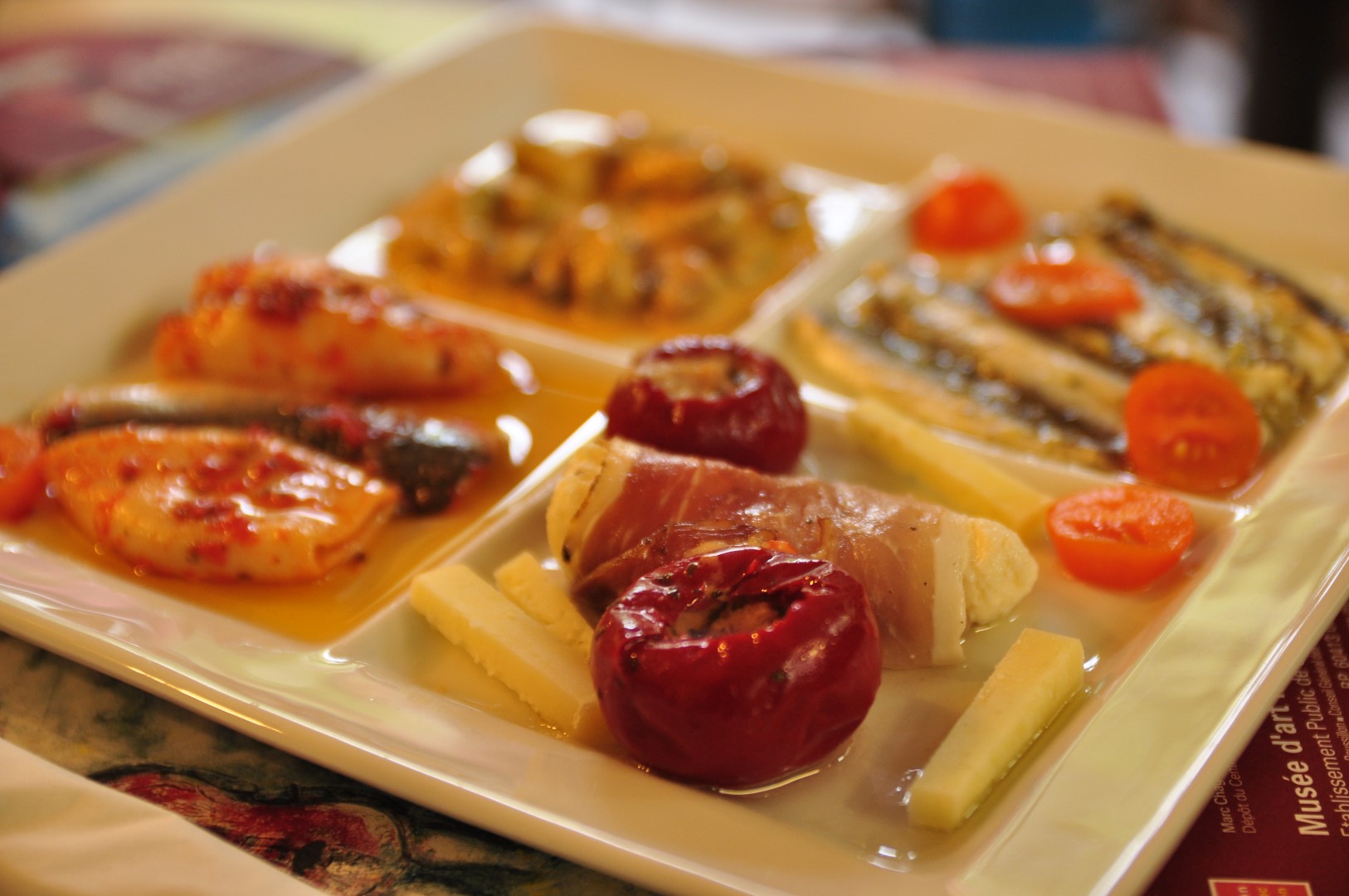
On the evening we arrived we drank muscat and ate fresh local anchovies, stuffed peppers and cheese and watched on while Pierre slated Chris for England´s recent Rugby World Cup loss to Wales. (This was done in French, but no translation was required.) On another evening, we drank too much sangria while a musician entertained dancing locals with some songs I´d never heard but haven´t been able to get out of my head since (like this and this). He also belted out a few English songs, and rather endearingly managed to step all over Elvis´s Blue Suede Shoes (¨Well itsannah fowanunny, anu fowannu, athee agennanney no GO CAT GO!¨).

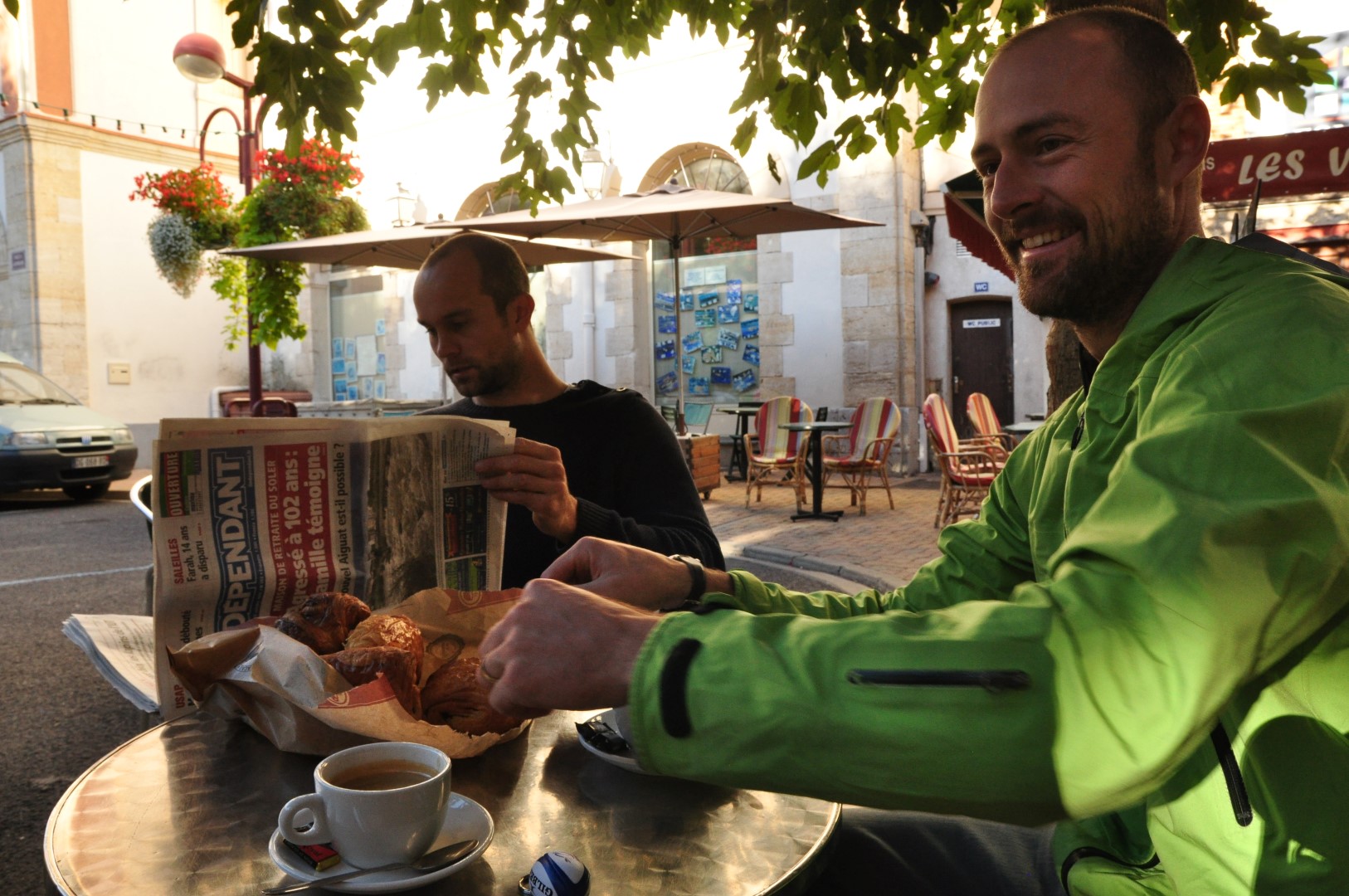
We also spent two mornings at this cafe crashing Chris´s normal routine of breakfasting with his vivacious ´extended French family´ on coffee and criossants (and second-hand smoke) – loving everything about the company and location so much that I had to stop myself from joining in the bouts of laughter when someone made a joke, realising sometimes too late that I didn´t actually understand what had been said…
DSC_0347 (Large) DSC_0447 (Large) DSC_0351 (Large) DSC_0330 (Large) DSC_0333 (Large) DSC_0381 (Large)

Part 4: Holiday in a holiday

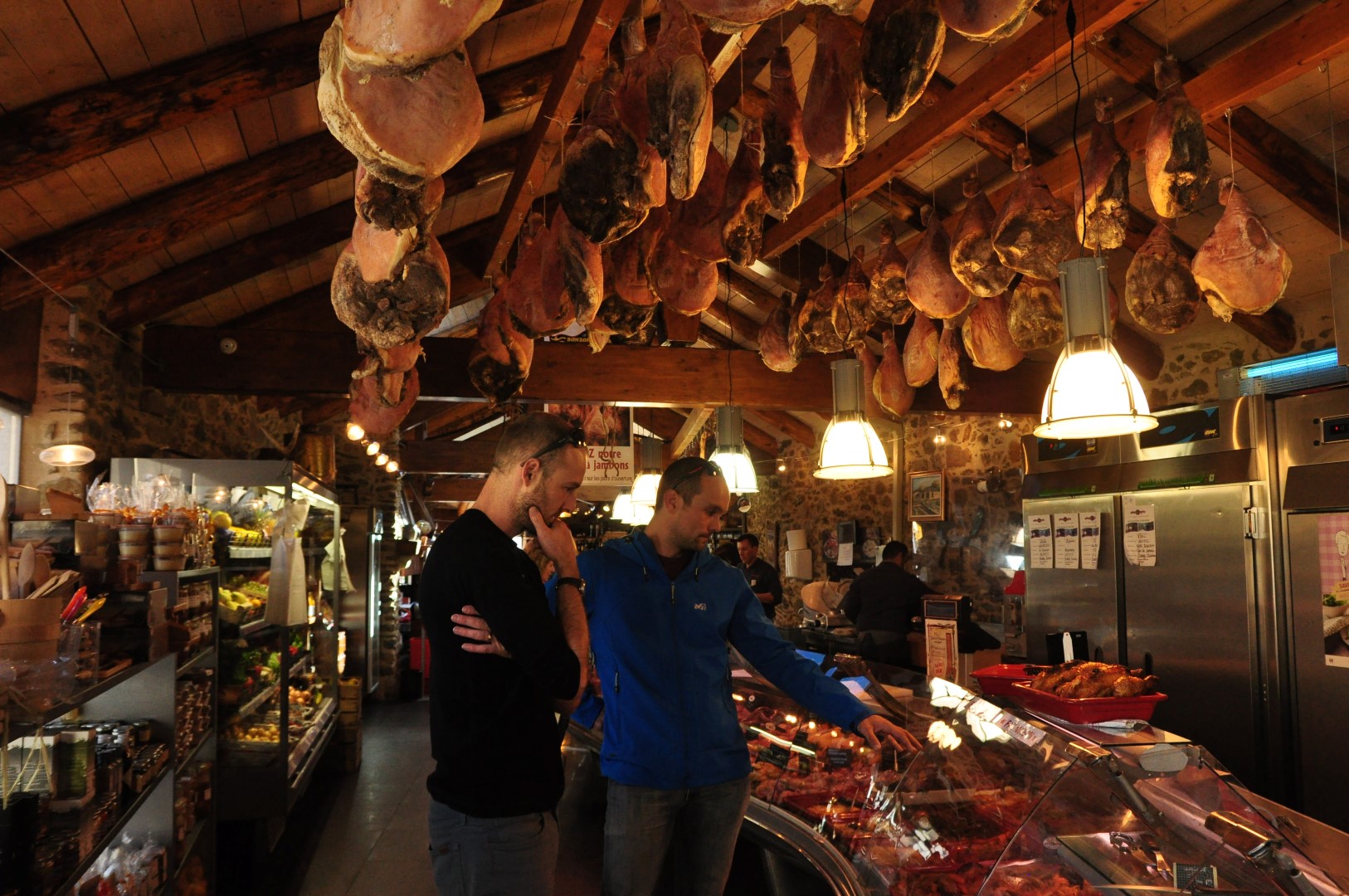
Thanks to Chris and his friends in Amelie les Bain, our well-planned Pyrenees adventure included a couple of nights at Philippe´s family´s holiday house in the heart of the Pyrenees. It was a couple of hours drive away, so we took the scenic route via some fascinating Catalonian villages and local sites, including crossing the border into Spain where we had lunch of potato tortilla and wild boar stew at a sleepy Spanish Catalonian town called Queralbs and stopped off to stock up for dinner at a locally famous charceturie.
DSC_0121 (Large)

​Another dramatic storm hit as we made it to the collection of lakeside homes that included our accommodation for the next couple of nights (the exact location of which Chris was almost, definitely, sort of, absolutely ​certain – right Chris?!).

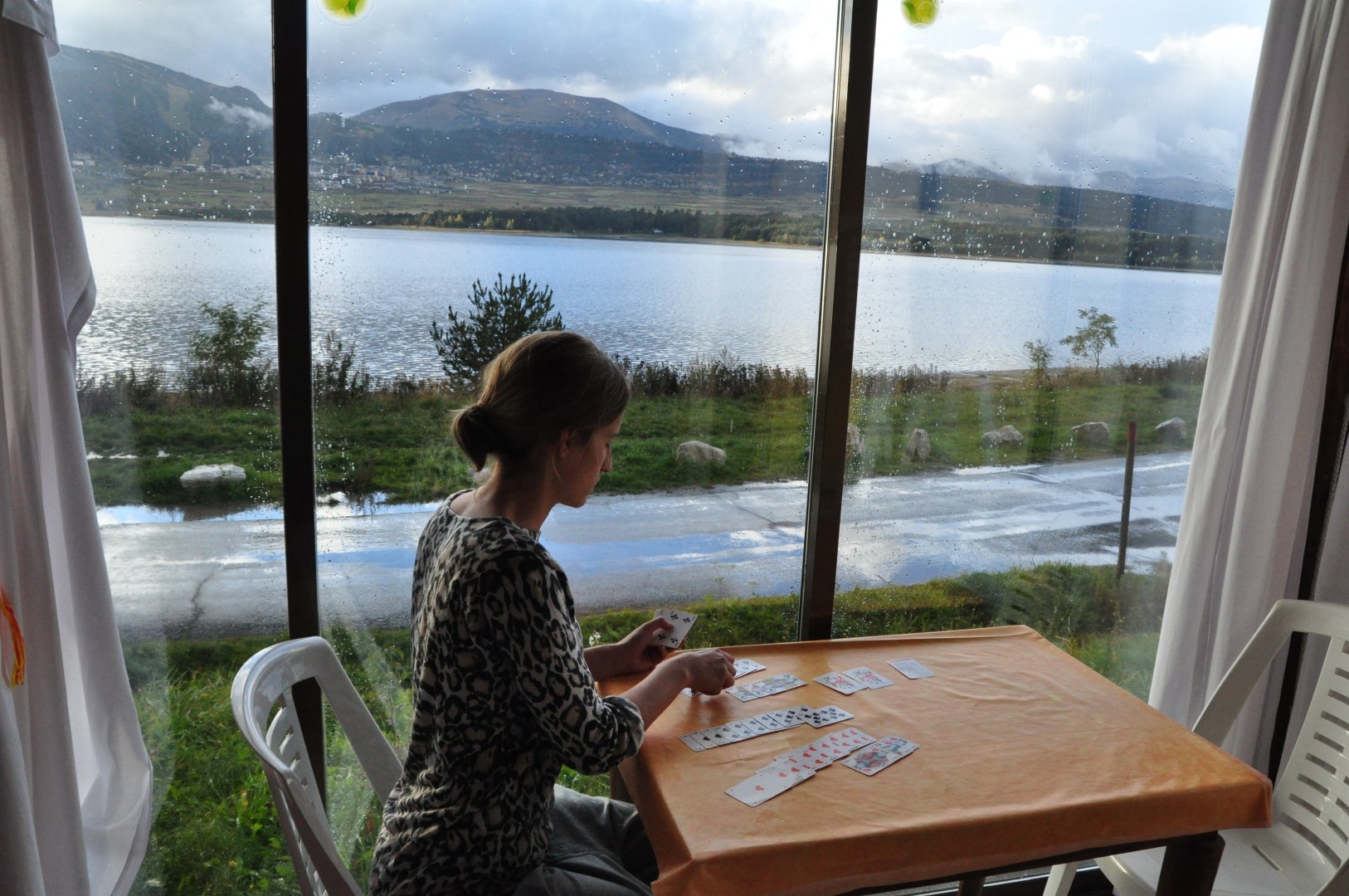
As we darted inside to escape the rain, I instantly knew I was in the kind of holiday house that the best childhood memories are made of – packed to the exposed rafters with memories, stacks of well-used board games and, in this case, stunning views over Lac de Matmale and the twinkly lights of a sleepy, off-season ski village across the water.

Cue cracking open a few beers, starting up a game of cards, snacking on cheese, pate and Fideuà (Catalonian paella made with pasta) ahead of our next adventure the following day.
DSC_0129 (Large)

Part 5: Puig Carlit (well, almost!)

We awoke to clear skies for another early start with coffee and croissants and a short drive to the start of the day´s hike – made longer stuck behind some very chilled out cows along the way.

DSC_0142 (Large)

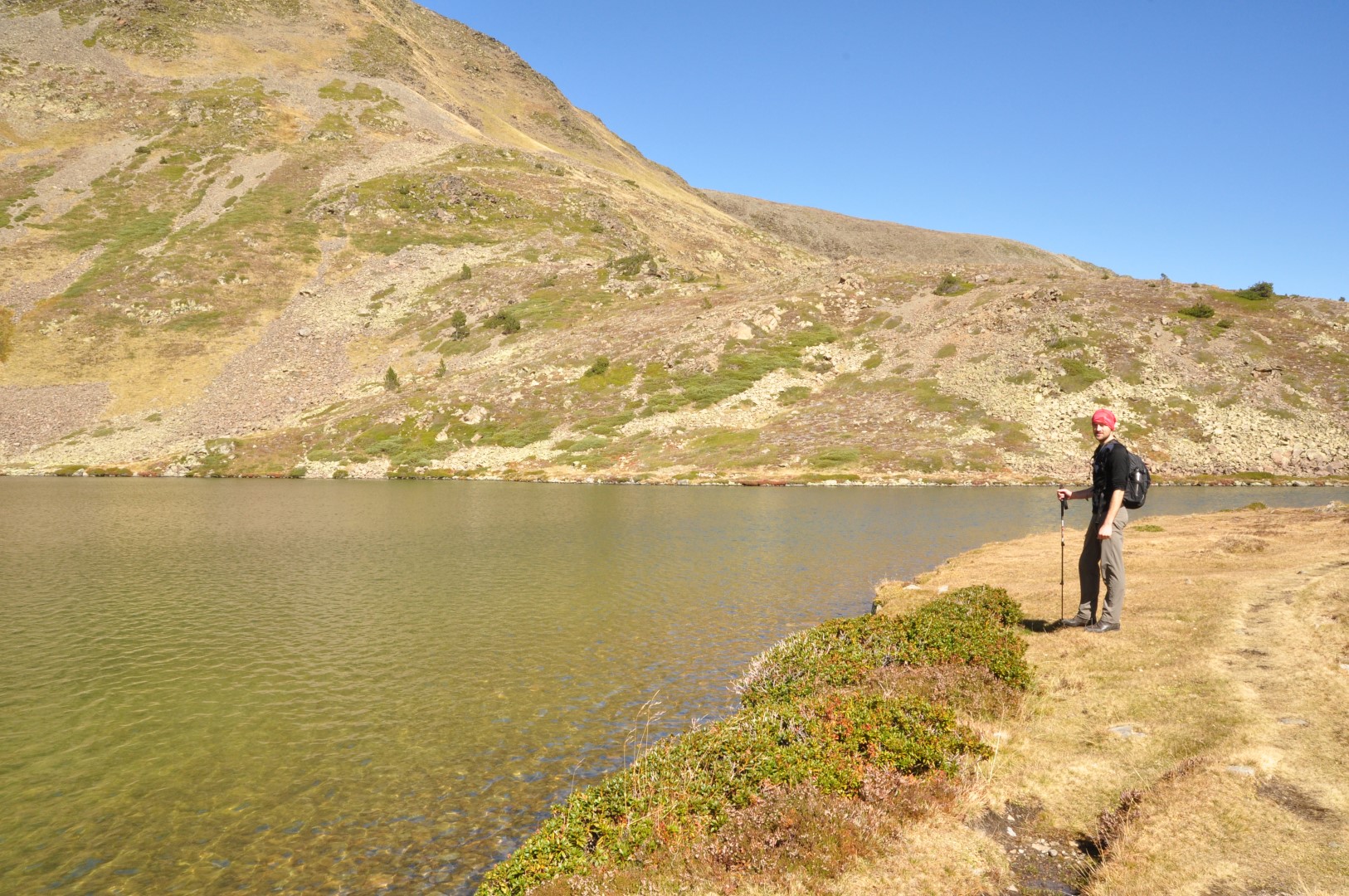
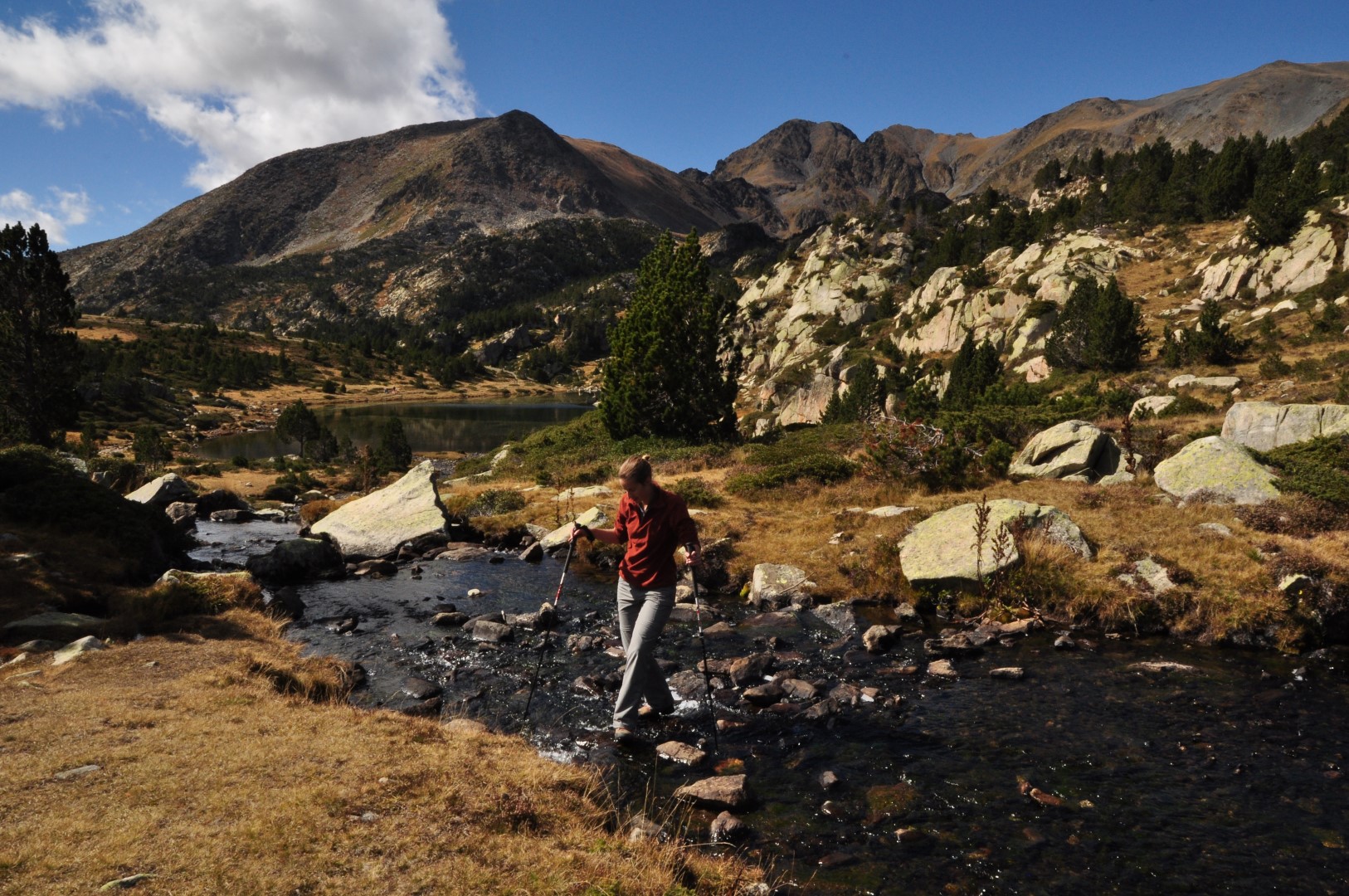
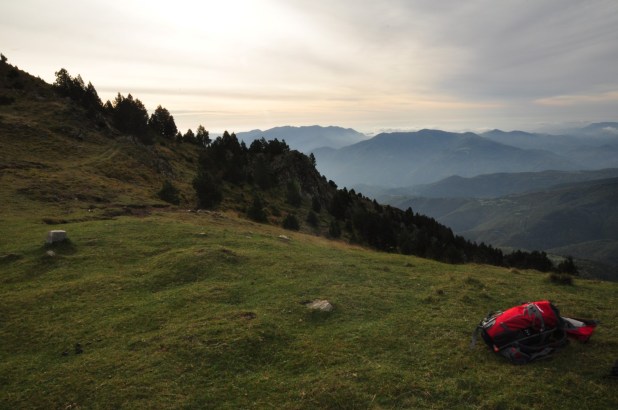
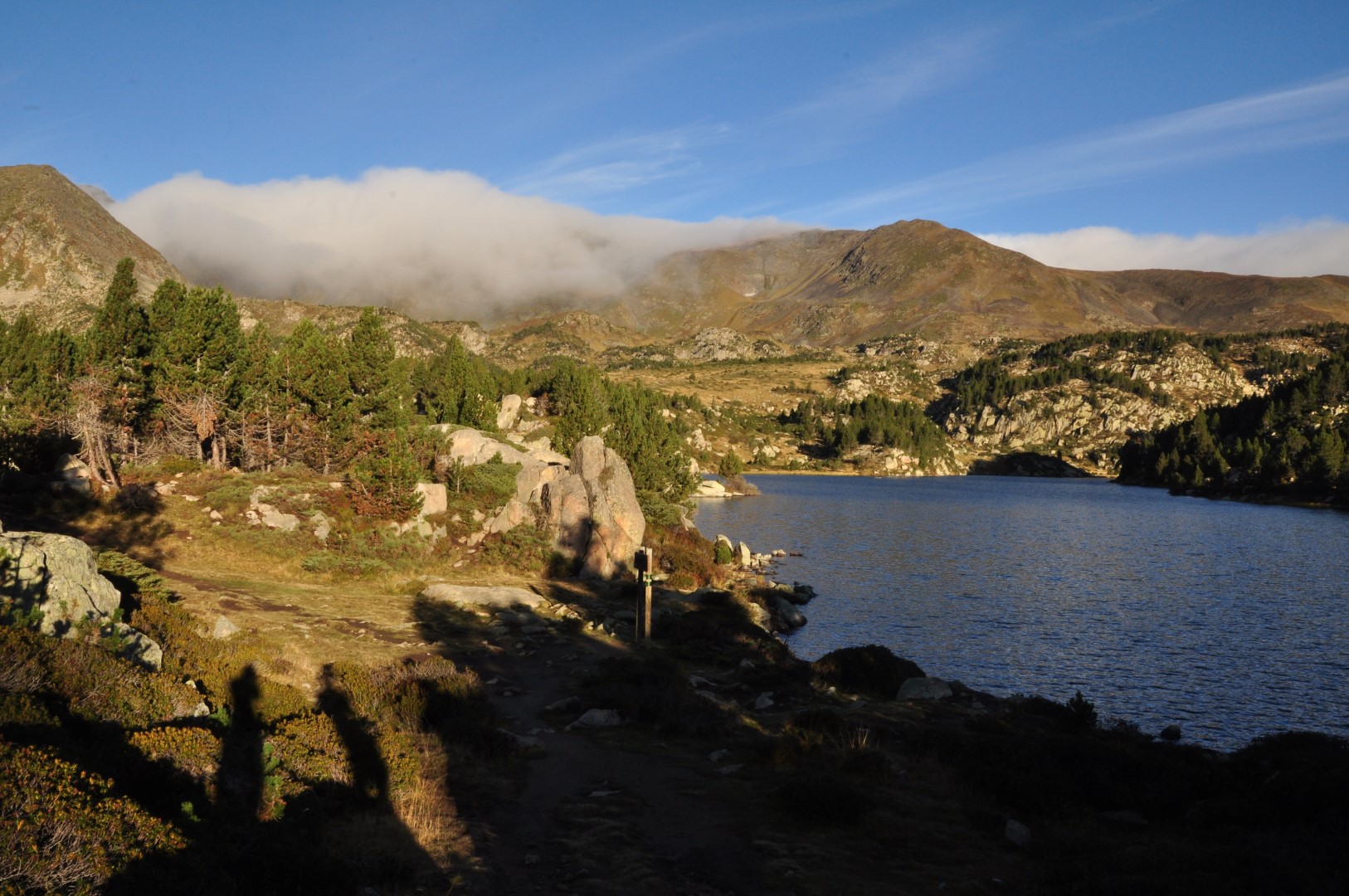
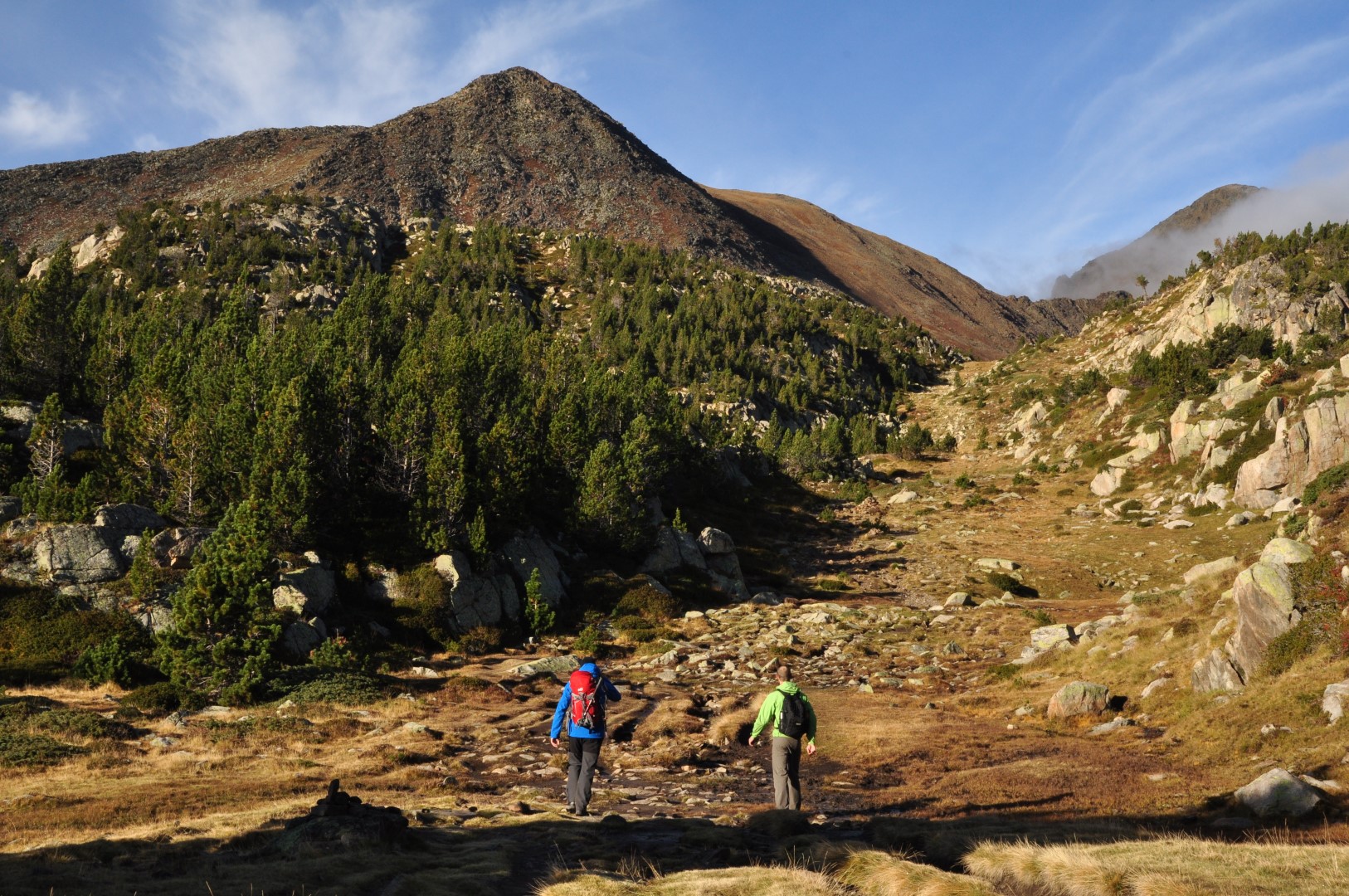
The scale and drama of the scenery here was almost beyond words – perhaps a combination of what I imagine Yosemite and Switzerland might look like? (Having seen neither!). Distant, jagged peaks, huge stands of coniferous trees and brilliant blue mountain lakes that sparkled under the bright day, including Étang du Lanoux, the biggest lake in the Pyrenees.
DSC_0155 (Large) Puig CarlitCatalunya hike adventure DSC_0167 (Large) Puig CarlitCatalunya hike adventure DSC_0223 (Large) DSC_0157 (Large)

DSC_0232 (Large)

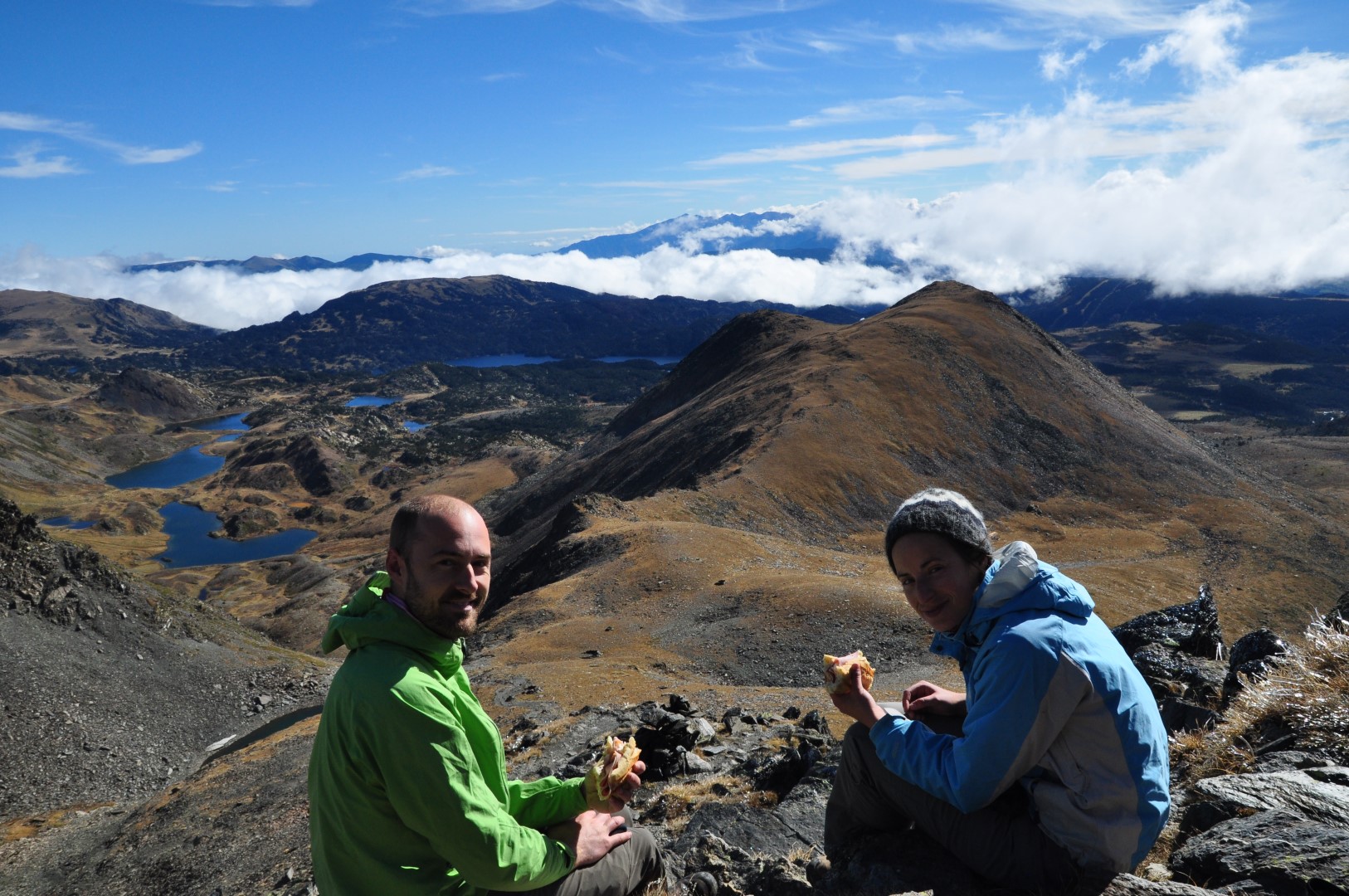
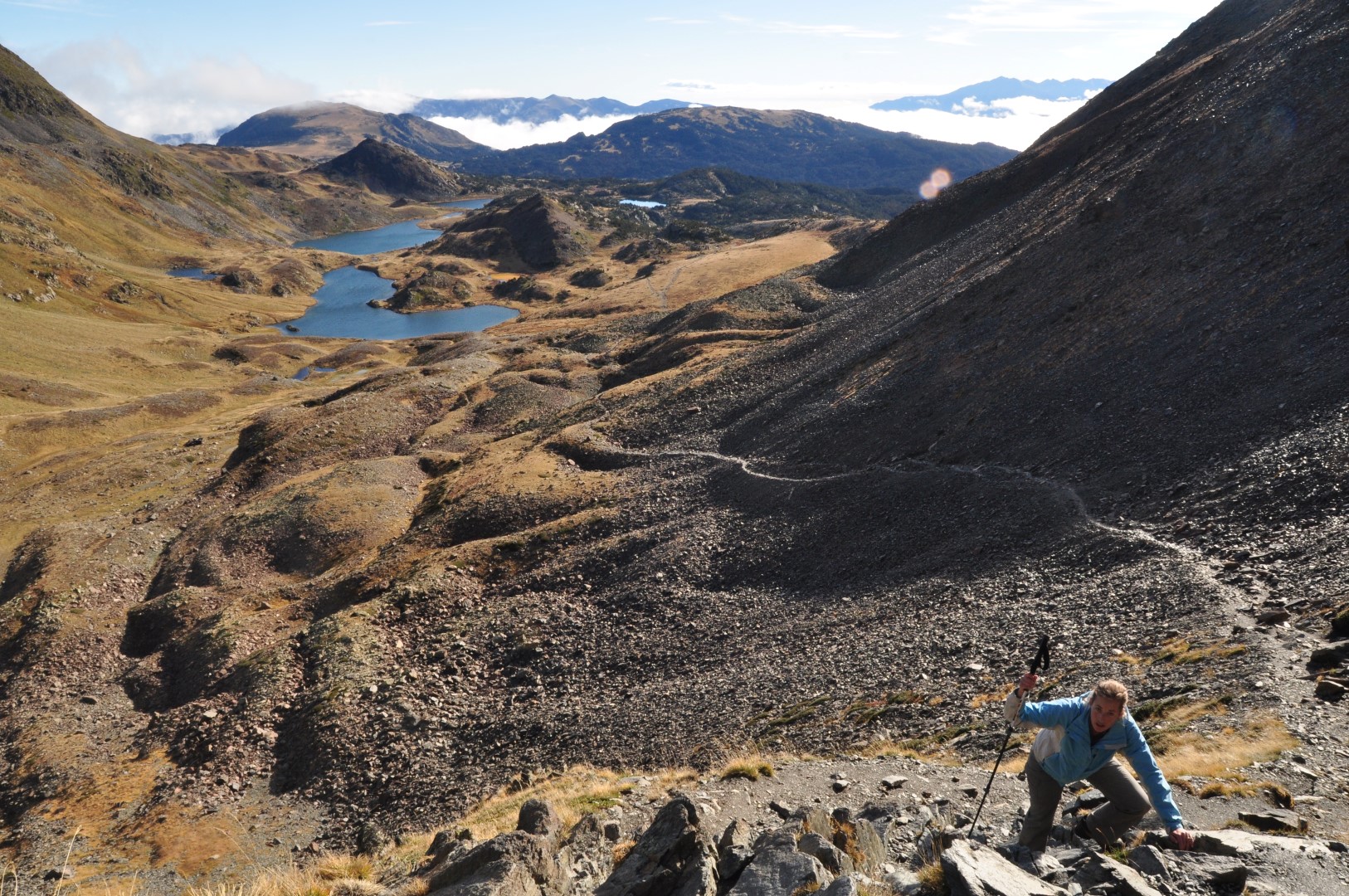
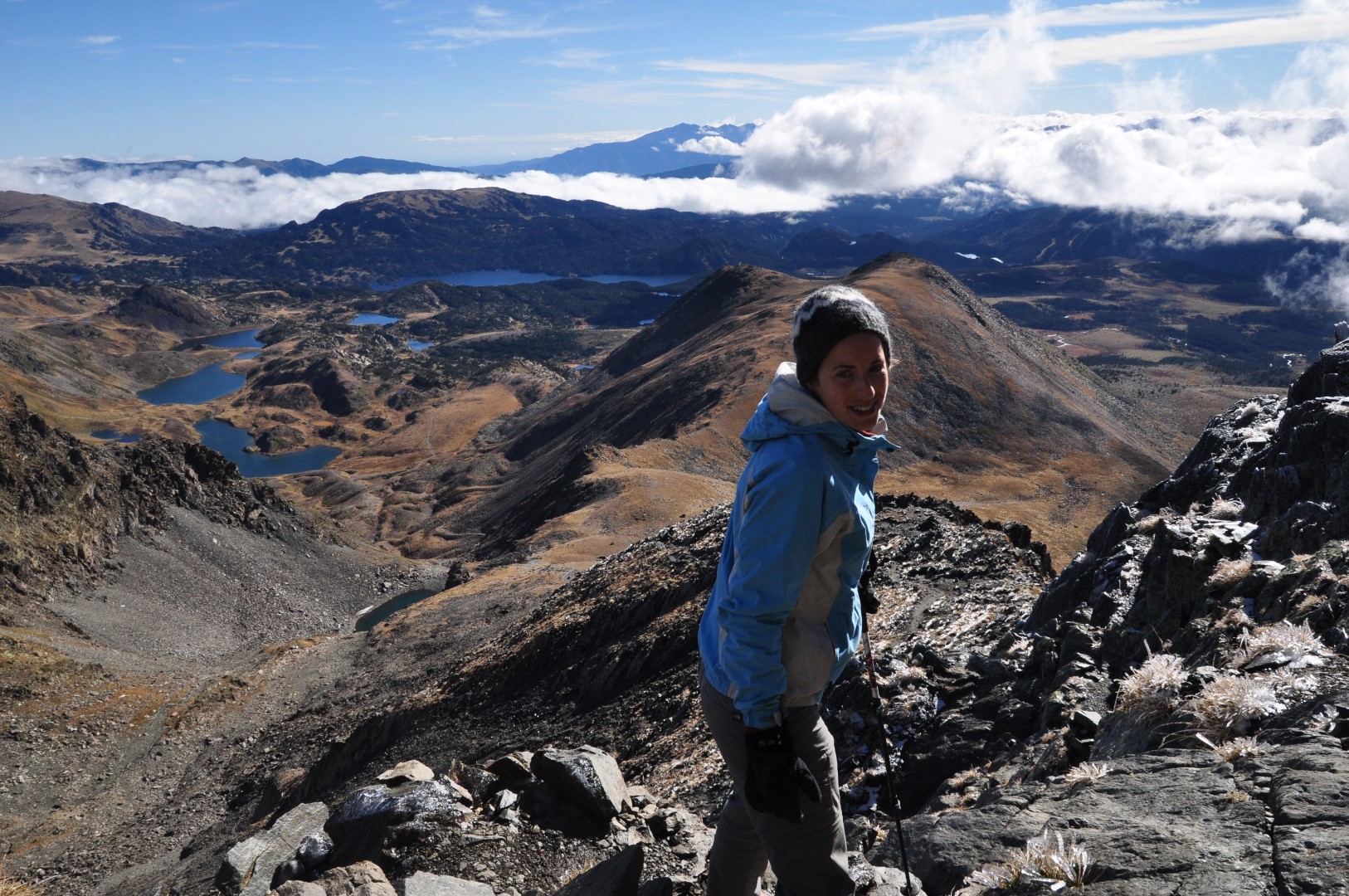
On this truly stunning hike, things only started to move a tad outside my comfort zone as we neared the summit of Carlit and the path started to climb until it became rockier and rockier and, as it was the cusp of seasons, a bit icy, with some surface snow. And so, I´m not ashamed to admit (although Chris did give us permission to lie!) that I didn´t quite make it to the summit – we were literally only about 50 metres away, but I´m no mountain goat and it was more of a climb than a walk and the rocks were slippery AND it was a long enough fall down! Paul stayed behind with me through sheer chivalry, naturally, and we left Chris to reach the frozen cross at the summit, while we found somewhere to wait for him and to have lunch – baguette, ham and Camembert, naturally.
DSC_0174 (Large) DSC_0193 (Large) DSC_0208 (Large) DSC_0212 (Large)

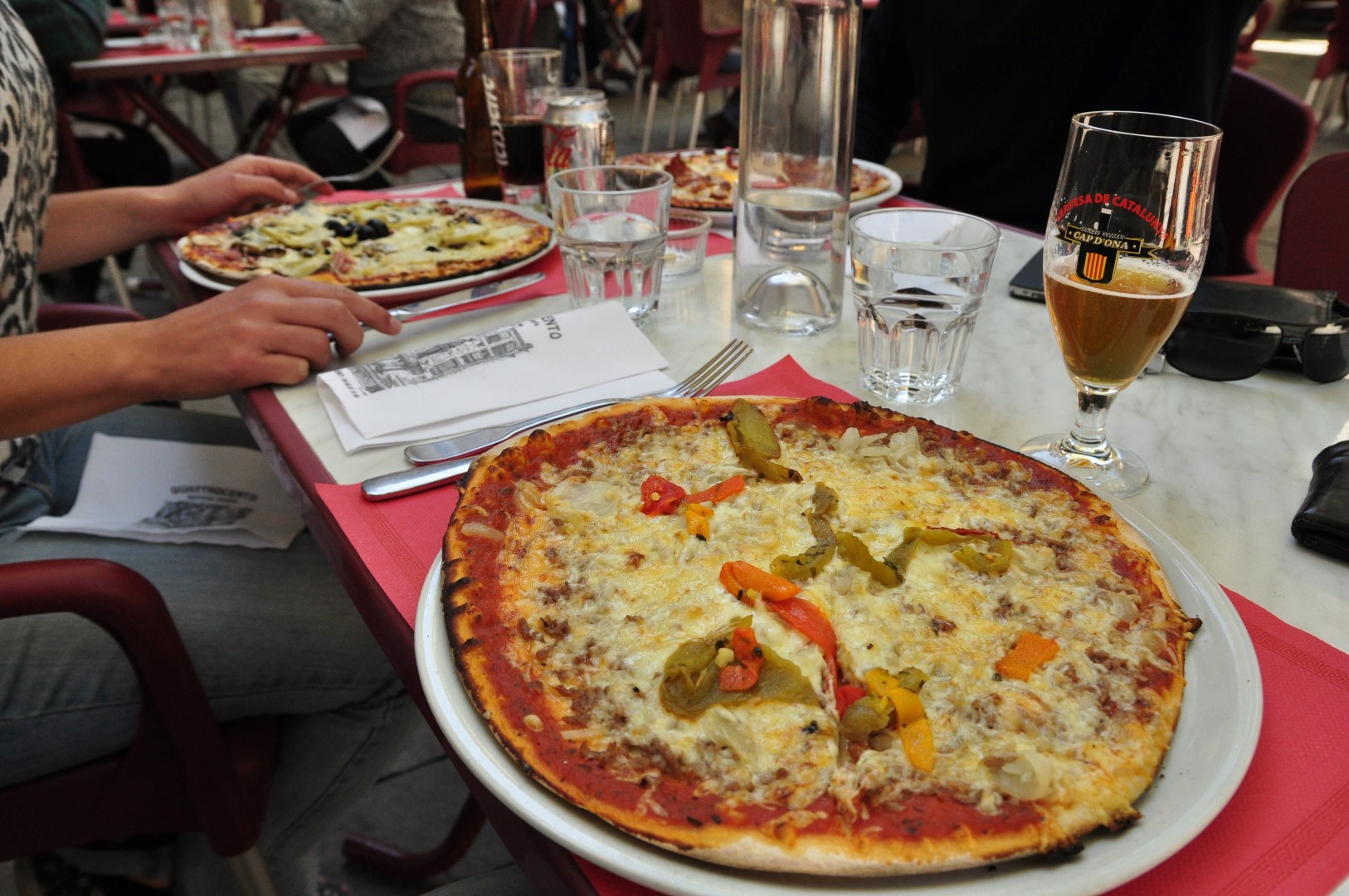
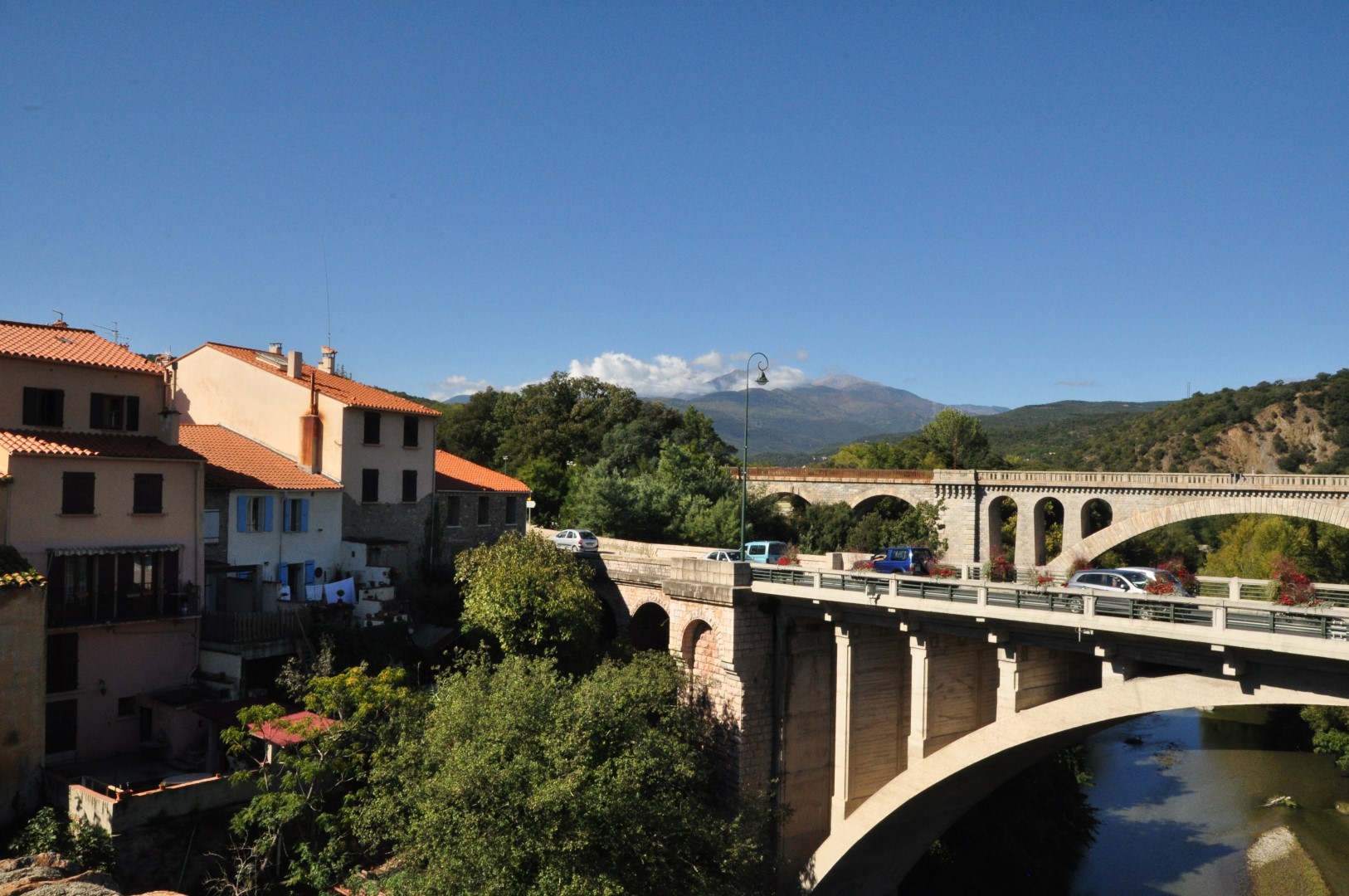
That night I miscalculated and cooked enough beef and veg stew to feed an army, while Paul disturbed all the village dogs with the noises he made whilst wading into the ice-cold lake to soothe his dodgy knee. Said dodgy knee would also mean that Puig Carlit would be our last big hike of the trip – there was only one other we had planned to take, but this was replaced with a day eating pizza and looking at local art in another village called Ceret, which is about as good as Plan Bs get.
DSC_0421 (Large) DSC_0413 (Large) DSC_0432 (Large) DSC_0435 (Large) DSC_0397 (Large)

After a couple more days of sight seeing (an abandoned military fort, a hill top monestry, the Devil´s bridge that maims not kills and so on…) we spent our last night back in the lovely old water mill house, where we (inadequately!) returned the incredible hospitality we´d received by cooking dinner. Chris also helped us translate a short thank you speech which I read out in French and which everyone in the room except Paul and me seemed to understand, which was a good sign.

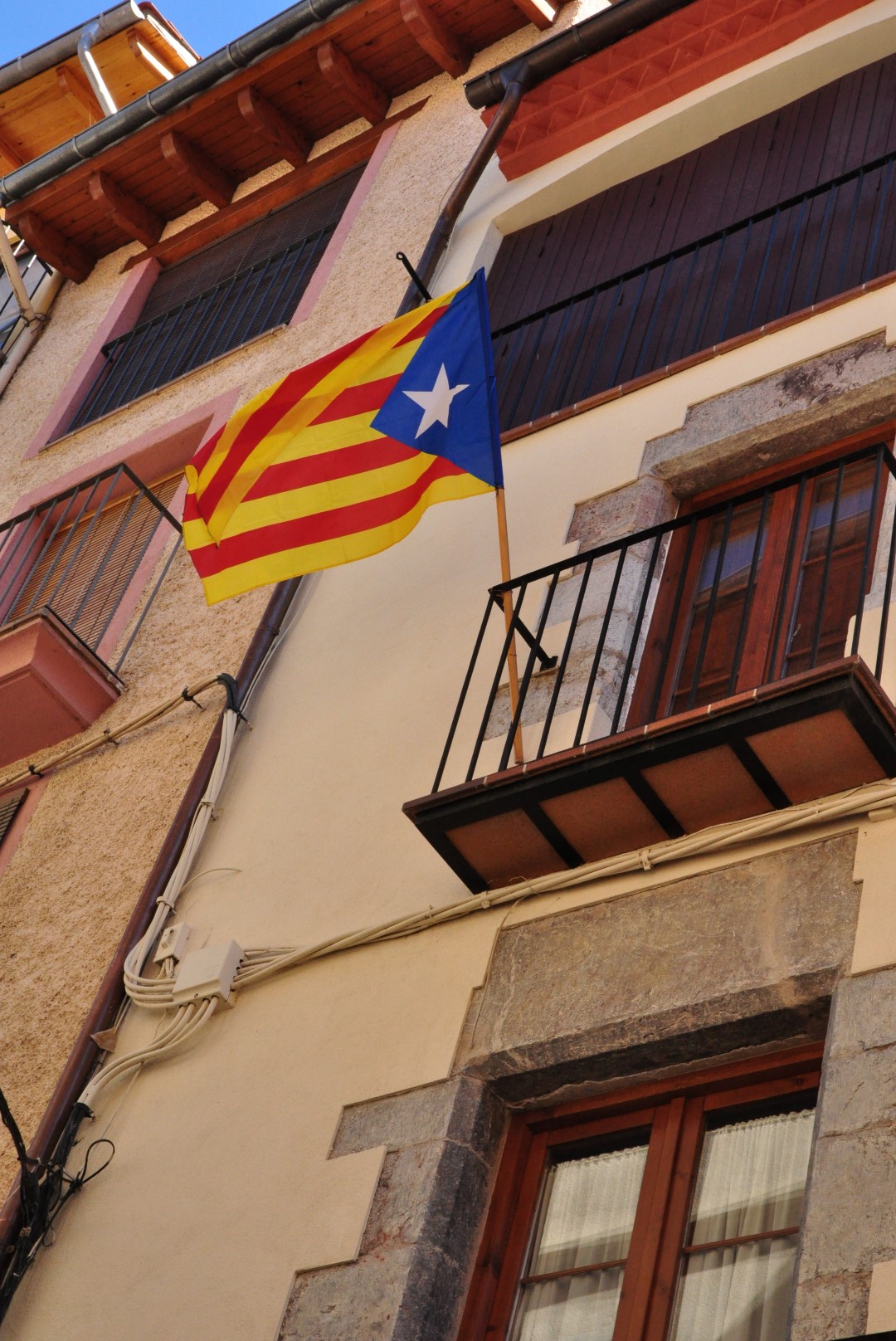
Then it was time for one last coffee at Chez Toinette before our next stop: the city lights of Barcelona, where, if it weren´t for the red and yellow Catalonian flags dangling from every balcony, the sleepy charming villages of French Catalonia just on the other side of the Pyrenees would have seemed a million miles away.
DSC_0106 (Large)

Exploring Exmoor

Sometimes you simply have to drop everything and head for the wilderness – even if just for overnight. Nowadays the buzzword for it is ‘microadventure’; whatever you want to call it, it’s often just the escape needed to reinvigorate the soul and whet your appetite for the next big adventure.

Camping Exmoor National Park Gemma Chilton

Saturday night lodgings

It all started with an email to Paul in the middle of the work day on Thursday. The week had already been wonderfully abbreviated, thanks to a visit on Tuesday from our friends Caitlin and Tim from the USA (who reminded us that we should still be tourists in our own town while we can – and that there’s still so much to see and enjoy). Our tent has also recently been repaired after we killed it in Iceland, and so the one-liner email I sent Paul read: “How does whiskey and cards under the stars in Exmoor National Park sound this weekend?” I really didn’t have to twist his arm.

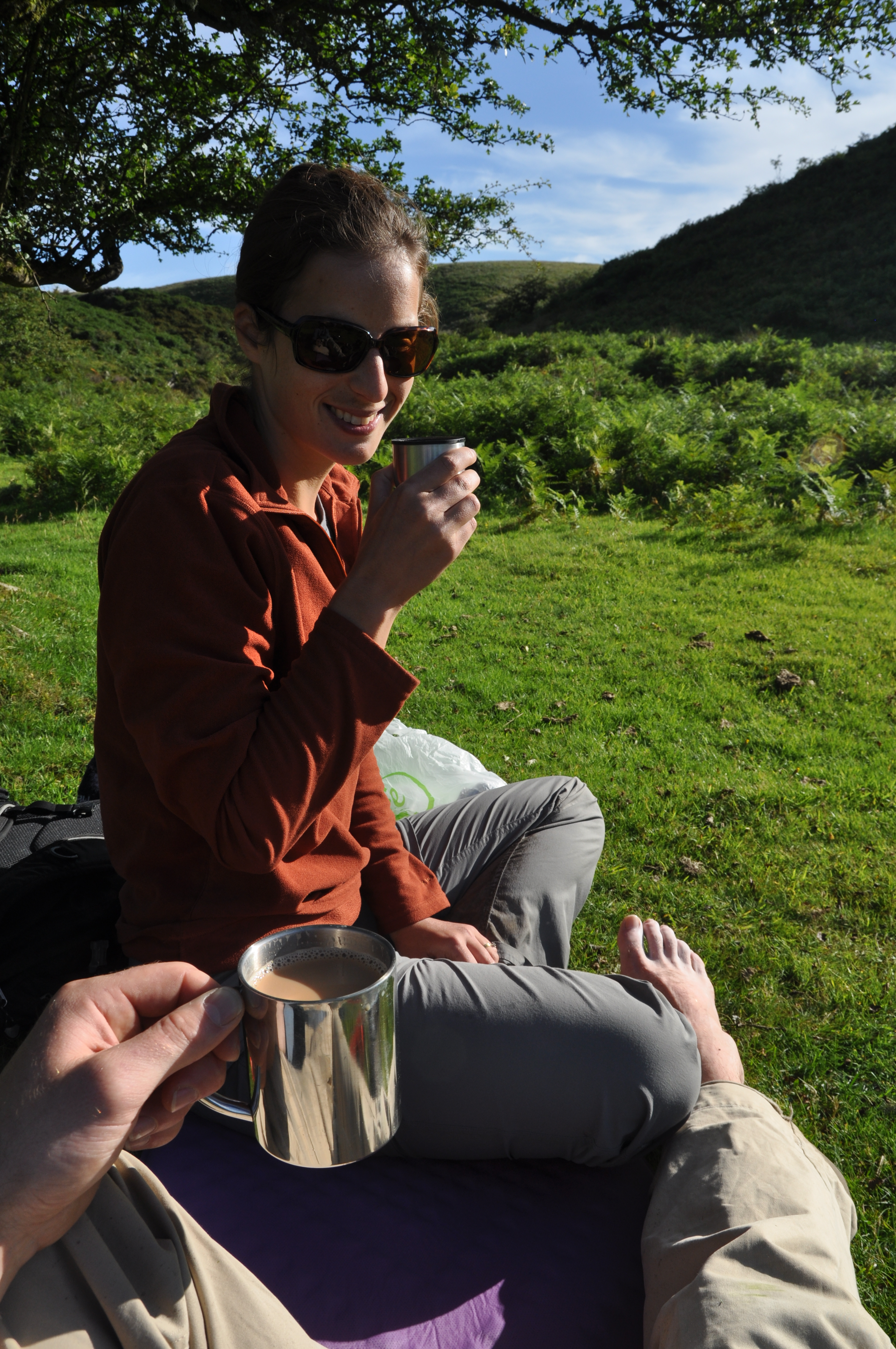
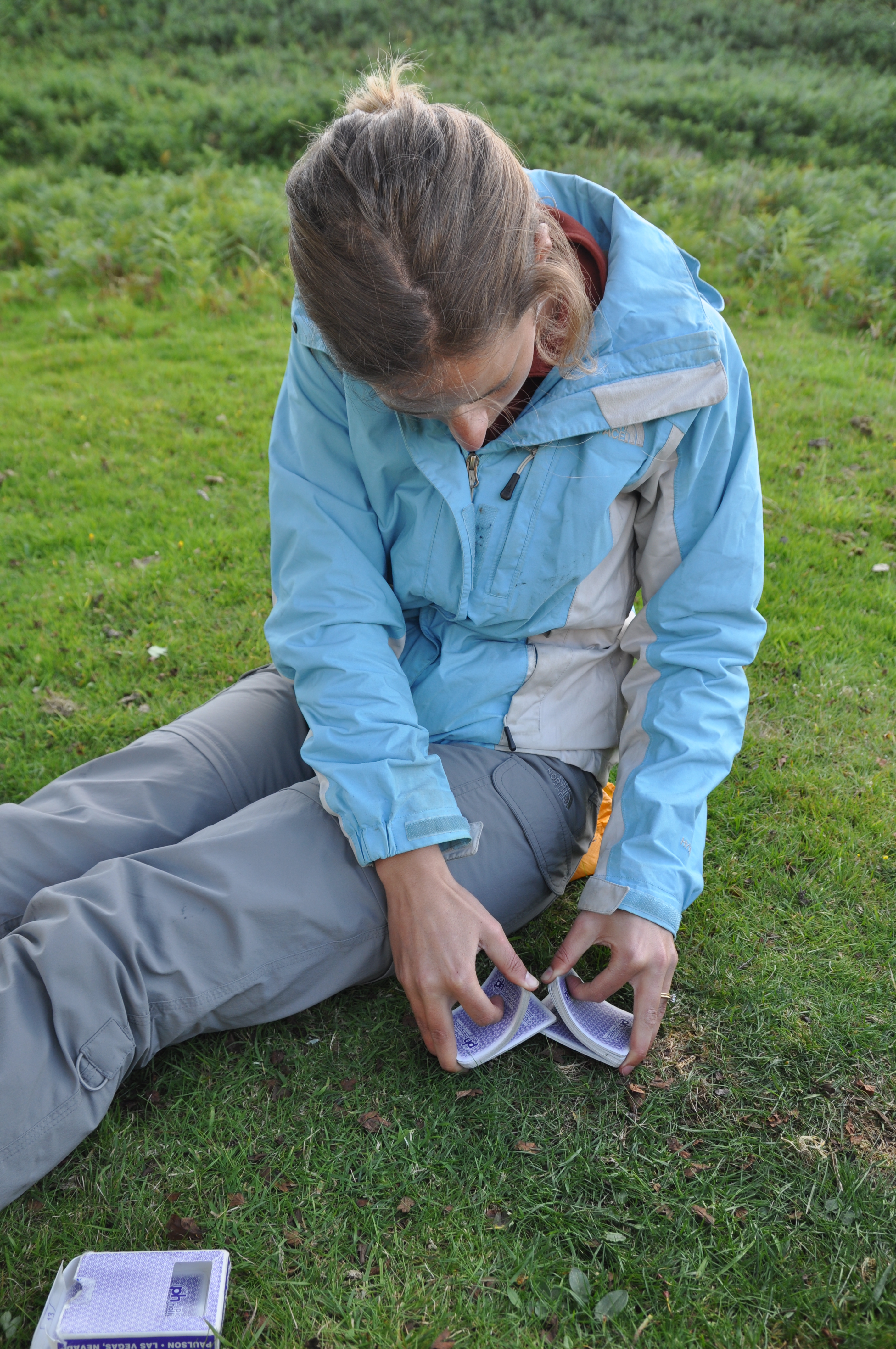
So, on Saturday morning we packed our bags and drove an hour to Lynton, where we forked out £15 for a good topographical map of the adjacent national park, then set off on foot out of the village of Malmsmead, loaded up with camping gear and food (and of course a deck of cards and a flask of whiskey), with a rough idea of where we wanted to explore and eventually sleep the night (Doone Country sounded pretty apt).

Paul Exmoor National Park Gemma Chilton

DSC_0445

DSC_0612

DSC_0561

Unfortunately for Paul, I have an almost uncontrollable urge to make Game of Thrones references when exploring the moorlands and the English countryside. The surroundings are such that I keep waiting for Arya Stark and the Hound to round the next corner on horseback.

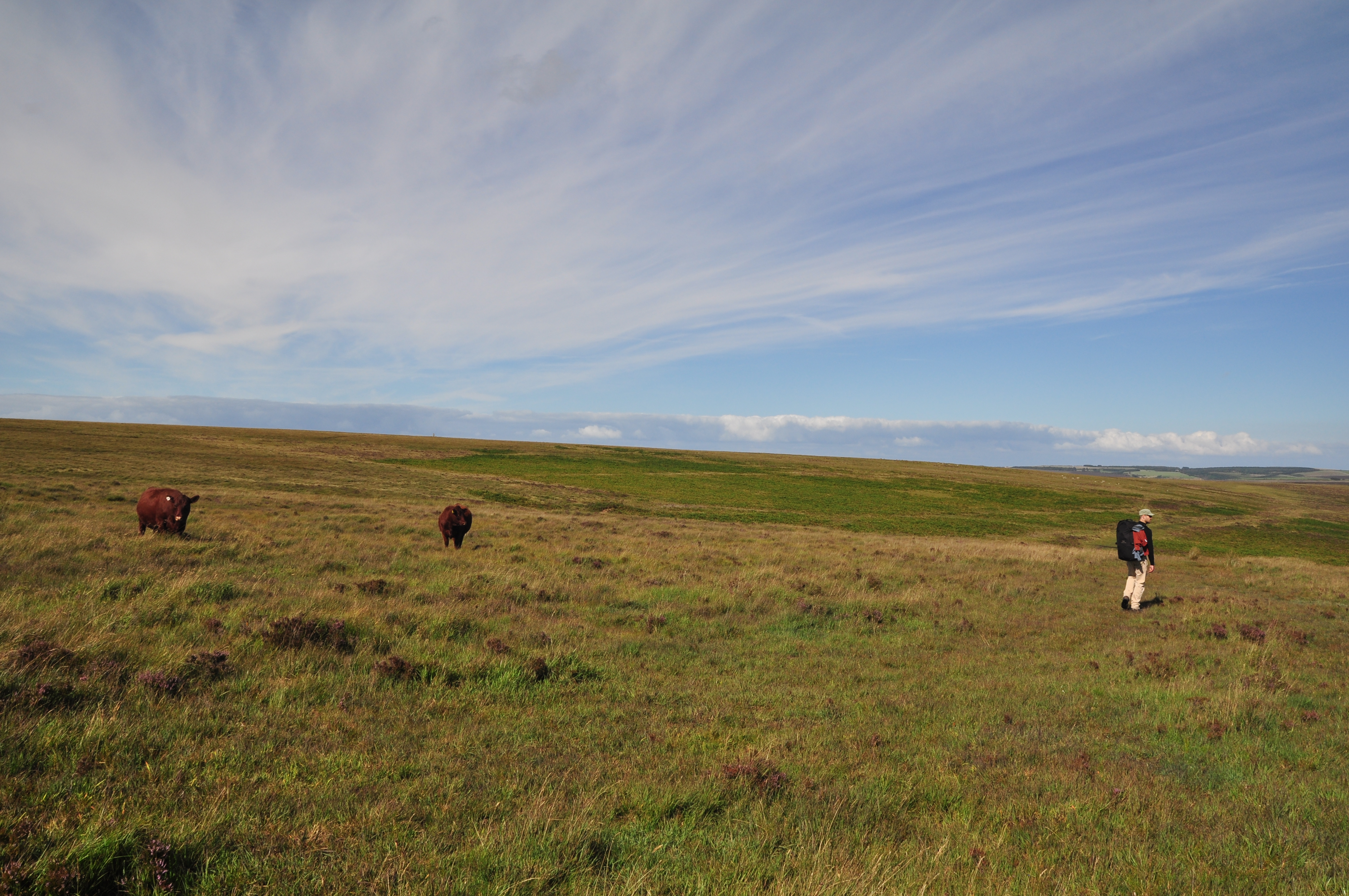
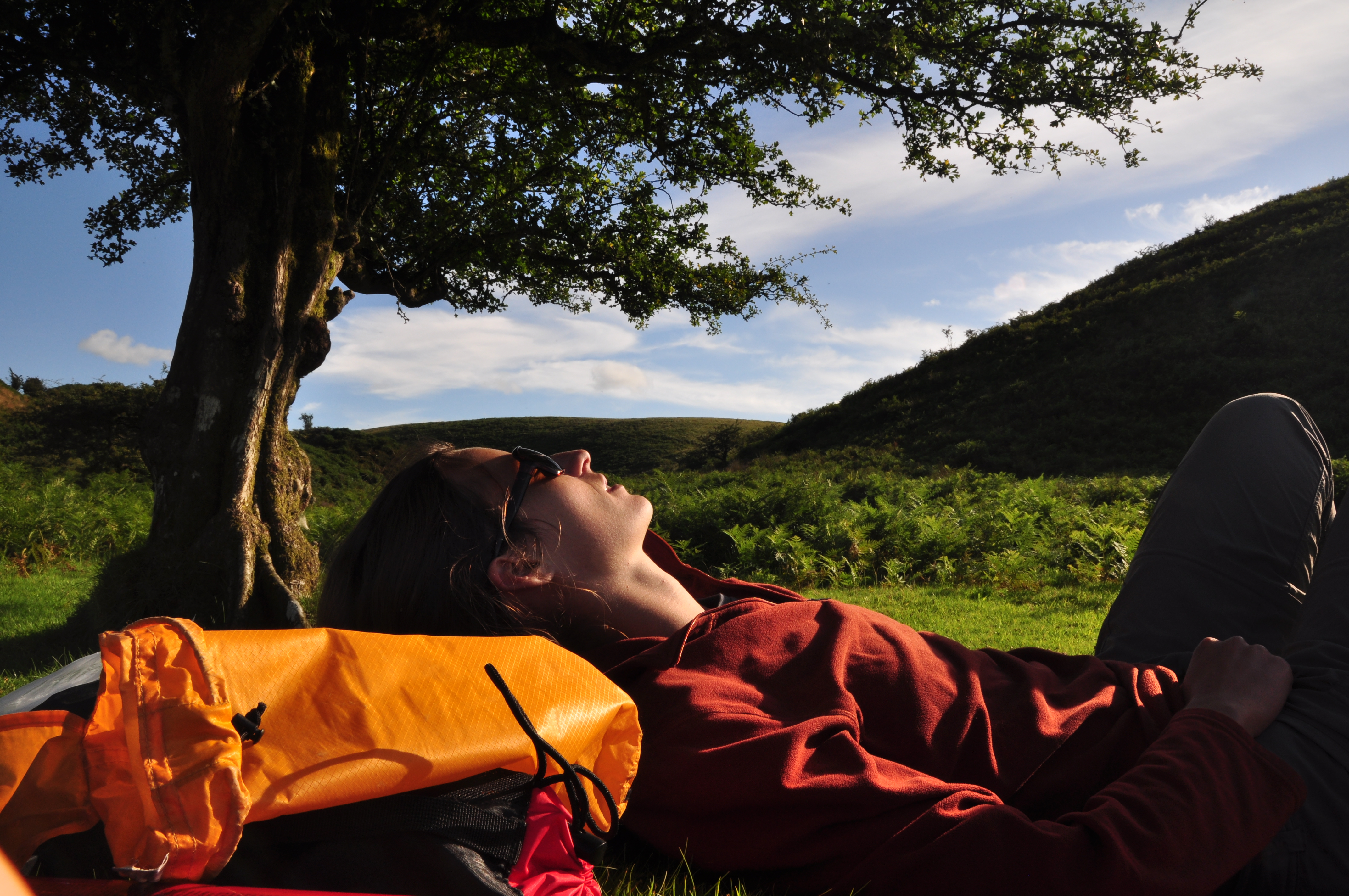
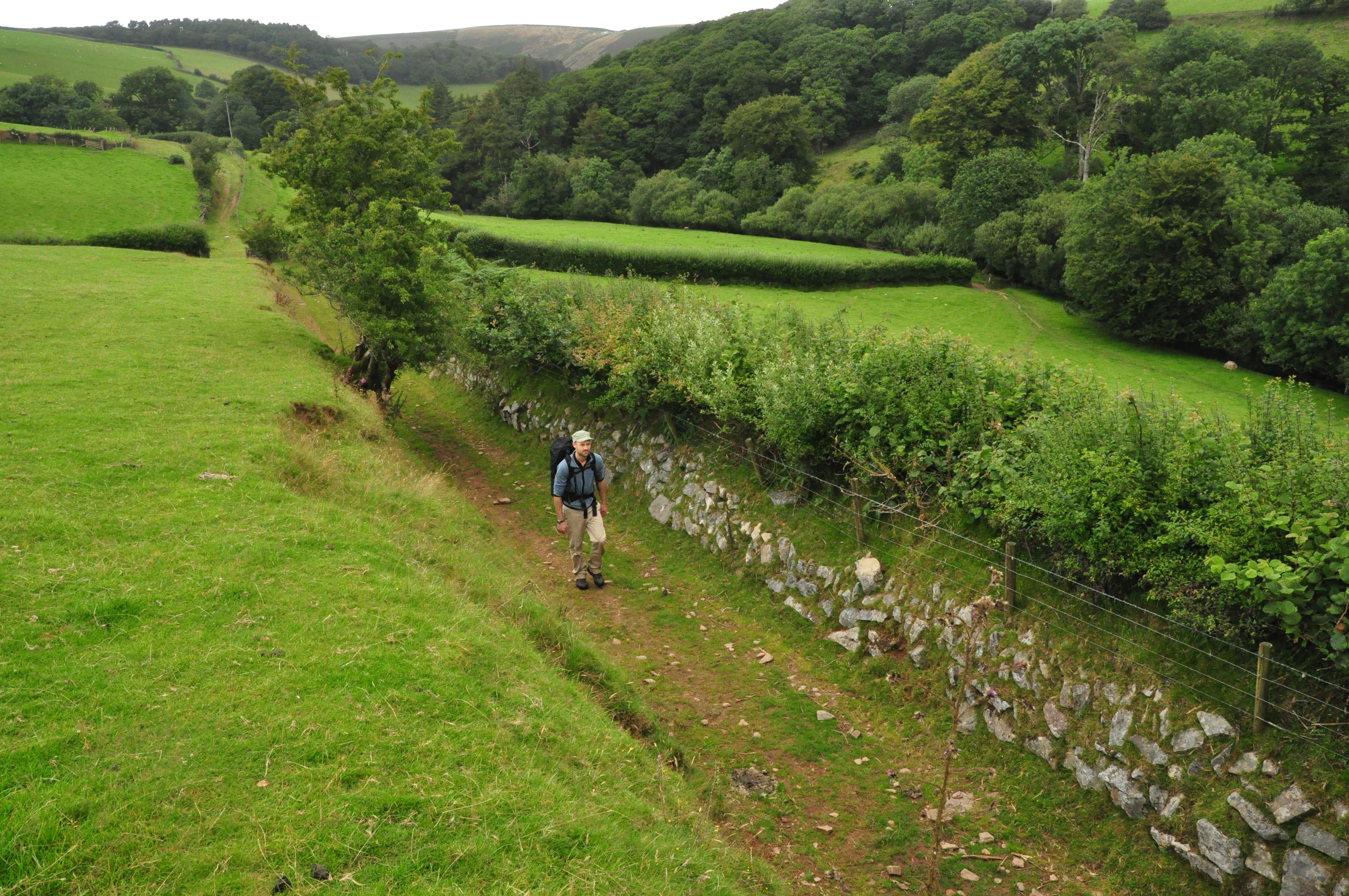
We made our way past ancient stone walls, gnarly old oak and ash trees, hopped over bubbling streams and climbed rolling green hills until we made it to the open expanse of moorland. Another inspiration for the trip had been Exmoor’s designation as a ‘Dark Sky Reserve’, with minimal light pollution and therefore offering excellent star-gazing potential. As we trudged across the endless heath and grasslands, it was easy to imagine how dark it would get come nightfall.

Eventually we made it to a back road that cuts through the national park, where we were surprised to find about a dozen four-wheel drives and horse trailers and distinctly dressed locals – all of which added up to suggest we’d stumbled across the makings of a fox hunt, as Paul pointed out. Indeed, as we found the next part of our hike back onto the moors, we did see one pretty agitated and flighty looking fox dart across the track and away, in between the disinterested cows chewing their cuds. (The look the cows gave us said, “We won’t tell them he went this way if you don’t.”)

Exmoor National Park Gemma Chilton

More local wildlife

Fierce local wildlife

DSC_0591

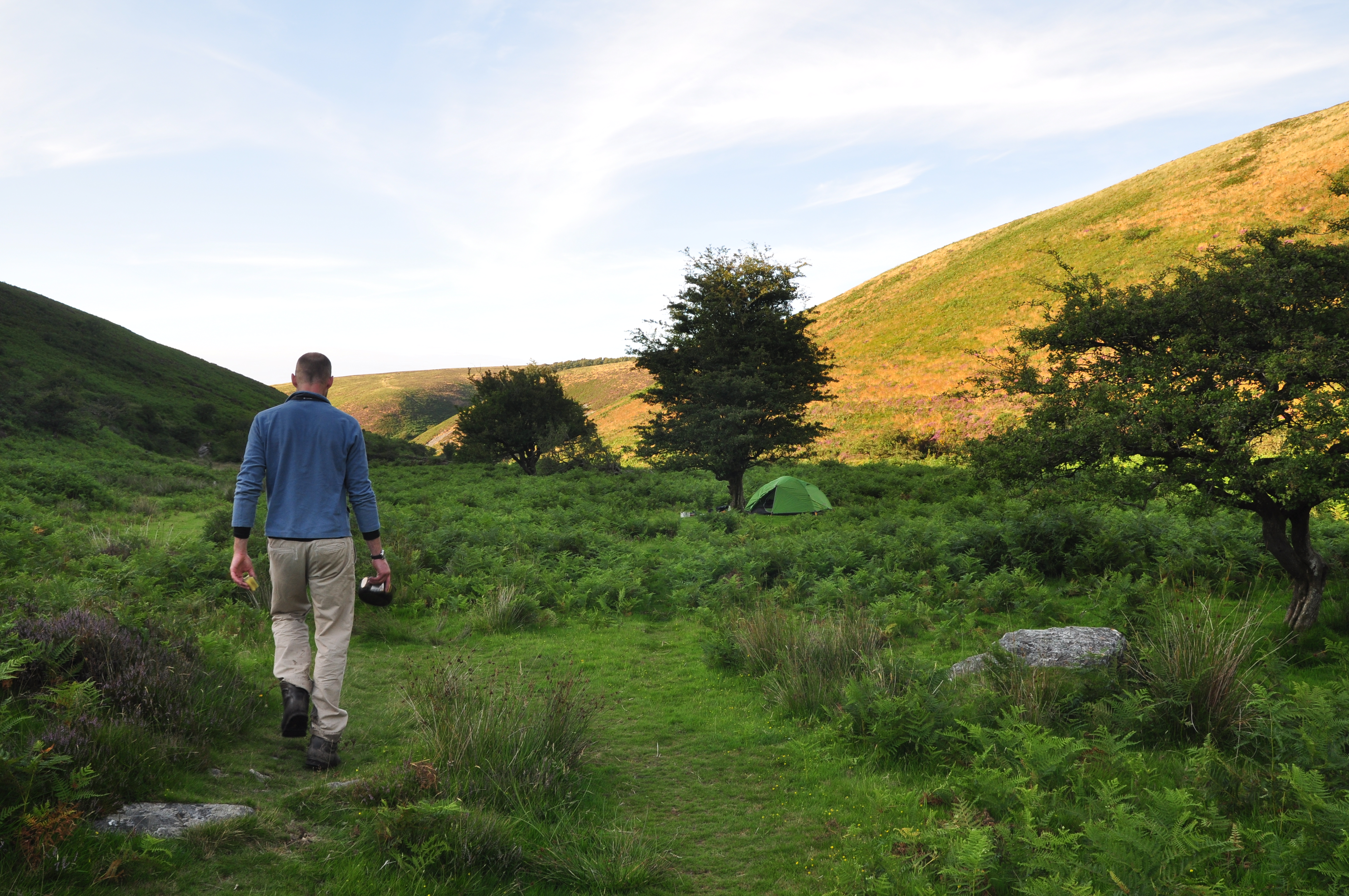
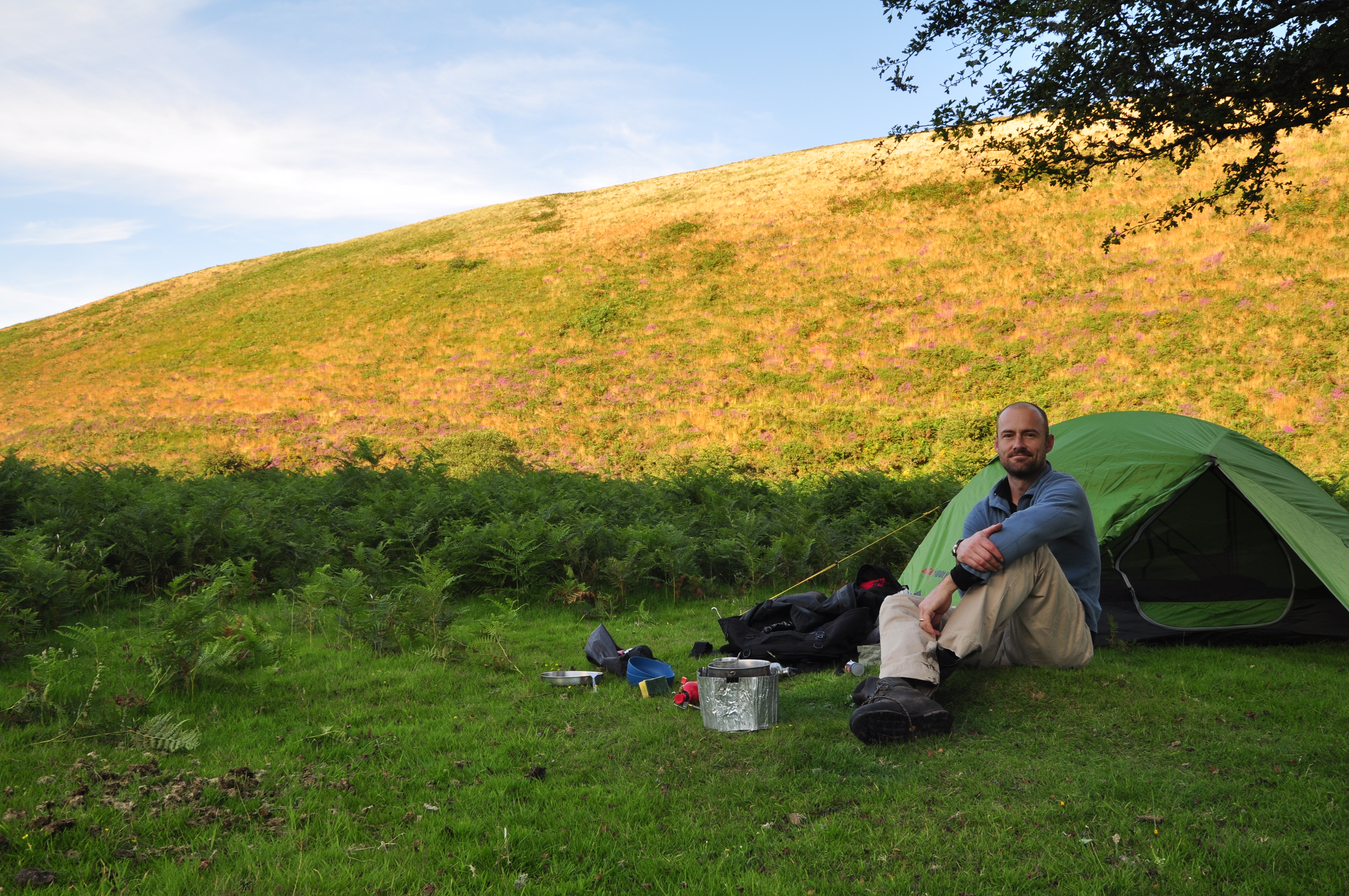
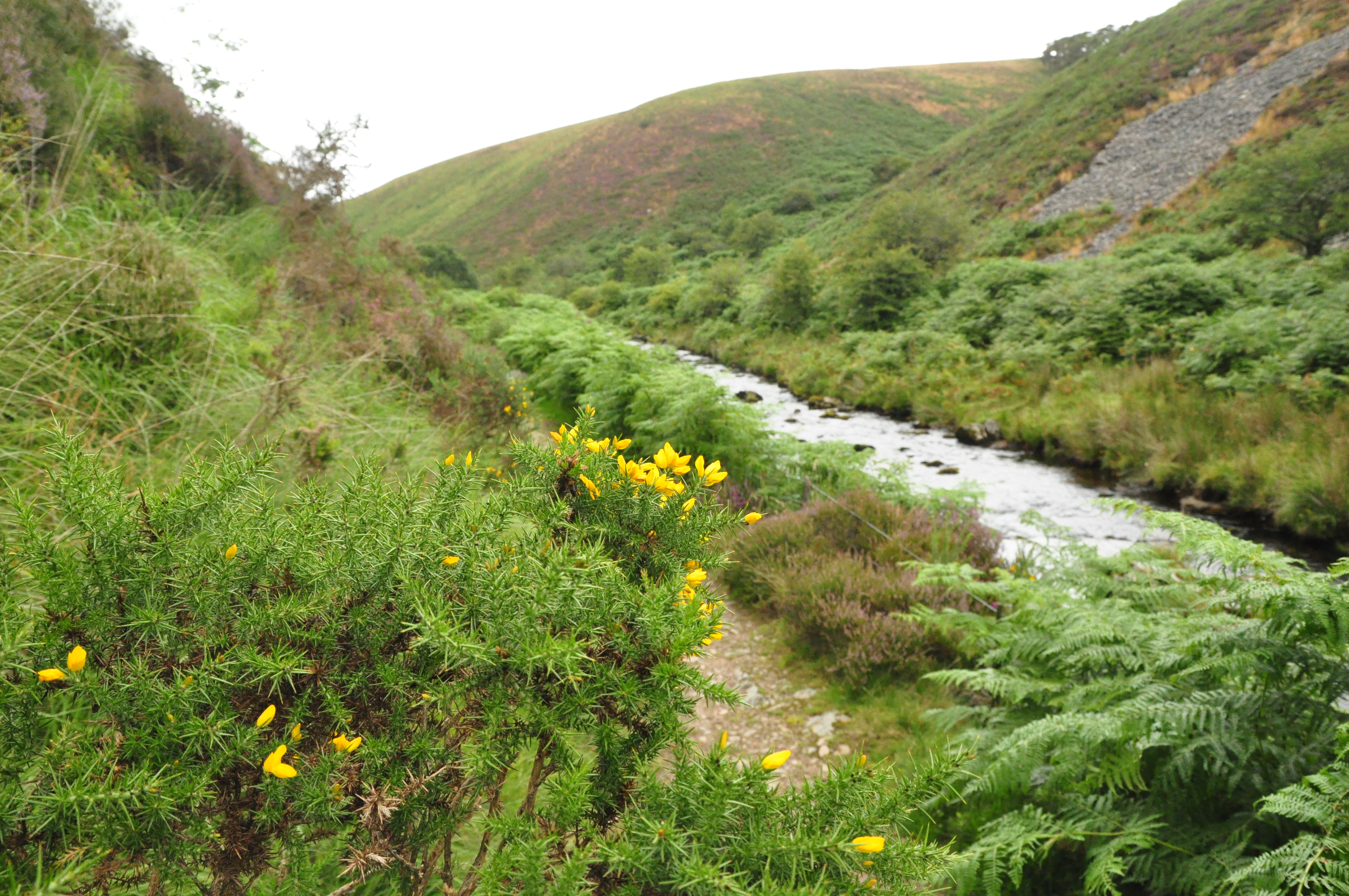
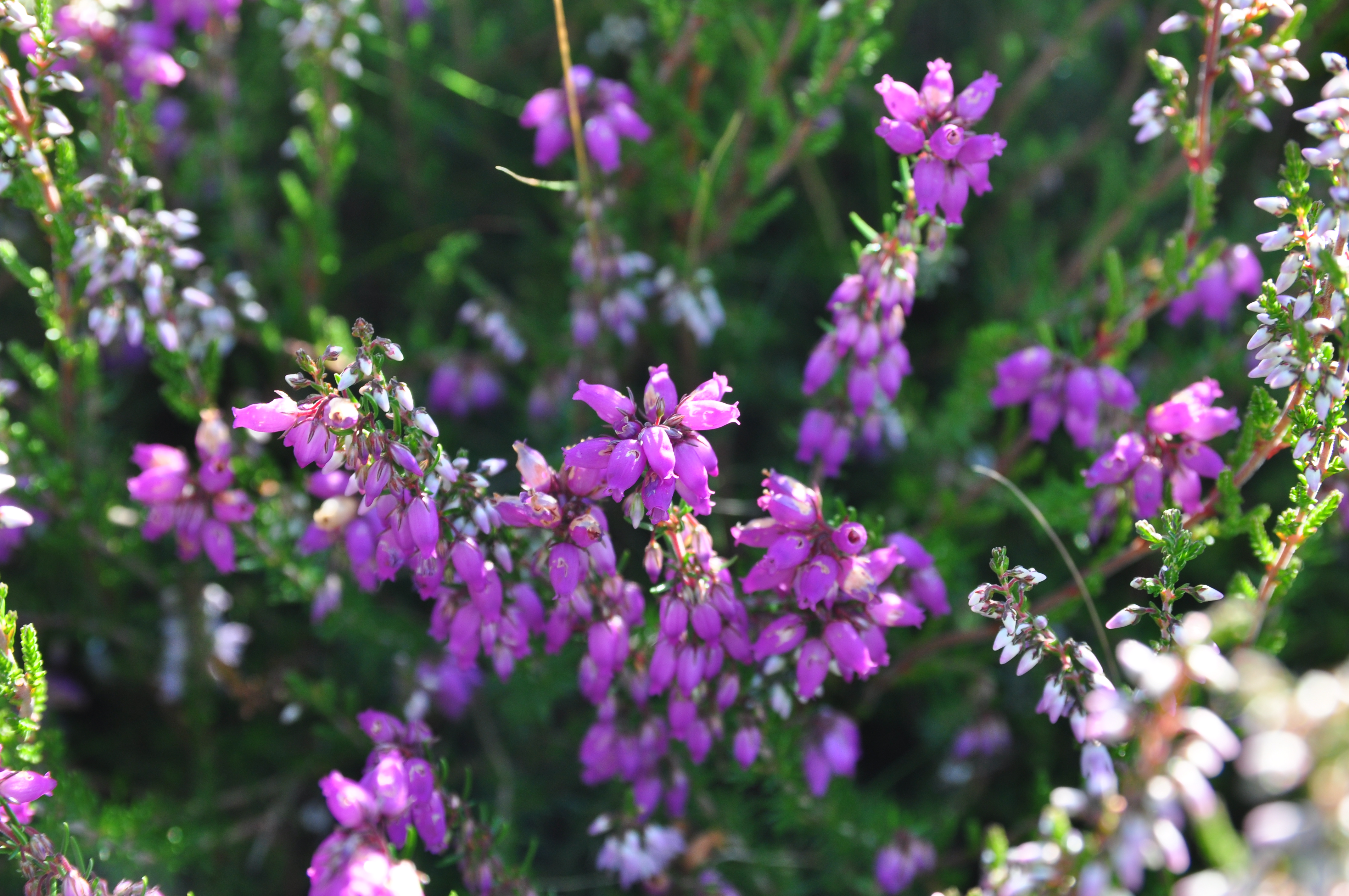
The aim of the game, of course, was finding the perfect campsite, and on this front I must say we did pretty well. We were heading towards a more protected valley, and as we crested yet another hill, paradise revealed itself below. A wide, clear freshwater stream, hillsides carpeted with purple heath and golden grasses that shimmered in the breeze, twisted, lichen-covered trees with short green grass around their base, perfect for pitching the tent.

The last time we camped was in the back yard of an old pub when we first arrived in England with nowhere else to stay. Before that, about a year ago now, we spent 35 nights straight in this tent, and so clipping the poles into place again felt a bit like a home-coming.

DSC_0506

DSC_0508DSC_0490DSC_0485DSC_0535

And then what we really came for…

DSC_0510

DSC_0517

DSC_0544

Alas, as the sun set, Doone Country lived up to its name (sorry history buffs and Lorna Doone fans) and appeared to pull a big, soft looking doona of clouds across the sky above us, so star gazing would have to wait until next time. (I always like an excuse to return, anyway).

The cloud hung around the next morning for our hike back, and if anything it made the scenery even more otherworldly; the brilliant greens even richer. This landscape truly is the stuff of fantasy (or even video games, it occurred to me; if this isn’t Game of Thrones country, it could easily be Zelda, and I could almost hear the sound track change with the rising sun of a new day.)

DSC_0579 DSC_0630

DSC_0474 DSC_0441

DSC_0638 DSC_0627

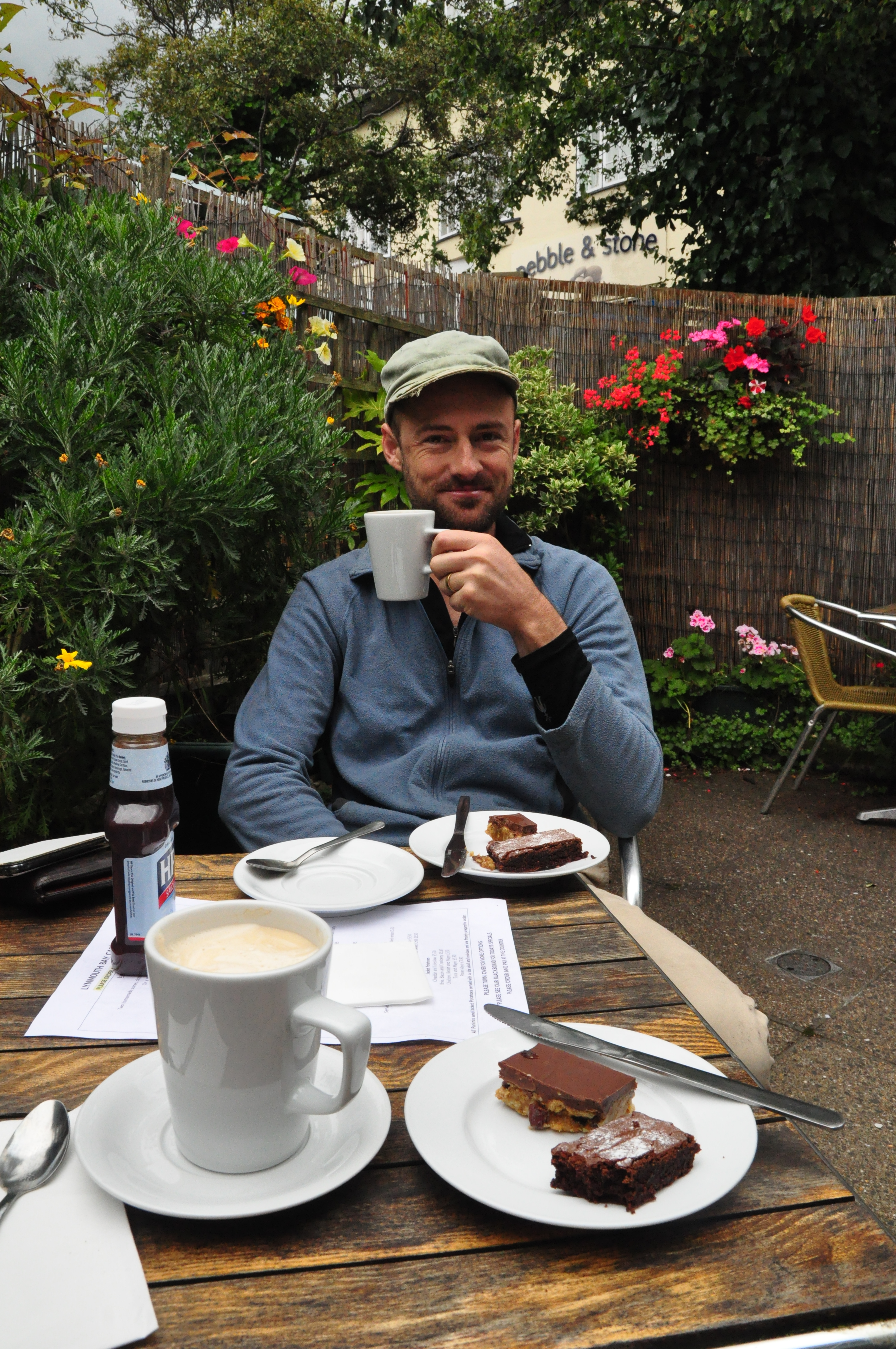
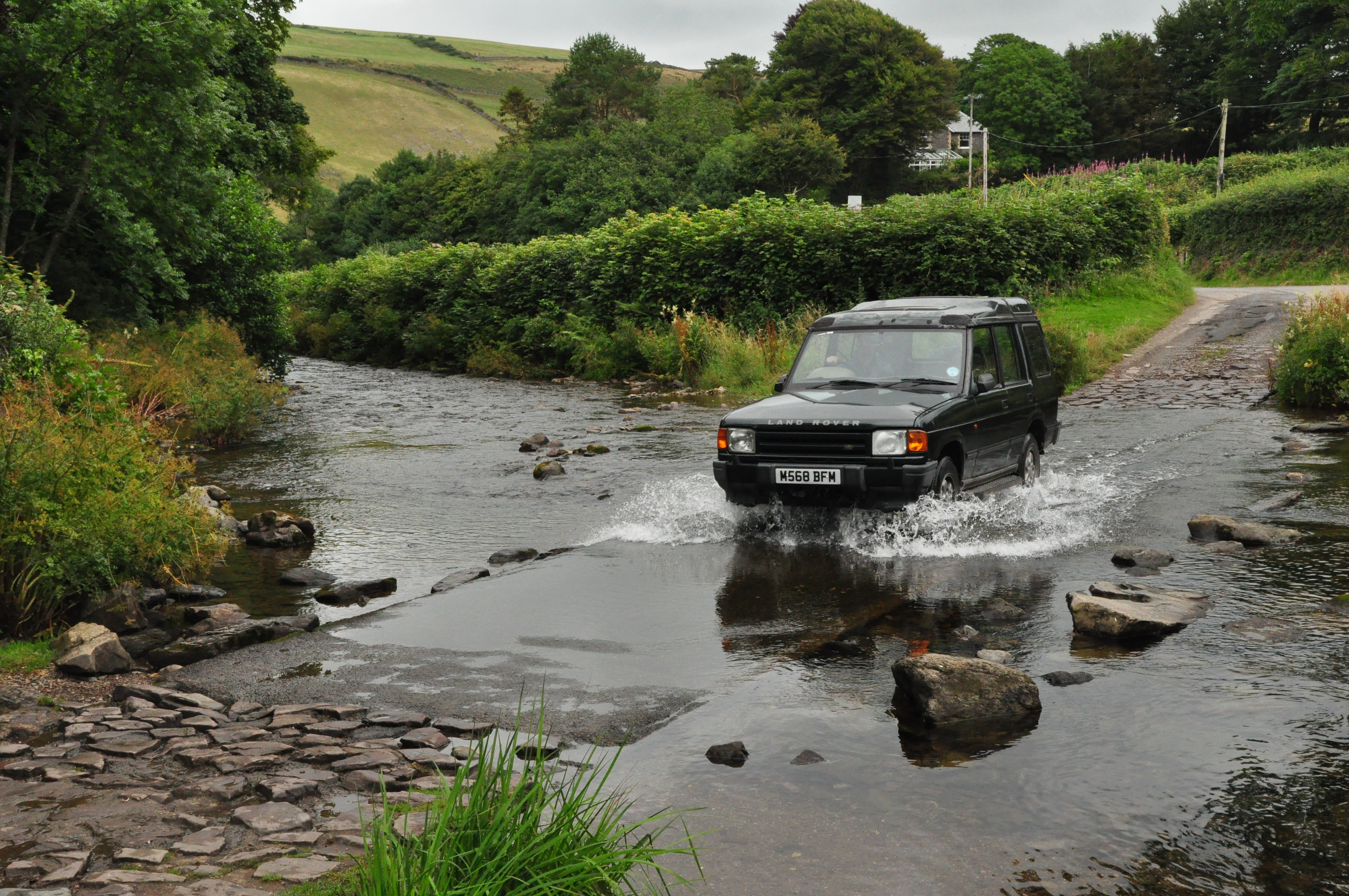
After all that, we enjoyed a well-earned treat in Lynmouth, and we finally managed to get an action shot of our much-loved Land Rover. We were home in time to spend Sunday afternoon writing this up, now it’s back to work on Monday.

Long live the microadventure!

DSC_0656 DSC_0643DSC_0648

Lunch in France? Oui

DSC_1105

“Shall we have lunch in France today, darling?”

It’s the type of phrase we antipodeans fantasise is entirely commonplace here in Old Blighty. And while I do realise that such country-hopping isn’t exactly practical or economical – even when the distance to cover is less than that from Sydney to Bathurst – it is certainly possible. At least so I discovered on a recent assignment for my current employer, which had my husband Paul and me taking an overnight ferry from Plymouth (in Devon, UK) for a pre-booked three course lunch the next day in Roscoff, a small seaside village in Brittany, in northwest France.

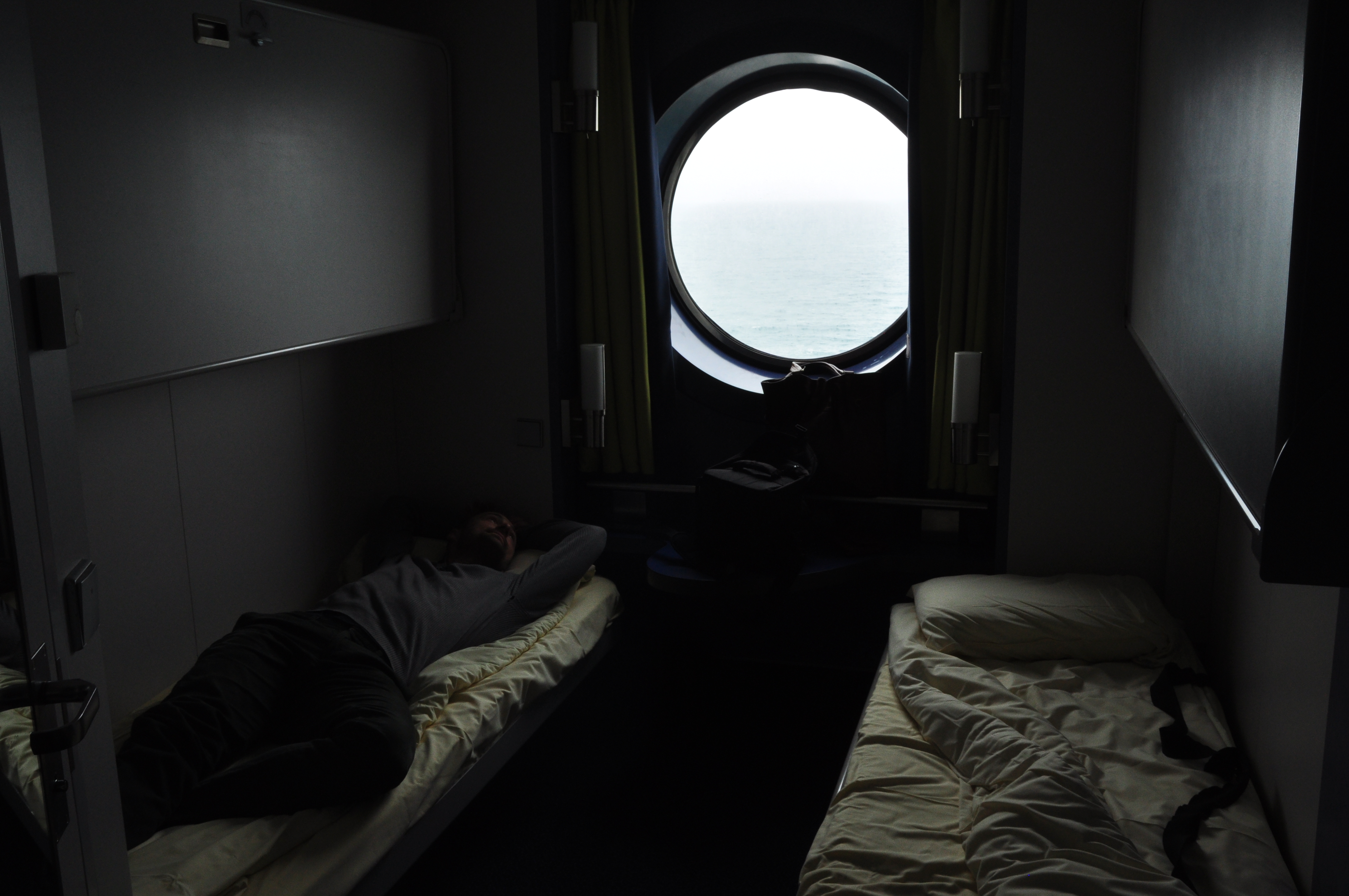
The only catch, I should add, is the experience might be less of the envisioned jetsetting glamour and more running around in a tiny, rocking cabin in your underwear at an ungodly hour hoping that that disgruntled French crew member won’t pop his head through the apparently-not-locked door again and tell you to please ‘urry up!

Anyway, to go back to the beginning, I want to point out that I’m rather getting the hang of this job – that is, visiting stately manor house hotels and restaurants most months to write up small content marketing pieces for Food, a free magazine that promotes food and tourism in the South West of England. When it comes to food, a country backwater the South West is not; rather it is home to renowned chefs such as Rick Stein, Nathan Outlaw and Michael Caines. In other words, my tastes have become rather elevated lately, perhaps unusually so for half of a modest single-income couple of expats renting the loft space in the home of Bideford’s answer to Uncle Fester.

This background leads me to an explanation for my lack of preparation on this recent trip to France. You see, I’m more accustomed to these work trip involving hotel stays that come with bottles of complementary champagne than glorified domestic flights. I mean, did I really need to read the fine print about disembarkation and set my watch to French time, or would a pipe-smoking tweed-clad hotelier not arrive at my door with a coffee and the paper to inform me that “yes of course the passengers will wait for you to wake at your own pace, for the French are a patient, tolerant people, particularly when it comes to non-French-speaking, disorganised tourists who failed to read the clearly-stated-in-English fine print”.

And then I woke up.

Of course, the boat trip was lovely. We didn’t get seasick and its onboard restaurant was more than pleasant and involved mountains of fresh langoustine. But even without that, the trip was well and truly worth it. Oh dear sweet French mother of God was it worth it. I would have almost swam the English channel had I known the lunch that awaited us the next day.

DSC_1043

Transport those harried boat passengers a few hours ahead, and you’ll find us sitting in the dining room of L’Ecume des Jours (which according to Google Translate could mean the ‘scum of days’, but is more likely the ‘seafoam of days’ and is in fact named after a classic 1947 French novel written by Boris Vian). This is the restaurant on the waterfront at Roscoff, in a tiny, ancient looking building, with sandstone-walled interiors and polished timber floorboards, all clean lines and nautical chic meets French colonial oil paintings and really heavy cutlery. The interior was muted, perhaps a little too much so – you could hear the clink of cutlery and the conversation levels lowered to match, until you had to be brave to be the first one to break the silence. However, eventually the room warmed up and it felt a little like we’d been invited to our super cool French friend’s seaside house for lunch on a rainy Sunday. Hey, that could happen.

Having navigated our way through that awkward part of the meal where I try to maintain a thin veneer of class to suit the surrounds, whilst also trying to ascertain just what has been agreed to be included in advance, we could commence onto the good part… (#foodporn)

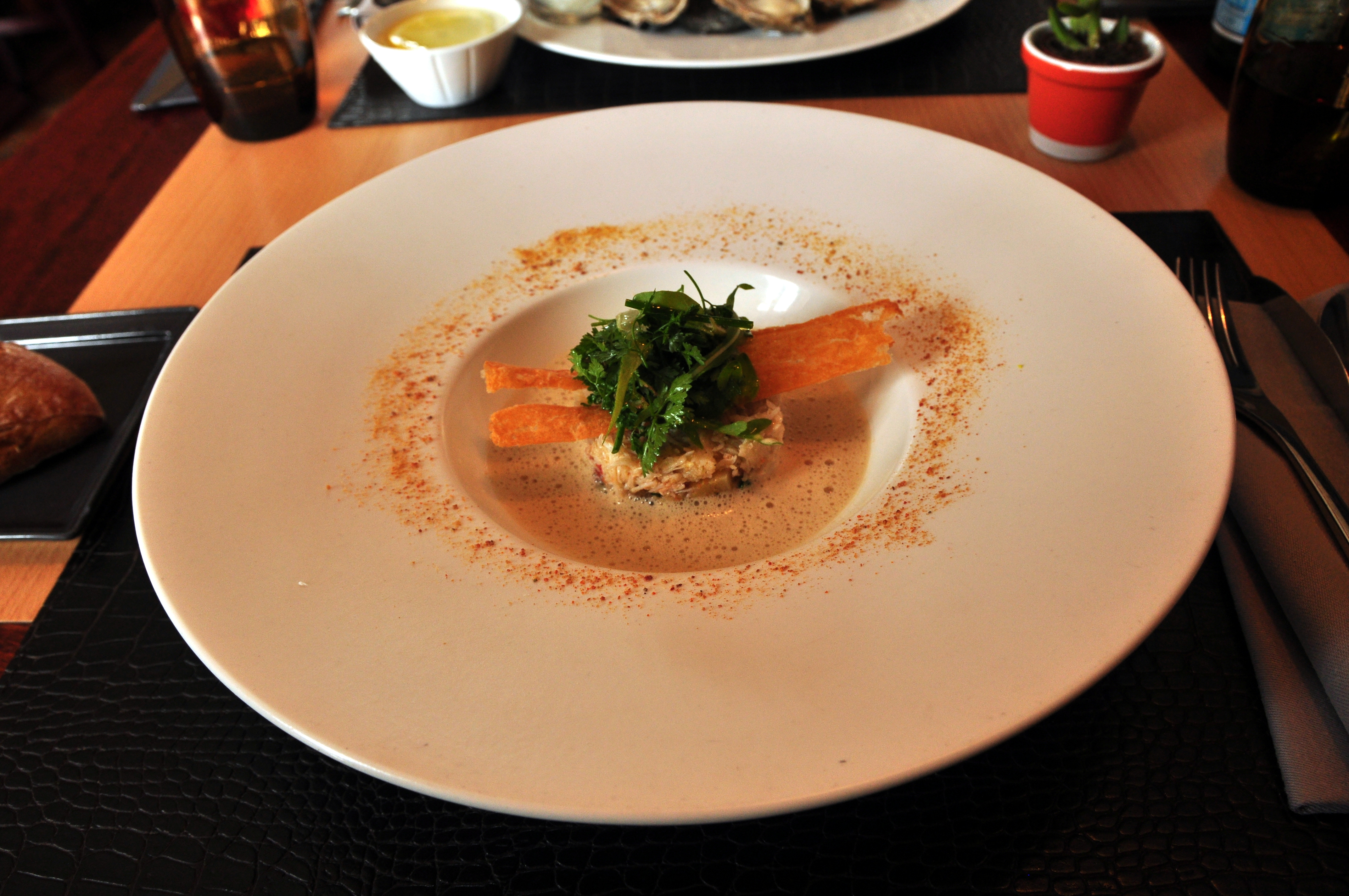
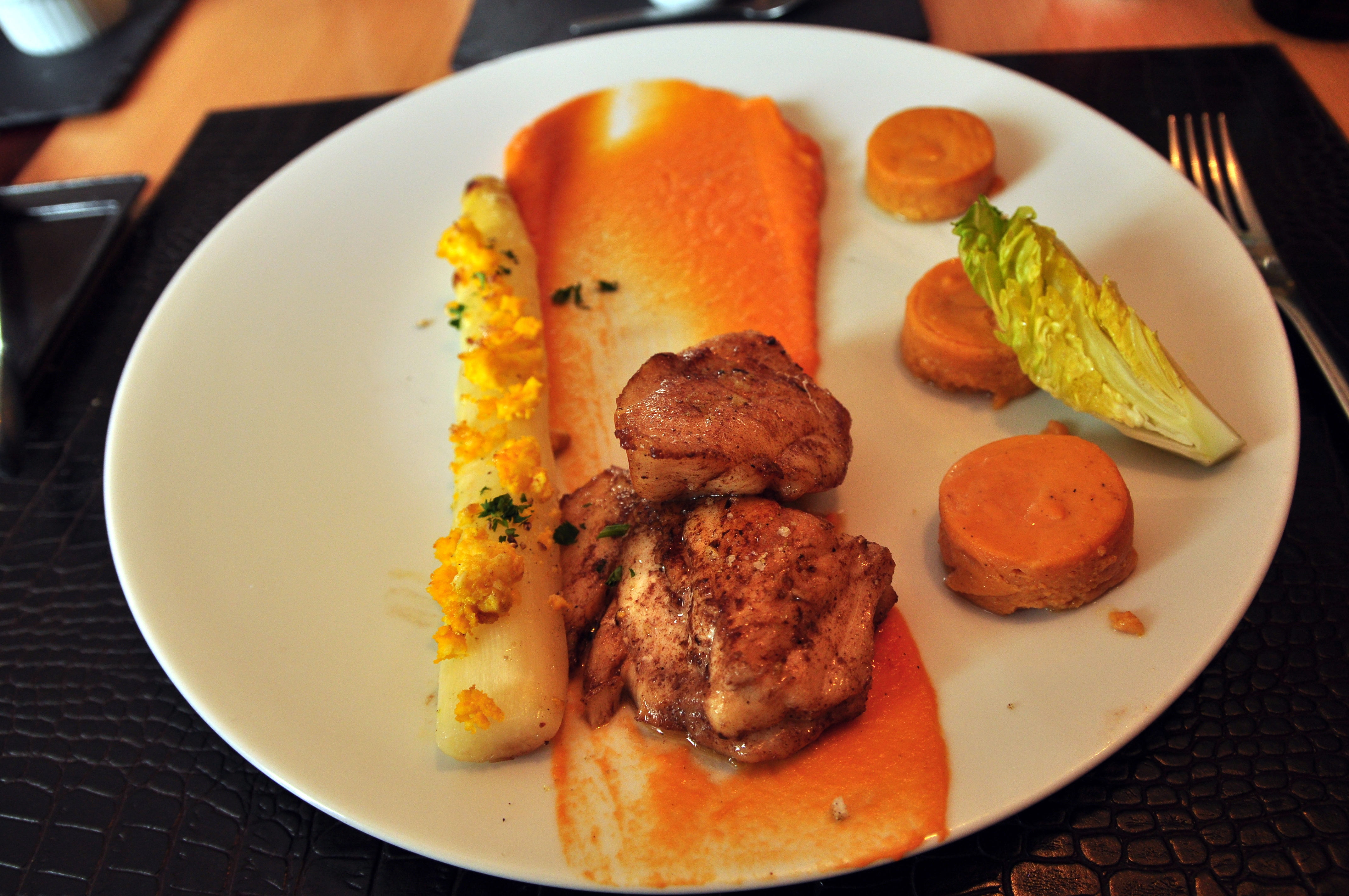
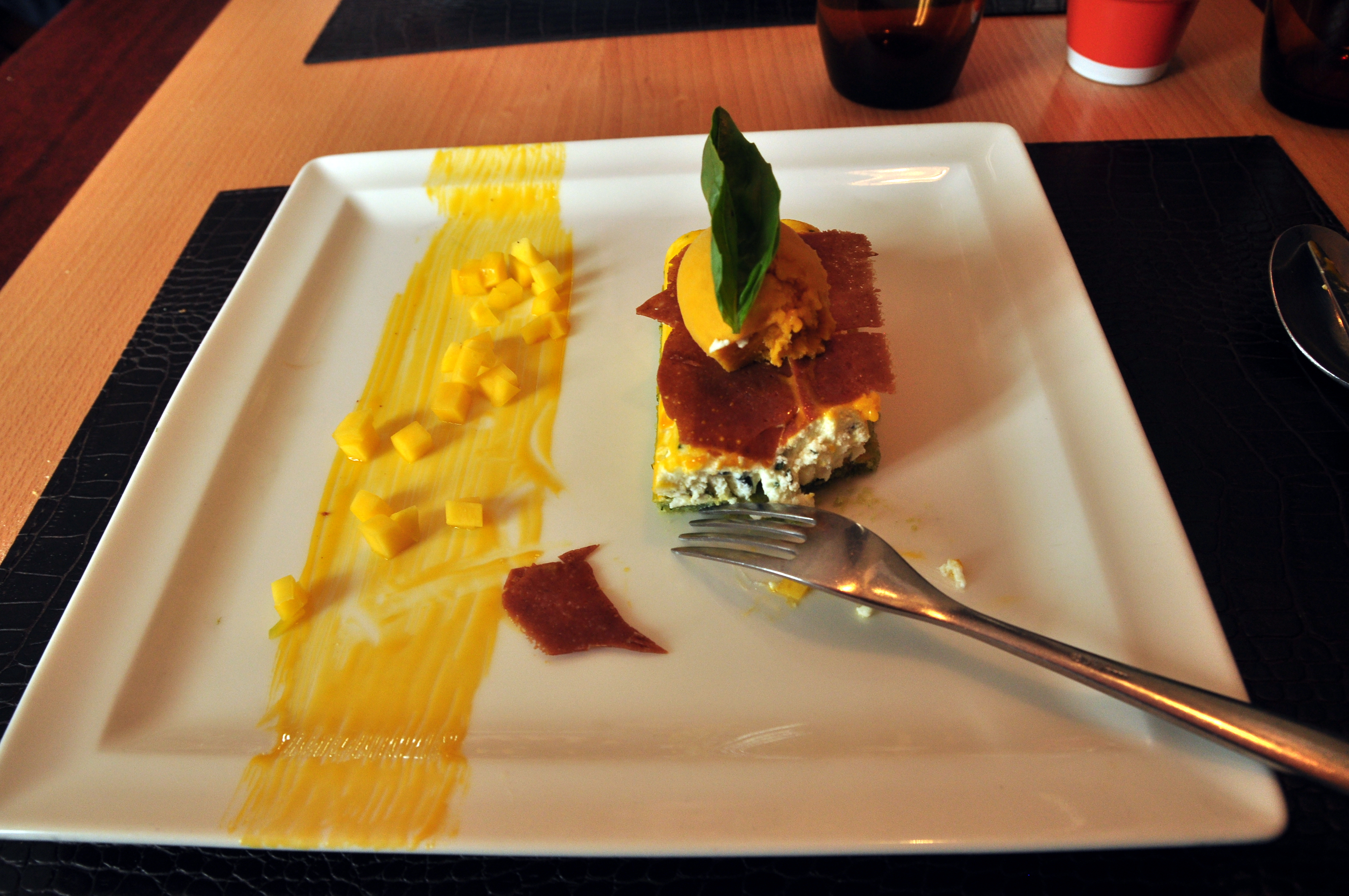
To start, an aperitif of champagne was served with an amuse bouche of white asparagus mousse and tuna tartare with seaweed. We shared two starters – one, a platter of ten natural oysters served with red wine vinaigrette and a surprisingly perfect parsley sorbet, and the other a plate of crab in a sauce of local artichokes and piquillos peppers, with crispy rice and seaweed. For mains we both ordered roast monkfish with sweet potato and cumin, white asparagus (it’s in season), and lobster juice. Literally a little tub of lobster goodness. For dessert I had a mango concoction that involved some sort of basil cake base, basil cream, mango ice cream, fresh mango and a crisp toffee shard and fresh basil garnish (basil in desserts is a trend that I’m totally on board with). Paul had a dark chocolate ball with an orange ice cream centre.

It was the type of food you close your eyes to savour, and perhaps release a single tear of joy in doing so.

DSC_1077

DSC_1079

DSC_1081

DSC_1083

(Yes I photographed every course.)

After lunch we ventured onto the right hand side of the road and drove a little further afield for a walk on the beach, before boarding the ferry again in the afternoon, scheduled to return to Plymouth at 9:30pm. We had another ensuite cabin booked, which meant a well earned siesta on the way home (oh wait, that’s Spanish. Ok, food coma.)

And in the name transparency, you can now mentally transport those wined and dined travellers to around 10pm that night, and you’ll find them sitting in rusty old Land Rover Discovery in a back street of Plymouth, downing a quick KFC Zinger burger before checking into our AirBnB accommodation… Like magic, back to the real world. Voila!

Post script: This post is dedicated to my niece Margaret Janice Wotherspoon Black who was busy arriving in the world far away in Australia while all this silliness was going on. Welcome Maggie! xxxx

Easter weekend in Romania

A long weekend in Romania left me pondering the nature of time and history, and our place in it.

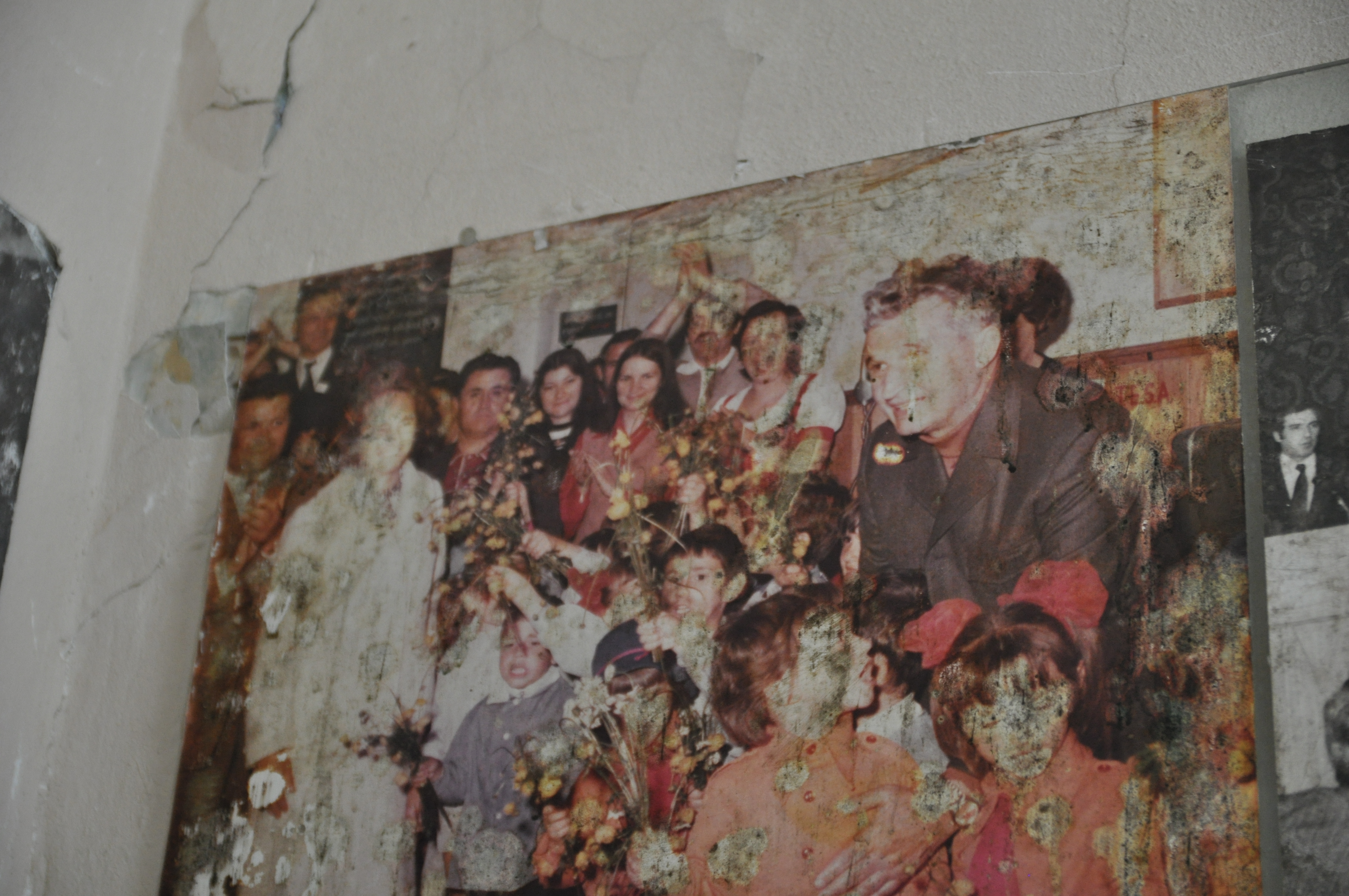
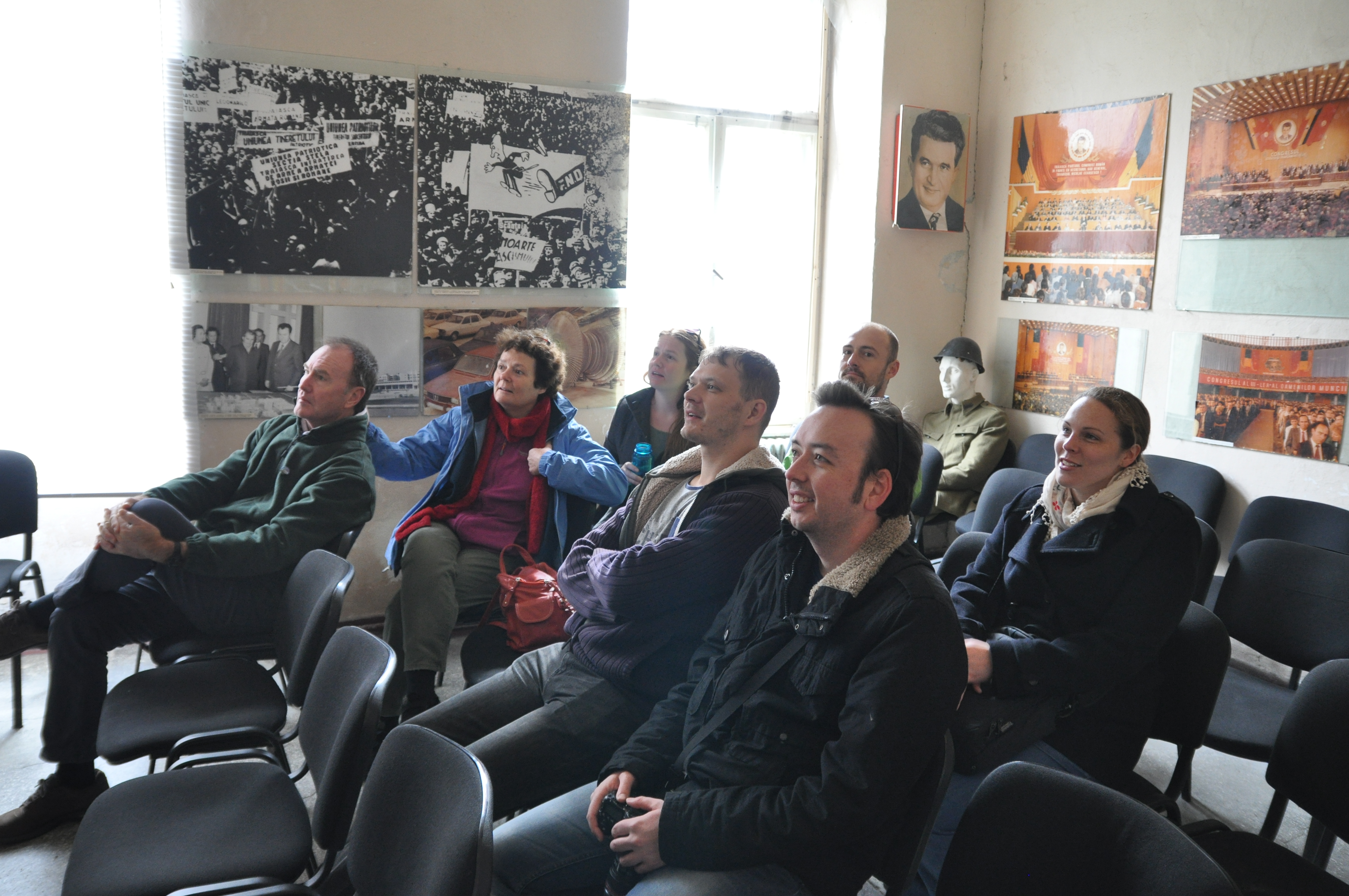
Damaged  old photo of Romanian dictator Nicolae Ceausescu on the wall of the revolution museum in Timisoara.

I should start by saying that I’m fully aware a long weekend in any country could barely provide a rough sketch – let alone a full picture – of a nation’s culture, history, environment and people. And yet the feeling I took away from five days in Romania was a glimpse not only of that country’s history, but of the nature of history and of the transience of time itself.

That might sound over the top, but what’s the point of travel if not to build on your ideas about the world, and to shift the foundations beneath your feet just a bit?

We started our Easter long weekend sojourn with Paul’s family in the city of Timișoara in western Romania – one of Romania’s largest cities, and the place where the revolution started on 16 December 1989 (it finished with the execution of Ceausescu and his wife a little over a week later, after 42 years of communist rule).

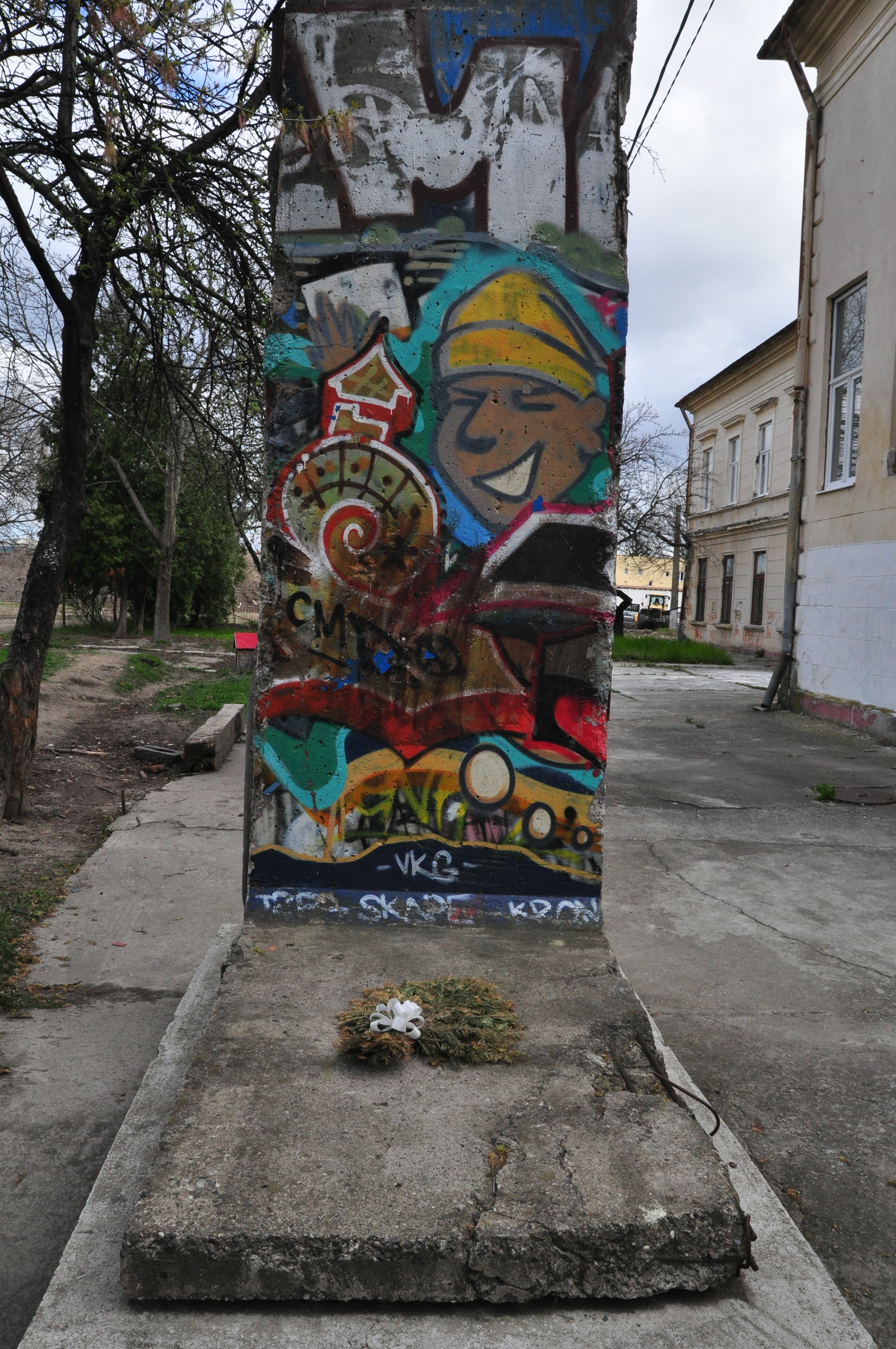
A piece of the Berlin Wall outside a museum of the Romanian revolution in Timisoara

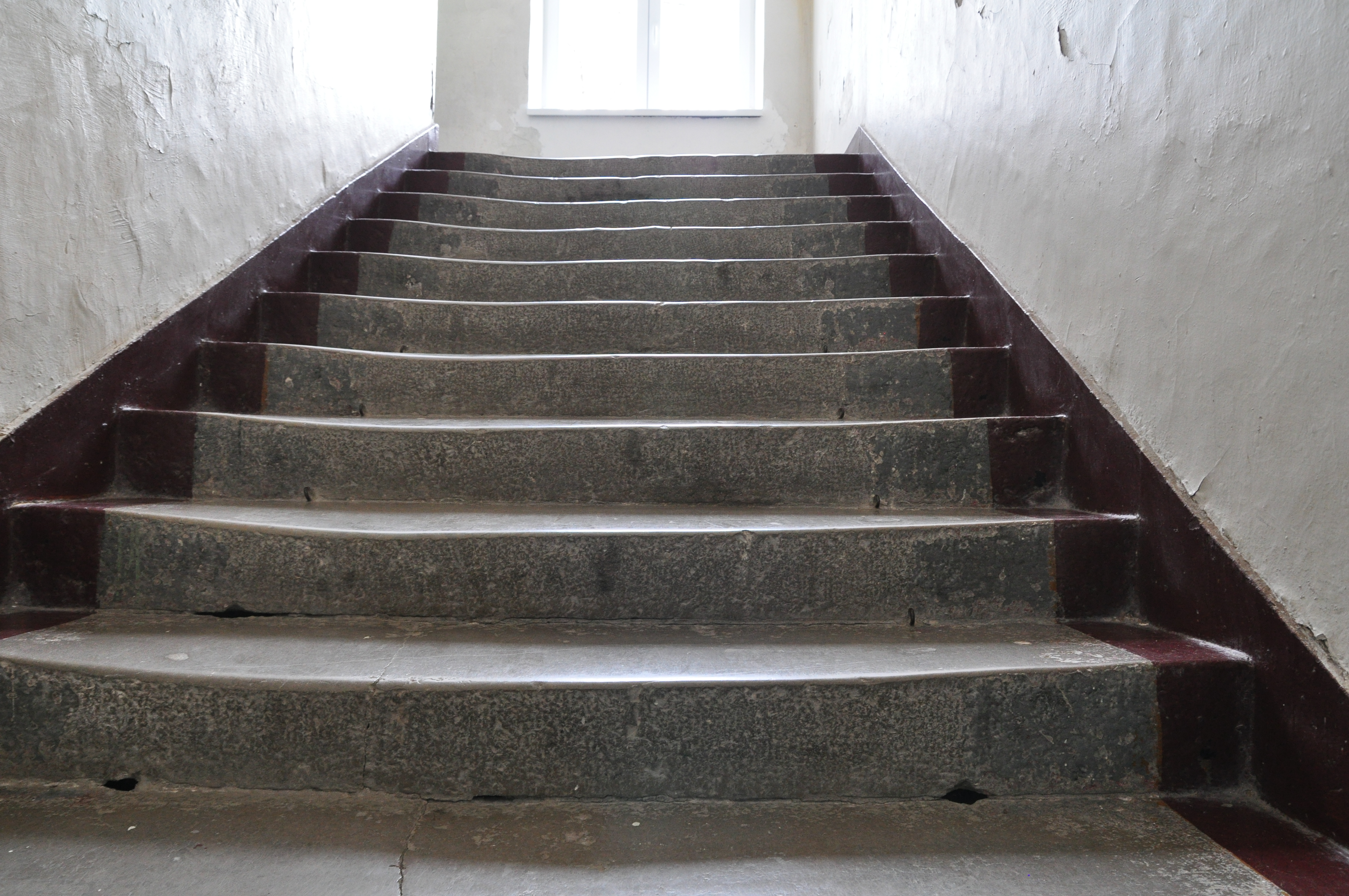
In Timișoara, we visited a museum of the revolution in an old building, which showcases a piece of the Berlin wall at its entrance. One of the first things that caught my attention entering the building was the concrete staircase, eroded and polished from a century of use – including, among other things, as a military barracks before becoming a museum. (When we asked a staff member about the building’s history, he said drolly that its function might yet change again if the situation in Ukraine accelerates.)

We sat quietly through a documentary about the revolution, in a room wallpapered with posters and propaganda from the communist era – throughout which I couldn’t help imagine the stairs outside trodden with 1940s soldiers’ boots, then the adrenaline-fuelled feet of panicked or angry (or both) civilians from that infamous week in 1989, and now replaced with made-in-China sneakers of a lone group of Australian tourists on a quiet, unseasonably cold spring day in 2015.

DSC_0542


DSC_0534

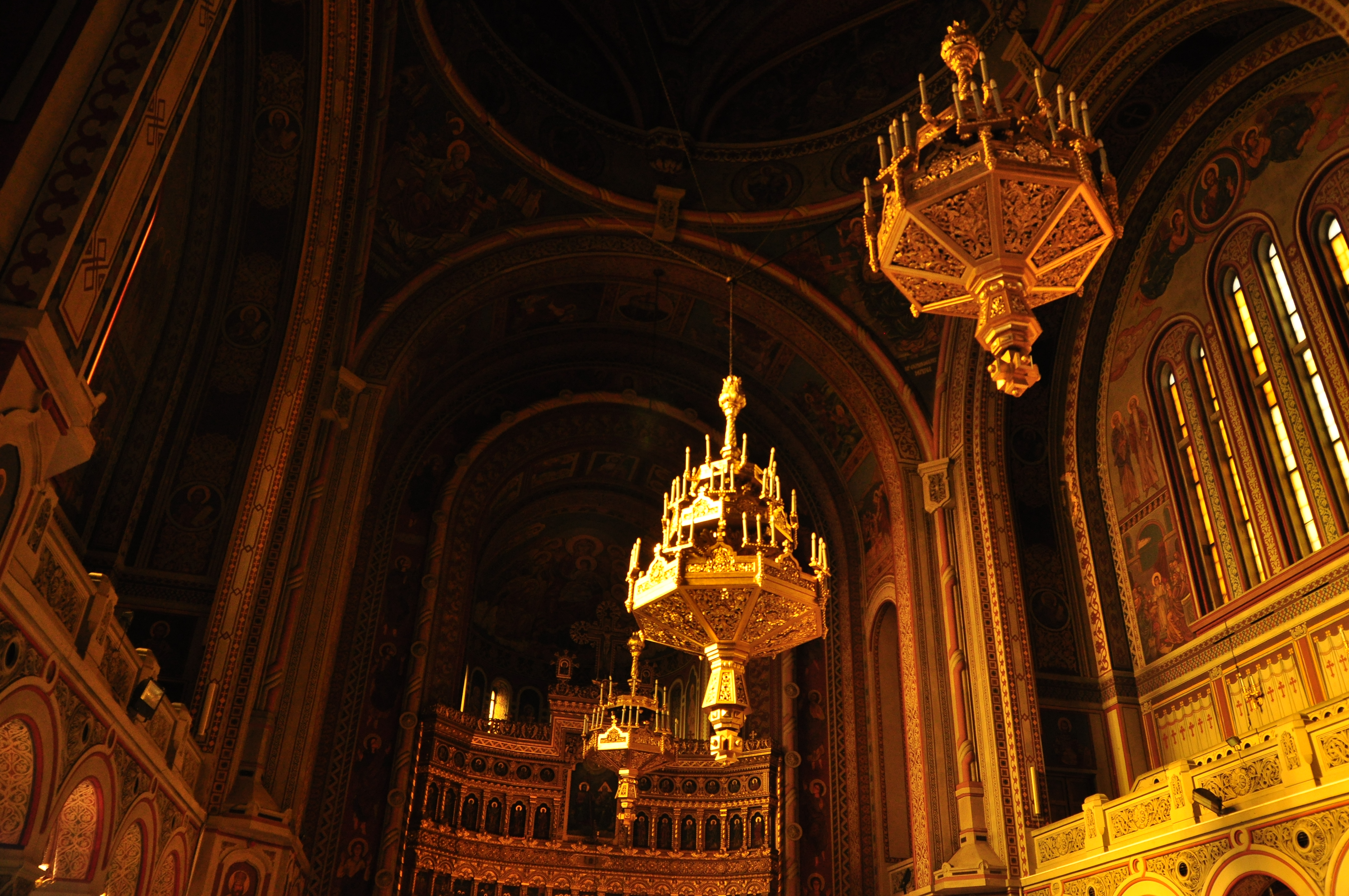
Before the museum, we’d visited Timișoara’s orthodox cathedral with its magnificent gilded chandeliers that look more like floating castles.

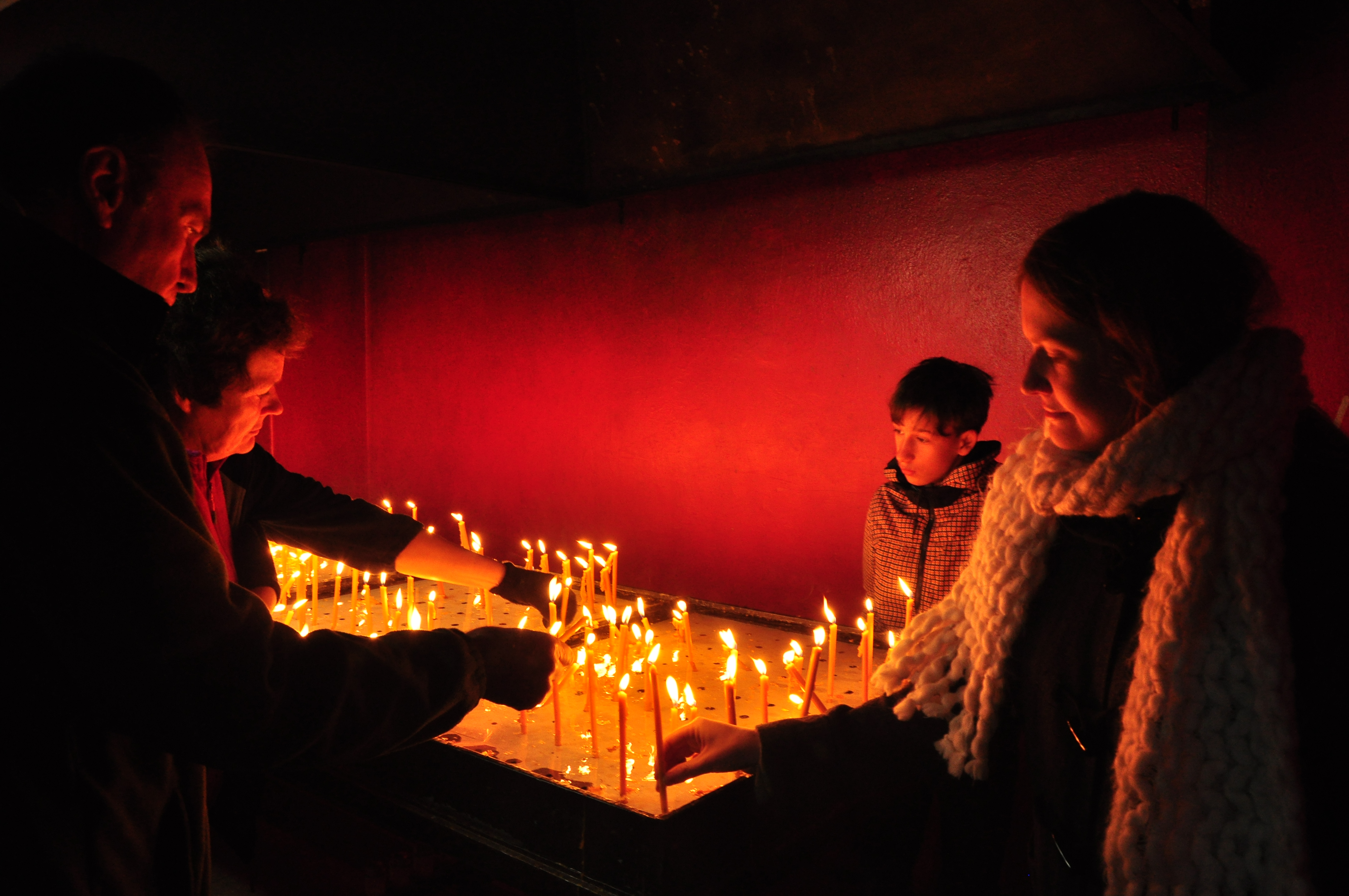
However it was only after watching the revolution documentary that I learned of the cathedral’s role as the site of the beginning of the revolution, as well as a place where people sheltered during the fighting, and outside of which thousands eventually knelt and lit candles for the dead. And so, only in hindsight could I wonder what memories or faces must have been in the minds of the people who gathered there during our visit.

Chandeliers like floating castles in the Timisoara Orthodox Cathedral

LIghting candles in the Timisoara Orthodox Cathedral

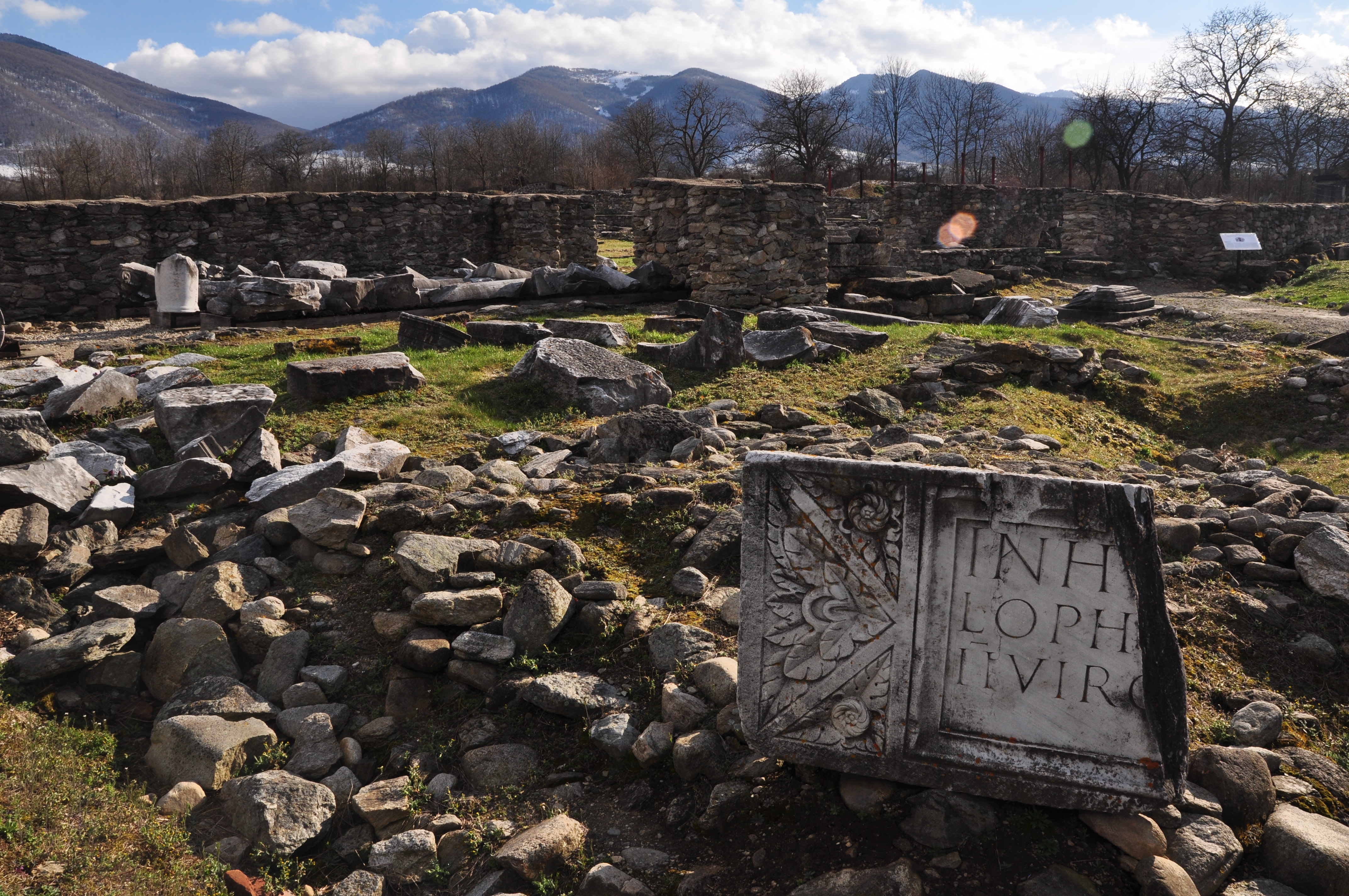
Later on, we visited Roman ruins in Sarmizegetusa (we were tested on pronunciation by our patient guide, generous host and brother-in-law, Radu). By now I’ve visited several sites of Roman ruins around Europe, and yet these crumbling ornate stone structures with ancient Latin insignia of a long-lost civilisation buried beneath our feet never lose their power.

Roman ruins in Sarmizegetusa, Romania

DSC_0592

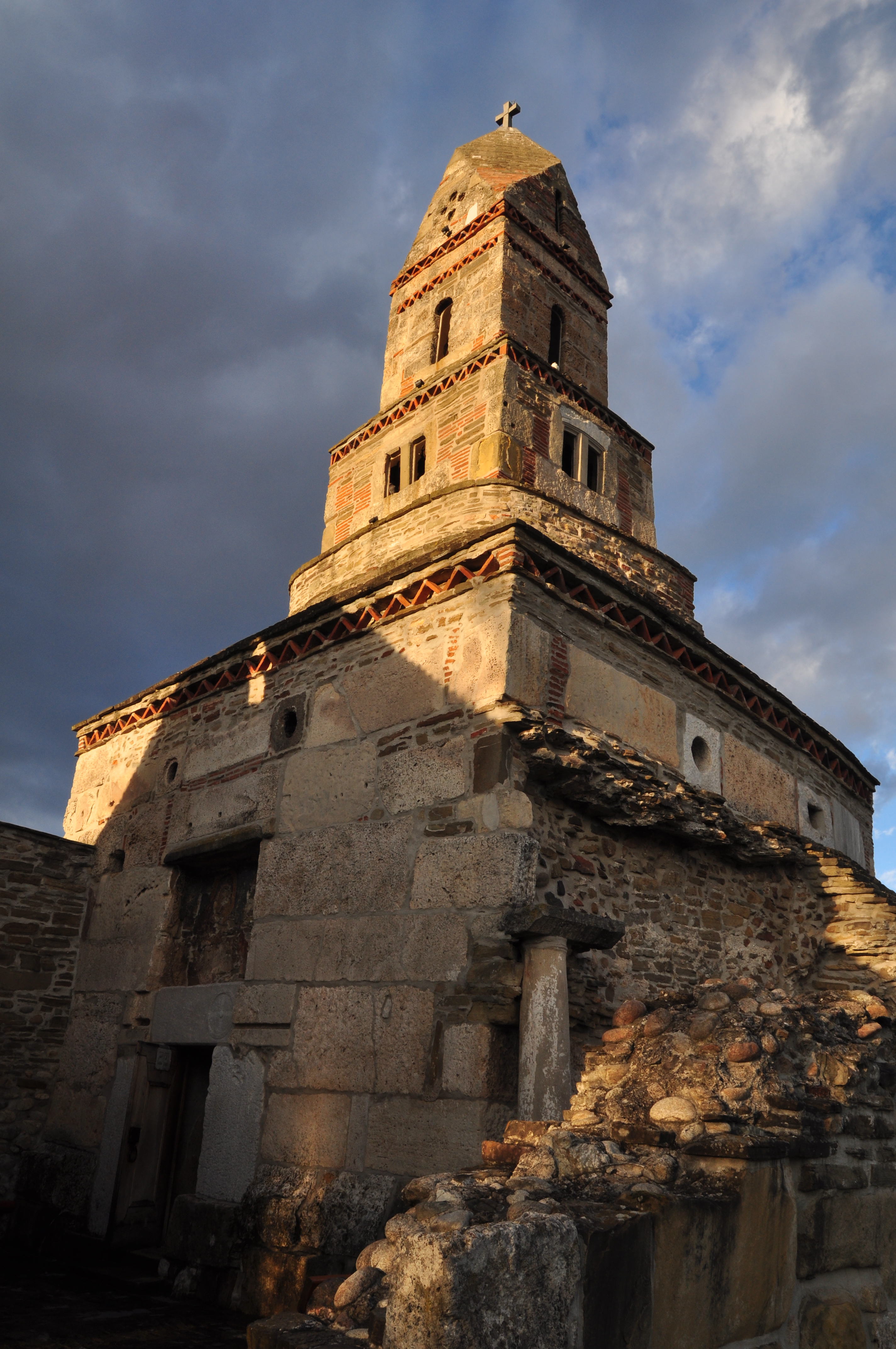
However, if the sight of those ruins emerging out of the grassy hills might have given me the impression that history is anything but continuous, I only needed to visit our next stop – a small medieval Catholic church, built perhaps a thousand years after the Romans, using pilfered pylons and stonework from the same ruins we’d just wandered through.

This centuries-old church was not only built with the materials of an even more ancient history, it also held evidence of its future. Rather creepily (no matter your religious or cultural affiliation) the eyes of all of the wall art – mostly murals of various saints and Jesus and Mary – had been scratched out of the stone in some sort of historic persecution of Catholics. Later my sister-in-law Angie also spotted a scratching in the wall (a kind of ‘X was here’) from the late 1800s – made when the church was already ancient, and yet old enough itself to join the ranks of historic interest, which is a fascinating idea in itself.

DSC_0595

DSC_0602

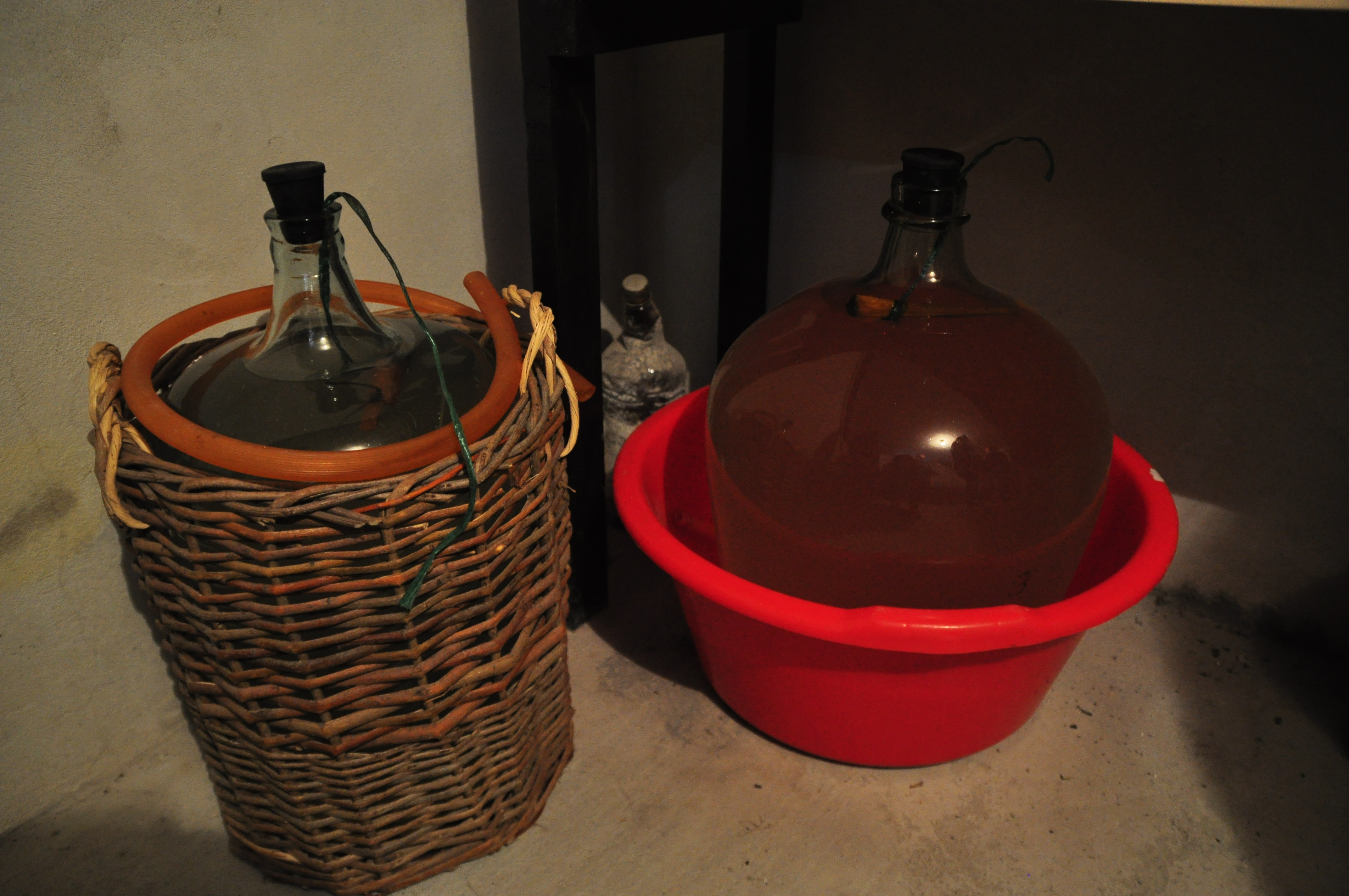
We would spend the next couple of days in the countryside with Radu’s kind and generous family, managing through translation and body language to communicate fairly comfortably, and to laugh a lot. The home-made ţuică (a knock-your-socks-off home distilled spirit made from apples) no doubt helped to that end.

DSC_0651

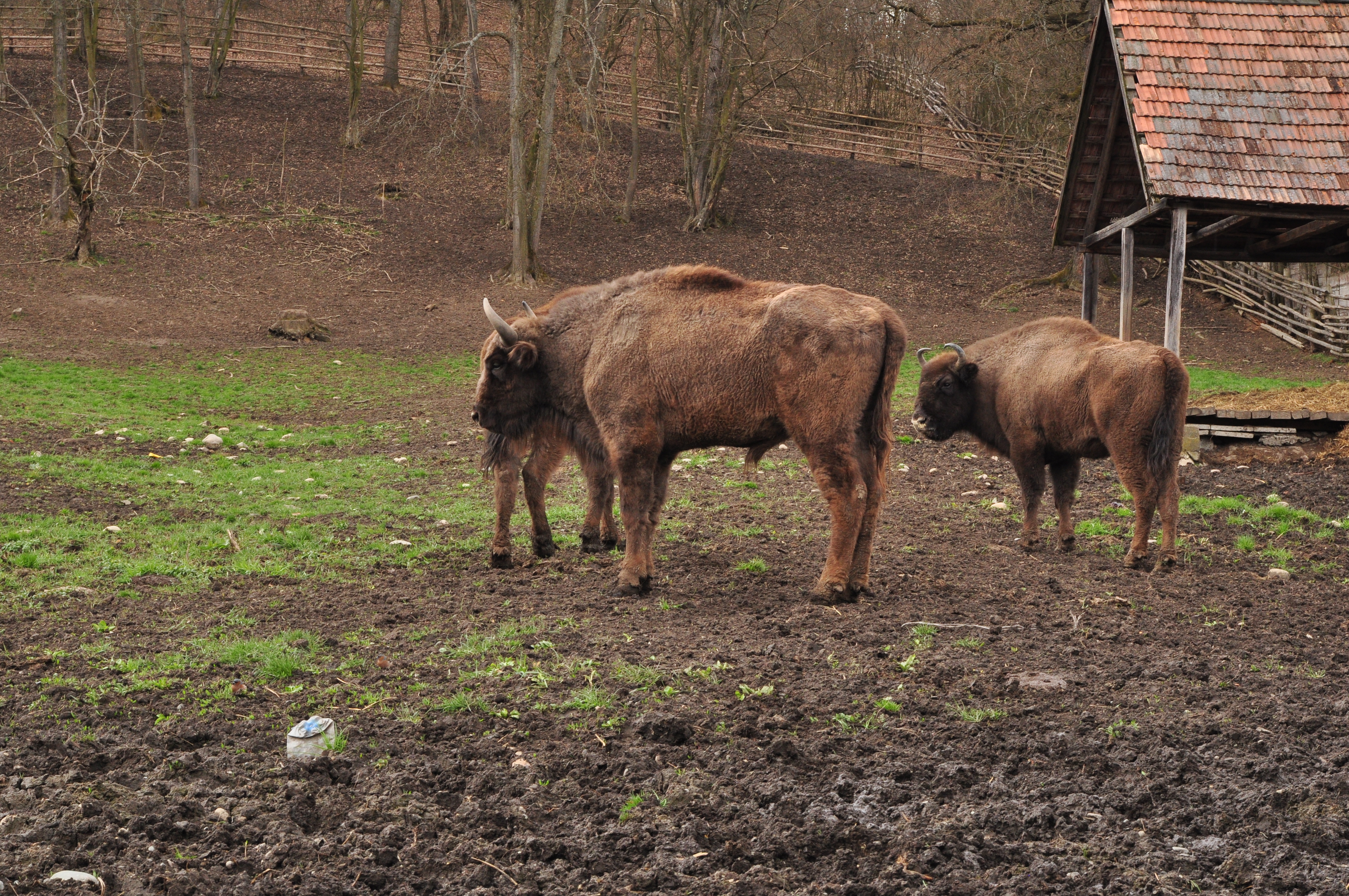
To add more context to my meandering thoughts on the nature of time and history, we visited a local breeding program that is trying to save the critically endangered European bison.

These beasts roamed the wilderness throughout Europe long before we came along with our cathedrals and revolutions and travel blogs, but have since (along with much of their habitat) been pushed to the brink of extinction. Scientists and conservationists have had some success in growing their numbers in recent years and hope to reintroduce a population into the wild in Romania, but the species remains rarer than the Black Rhino.

European bison breeding program

Another day, despite the unexpected spring snow, we managed to steal a couple of hours wandering through a beautiful beech forest in the southern Carpathian Mountains – where grumbling water pipes and airplane engines had us baulking at bear-shadows.

The bison experience and the rare opportunity to spend time in real wilderness on the European continent was a good reminder that history does not belong to humans – like the Romans, and the person who scratched their name into the wall of that Catholic church 100 years ago and the communist dictators of the twentieth century – we are all only passing through.

DSC_0759

DSC_0784

DSC_0805

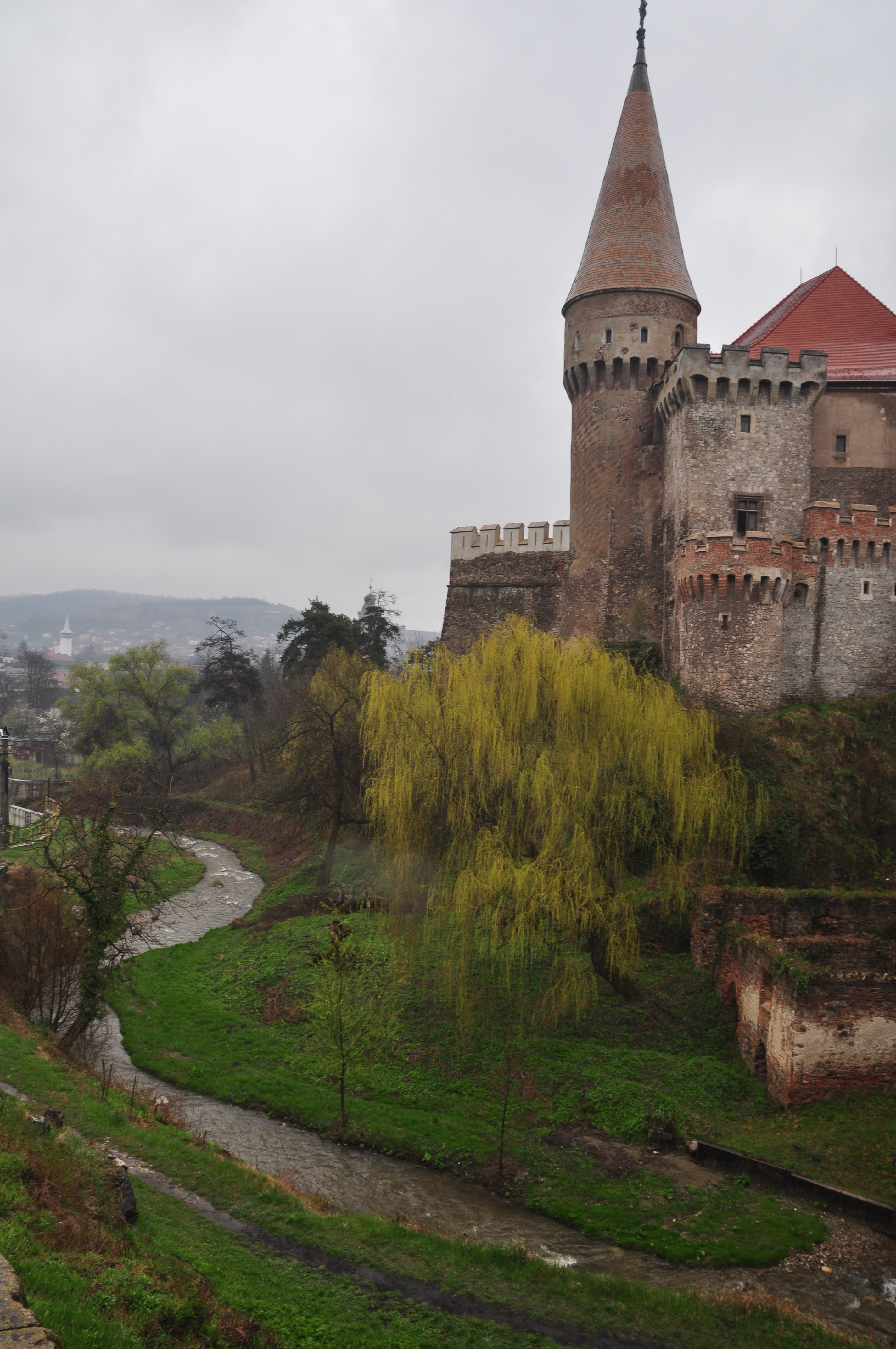
Before our flight back to London, we toured the centuries-old Corvin Castle in Hunedoara, where we competed with hordes of young smartphone-wielding, brightly dressed school children as we wandered the halls beneath soaring stone ceilings, read stories of torture chambers and bloody battles – and gazed out through crumbling stone windows onto crumbling communist structures and out to the snow-covered Carpathians in the distance.

We joked about scratching our very un-Romanian names onto the wall to confuse some future historian, but settled with being observers this time – although no less a part of the story of Romania’s history now, even if just a footnote.

Corvin Castle in Hunedoara


DSC_0816


My Passport and Plate entry

Passport and plate entryClearly where I went wrong was in failing to kiss the fish. Always kiss the fish.

For the past month or so I’ve been carefully avoiding making plans for the week of June 5-13, in the hope that a recent day spent cooking, photographing and writing up the below recipe might pay off with a food blogging trip to Sri Lanka, courtesy of Intrepid Travel and World Nomads.

Alas, as of today, I became all too free on those dates, as the winners of the ‘Passport & Plate’ competition were announced and my name wasn’t one of the chosen three. As I only later noticed, however, I did make the shortlist, which was enough to give me a little glow of pleasure and the impetus to try again next year.

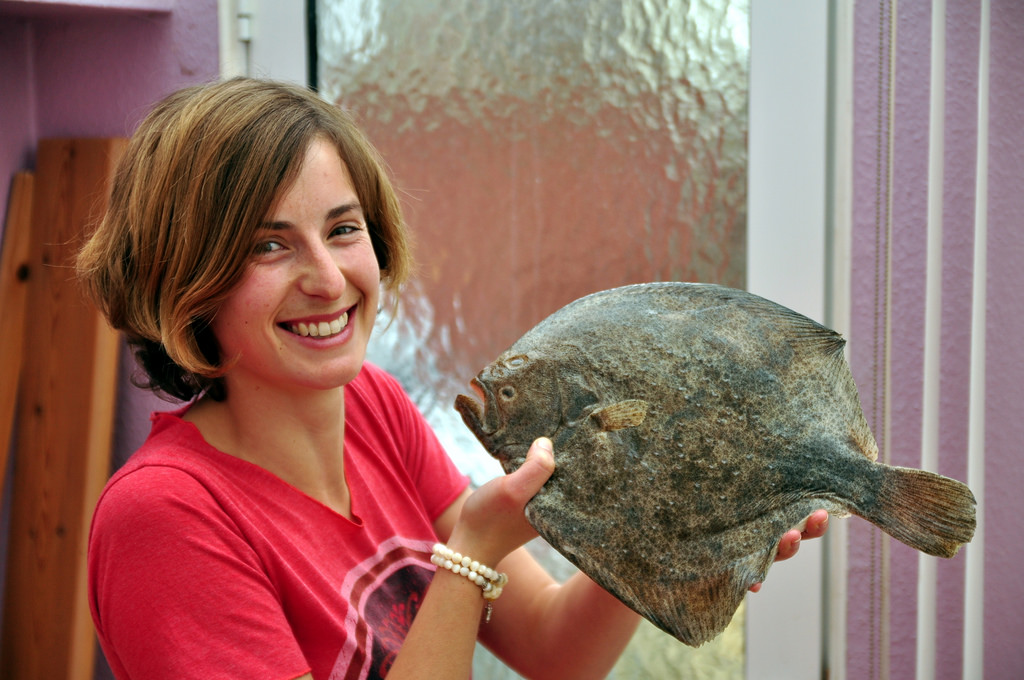
And besides, time spent cooking, writing and eating is never time wasted and so here is my competition entry reposted below – a recipe of steamed turbot with green papaya salad, along with a story behind the recipe and ‘why I should be chosen’ (the section that is left off the published online entry).

Steamed turbot with green papaya salad (som tam)

16673157661_c1f886b2bc_b

Ingredients
FOR THE FISH
1 fresh whole (1-1.5kg) firm white-fleshed fish (seabass, bream, turbot etc.), gutted, scaled, finned and cleaned
2 garlic cloves, crushed
1/2 bunch of coriander, roughly chopped
6-8 spring onions, skin and ends removed, cut until the beginning of the green part, then chopped in half again
1 lime – half juiced, half sliced
2cm chunk of ginger, finely chopped
2 red chillies, finely chopped
2 tbsp peanut oil
1 tsp sesame oil
4 tbsp oyster sauce
2 tsp soy sauce
1 tsp salt
16486967488_3dee745a57_b
FOR THE GREEN PAPAYA SALAD (SOM TAM)
1 large green papaya, thinly shredded (if you can’t find green papaya, 1-2 green mangoes prepared in the same way will work as an alternative)
Juice of 2 limes
2 red chillies, finely chopped or minced
2 garlic cloves, minced
2cm chunk of ginger, minced
2 tablespoons fish sauce
1 tbsp palm sugar, grated (or use brown sugar as an alternative)
Handful of green beans
1 large ripe tomato, pulp removed, sliced

How to prepare this recipe
FOR THE SALAD
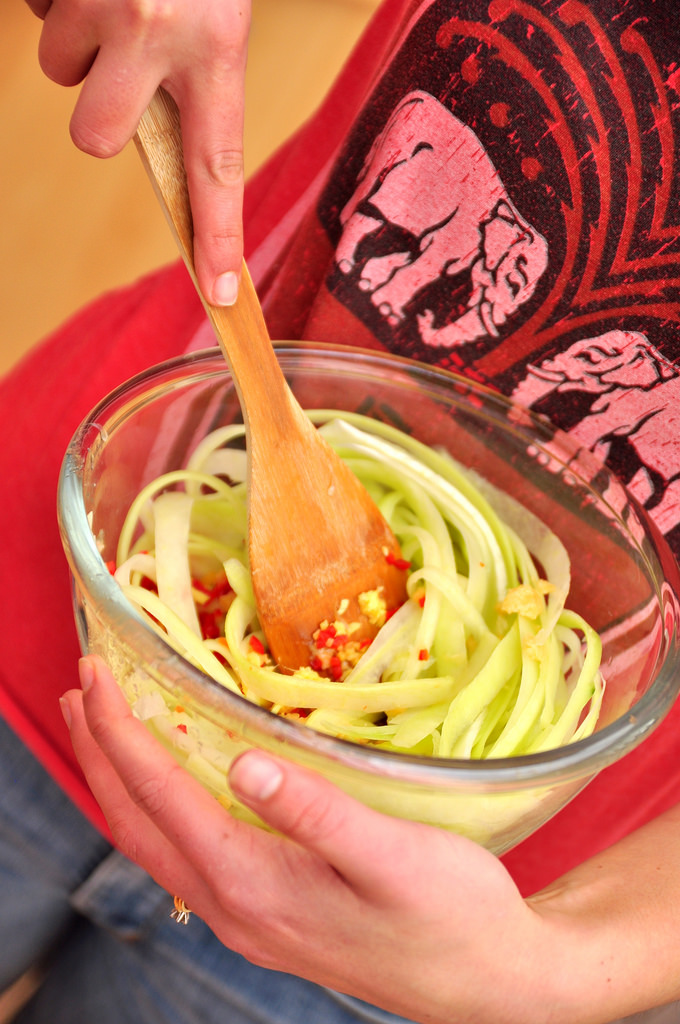
In a large bowl (or use a mortar and pestle if you have one), add all of som tam ingredients (bar the beans and tomato) and ‘pound’ to mix with the pestle, or a wooden spoon. 16673524192_652c72ac44_b
Blanch the beans in lightly salted boiling water for about 2 minutes, or until tender, then refresh under running cold water. Slice them lengthways.
Add the beans and the sliced tomato to the papaya mix, move to desired serving dish. Set aside or refrigerate until ready to eat.

FOR THE FISH
(Note: Exactly how you prepare the fish depends on your catch!)

  1. Pat the prepared fish dry with paper towel and rub it all over with salt.
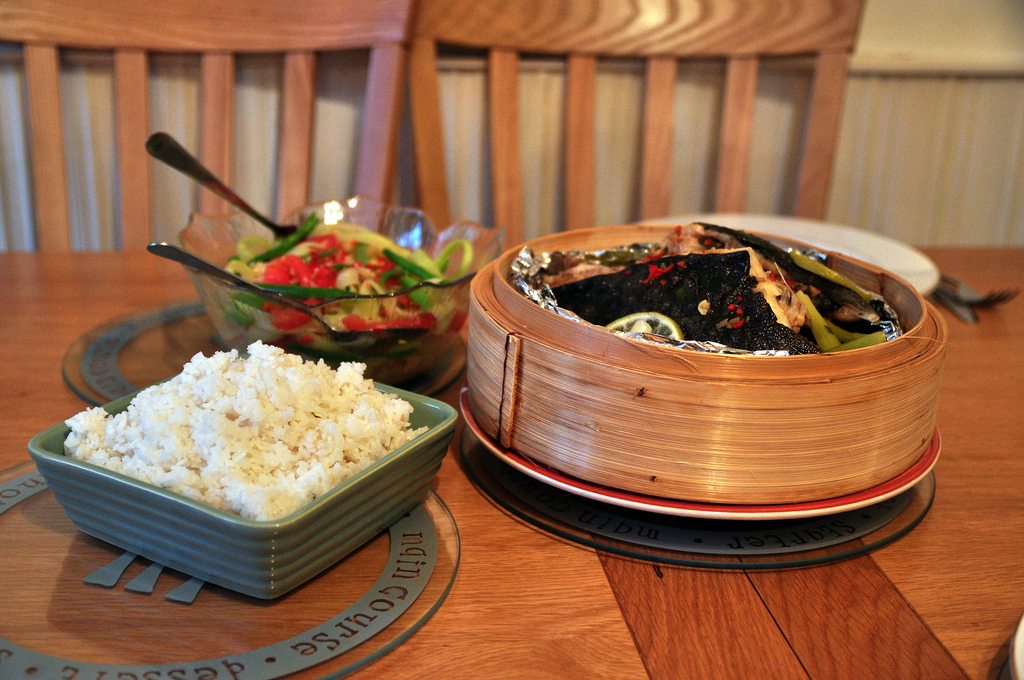
  2. Place the fish in a bamboo steamer, on a bed of foil (to catch the juices!). If the fish is too big, you can cut it in half (or thirds, as I did with this big-mama turbot).
  3. Mix the garlic, chilli, ginger, oyster sauce, soy sauce, the juice of half the lime and the sesame oil in a small bowl.
  4. Stuff the fish cavity (where the fish was gutted, or otherwise – as in the case of the turbot! – create a cavity using a sharp knife) with most of the contents of the bowl, all of the coriander and a few of the spring onions.
  5. Baste the fish with the rest of the mix, then scatter the rest of the spring onions around it on the foil and place a few slices of lime on the fish.
  6. Place the bamboo steamer over a wok or saucepan filled with about 5cm of boiling water. Tightly fit the lid and reduce the heat slightly.
  7. Cook for about 20 minutes, or until the flesh is white and flakes apart easily.
  8. Before serving, heat the peanut oil in a small saucepan until you see smoke, then pour the sizzling oil over the fish skin to make it crispy.
  9. Put the fish and the salad in the middle of the table along with fluffy steamed rice to soak up the juices. Then dig in!

16486975058_3e2a4fe0a5_b

The story behind the recipe

It’s low tide on the River Torridge; boats lean over on the exposed mudflats, rain has cleared and sunshine peeks through the clouds.

If I close my eyes, lift my face to the sun and breathe in the briny air, I could almost be home – 15,000km away on Australia’s east coast. When I open them, I might find myself crouched by a running tap, scaling freshly caught yellowfin bream or a glistening red morwong – speared by my husband or my brother in the ocean that day. Waves crashing within earshot, the hot sun on my bare shoulders…

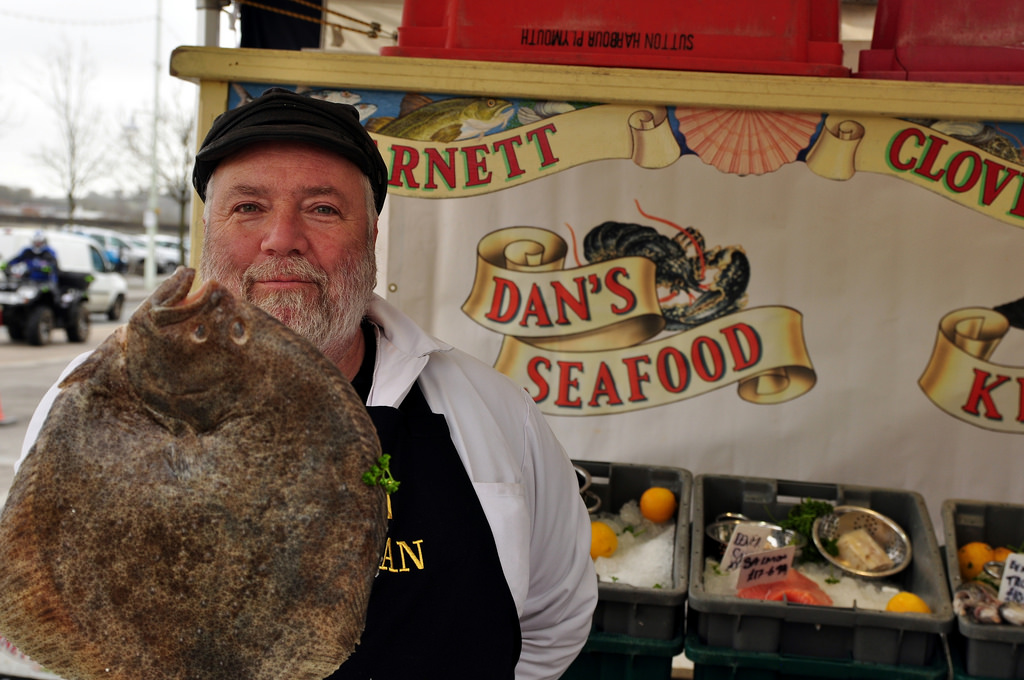
I open my eyes and greet the little English town I currently call home. It’s not a bad alternative – it’s unfamiliar and exciting; an adventure. I’m at the farmers’ markets to meet Dan the Fisherman and pick up the catch of the day, turbot. It’s not a fish I grew up eating, but it’ll work with my recipe, Dan assures me with a whiskery grin.

Dan the Fisherman BidefordThe seafood I ate growing up was fresh and simple – pan fried whiting fillets, thin sliced abalone, oysters flipped open and eaten standing knee-deep in an estuary. Over time, my own cooking took on influences from around the world and Sydney’s vibrant multiculturalism – particularly from South East Asia, our exotic neighbour.

In Australia, I often cooked fresh-caught fish as I have in this recipe – in a bamboo steamer bought at a local Thai supermarket, using Asian-inspired ingredients. I’ve served it with a newer discovery, green papaya salad or som tam, from my honeymoon in Thailand last year. For those three weeks I ate it whenever I could – usually under a whirring ceiling fan, sticky with sweat, and blissfully happy. Som tam is fresh and spicy, and like most Thai food it’s about finding the perfect balance between sweet, salty and sour.

This recipe represents things I miss from home – the bounty of the Pacific Ocean, Asia at my doorstep – but it’s also a reminder that food can be the vehicle in which I travel back every now and again, while exploring all the rest of the world has to offer.

‘Why I should be chosen’ (…aka Pick me! Pick me! or shameless self promotion in 2000 characters)

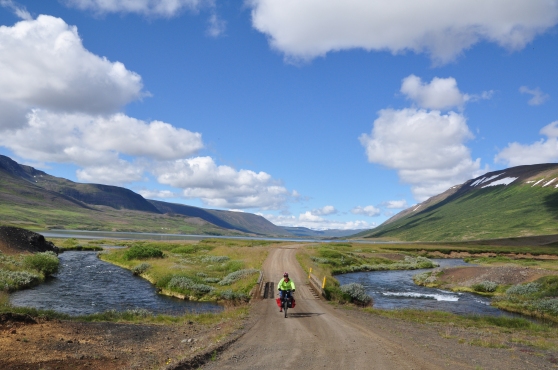
When, last summer, my husband and I took a five-week, 1200km bike tour around Iceland, a lot of friends couldn’t understand how I managed to “fit in” the travel blog I kept to document our adventure. The answer, of course, is simple: sharing the story was as rewarding as the adventure itself.

That’s why I became a journalist – it was the only job that would cater to my insatiable curiosity about the world and its people, and the desire to tell their stories. Since then, I’ve never stopped telling stories – from travel and adventure, to science and engineering, and most recently as writer and editor at a food and tourism publisher.

I’m also an adventurer, and my sense of adventure extends beyond the physical to the culinary. In the past few years alone I have snacked on silkworm larvae at the North/South Korean border; slept under the stars in outback Australia; eaten Pad Thai served wrapped in wax paper on a long, hot train ride from Chiang Mai to Bangkok; ridden to the top of an Icelandic glacier; tasted hákarl, Iceland’s infamous rotten shark delicacy; plucked, gutted and roasted a pheasant on a farm in England; and gorged on cheesy tartiflette and local wines in southern France.

Hearing about this opportunity made my heart flutter – it represents all of my passions: travel, adventure, food and writing.

*****

Ah well, you win some you lose some and there’s always next year! In the meantime, I’m super excited to be heading off to Romania next week for the Easter long weekend, so stay tuned for the next travel post soon.

Meet Dori, Iceland’s outdoor adventure guru

It’s been so long since we finished our bike tour of Iceland, it seems like a distant dream. I’ve had this interview with Dori sitting in my recorder all that time, and listening to it immediately transported me back to one of the best experiences of my life. If you’re ever in Reykjavik, be sure to give him a smile and say hello – he’ll appreciate it.

Halldór Hreinsson
Halldór Hreinsson: tent person, family man and smile collector

When we first met Halldor (Dori) Hreinsson, Paul and I were purchasing the final few items we needed at an outdoor shop in Reykjavik, before setting off on a five week bicycle tour around Iceland.

Wielding a series of maps, a set of lightweight cutlery and a couple of midge-proof head nets, we were greeted at the counter by Dori – a larger than life Icelandic man with kind eyes and a ready smile. We placed down our purchases and chatted to him about our plans, to which his face immediately lit up. Having confirmed that we were definitely going to buy the maps, Dori spread them out on the counter between us, grabbed a pen and started marking off must-see spots.

Aware that we needed all the advice we could get, we were pleased with our good fortune at having met this enthusiastic and generous Reykjavik local – but we were also conscious of the growing queue of toe-tapping customers behind us, as well as Dori’s slightly flustered colleague who politely asked more than once if we might shift over so others could be served. It was clear Dori was an outdoor enthusiast first, a checkout clerk second – and we didn’t want him getting in trouble at work, even though Dori himself didn’t seem all that fazed.

As it turned out we were only half right – Dori wasn’t as we’d guessed a local guy funding his passion for adventure with a part-time job behind the counter at an outdoor store. He was a local guy funding and sharing his passion for adventure as the owner of a chain of three outdoor stores in Iceland called Fjallakofinn (literally ‘mountain hut’), along with the associated import business and a boutique European adventure travel agency. On that particular day, he had dropped by his Reykjavik store for a visit and to meet some fellow adventurers – including, thankfully, us.

8 On the road to Akureyri

A month later – with 1200 hard-earned kilometres under our belt, ridden through a spectacular country in an adventure that will stay with us forever – we again joined Dori, this time for a pint of lager at the pub across the road from his store on Reykjavik’s main street.

One of the first things Dori told us – in classic to-the-point Icelandic style that can sometimes seem cocky at first, but is in fact refreshingly honest – was that he expected there to be a lot of people at his funeral. “I have a simple philosophy of life, and that’s why I know the church will be packed when I pass away,” he said, eyes shining with the revelation. “I try to make people smile,” he went on. “To get a smile – whether it’s an Icelandic or English or an Australian smile, it’s the same – that gives me a lot in my heart. I am nourished by making people happy. People like you who are buying their stuff and they come back with their story about how marvellous their adventure was.”

That might sound like the line of a salesman eager to sell more gear to the waves of tourists arriving on Iceland’s shores – a million in the summer of 2014 alone, three times the country’s local population. However, Dori’s sincerity is underscored by his equal candour when it comes to the type of tourism that is less likely to elicit one of his contagious grins.

“I don’t want this precious diamond which Iceland is for me to be flooded by ‘ants’, which is what I call some of the tourists. The ones that are here with their scoreboard to match up with their neighbours,” he said. For example, Dori told us he finds visits to Iceland’s famous Geysir rather depressing nowadays. “For me, Geysir is like a fish factory. When I was younger, it was unbelievable, but I don’t enjoy it anymore. People pass through like fish being processed – they may as well just buy a postcard.”

But it’s not just the “carousel tourists” (another one of Dori’s phrases) – he also laments the growing caravanning culture among Icelanders. Dori says he is proud to call himself a “tent person”, even if he is part of a shrinking community. As an example, Dori told us a story about a recent camping trip he took with his family. They had set up camp early in the day and left to go hiking, only to return to find their tent flanked on all sides by enormous caravans; they had unwittingly erected it near the only power outlet. The worst part was when the caravan occupants all turned up the same TV show at 9pm. “I really don’t understand it, I’ve been trying to figure it out. Why do they bring their living room to the mountains? Why do they need TV?” Disappointed, Dori and his family shortened their stay at that particular site and moved on early. “The caravans are cutting the connection from the earth, from nature,” he said.

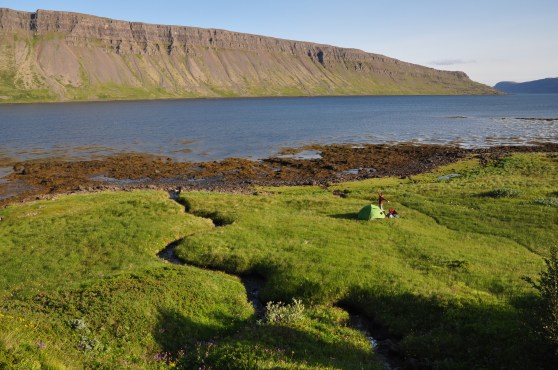
Iceland Westfjords: "Tent People"

Dori’s love for the outdoors has been nurtured since childhood – he grew up skiing, hiking and camping in Iceland’s remote wilderness with his parents. Dori’s father was a member of the Reykjavik rescue team (part of a national volunteer organisation similar to Australia’s SES), which Dori himself has been involved with for over 40 years now – since he was old enough to join at age 16. This was also how Dori came to be working in the outdoor industry.

“The rescue team had the only serious outdoor shop in Iceland,” Dori explained. His father had been on the board of the rescue team, and Dori used to accompany him to outdoor exhibitions in Europe to select skis and outdoor gear for the store. Ten years later, Dori was on the board when the outdoor gear shop was up for sale – and the rest is history. Fjallakofinn has expanded to three stores across Iceland, and Dori also runs a small tour company in which he takes limited numbers of travellers on adventures around Europe. The latter business venture, however, is more for his personal fulfillment than anything else. “We have small groups, we don’t advertise – it’s like those micro farms, we just harvest what we need for ourselves,” he said.

It’s clear that the key to Dori’s success is his contagious enthusiasm and his generosity – his smile collecting philosophy. A great story-teller, he had plenty of anecdotes to share with us over beer. One was about the time he read a public notice in the local paper about a ten-year-old boy who’d lost his treasured Swiss Army Knife. Immediately sympathetic to the boy’s loss – and as the country’s only importer of Victorinox – Dori had contacted the family and replaced it. He then showed us a photo on his phone – it was of the boy, now grown up, on a recent heli-skiing trip they’d taken together. The pair became lifelong friends. Dori never asked for payment for the Swiss Army Knife – only a smile to add to his growing collection, and perhaps another friend to fill a space on a church pew when the time comes.


Bonne Annee! New Year’s in France

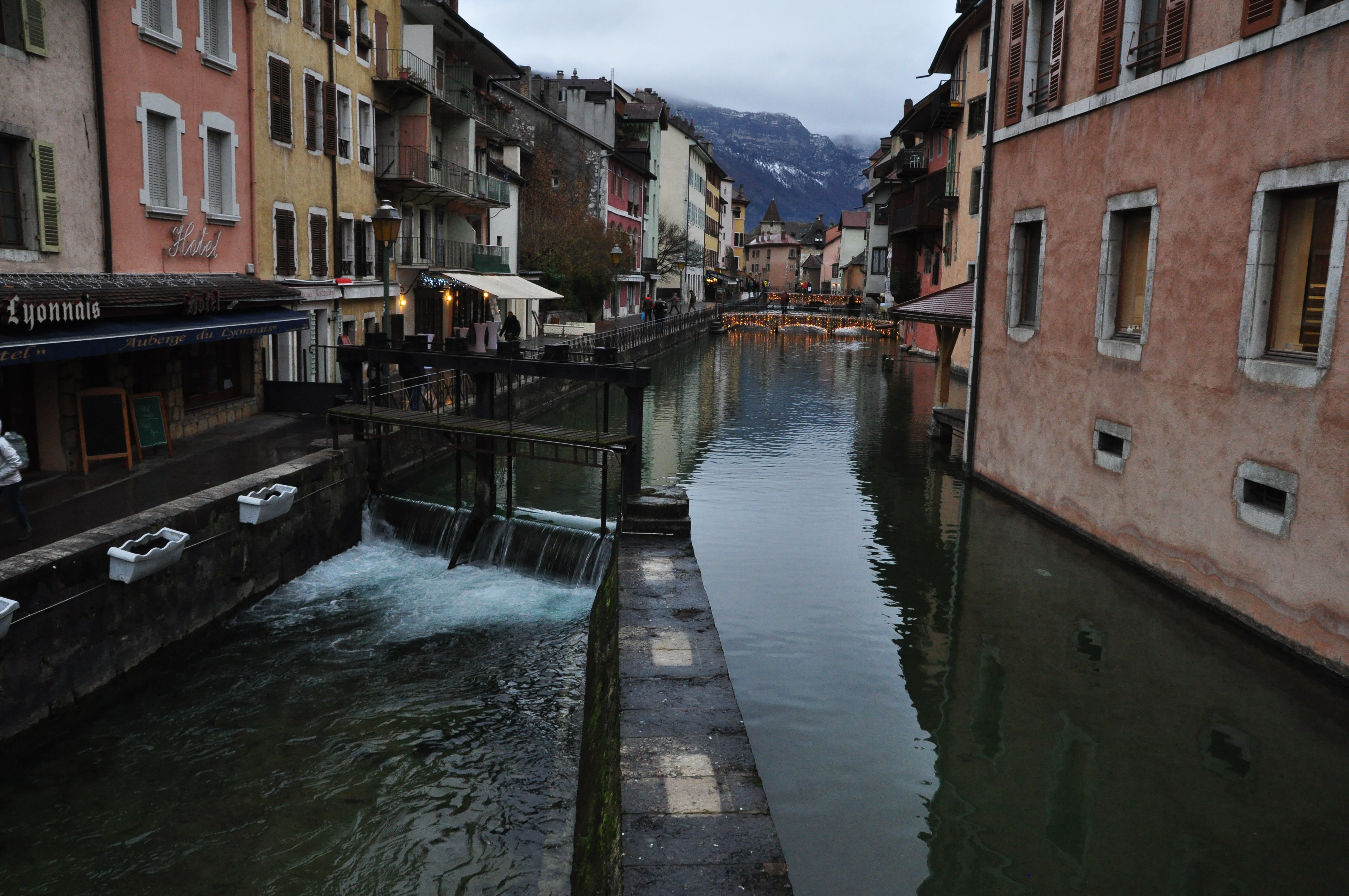
Annecy

Thiou ‘river’ in Annecy, France.

I’ve always felt that wandering the streets of a new city anonymously and alone is the essence of travel and adventure – but a recent week in France reminded me of the wonderful gift of having close friends in faraway places.

There’s no breakfast quite as luxurious as a freshly baked pan au chocolat, croissants and crusty baguette with assorted confiture and a hot coffee – particularly when enjoyed with friends, and the odd flurry of snow outside.

Mont Pilat

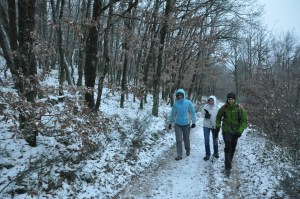
Snowy stroll on Mont Pilat

This is how Paul and I started every morning of our recent week-long getaway to France to welcome the arrival of 2015 – mostly in the south-west in Roussillon, near Lyon, but with New Year’s Eve spent in the north-east, in Rouen. Staying with two good friends, Chris and Maud, we couldn’t have asked for a better introduction to French food, culture and language.

Our trusty notepad remained at our side as we jotted down new phrases to our previously non-existent French – lessons that were consolidated in the evening over a glass of champagne or vin rouge from grapes grown just down the road. (The wine helped improve our confidence, if not our competence.)

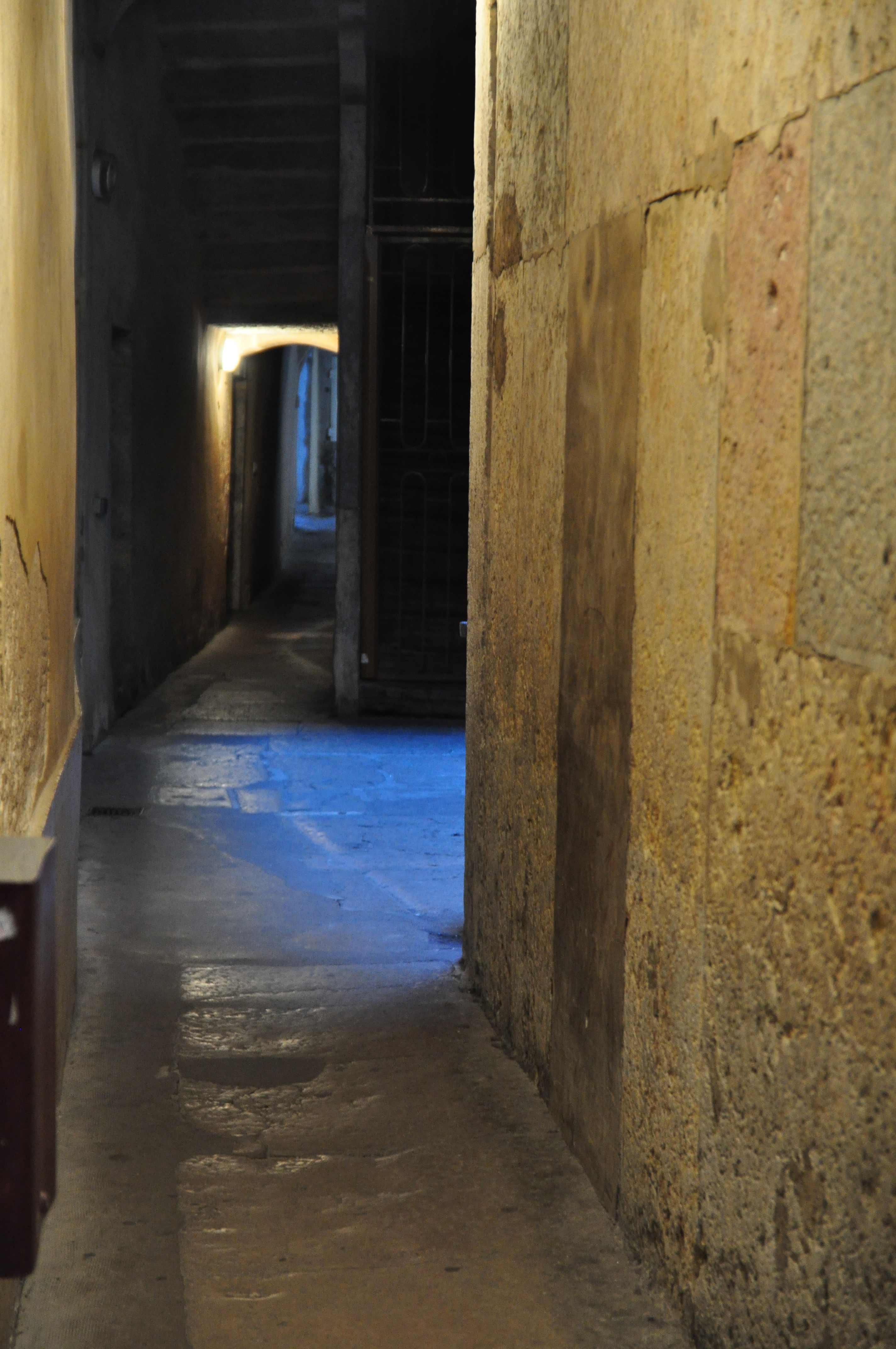
Traboules

Lyon’s hidden passageways, called ‘Traboules’

On our first afternoon staying with Chris and Maud (and their cat Brenda), we took a rather fresh stroll through the snow in nearby Mont Pilat, then ventured out to the city of Lyon the next day. A highlight in Lyon was exploring the city’s hidden passageways, called ‘Traboules’ – originally used to speed up the transport of products and produce, and centuries later used in the local resistance against Nazis during World War II.

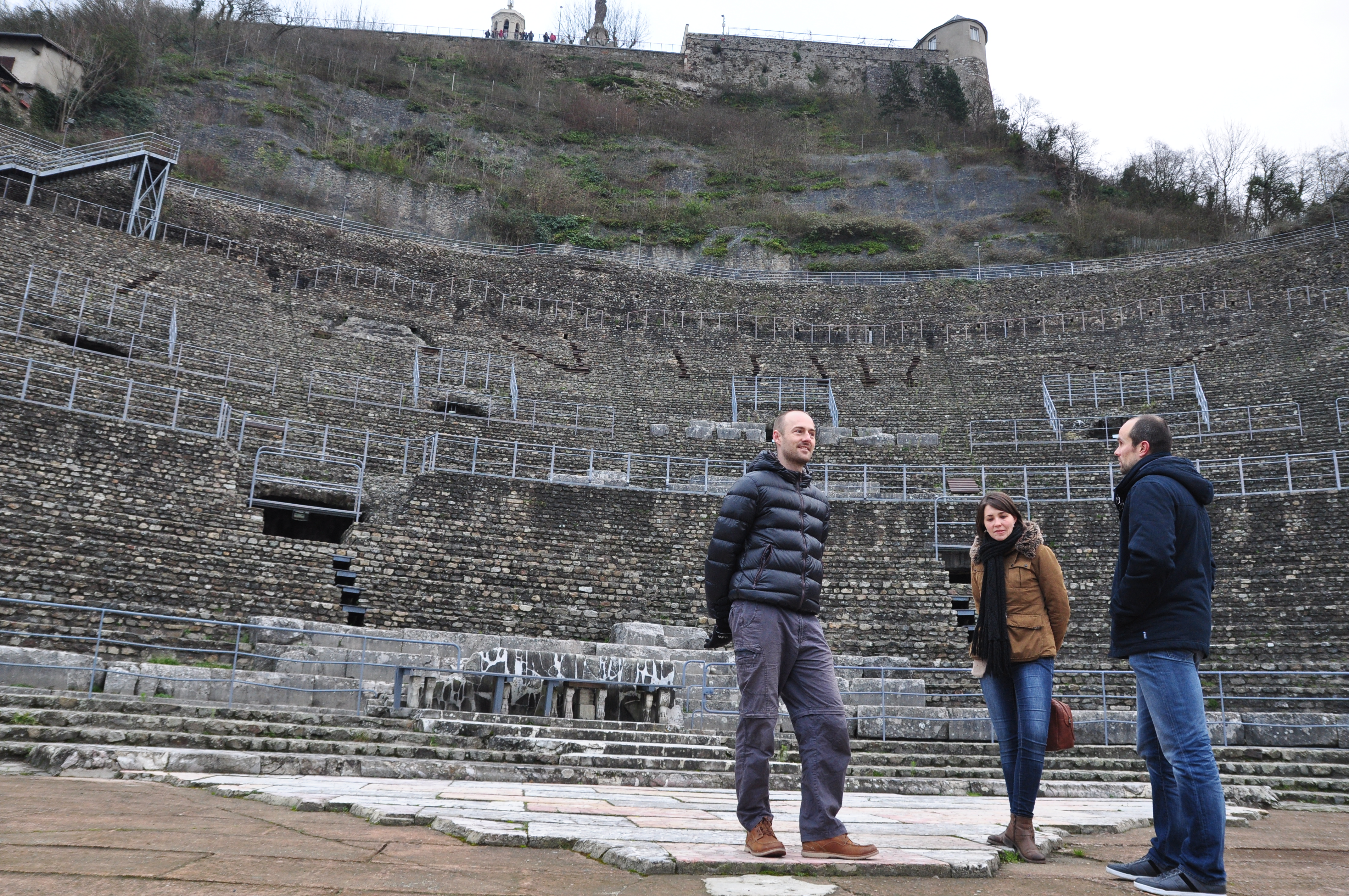
On another day out and about in the town of Vienne, we explored Roman ruins, including an enormous Roman amphitheater that is used to this day to hold an annual jazz concert.

This wasn’t, however, a hardcore sight-seeing trip, but a chance to relax with friends. This meant luxurious sleep-ins, strolling down to the bakery to buy breakfast, and maybe heading out to wander and explore around lunchtime until the sun set at 5pm – home in time for a cosy evening in of wine and a regional dishes expertly whipped up by Maud (such as the cheesy, potatoey goodness that is the local dish of tartiflette…).

Roman amphitheater in Vienne

Roman amphitheater in Vienne

Then came New Year’s Eve and a six-hour drive that had us straddling the country from the south-west to north-east to get to Maud’s childhood hometown of Rouen – famous, among other things, as the place where Joan of Arc was executed in 1431.

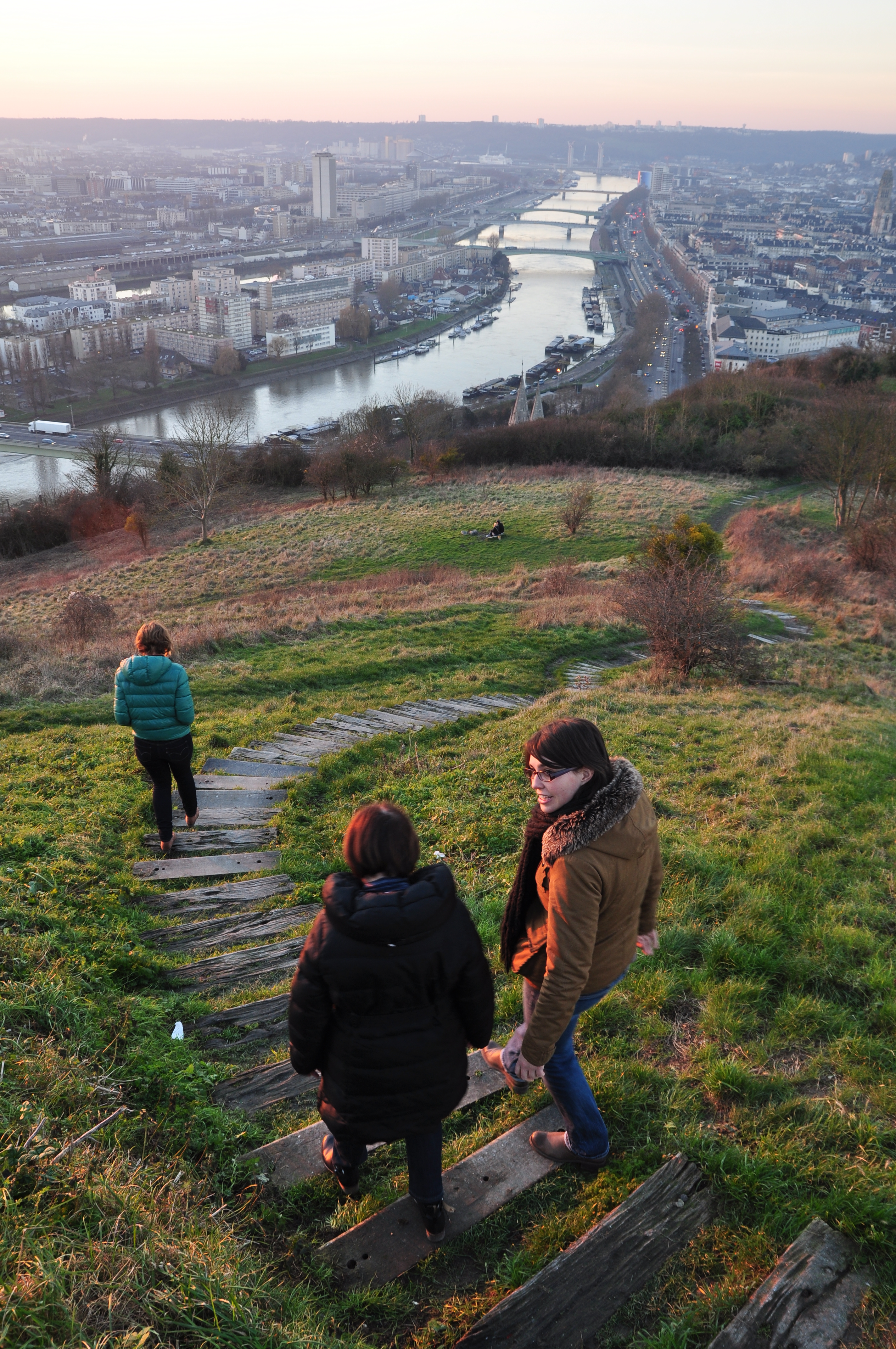
View over Rouen, France

View over Rouen, France

In Rouen, Paul and I would be crashing the party of Maud’s lovely extended family – 50-odd of the most generous, welcoming and vivacious French people, some of whom spoke English far better than they either let on or realised, while those who spoke less fluently might consolidate a phrase in their mind and then  – slightly tipsy – track you down in the crowd to offer up the unfamiliar words, released delicately like a flock of butterflies: “‘Ello, I am very ‘appy to meet you. ‘Appy new year!”

A typo in Maud’s original email about our plans for New Year’s Eve had told us drinking would start at 8:30am with the main meal usually served at midnight. In hindsight, I’m impressed by how stoically we took this revelation – a slight nod, an exhalation, a recalibration of our body clock’s expectations and then, finally, acceptance. “Yep, okay, sure. We’re up for it,” – only to find out that she had in fact meant 8:30pm. There was, however, no typo about dinner being served at midnight – vive la France, these guys know how to party.

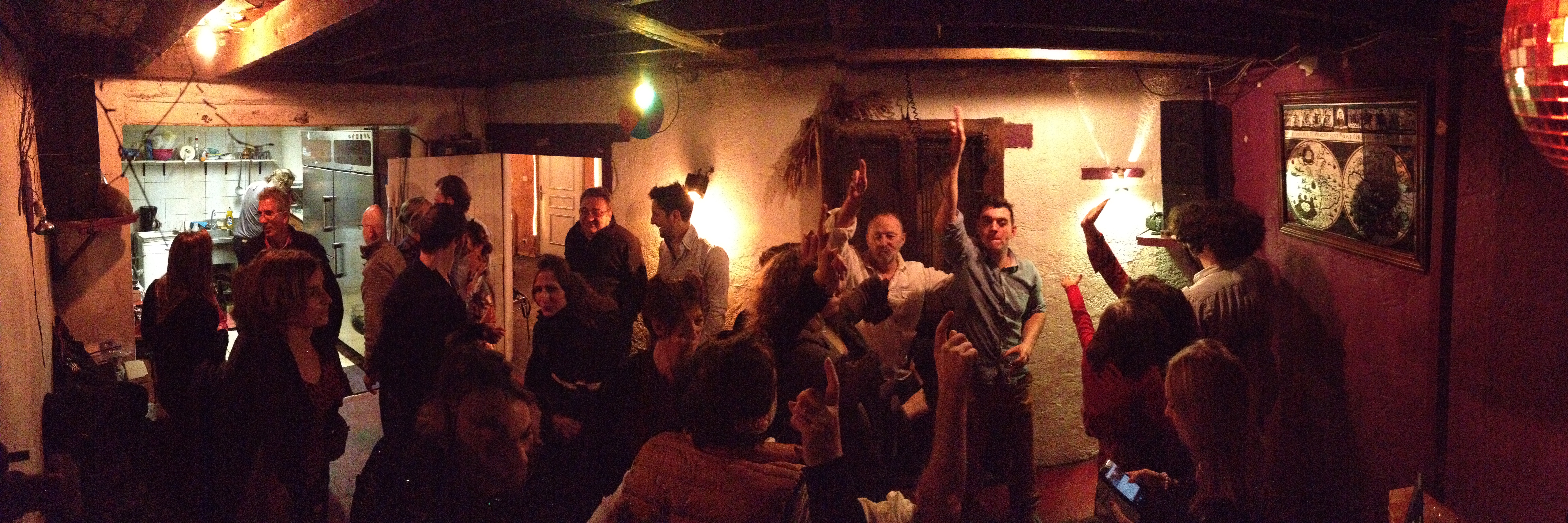
NYE party photo taken by Maud

NYE party photo taken by Maud

Unfortunately Paul ended up being laid up for the evening ill, which left me to hold the fort as the single Australian and one of two native English speakers (including Chris) – but the only one who couldn’t speak French. (Luckily one of the guests was also an English teacher, so I clinged to her side for much of the evening.)

Another cultural experience – I’ve never kissed or been kissed so much in my life… A peck on each cheek for everyone in attendance is customary, both on arrival and after the countdown at midnight (Dix! Neuf! Huit! …) A highlight of this was certainly the little cherub-like faces in the crowd who dutifully sought out any not-yet-kissed grownups and then queued up to offer a polite bonsoir (good evening) or bonne année (happy new year) and then stood on tippy-toes for a peck on the cheek – even for the odd Australian woman whom they didn’t recognise, and who was all misty-eyed and giggly as she tried to gauge if anyone nearby realised how seriously cute these little kids were?!

After initial mingling, we ate at long tables that wound around the edge of the room – a home-cooked starter of cheese fried in pastry and salad at about 10pm (followed by more drinking, dancing, mingling), then – after more drinking, dancing, mingling – a main meal of deer/venison with a mushroom gravy and parsnip purée (at around 1am), followed by bread and cheese and salad (naturally), and finally tiramisu for dessert served up not long before we headed home at about 3:30am – fairly sober, I should point out. The food was just as much a hero of the party as the drink, and there wasn’t a shot glass in sight. Tres chic.

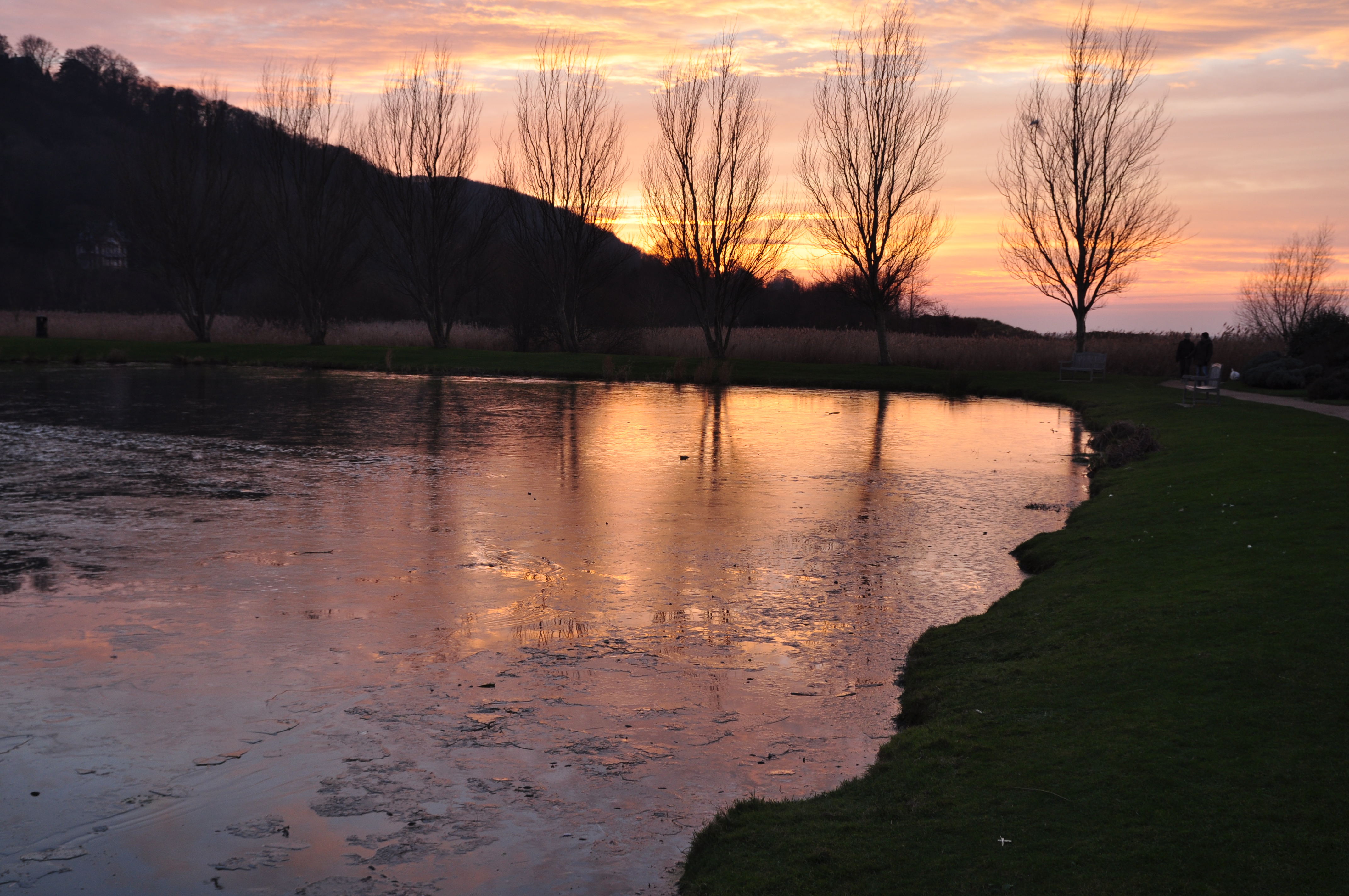
Sunset in Honfleur

Sunset in Honfleur

Before the long drive south again, we spent the following afternoon visiting the town of Honfleur and its picturesque port, and watched the sun set over the English Channel. Then, on our last day we broke up the two-hour drive across the border to Geneva Airport with a few hours in Annecy visiting its famous, pristine lake and clear-water canals. We had lunch at a creperie – accompanied, as is traditional, by bowls of apple cider.

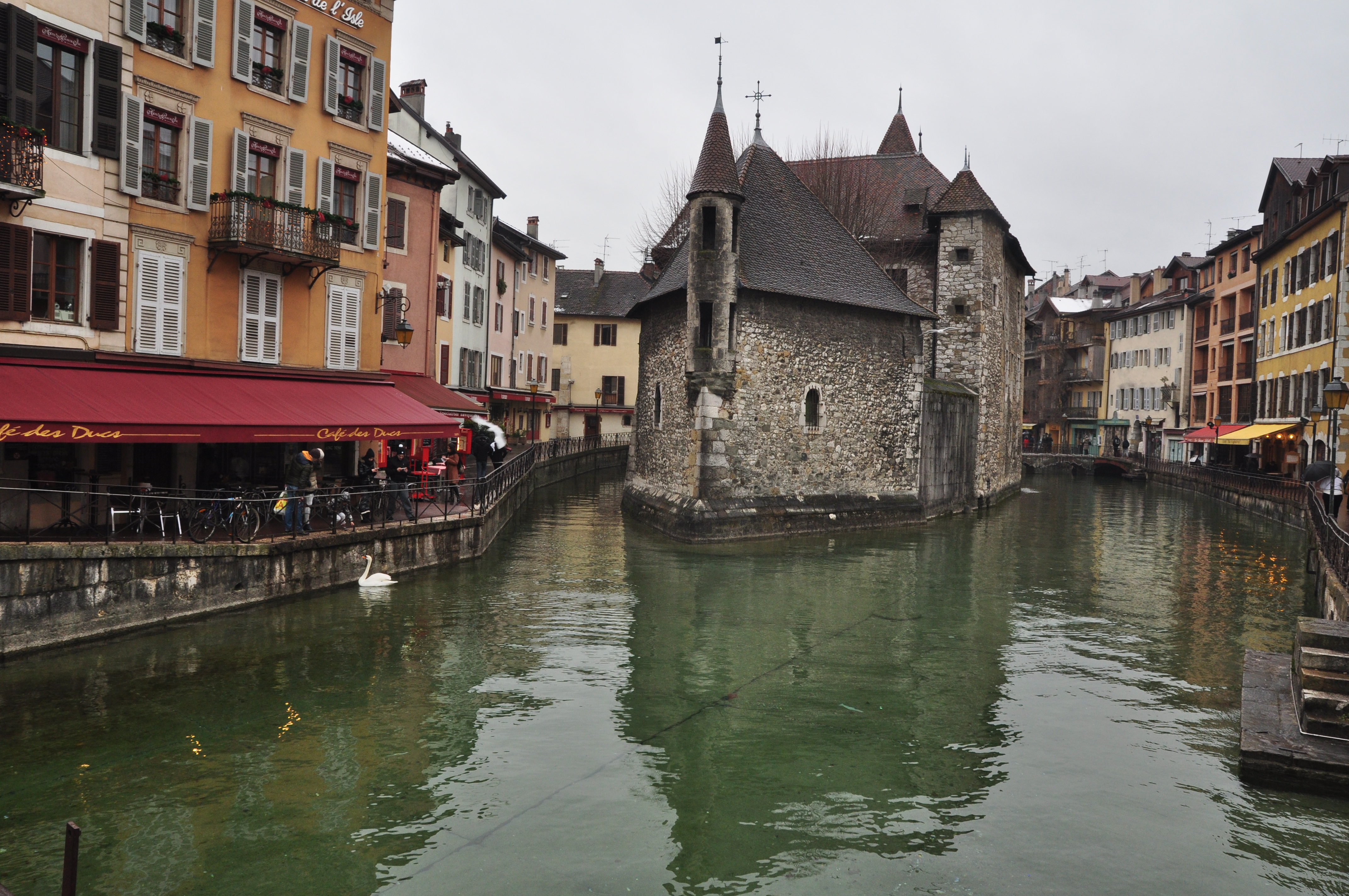
Palais de l'Isle, Annecy, France

The Palais de l’Isle (built 1132) in Annecy, France

While I love getting lost in unfamiliar places around the world, there is so much to be gained from the opportunity to see a new place through the eyes of the locals who have taken you in like family – so, on that note, merci beaucoup to Chris and Maud, and Maud’s family, for making our new year so special and memorable!

Now that we’re back in Bideford and getting into the swing of 2015, we have tentative plans to return to France in summer to hike the Pyrenees – along with a new year’s resolution to have listened to a few French language tapes before then (promise).

Bonne année les amis! Merci for reading.

This slideshow requires JavaScript.

The link between Santa Claus and the Sydney siege

Disclaimer, please read: This isn’t my usual travel-themed blogpost. It’s a 3am rant about the link between Santa Claus, the Sydney siege and critical thinking. It may lose me a few followers (even friends), but anyone averse to a bit of tough intellectual honesty probably isn’t worth fighting for anyway. I was nervous about writing this, but the alternative was writing it over and over again in my mind until the alarm went off at 6:30am and I became distracted by the routine of the day. So, in the end, this seemed like a better use of my time. Besides, as a wise person once said (sorry I can’t find the source so I’ll paraphrase) – the only thing worth writing is that which scares you. So here it is. Merry Christmas!

There’s a bit of click-bait circulating Facebook at the moment. It lures you in with classic click-bait style language, promising to offer: “Possibly The Best Parental Explanation Of Santa Claus We’ve Seen”. (Yes, In Title Case Because Internet.)

So, of course, I took the bait and was hooked, mainly because (presumably) like a lot future or present or non-parents, the idea of knowingly taking advantage of my (hypothetical) little child’s unconditional trust in me – that is, by lying to them – has never really sat well, and even left me feeling a little squeamish.

BUT never you mind parents of the world, the good news is that a website called Pyzam (okay I should have known better) has the answer, so I clicked away.
Oh world, why do you keep letting me down?

The crux of the letter to dear, clever little Ryan (as I’ve sneeringly paraphrased it – you can read the full thing here) is this: Alright, Ryan sonny, you got us! Santa isn’t technically real, as in, you know, the facts we told you about him – flying reindeer, Coca-Cola-inspired suit, chimneys and the like. But, our dear impressionable sweet child, you just let all that pesky innate scepticism and healthy curiosity stop right there! You don’t need to ask anymore difficult questions because we have A Life Affirming, Heart Warming Revelation For You. What we really tried to teach you with our stories about a man sneaking into our house at night while you sleep to give you material things you don’t need (along with the houses of all the other rich kids in the first world) was this: believing in things – even when they’re blatantly untrue – Just Feels Good, okay Ryan! #amirite Ryan? …Ryan?!

To quote the letter directly:

“What [Santa] does is teach children to believe in something they can’t see or touch. Throughout your life you will need this capacity to believe: in yourself, in your family, and in God. You’ll need to be able to believe in things you can’t measure or hold in your hands.”

But wait! Santa isn’t real, right, mum and dad? That is what you’re telling me here, underneath all this euphemistic, pseudo-philosophical BS? So there is no Santa, but… but it’s healthy to believe in him because he isn’t real? Because… Because love and Christmas?

Me neither Ryan. Me friggin neither.

You know who wasn’t very good at taking stuff on faith (or authority), but had a dangerous habit of “measuring” things (ew, science) and asking annoying questions? Well loads of awesome people, but for some reason Galileo in particular springs to mind – probably because 500-odd years later so many of us still seem stuck on the idea that we inhabit the centre of the universe.

Had this 16th century Italian had access to Ryan’s mum and dad’s theory on Santa, he might have ignored his beautiful, courageous human curiosity and scepticism in his humble attempt to understand the immense grandeur and complexity of the universe – and instead just, well, goddam believed the Catholic Church doctrine on heliocentrism and kept his doubting-Thomas mouth shut like a good boy. Then he might not have spent his twilight years under house arrest (and the western world would have remained in the Dark Ages a little longer).

While the worst part of this Santa click-bait is that it seems to have given several thousand internet users their warm and fuzzies this season with a celebration of the Crushing Of Reason as early as possible in life; the best part about it is definitely the fact that it equates a belief in Santa with a belief in God right there on page in black and white. You’ve got to take your Christmas miracles where you can get them.

So how does all this link to a criminal madman who held a bunch of innocent people hostage at gunpoint for 16 hours in a chocolate shop in my beloved home city of Sydney 10 days before Christmas? Okay, don’t panic, I’m going to ease you into it. Wait for it… it’s coming: Religion. There, I said it. Didn’t hurt that much, did it?

Because, while critical thinking and scepticism is why most of us no longer die at around 30 years of age from diarrhoea or our teeth, unchallenged, medieval desert-origin belief systems give us the Westboro Baptist Church, ISIS and the Taliban. And Al Shabaab and Boko Haram and the Boston Bombers and the London bombers. And creepy middle-aged virgins, and Fred Nile. And Man Haron Monis.

Now, let’s be clear: I’m the type of global-warming-concerned, social-welfare-loving, Christmas-ruining lefty that usually keeps the likes of Miranda Devine up at night. However, it was seemingly at odds with the dominant opinion within that cultural group that I was becoming frustrated with the desperate need (on my Twitter and Facebook feeds at least) to completely and without question separate Man Haron Monis’ actions in Sydney on 15-16 December 2014 with his explicitly stated religious beliefs. Crimes have motives, and sometimes we don’t need to do much detective work to find out what those motives are – sometimes they are stuck there on the wall or in the window for everyone to see.

Yes, it is important to be nuanced in our interpretation of an event, and yes of course it’s vitally important that innocent people are never harassed or physically intimidated in public places for the way they dress or what they look like. And of course I’ll bloody ride on the bus with you – provided you’re not A: a racist twat or B: wearing a bomb (because, people, the latter does happen and being nervous about that isn’t the delusion here).

My overarching gripe is this: Our healthy aversion to the inadequacy and injustice of stereotypes should not equate with a chilling effect on legitimate, civilised debate about the demonstrable link between belief and behaviour. (I would go further to say that I would want to have anyone who believes that their holy book or dogma is infallible and beyond criticism on my personal keep-a-close-eye-on-that-guy list).

Because while it’s relatively easy to cringe together about otherwise well-meaning parents and their impressive capacity for Doublethink at this time of year – it has somehow, on the other hand, become social suicide in certain groups (and they’re usually my favourites!) to suggest that a strong belief in core religious doctrines such as jihad might have a cause-and-effect relationship with violent crimes against, let’s say, apostates. Because let’s be clear: the one thing that Man Haron Monis, Dzhokhar and Tamerlan Tsarnaev, and members of Boko Haram and the Taliban have in common is certainly not anything as irrelevant as their (differing) race or language or clothes.

We fought and (mostly) won the good fight against crusading Christians – right around the time when Islamic countries were leading the world in cultural and scientific progression – and now for a multitude of reasons the Islamic world has found itself on the wrong side of the sawtooth of human progress: because too many people believe in it too much. And if the best thing you can say about your belief system is that it works better when you don’t follow it all that closely (and that is the case for at least all of the monotheisms that dominate the culture I’m a part of), then you’re not off to the best start.

If we keep closing our eyes to the obvious inadequacies of religion as a moral compass, then every time war and famine and ruthless dictators toss our societies back into the dark ages, we’ll keep falling on those religions for comfort and we’ll keep repeating our mistakes.

Perhaps if the world was as small and connected 500 years ago as it is today, the crusading Christians would have clashed with the progressive muslims of the time, and this all would have come to a head back then and we’d be living in a very different world today. As it stands, this is the world we live in and I just want to play my part by defending one strongly held (and open to debate and criticism) belief: in free speech.

And on that note, even if you haven’t read a word of this diatribe because you can’t stop crying into your mulled wine and mince pies, then at least watch this – an old favourite that says so much of what I wish I could but far more eloquently, such as: “Don’t take refuge in the false security of consensus”.

A Cornish Christmas getaway

DSC_0098

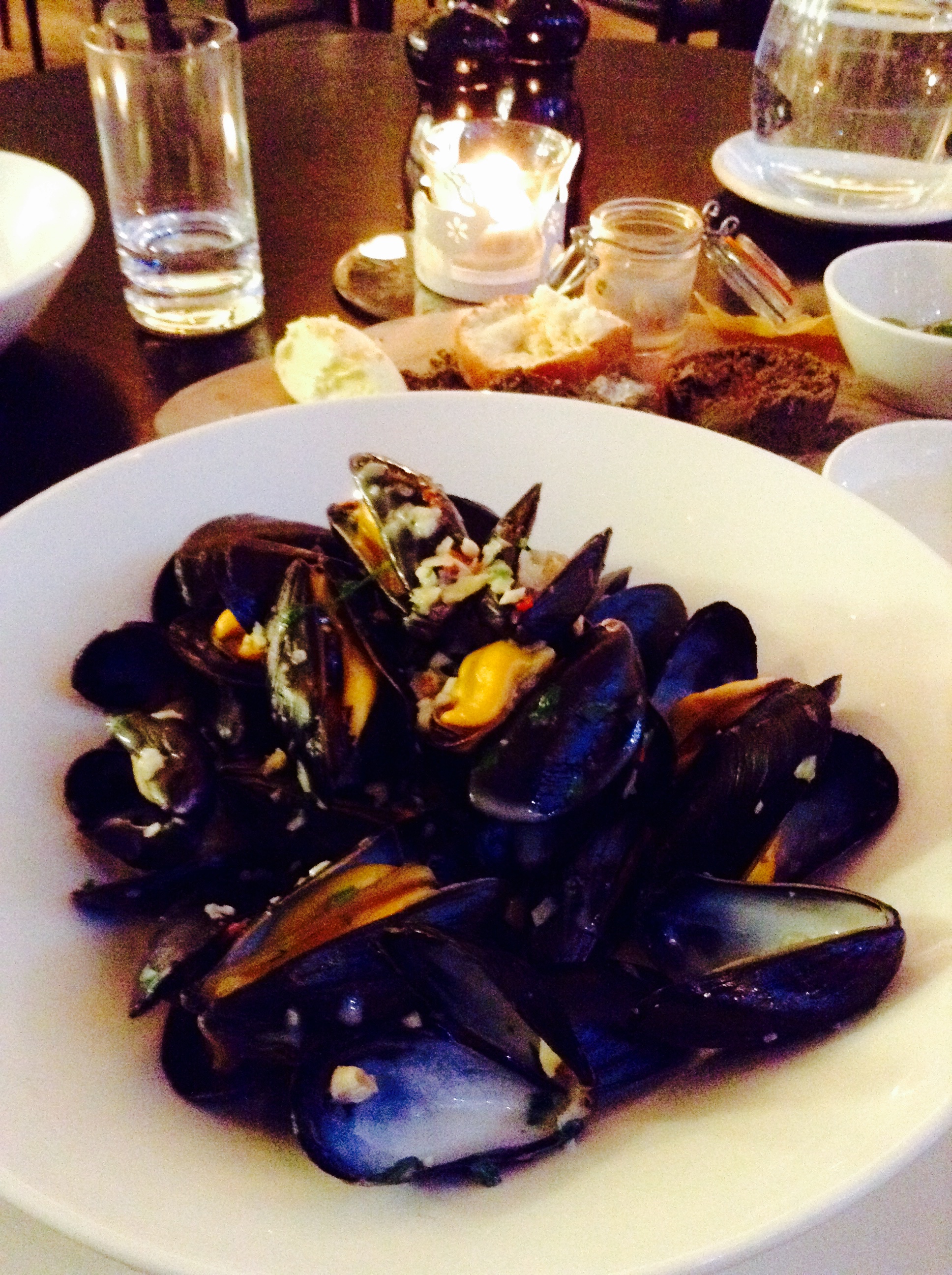
In hindsight, when ordering a meal to be eaten at a table for one in a large swanky dining room, I should probably have gone for a less messy option than the mussels… Padstow Christmas Festival

As I’d chosen to eat early that evening on my overnight stay at the St Moritz Hotel in Rock, north Cornwall, the restaurant was mostly empty and I couldn’t help but feel the waiters’ eyes on me as I wrestled with the tasty but stubborn mussels in their fragrant coconut and coriander broth… My previous confidence that yes I’m sure you’re supposed to eat these with your hands and use the first shell to extract the rest of the little suckers was fast waning, but I was in too deep by then to reach for the fork, so my only option was to look confident, whilst occasionally smiling reassuringly over at the attentive row of waiters as I attempted to proceed to the next page of my touch-screen e-book using the knuckle of my pinkie finger.

Mussels at St Moritz

The situation brought a scene in Sylvia Plath’s The Bell Jar to mind –when her character Esther Greenwood mistakenly consumes the entire finger bowl at a luncheon “including the crisp little blossoms”. Esther came to learn that when you think you’re doing something incorrect in a dining situation, just do it with “a certain arrogance […] and nobody will think you are bad mannered or poorly brought up. They will think you are original and very witty.” So, in short, that’s the effect I was going for – and after a glass of South African sauv blanc and finished off with a warm, spicy mulled wine, I was starting to feel pretty merry and confident again anyway.
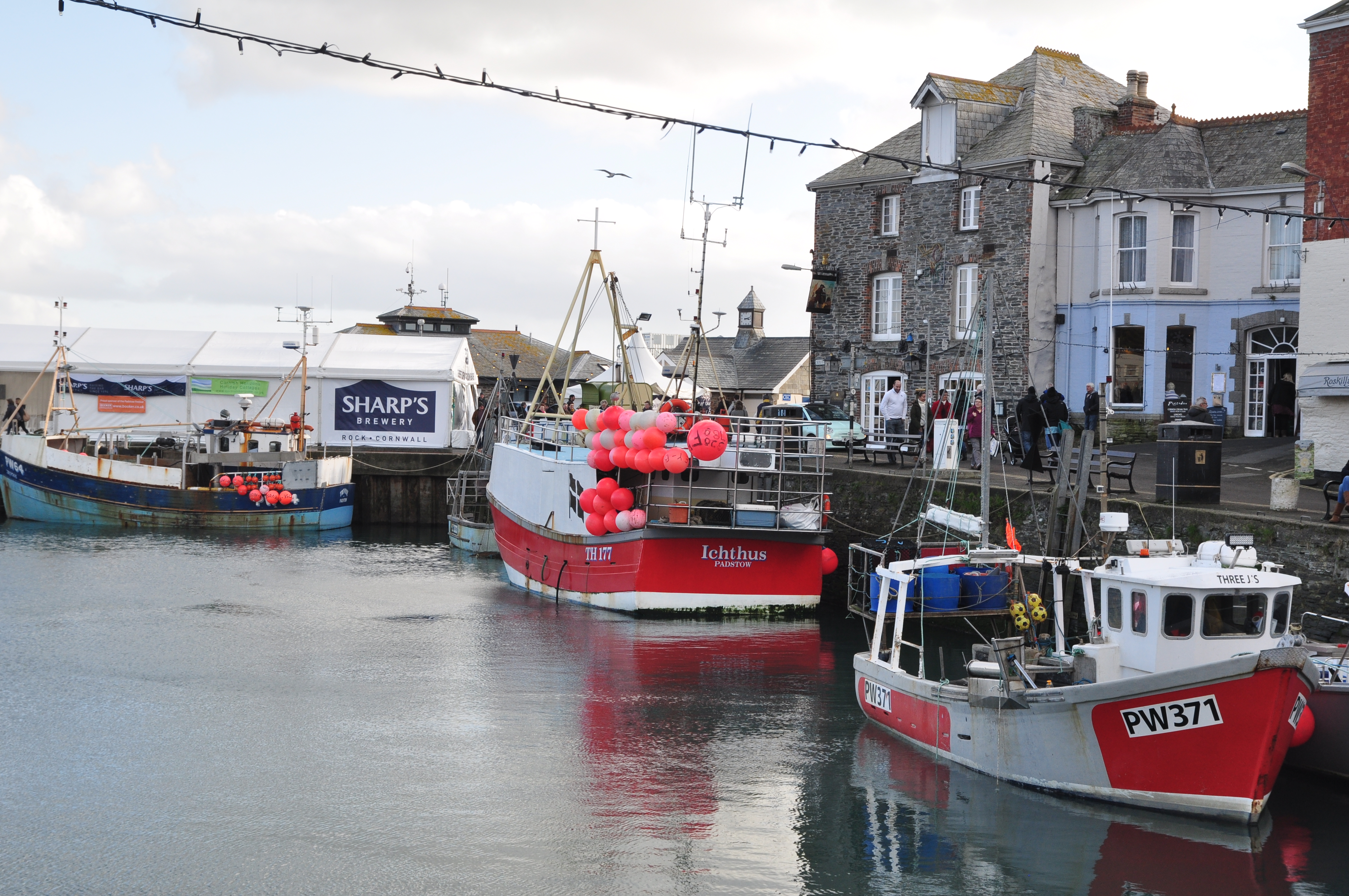
The reason I was down in Cornwall was for a two-day work trip to attend the first half of the annual, four-day Padstow Christmas Festival. My employer was invited by one of their clients, Sharp’s Brewery, who was putting staff up at the St Moritz Hotel – which happens to be another client and one who I work with directly, so I was lucky enough to be sent along.

IMG_0201

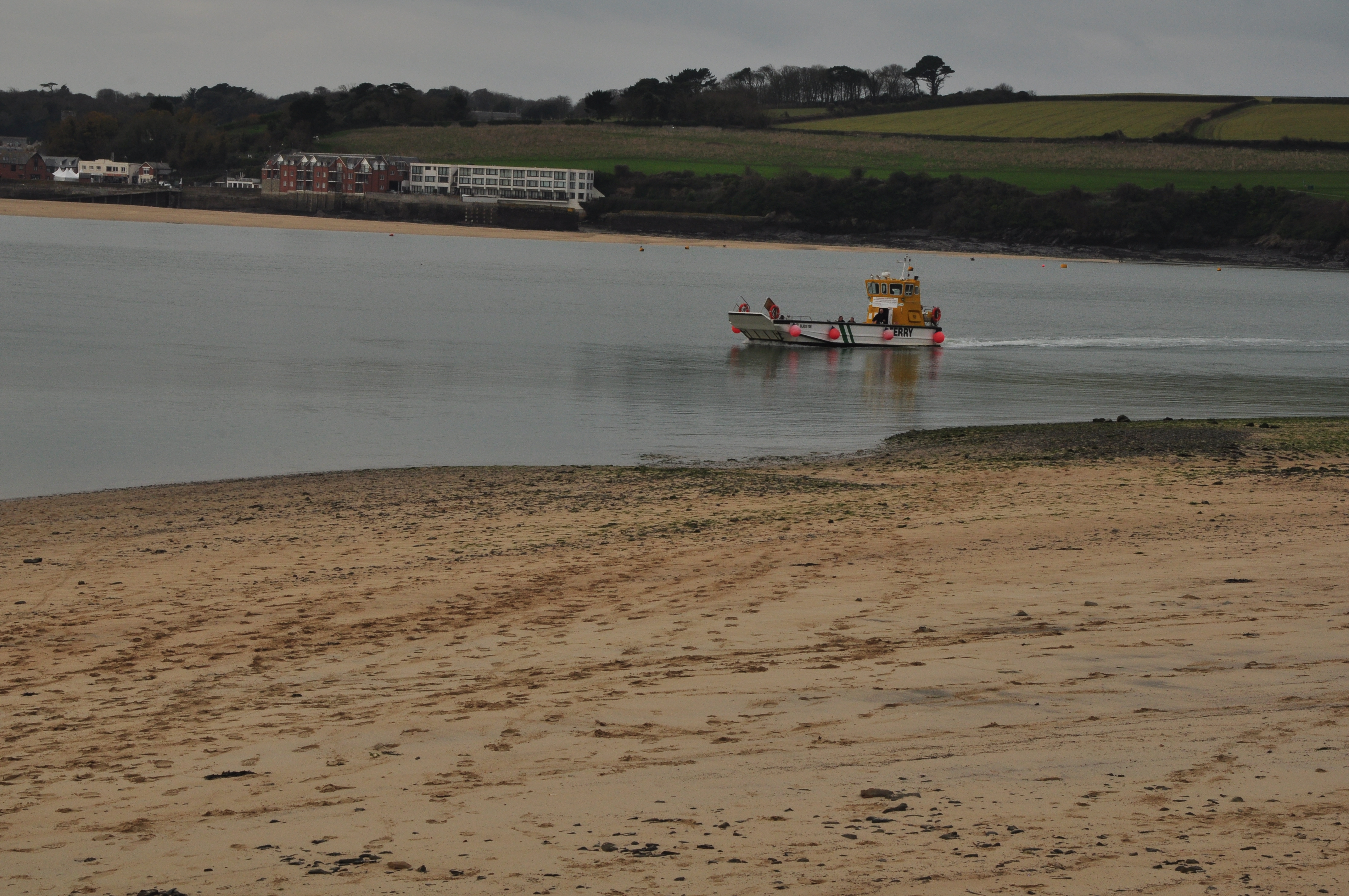
It’s a two-hour drive down the coast from North Devon through winding, narrow country lanes (saying that, even the A-roads here feel like narrow lanes to me…), and I arrived at around 11am to check in at the hotel then make my way down to the little ferry that crosses the Camel Estuary between the towns of Rock and Padstow – it will drop you off at different points along the beach or harbour depending on the tide.

Black Tor Ferry

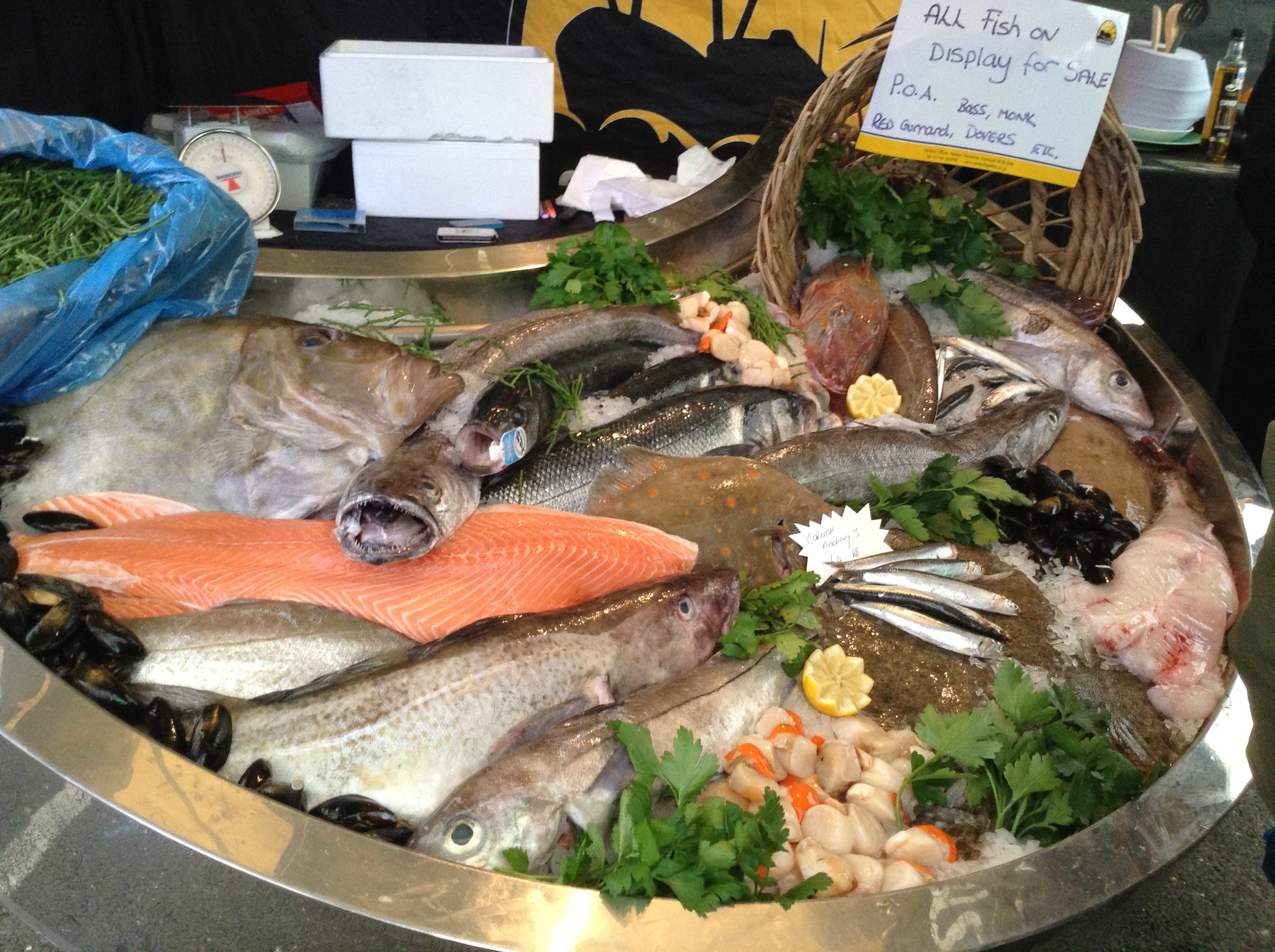
The centrepoint of the festival was a big marquee set up with food stalls and craft and Christmas gifts, and of course beer – Sharp’s Brewery was the main sponsor of the event. Highlights were the Chefs Demonstration Theatre, where some of Padstow’s best chefs – including Rick Stein who many joke more or less owns Padstow (he certainly put it on the map) – cooked meals on stage for the audience to watch and learn. Among my personal favourites was the eccentric moustachioed Hugo Woolley who restored my faith in my own prospects as a home-baker when he’d been given the wrong flour and his granola cookies turned into a buttery mess in the oven – it happens to the best of us!

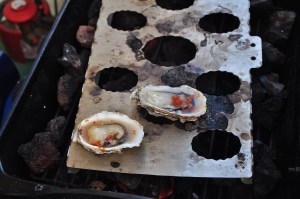
BBQ oysters

The next day I was lucky enough to sit down for coffee at Rick Stein’s The Seafood Restaurant to interview former Michelin-starred chef Paul Ripley (Paul was head chef at The Seafood Restaurant after Rick and now works at The Mariners Rock pub), as well as his sous-chef Zack Hawke and Sharp’s Brewery’s beer sommelier Ed Hughes – Ed is passionately trying to elevate beer to the world of fine dining, which is a noble cause, I say.
Sharp’s Brewery also had a clever marketing trick up their sleeve with something called The Secret Bar that took place inside a closed shipping container at the festival… I can’t say too much about what went on inside, except that it involved beer and food and as a visiting journalist I was fortunate enough to have my ‘secret bar’ experience with a group of VIP chefs…

If anything was going to get me into the spirit for my first ‘cold’ Christmas in the northern hemisphere, then this little getaway to Cornwall’s foodie capital was it. Thanks Padstow and now bring on the home-made minced pies and mulled wine, I’m in a festive mood!

Merry Christmas xx

DSC_0078

Expat update: from Bideford, Devon

So I’ve been slack with blogging, I know, I know. You can put that down to the trials and tribulations (and joys!) of setting up life in a new country.
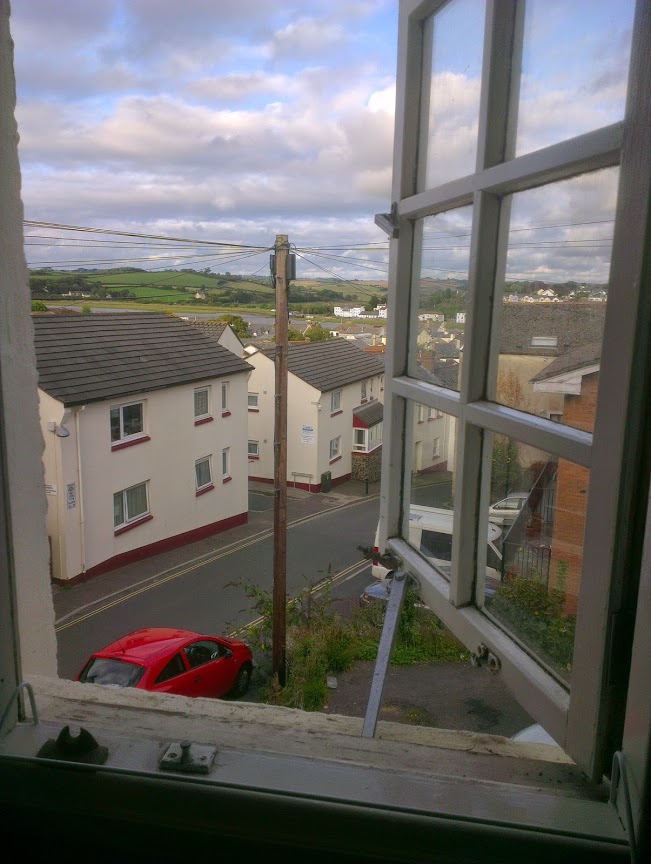
A room with a view, in Bideford, North Devon

After adjusting to the leisurely pace of life on Paul’s family’s farmhouse in the UK’s idyllic west midlands, we ended up spending our first night in our ‘new’ home of North Devon in a tent in the beer garden of a country pub…

Yes, less than a fortnight after finishing our bike tour around Iceland, we were back to our old ways again, pitching tents in unexpected places.

Paul’s furniture making course had been scheduled to start in about a week’s time, and we still had to solve the minor detail of finding somewhere to live for the year. On that weekend ‘reccy’ to North Devon – timed smack-bang in the middle of school holidays – we couldn’t even find accommodation for a night. Thankfully, the pub owner at the Devil’s Stone Inn in Shebbear overheard our quandary and offered a grassy patch out the back, which we gratefully accepted.

A sign on the wall behind the bar proclaimed the pub to be ‘officially haunted’ (as decided by some sort of independent auditor of those kinds of things, apparently). However the only haunting we experienced was from the Rottweiler with which we shared the beer garden, and which left several landmines for us to dodge. There was also the Wifi that didn’t work when the jukebox was plugged in, and vice versa (those ghosts can be oddballs, sometimes). Boat at Instow beach

Eventually, houseshare.co.uk led us to a terrace just outside the town centre of Bideford, in which we now rent a, let’s say… cosy bedroom. That is to say, we’ve had to customise a double futon to make it fit, still leaving really only standing room for one.

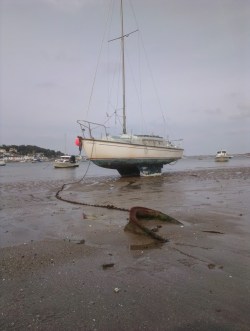
Our new home is, however, just a cobble stone’s throw from the high street and the River Torridge, to which we have found ourselves gravitating on these balmy summer evenings to watch the local rowing teams, as well as carefree kids in wetsuits jumping off the ‘old bridge’ at high tide. (At low tide, the boats lean over on their keels on the exposed mudflats.) Our room also has a window looking out on all this, which makes up for the lack of space. We leave the curtains open overnight and are awoken every morning with the walls painted pink from the rising sun.

Accommodation, tick. Next up was to find a job. Paul started his course on the 1st of September, and since then drives the 10 miles there through country lanes in our ‘new’ 1995 Land Rover Discovery. The hedged lanes are so narrow (and the Disco so wide) that he has to fold in the side mirrors.

That left me with the place to myself during the day as I continued the process of becoming established in Bideford and in the UK in general (even grocery shopping was a learning curve – aubergines not eggplants, courgettes not zucchinis, gammon shank not bacon hock, and I made a spinach pie out of something called ‘spring greens’…). I had a couple of freelance jobs to tide me over – including working on a feature article for Australian Geographic Outdoor magazine about our Iceland bike tour – but otherwise I was emailing and phoning anyone and everyone I could to look for work opportunities.Boat on the River Torridge

With several irons in media/publishing-related fires, I still became impatient. It turns out I don’t ‘do’ idle well, so after about a week I responded to an ad in a local cafe, called Cafe Collective, and found myself making coffees and waiting tables for the locals (the Australian accent always made for a great ice-breaker with customers). As a Sydney-sider, I was a little aghast when the cafe owners let me operate the espresso machine without a PhD in latte art, but I got the hang of it and even learnt what the hell an ‘Americano’ is. (If you’re interested, it was invented in Europe during WWII to resemble the filter coffee that American soldiers were used to. It is also what you give someone when they ask for simply a ‘coffee’ and you can tell very clearly that they do not want to be hassled with any further options.)

Alas, however, my days in hospitality were numbered. I am pleased to say instead that I’ve started in a permanent role at a very groovy little boutique publisher and marketing agency called Salt Media, which specialises in gorgeous food publications. I take a double decker bus to work, and always nab the front, top-level seats to enjoy the view. (As these are always empty, and I share the bus with mostly high school kids, I gather this isn’t a particularly cool place to sit – which works out perfectly.)Blackberries

Bideford is starting to feel like home (or home-away-from-home, at least) and Paul and I are diligently conducting our own local research – that is, gradually working our way around all of the local pubs for our Friday night ales. Most of them were built in the 15th/16th centuries, and for a town with a population of about 10,000, there’s plenty to choose from. Most recently, it was the Joiners’ Arms, with old woodworking tools hung on the walls, which felt extremely fitting given the circumstances of our relocation here. It might just become our regular haunt (although we have a few to work through yet).

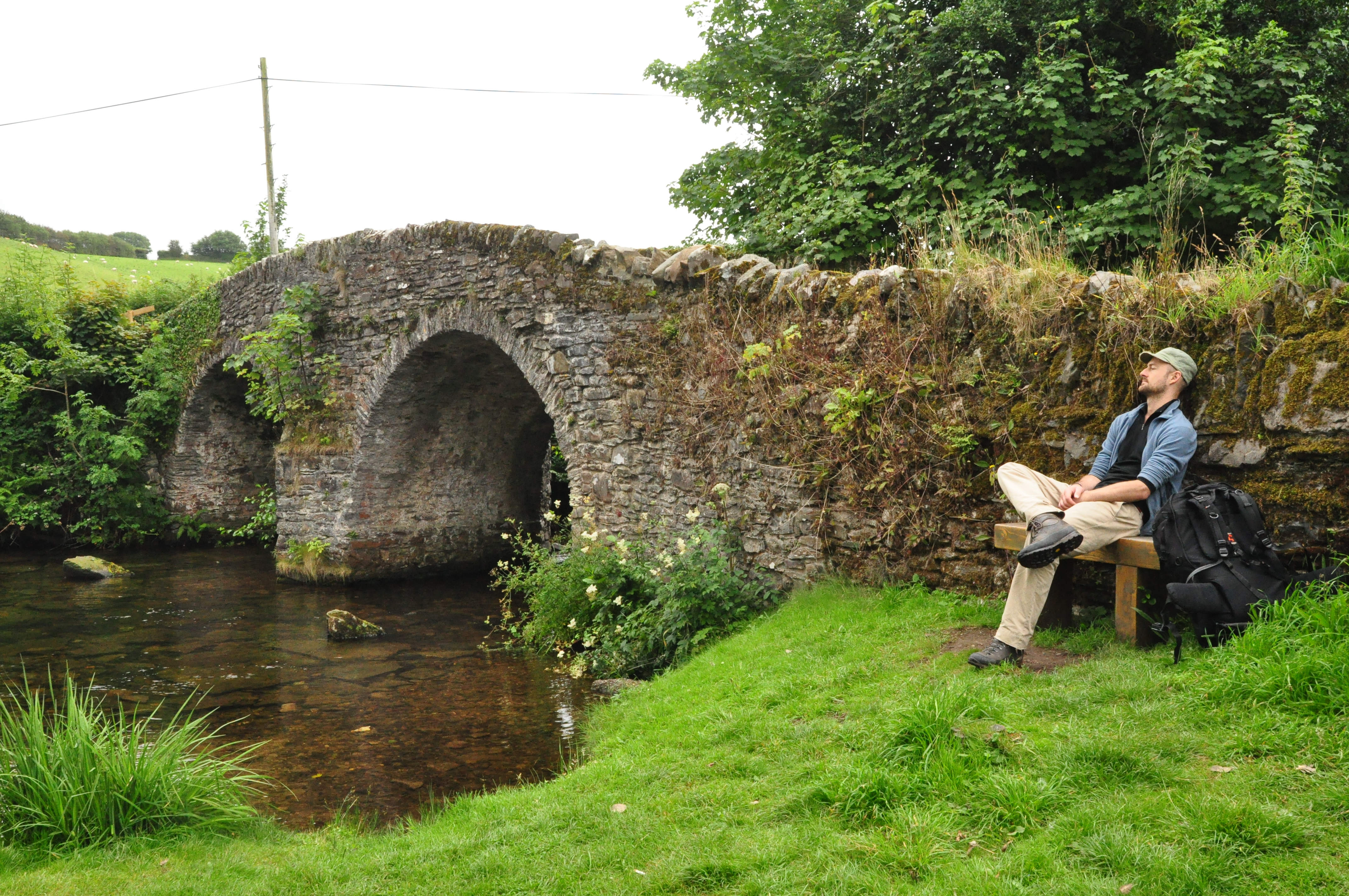
Another highlight has been taking weekend walks along the Tarka Trail, which covers a total distance of 180 miles through North Devon. We’ve walked about 14 of those miles (~22km) over various weekends – passing under old stone bridges, by unused canal locks and rail lines, and picking blackberries from hedges that are fat with them this time of year. The Tarka Trail might just have to become a future blog post of its own, once we’ve explored a bit more.

It’s all just a bit ridiculously quaint, really. I thought England was supposed to be grey and dreary? We’ve even been swimming in the Atlantic Ocean. Without wetsuits. Twice.

Now, I’ll leave you with a few shots from the Bideford Carnival, which took us by surprise when the carnies started rolling in with their amusement rides and fast food vans, and when for one entire evening the town came to life to the soundtrack of the local pipes ‘n’ drums bands. It was a perfect welcoming. Thanks Bideford!

This slideshow requires JavaScript.